DIY Radiator: How to Test, Replace, and Keep Your Car from Overheating
When your car starts running hot, it’s rarely the radiator’s fault alone—but a failing DIY radiator, a core part of your car’s cooling system that circulates coolant to prevent engine overheating. Also known as a cooling radiator, it’s one of the few parts you can often fix yourself if you catch the warning signs early. Most radiators last 8 to 12 years, but if you skip coolant flushes or ignore leaks, it can die in half that time. And when it does, your engine doesn’t just overheat—it can warp, seize, or blow a head gasket. You don’t need a garage to spot the early signs: a puddle under your car, steam from the hood, or a temperature gauge creeping into the red are all red flags.
The radiator replacement, the process of removing a damaged radiator and installing a new one to restore proper engine cooling isn’t rocket science, but it’s not a weekend hobby either. You’ll need the right tools, a clean workspace, and patience. Most DIYers skip checking the radiator failure signs, visible or audible indicators like coolant leaks, rust buildup, or abnormal temperature spikes that signal a radiator is breaking down until it’s too late. That’s a mistake. Look for crusty residue around the filler cap, discolored coolant (not bright green or red), or a radiator that feels hot on top but cold on the bottom—that’s a sign of internal blockage. And don’t forget the hoses. A cracked or swollen hose can mimic radiator failure, so always inspect them first. If you’re replacing the radiator, it’s smart to swap the thermostat and coolant at the same time. It’s cheap insurance.
Many people think a radiator is just a metal box with tubes. It’s not. It’s a precision system tied to your water pump, fan, sensors, and even your engine’s computer. A bad radiator maintenance, regular actions like flushing coolant, checking for leaks, and inspecting hoses to extend radiator life and prevent engine damage habit—like using tap water instead of proper coolant—can cause corrosion inside the tubes. That’s why most DIYers who skip flushes end up with a clogged radiator they didn’t see coming. And if you’re in the UK, where winters are wet and summers can be surprisingly hot, your radiator works harder than you think. The posts below give you real-world checks, step-by-step guides, and the exact signs that mean it’s time to act—not wait. Whether you’re trying to save money, avoid a breakdown, or just understand what’s under your hood, you’ll find clear, no-fluff advice here. No theory. No guesswork. Just what actually works.
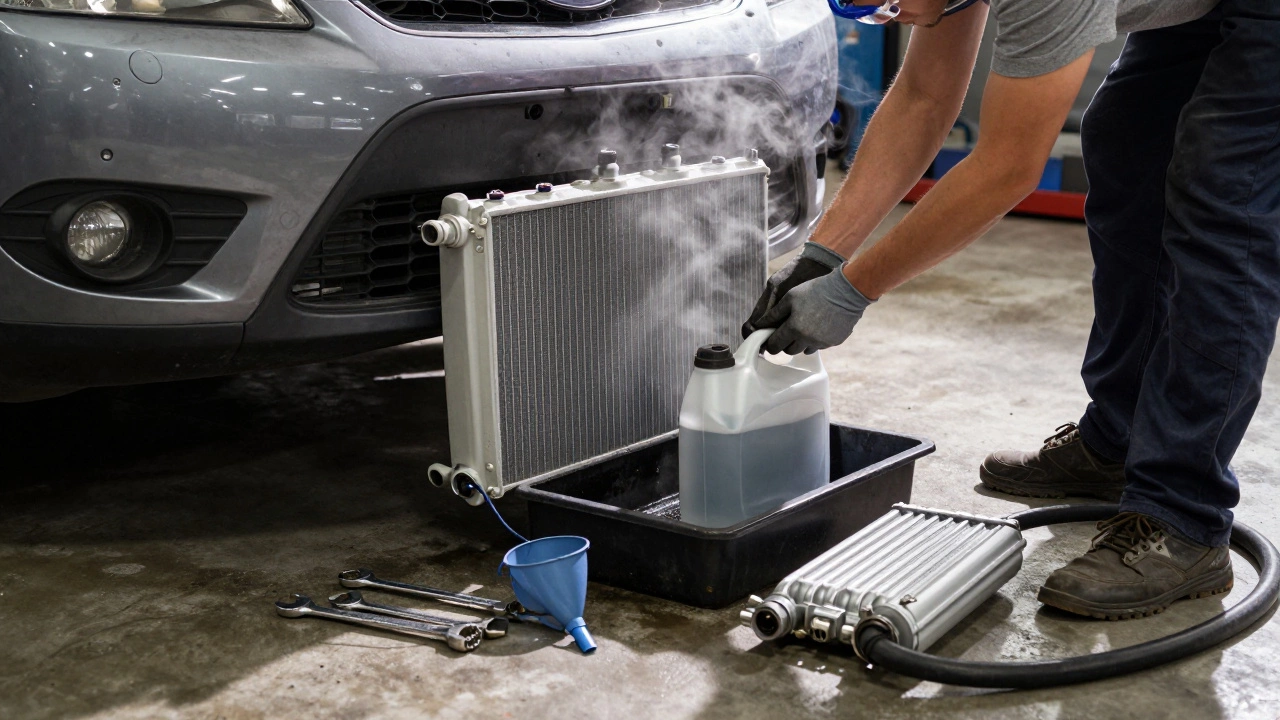
Is Changing a Radiator Easy? A Real-World Guide for Car Owners
Changing a radiator is doable for DIYers with the right tools and patience. Learn the steps, common mistakes, costs, and when to call a pro to avoid costly engine damage.
December 4 2025