Wiper Blade Lifespan Calculator
Your Wiper Blade Calculator
Your Results
You’ve just replaced your wiper blades, and within six months, they’re streaking again. You wipe the glass, they smear. You turn them on in a light rain, and they chatter like a broken metronome. It’s frustrating - especially when you paid good money for them. So why do wiper blades go bad so quickly? It’s not just poor quality. It’s not just bad luck. There are real, measurable reasons - and most of them are hiding in plain sight.
The Rubber Is the Weak Link
Wiper blades aren’t made of metal or plastic. They’re made of rubber - specifically, a synthetic rubber blend designed to flex, grip, and glide. But rubber doesn’t last forever. It degrades. And in the UK, where you get everything from freezing winters to scorching summer days, that rubber gets abused.
UV radiation from sunlight is the #1 killer. Even on cloudy days, UV rays penetrate. Over time, they break down the molecular bonds in the rubber. The blade becomes brittle. It cracks. It loses its flexibility. When that happens, it can’t conform to the curve of your windshield anymore. That’s when you start seeing streaks and skips.
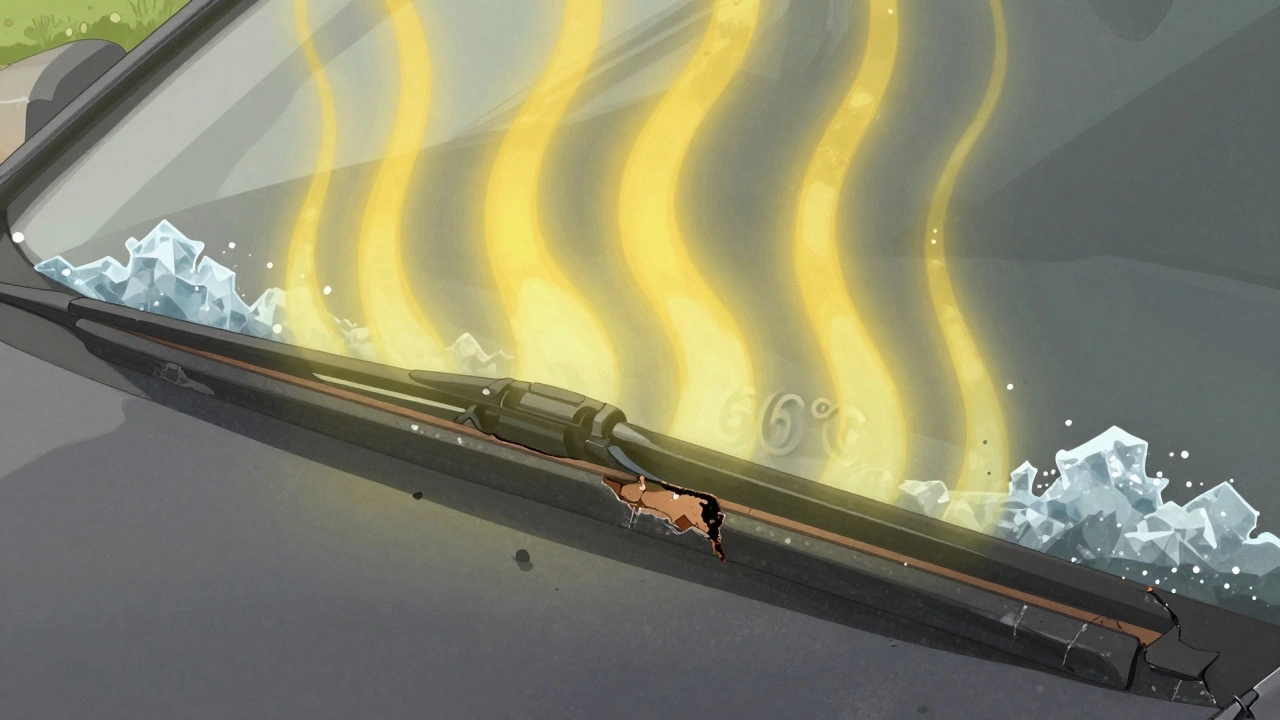
Heat accelerates this. A car parked in the sun for hours in July? The windshield surface can hit 60°C. The wiper blade sitting on it? It’s absorbing that heat. That’s like leaving a rubber band in an oven. It doesn’t take long before it loses its spring.
Winter Is a Silent Saboteur
Winter in Manchester doesn’t just mean rain. It means ice, frost, and salt. When you scrape ice off your windshield, you’re not just removing snow - you’re dragging grit across the blade’s edge. That grit acts like sandpaper. It wears down the rubber strip, creating tiny notches. Those notches catch on the glass, causing that awful chattering noise.
And then there’s the freezing. If your blades are frozen to the glass and you turn them on without clearing them first, you’re not just straining the motor. You’re tearing the rubber. The blade snaps back violently, stretching the rubber beyond its limit. One or two of those moments, and the blade’s lifespan is cut in half.
Even the salt on roads - sprayed by other cars - gets flung onto your windshield. That salt dries on the glass. When the wipers run over it, they’re essentially sanding the rubber. Over weeks, it adds up.
Windshield Condition Matters More Than You Think
Have you ever noticed how some cars have wipers that work perfectly, even after years, while yours fail in months? The difference isn’t the blade - it’s the glass.
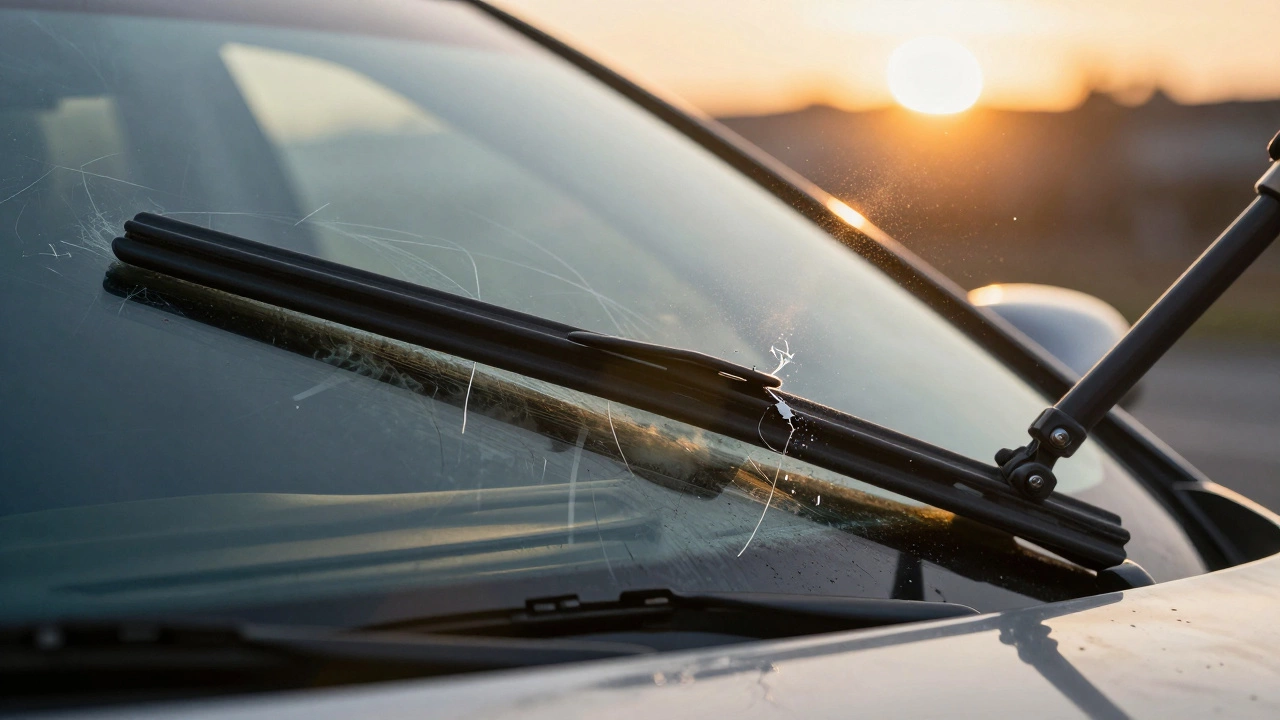
Modern windshields are made of laminated safety glass, but they’re not immune to damage. Tiny scratches from car wash brushes, stone chips, or even dirt buildup create rough patches. A wiper blade glides smoothly over a clean, smooth surface. But over a scratched or pitted windshield? It’s like running your finger over broken glass. The rubber wears unevenly. It lifts off in spots. It skips. And the blade doesn’t last.
It’s not just about cleaning your windshield. It’s about maintaining it. A quick polish with a glass restoration compound can extend your wiper life by months. Skip it, and you’re forcing the blades to work harder than they should.
Wiper Arm Pressure Is Often Off
Wiper arms are spring-loaded. That spring is supposed to press the blade evenly across the glass. But springs weaken over time. Or they get bent. Or they’re replaced with cheap aftermarket arms that don’t match the original tension.
If the pressure is too light, the blade doesn’t make full contact. You get smearing. If the pressure is too heavy, the rubber compresses and overheats. It flattens out. It loses its edge. Either way, the blade wears out faster.
Most people never check this. But it’s easy to test. Lift the wiper arm off the glass. Let it drop back gently. If it slams down hard, the tension is too high. If it barely touches the glass, it’s too loose. Both are problems. The ideal tension lets the blade land with a soft, controlled thud - not a bang, not a whisper.
Driving Habits Accelerate Wear
How you drive affects your wipers. If you drive in heavy rain and keep your wipers on high speed for long stretches, the rubber heats up from constant friction. That’s extra stress. If you use your wipers on a dry windshield - even once - you’re grinding dust and grit into the rubber. That’s like using a paper towel to scrub a gravel driveway.
And don’t forget the little things. Parking under trees? Sap and bird droppings stick to the glass. Left overnight, they harden. The next morning, you turn on the wipers. The rubber scrapes through sticky residue. That’s not cleaning - that’s abrasion. Over time, it eats through the blade’s surface.
Even washing your car can hurt. If you use a dirty sponge or towel on the windshield, you’re transferring grit. That grit stays on the glass. Next time you use the wipers, they’re cleaning with sand.
Not All Blades Are Created Equal
There’s a big difference between a £5 generic blade and a £25 OEM-style blade. The cheap ones use lower-grade rubber. They have thinner frames. Their connectors are flimsier. They’re designed to last one season - not two.
Brands like Bosch, Michelin, and Rain-X use silicone-infused rubber or hybrid materials that resist UV and heat better. They’re built to last longer. But they cost more upfront. People see the price and think they’re being overcharged. They’re not. They’re paying for durability.
And don’t be fooled by “all-season” labels. That’s marketing. No blade is truly “all-season” if you live where temperatures swing from -2°C to 30°C. The rubber can’t adapt that much.
How Long Should Wiper Blades Last?
Manufacturers say 6 to 12 months. That’s not a guess - it’s based on real-world testing under average conditions. But in the UK? You’re lucky if they last 8 months. Most drivers need to replace them every 6 to 7 months.
Here’s a simple rule: if you’re using your wipers more than 3 times a week in poor weather, replace them every 6 months. If you park outside, replace them every 5 months. If you drive on gravel roads or near the coast (salt air), replace them every 4.
There’s no magic number. But if your blades are older than a year and you’re seeing streaks, it’s time. Don’t wait for them to fail completely. That’s when visibility drops - and that’s when accidents happen.
How to Make Them Last Longer
- Always lift the blades off the glass before freezing weather. Use a cloth or cardboard to cover them overnight.
- Never use wipers on a dry windshield. Always spray washer fluid first.
- Clean your windshield monthly with a glass cleaner and microfiber cloth. Remove grime, sap, and salt buildup.
- Check wiper arm tension every 6 months. Adjust or replace if needed.
- Replace blades in pairs. Even if one looks fine, the other is likely close behind.
- Buy quality blades. Don’t go for the cheapest. Look for silicone-blend or beam-style blades - they handle heat and cold better.
When to Replace - A Quick Checklist
- Streaks or smears even after cleaning the glass
- Chattering or skipping during light rain
- Cracks or splits visible on the rubber edge
- Missing pieces of rubber
- Blades curling or lifting off the glass at the ends
If any of these show up, replace them. Don’t wait for the next storm. Your visibility is worth more than the cost of a new set.
Final Thought: It’s Not Your Fault - But You Can Fix It
Wiper blades don’t fail because you’re careless. They fail because they’re exposed to the worst of the elements - every single day. Sun, salt, ice, grit, heat. No other car part gets punished like this and is expected to last a year.
But you can beat the odds. Choose better blades. Clean your glass. Protect them in winter. Check the tension. Replace them before they become a hazard. It’s not expensive. It’s not hard. And it could save your life when visibility drops in a downpour.
How often should I replace my wiper blades in the UK?
In the UK, most drivers need to replace wiper blades every 6 to 7 months. If you park outside, drive in coastal areas, or get heavy rain and freezing temps, replace them every 5 months. Even if they look okay, rubber degrades with UV exposure and temperature swings. Don’t wait for streaks - replace them proactively.
Can I extend the life of my wiper blades?
Yes. Lift them off the glass before freezing weather. Clean your windshield monthly with glass cleaner. Never use wipers on a dry windshield. Use washer fluid every time. Avoid parking under trees. Use quality blades with silicone-infused rubber. These steps can add 2-3 months to their life.
Why do my wipers chatter only in the morning?
Morning chatter is usually caused by overnight condensation, dew, or frost that turns into a thin film of grit or salt on the glass. When you turn on the wipers, they drag that residue across the rubber, creating uneven contact. Clean your windshield with a microfiber cloth and glass cleaner - it’s often enough to fix it.
Are expensive wiper blades worth it?
Yes. Premium blades use higher-grade rubber, better frame designs, and sometimes silicone blends that resist UV and heat. They last longer, wipe cleaner, and don’t smear. A £25 blade that lasts 8 months is cheaper than two £6 blades that last 3 months each. You get better visibility and fewer replacements.
Can I clean my wiper blades instead of replacing them?
You can clean them temporarily. Wipe the rubber edge with isopropyl alcohol on a lint-free cloth. This removes grease and grime that cause streaking. But if the rubber is cracked, hardened, or worn thin, cleaning won’t help. It’s a short-term fix - not a replacement.