Radiator Health Checker
Check Your Radiator Health
Select symptoms you're experiencing. This tool will assess your radiator's condition and provide personalized advice.
Warning Signs
Radiator Health Assessment
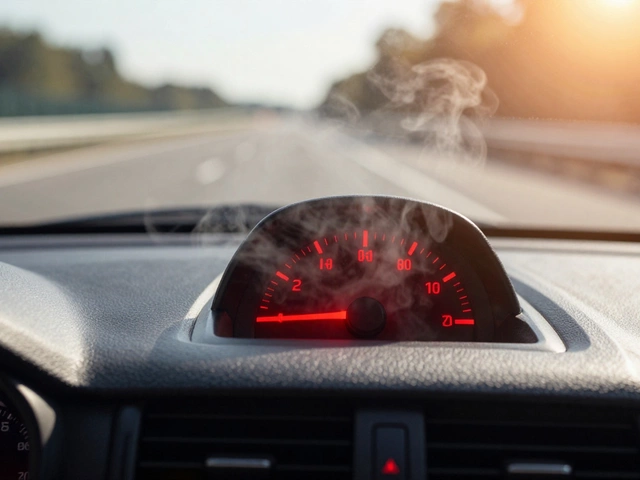
Most drivers don’t think about their radiator until the temperature gauge spikes and steam starts rolling out from under the hood. By then, it’s too late. A bad radiator doesn’t just cause inconvenience-it can destroy your engine in minutes. So why do radiators fail? It’s rarely one big mistake. More often, it’s a slow build-up of small problems ignored for months-or years.
Corrosion Is the Silent Killer
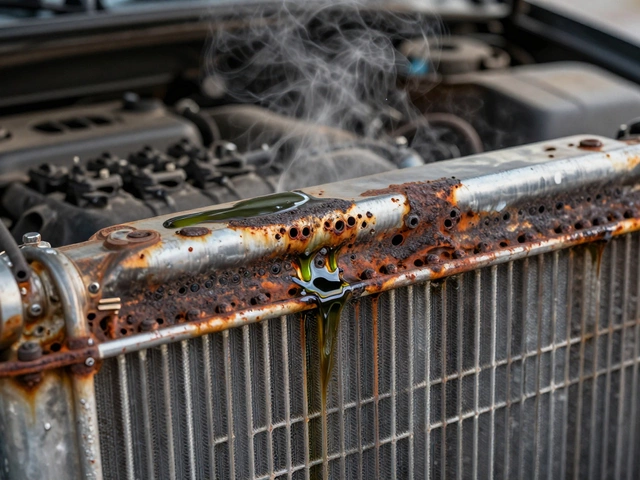
Your radiator is made of aluminum, copper, or brass, all metals that react with coolant over time. If you haven’t changed your coolant in five years, you’re running acidic fluid through your cooling system. Old coolant loses its anti-corrosion additives. That means rust, scale, and gunk start eating away at the radiator’s internal tubes and seams.
One mechanic in Manchester told me he sees this every winter. Cars that ran on tap water or cheap coolant for years start leaking from tiny pinholes near the filler neck. The damage looks like rust spots, but it’s actually metal erosion. Once those holes form, pressure builds and coolant sprays out. No amount of tape or sealant fixes it. You need a new radiator.
Leaking Seals and Hoses
The radiator doesn’t work alone. It connects to hoses, the water pump, the thermostat housing, and the radiator cap. Any of those can fail first-and then overload the radiator.
A cracked hose might drip slowly for weeks. You top up the coolant, think you’ve fixed it, and move on. But that leak means air gets into the system. Air pockets block coolant flow. The engine runs hotter. The radiator works harder. Eventually, the stress cracks the radiator tank itself.
The radiator cap is another silent culprit. It’s supposed to hold pressure at 15-20 psi. If it fails, pressure drops. Coolant boils at a lower temperature. That’s why your car overheats on the motorway even though the coolant level looks fine. A worn cap costs £5. A cracked radiator costs £400.
Overheating From Other Problems
Many people blame the radiator when the real issue is elsewhere. A stuck thermostat? That stops coolant from circulating. A broken water pump? No flow means no cooling. A clogged air filter? The engine runs hotter. A failing fan clutch? The radiator can’t shed heat at idle.
These problems don’t kill the radiator right away. But they make it work overtime. Think of it like running a marathon every day for a year. Even the strongest runner will break down. Same with your radiator. Constant overheating warps the metal. Solder joints weaken. Tanks bulge. It’s not the radiator’s fault-it’s just the victim.
Contaminated Coolant
Oil in the coolant? That’s a red flag. It usually means a blown head gasket. Oil mixes with coolant and forms a thick, brown sludge. That gunk clogs radiator fins and tubes. It doesn’t just reduce cooling-it creates hot spots that melt internal parts.
Same goes for transmission fluid leaks. Some cars share coolant lines with the transmission cooler. A cracked line there dumps automatic fluid into the radiator. The result? A radiator that looks like it’s full of motor oil. Cleaning it won’t help. The damage is permanent.
Even mixing different types of coolant can cause trouble. Some brands use silicate-based inhibitors. Others use organic acid technology (OAT). Mixing them creates a gel-like substance that clogs the radiator from the inside. You won’t see it until the engine overheats.
Physical Damage
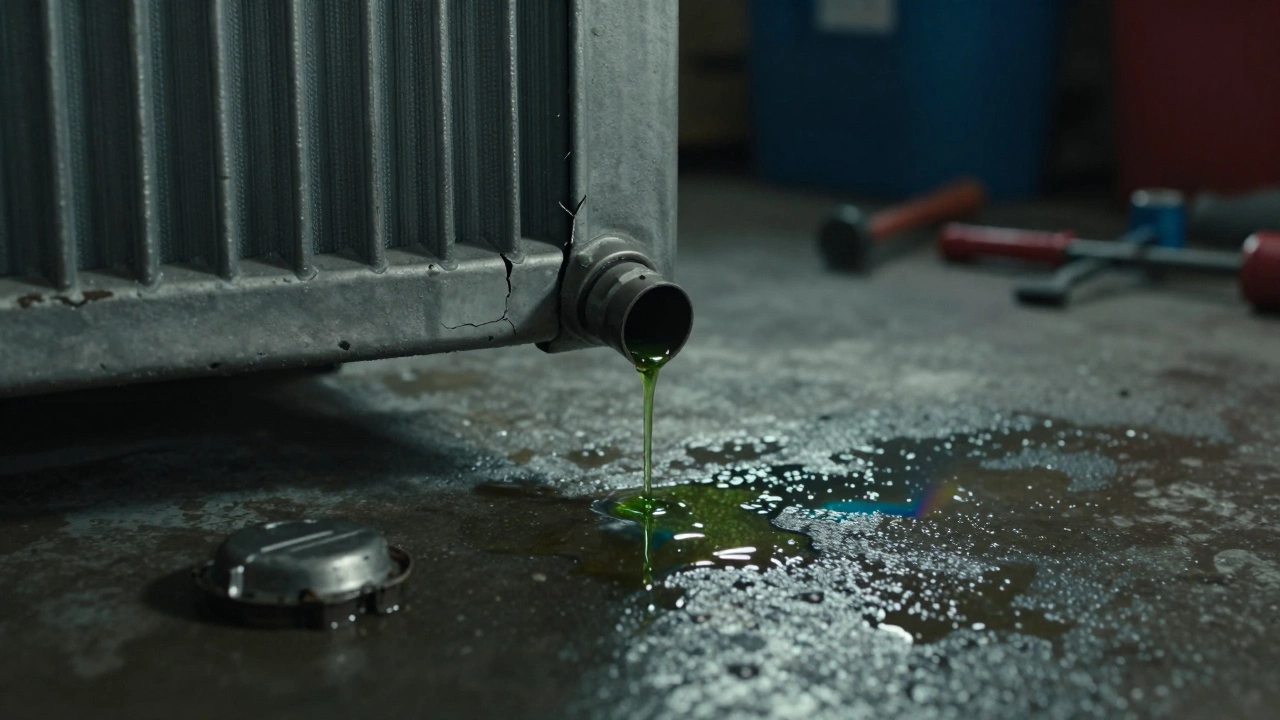
Road debris, stones, or even a bad parking job can crack a radiator. You might not notice right away. A small dent might look like a scratch. But over time, vibrations from the engine and road bumps turn that dent into a crack. Coolant seeps out slowly. The radiator runs low. The engine overheats. The crack grows.
And then there’s the dreaded collision. A front-end crash doesn’t always mean you need a new engine. But it almost always means you need a new radiator. Even if it looks fine, internal tubes can be crushed. Pressure tests often reveal hidden damage. Replacing it preemptively saves you from a breakdown weeks later.
What You Can Do to Prevent It
You don’t need to be a mechanic to keep your radiator alive. Here’s what actually works:
- Change your coolant every 40,000 miles or every 2-3 years, whichever comes first. Don’t wait for the “service light.”
- Check coolant level every time you fill up. If it’s dropping fast, get it checked.
- Look for green, orange, or pink stains under your car. That’s coolant. Don’t ignore it.
- Inspect hoses for cracks, bulges, or soft spots. Squeeze them. If they feel mushy, replace them.
- Test your radiator cap with a pressure tester. They’re cheap at auto parts stores.
- Never use water alone in summer or winter. Even distilled water lacks corrosion protection.
These steps cost you time, not money. But skipping them? That’s when you pay the real price.
Signs Your Radiator Is Already Failing
You don’t need to wait for steam to know something’s wrong. Look for these early warnings:
- Temperature gauge creeping into the red zone, even on short drives
- White, sweet-smelling steam from the engine bay
- Low coolant level with no visible leaks
- Sludge or rust in the coolant reservoir
- Unusual noises-gurgling or bubbling from under the hood
- Visible corrosion on radiator fins or tanks
If you see two or more of these, get it checked. Not tomorrow. Today.

What Happens If You Ignore It
Ignoring a bad radiator doesn’t just mean a tow truck bill. It means a blown head gasket. A warped cylinder head. A seized engine. Those repairs cost £2,000 to £5,000. A new radiator? £150-£400, including labor.
I’ve seen people spend £300 on a new radiator, then ignore the thermostat and water pump. Three weeks later, the new radiator cracks from overheating caused by the other failures. Now they’re out £700. It’s not the radiator’s fault. It’s the pattern of neglect.
Fix the whole system. Not just the part that’s leaking.
When to Replace vs. Repair
Can you fix a radiator? Sometimes. If it’s a small leak at a seam, a professional might solder it. But that’s rare. Most modern radiators are plastic tanks with aluminum cores. You can’t weld plastic. And if the core is clogged or corroded, cleaning won’t restore its cooling ability.
Rebuilding a radiator is like patching a tire on a cracked rim. It might hold for a while-but it’s not safe. For most drivers, replacement is the only smart choice.
Look for OEM or high-quality aftermarket units. Cheap radiators from unknown brands often use thinner tubes and weaker end tanks. They fail faster. Stick with brands like Valeo, Denso, or Spectra. They’re built to last.
Final Thought: Radiators Don’t Just Break-They Beg for Help
A radiator doesn’t suddenly die. It whispers first. A drop of coolant here. A faint smell there. A gauge that’s a little higher than usual. Most drivers tune out the whispers. They think, “It’s just a little low.” Or, “It’s winter, the engine runs hot.”
But cars don’t lie. They just don’t scream until it’s too late.
Listen to the quiet signs. Check your coolant. Replace the cap. Change the fluid. Don’t wait for steam. By then, the damage is already done.
Can a radiator be repaired, or does it always need replacing?
Most modern radiators can’t be repaired. Older copper-brass radiators could be soldered, but today’s units have plastic tanks and aluminum cores. Leaks in plastic tanks can’t be welded. Corrosion inside the core can’t be cleaned effectively. Even if a shop claims they can fix it, the repair rarely lasts more than a few months. Replacement is the only reliable fix.
How often should I change my coolant?
Change it every 40,000 miles or every 2-3 years, whichever comes first. Some long-life coolants claim 5-year intervals, but those are under ideal conditions. In real-world driving-with stop-and-go traffic, short trips, and extreme temperatures-coolant breaks down faster. If your car’s manual says 5 years, still check the fluid’s condition every 2 years. Dark, cloudy, or rusty coolant needs replacing now.
Can I use water instead of coolant in an emergency?
Yes, but only as a last resort and only for a very short time. Water boils at 100°C, while coolant can handle up to 130°C under pressure. Using water raises the risk of overheating. It also causes rust and corrosion inside the radiator and engine. As soon as you can, drain the water and refill with proper coolant. Never drive long distances with just water.
Why does my radiator keep losing coolant but I can’t see a leak?
If coolant is disappearing but there’s no puddle, the leak is likely internal. A blown head gasket can let coolant seep into the combustion chamber and burn off. A cracked cylinder head or engine block can do the same. Check your oil-if it looks milky or has a frothy texture, coolant is mixing with oil. That’s serious. Get it diagnosed before the engine seizes.
Does a bad radiator affect fuel economy?
Yes. When the engine overheats, the computer richens the fuel mixture to cool things down. That burns more fuel. Also, if the thermostat stays closed because of poor coolant flow, the engine takes longer to reach optimal temperature. Running cold reduces efficiency. A failing radiator can drop your fuel economy by 10-15% without you even noticing.