Coolant Calculator for Radiator Replacement
Calculate the proper 50/50 coolant mixture for your radiator replacement. This tool helps you determine how much antifreeze and distilled water you need based on your vehicle's cooling system capacity.
Enter your cooling system capacity
Find your cooling system capacity in your vehicle's owner's manual or online. It's typically between 5-8 liters for most cars.
Enter your cooling system capacity to see the correct mixture.
Important notes:
- Always use distilled water, not tap water, to prevent mineral buildup
- Use the coolant type specified in your vehicle manual (OAT, HOAT, or IAT)
- Never mix different coolant types - this creates sludge
- Flush your system before installation, even if coolant looks clean
Changing a radiator isn’t hard if you’ve got the right tools and a clear plan-but it’s not something you should rush through like changing a lightbulb. I’ve done it on three cars in Manchester, from a 2010 Ford Focus to a 2015 Toyota Corolla, and each time, the biggest surprise wasn’t the radiator itself-it was how much mess and time the coolant system creates. If you’re asking whether it’s easy, the honest answer is: it’s manageable, but only if you respect the process.
What you’re really dealing with
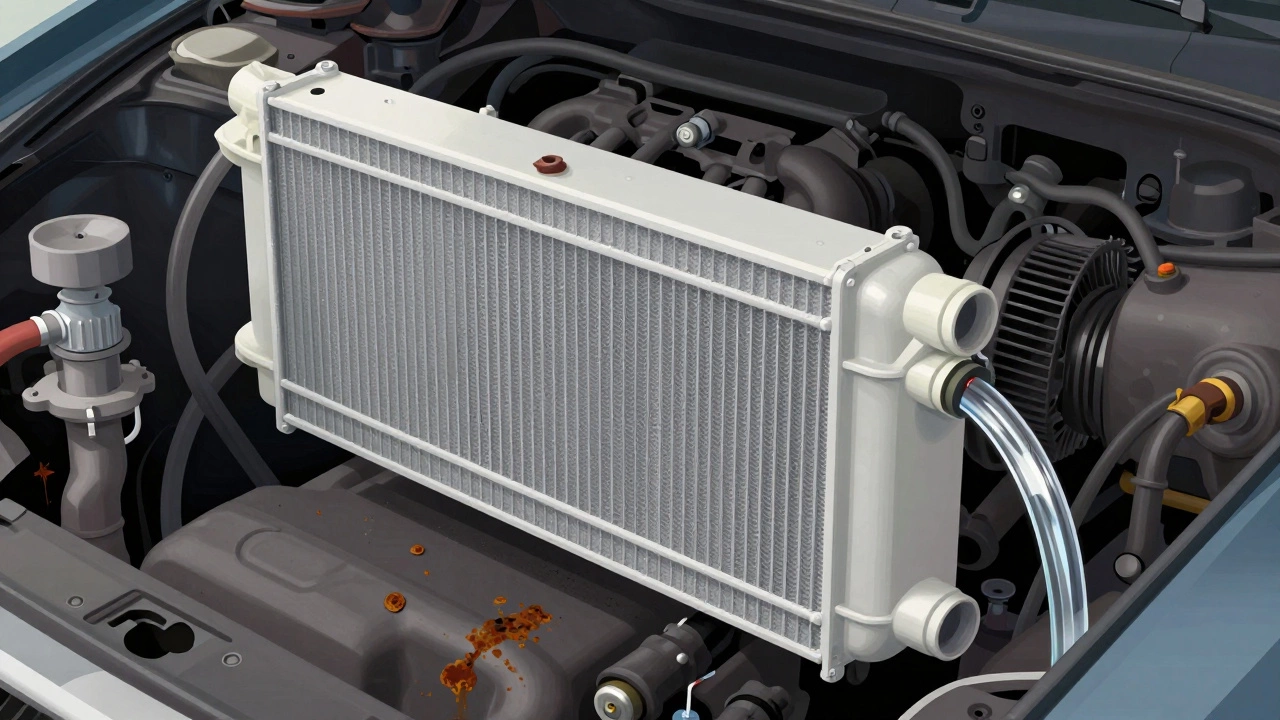
A radiator isn’t just a metal box with tubes. It’s part of a sealed, pressurized cooling system that includes the thermostat, water pump, hoses, coolant reservoir, and often an electric fan. When it fails, it’s usually because of corrosion, a crack from overheating, or a damaged tank from road debris. Most radiators last 8-12 years, but in the UK’s damp, salty roads, 6-8 years is more common. If your car’s overheating, the coolant looks rusty, or you’re topping it up every week, the radiator is likely the culprit.Tools you’ll need
Forget grabbing a socket set and calling it a day. You need specific gear:- 10-19mm wrenches or sockets (depending on your car)
- Drain pan (at least 5 litres capacity)
- Funnel with a narrow spout
- New radiator (make sure it’s the exact match-OEM or direct-fit aftermarket)
- New radiator hoses (even if they look fine)
- Thermostat (recommended to replace while you’re in there)
- Quality coolant (50/50 mix, correct type for your car-check the manual)
- Gloves and safety glasses
- Shop towels or rags (you’ll use a lot)
Don’t skip the hoses. Old hoses can collapse internally or crack under pressure. Replacing them now saves you from a breakdown six months later.
Step-by-step: How it actually goes
Start with the car cold. Hot coolant can burn you badly. Let the engine sit for at least four hours if it’s been running.- Place the drain pan under the radiator petcock or bottom hose. Open the petcock (if your radiator has one) or loosen the bottom hose clamp with pliers. Let all the coolant drain out. This takes 15-25 minutes. Don’t rush it.
- Disconnect the electrical connector for the cooling fan. Label it if you’re unsure where it goes.
- Remove the upper and lower radiator hoses. Use pliers to loosen clamps, then twist and pull the hoses off. They might stick-don’t yank. Use a gentle rocking motion.
- Unbolt the radiator mounting brackets. Some cars have brackets on the top, sides, or bottom. Take photos as you go.
- Slide the radiator out. It’s tight. You might need to tilt it slightly to clear the fan shroud or AC lines. If you have air conditioning, the condenser is right in front of the radiator-don’t bend it.
- Set the new radiator in place. Double-check the inlet and outlet positions match. Reattach the mounting brackets.
- Reconnect the hoses. Use new clamps if the old ones are rusty or stretched. Tighten them snug, not brutal.
- Reconnect the fan wiring. Make sure it’s seated fully.
- Fill the radiator with coolant. Use a 50/50 mix of antifreeze and distilled water. Fill slowly to avoid air pockets. Top up the reservoir to the max line.
- Start the engine. Let it idle for 10 minutes with the heater on full. Watch for leaks. Check the coolant level again after it cools down.
It takes me about 3-4 hours for a first-timer. Experienced mechanics do it in 90 minutes. But if you’re doing it for the first time, give yourself a full afternoon.
What can go wrong
Here’s where most people get stuck:- Leaking after installation: Usually because hoses weren’t seated properly or clamps are loose. Check every connection after the engine warms up.
- Overheating again: Often because air got trapped in the system. Bleed the air by running the engine with the radiator cap off until coolant flows steadily.
- Wrong coolant: Mixing Dexcool with traditional green coolant? That creates sludge. Always use the type your car manual says.
- Broken fan shroud: On some models, the plastic shroud cracks when removing the radiator. Keep an extra one in your parts bin.
One guy I know in Salford replaced his radiator, then drove 20 miles before realising the thermostat was stuck shut. His engine seized. Don’t be that guy.
When to call a pro
You don’t need to be a mechanic to do this-but you do need to know your limits. Walk away if:- Your radiator is connected to the transmission cooler (common in automatics). Messing with those lines without the right tools can ruin your gearbox.
- You see oil in the coolant. That’s a blown head gasket. Replacing the radiator won’t fix it.
- Your car has a complex cooling system with multiple fans or electric pumps. Some hybrids and newer BMWs need diagnostic tools just to bleed the system.
- You’re short on time or tools. A £150 radiator job can turn into a £800 repair if you mess up the coolant system.
Cost breakdown: DIY vs garage
| Item | DIY Cost | Garage Cost |
|---|---|---|
| Radiator | £80-£220 | £80-£220 |
| Coolant (5L) | £15-£30 | £15-£30 (included) |
| Hoses & thermostat | £25-£50 | £25-£50 (included) |
| Labor | £0 | £120-£250 |
| Total | £120-£300 | £225-£500 |
DIY saves you up to £200. But if you’re not confident, the labour cost is worth avoiding a coolant leak that fries your engine.
Pro tips from the garage floor
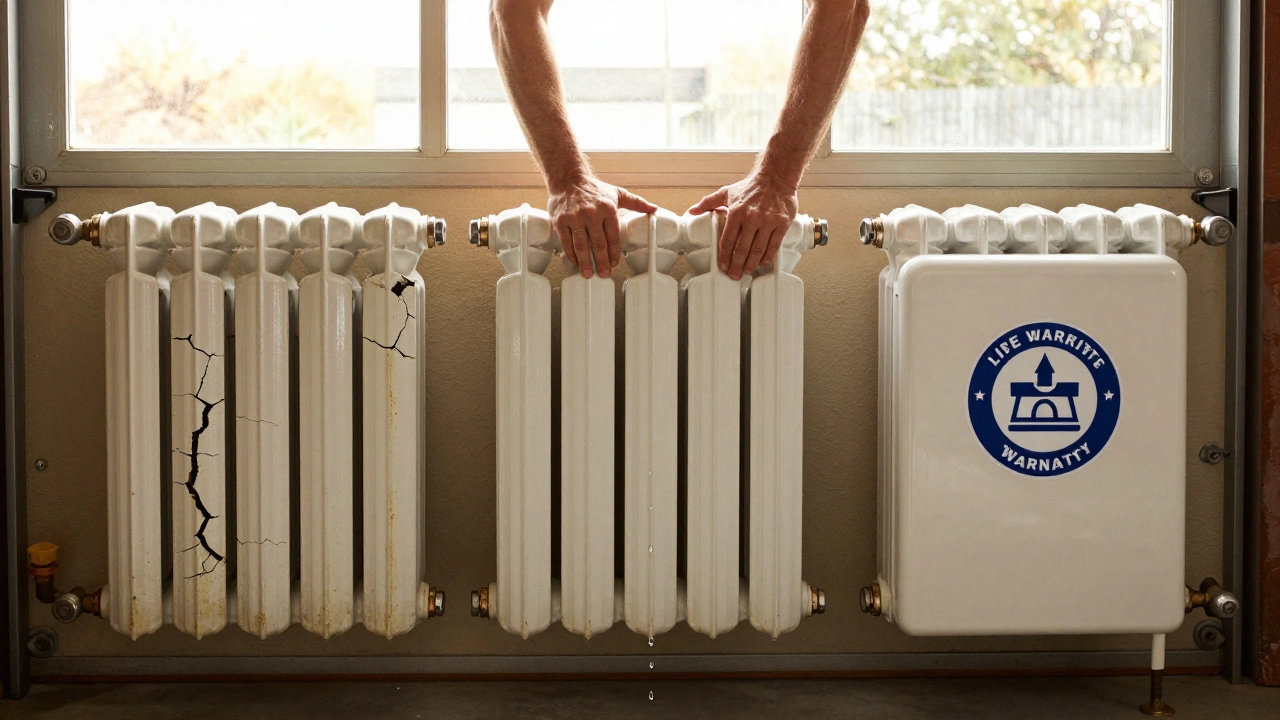
- Buy a radiator with a lifetime warranty. Brands like Behr, Valeo, and Denso are reliable.
- Use distilled water-not tap. Minerals in tap water cause sludge over time.
- Flush the system before installing the new radiator. Even if the old coolant looked clean, it’s full of debris.
- Replace the radiator cap too. A faulty cap can cause pressure issues and overheating.
- Check the fan clutch (if your car has one). A seized fan will overheat the new radiator fast.
After you’re done, take the car for a 15-minute drive. Then park it and check under the hood again. Look for drips, listen for unusual noises, and feel the upper hose-it should be warm but not scalding.
How often should you replace a radiator?
There’s no fixed schedule. But if your car is over 8 years old and you’ve never replaced the radiator, it’s overdue. Salt, heat, and age eat away at aluminium and plastic parts. Most failures happen between 80,000 and 120,000 miles. If you’re planning to keep your car past 100,000 miles, replacing the radiator proactively is one of the smartest moves you can make.Can I drive with a leaking radiator?
No. Even a small leak will cause the engine to overheat within minutes. Driving with low coolant can warp the cylinder head, blow the head gasket, or seize the engine. That’s a £2,000+ repair. Pull over, turn off the engine, and call for a tow.
Do I need to flush the cooling system before installing a new radiator?
Yes. Old coolant leaves behind rust, scale, and debris that can clog the new radiator’s tiny tubes. Use a radiator flush kit or a 50/50 mix of water and citric acid, run the engine for 15 minutes, then drain completely before installing the new radiator.
Why does my new radiator keep overheating?
Air trapped in the system is the most common cause. Bleed it properly: fill the radiator, start the engine with the cap off, let it warm up until coolant circulates, then top up. Also check the thermostat-it might be stuck closed. A bad water pump or clogged heater core can also cause this.
Can I use any coolant in my car?
No. Modern cars use specific types: OAT (orange/red), HOAT (yellow/green), or IAT (green). Mixing them causes chemical reactions that turn coolant into sludge. Always use the type specified in your owner’s manual. If you’re unsure, look up your car’s VIN online or ask a parts store with a database.
Is a plastic radiator worse than an aluminium one?
No. Most modern radiators are aluminium with plastic end tanks. Aluminium conducts heat better than old copper-brass radiators, and plastic tanks are lighter and less prone to corrosion. The issue isn’t the material-it’s the quality. Cheap radiators crack under pressure. Stick to OEM or reputable aftermarket brands.