Home Air Filter: What It Does, When to Replace It, and How It Affects Your Car
When you think of air filters in your car, you probably picture the engine air filter under the hood. But there’s another one you can’t see—the cabin air filter, a small but critical component that cleans the air entering your car’s interior through the HVAC system. Also known as a home air filter, it’s the first line of defense against dust, pollen, pollution, and even mold spores that get pulled into your cabin every time you turn on the fan. This isn’t just about comfort—it’s about health. If you’ve ever sneezed nonstop on your morning commute or noticed your AC blowing weak, warm air even on a hot day, the cabin air filter could be the culprit.
Most car manufacturers recommend replacing the cabin air filter every 12,000 to 15,000 miles, or once a year, whichever comes first. But if you drive in cities with heavy traffic, on dusty country roads, or during pollen season, you might need to swap it out sooner. A clogged filter doesn’t just make your AC less effective—it forces the blower motor to work harder, which can lead to premature wear. And if it’s so dirty that air can barely pass through, you’re breathing in whatever’s stuck on the filter’s surface—think road grime, exhaust fumes, and allergens. That’s not just unpleasant; it’s a health risk, especially for kids or anyone with asthma.
Replacing the cabin air filter is one of the easiest DIY jobs you can do. Most cars have it behind the glove box or under the dashboard—no tools needed. You’ll find the old one looking like a dirty sponge, sometimes black with grime. The new one? Crisp, white, and clean. And the difference is immediate. Within minutes of installing a fresh filter, your AC starts blowing colder air, the cabin smells fresher, and the fan noise drops because the system isn’t struggling anymore. You don’t need to wait for symptoms to get bad. If you haven’t changed it in over a year, it’s time.
It’s not just about cooling. A clean cabin air filter also helps your defroster work better in winter. Foggy windows? Often, it’s not the heater—it’s the filter choking off airflow. And if you’ve ever noticed a musty smell when you turn on the AC, that’s mold growing on a damp, dirty filter. Replacing it stops the odor at the source.
What you’ll find below are real-world guides from UK drivers who’ve dealt with everything from sudden AC failure after a filter change to figuring out if their car even has a cabin filter (some older models don’t). You’ll learn how to spot the signs your filter is done, how long it takes for cooling to improve after replacement, and why skipping this simple task can silently hurt your car’s performance and your comfort. No fluff. Just what works.
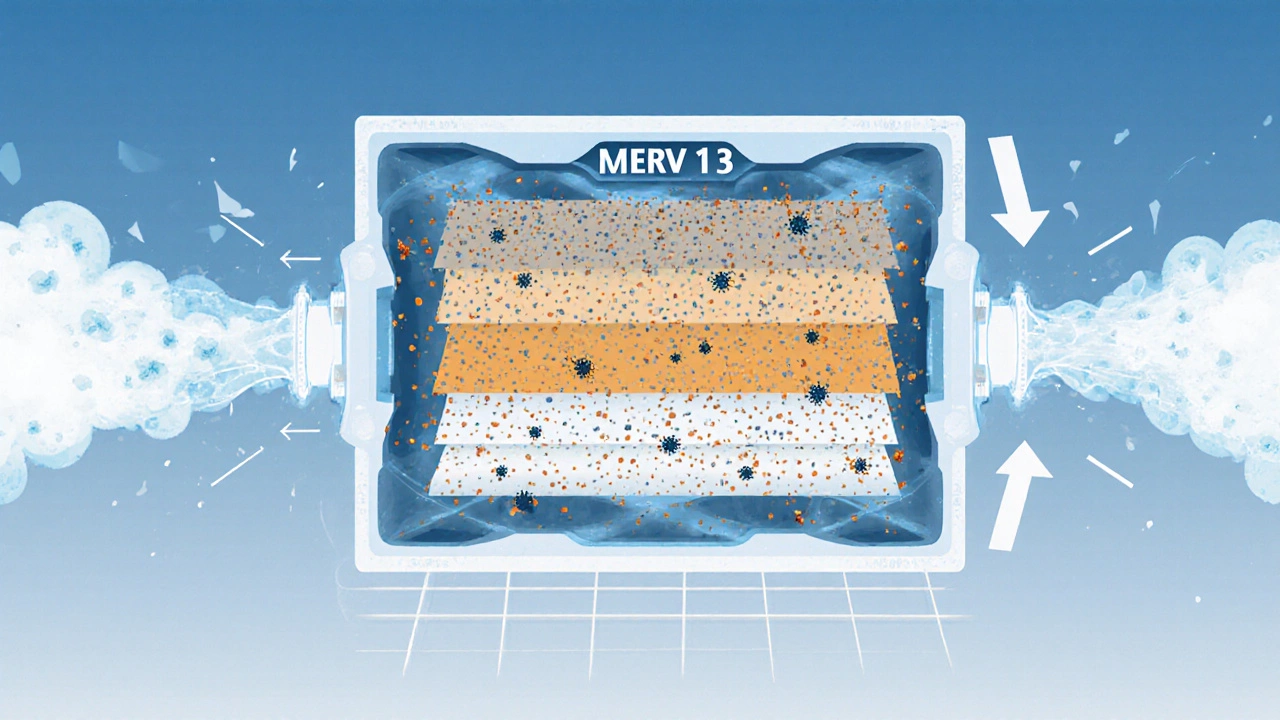
Is MERV 13 Too High for a Home? Understanding When to Use High‑Efficiency Filters
Explore whether a MERV 13 filter is suitable for home use, covering benefits, drawbacks, HVAC compatibility, and maintenance tips in a clear, practical guide.
October 8 2025