Radiator Failure Risk Calculator
How Your Radiator Affects Head Gasket Risk
This tool estimates your engine's overheating risk based on radiator condition and driving habits. As explained in the article, radiator failure is the leading cause of blown head gaskets.
When your engine starts running hot and the temperature gauge climbs into the red, most drivers panic and assume the worst: a blown head gasket. But here’s the truth-bad radiator issues are often the real culprit, not a sudden failure of the head gasket itself. The head gasket doesn’t just blow out of nowhere. It dies slowly, under pressure, and one of the biggest reasons it fails is because the radiator stopped doing its job.
How a radiator actually works
Your radiator isn’t just a metal box with coolant in it. It’s the main cooling system component that pulls heat out of your engine and dumps it into the air. Coolant flows from the engine into the radiator, where thin tubes and fins transfer heat to the air rushing through the grille. A fan helps when you’re stopped. A water pump keeps everything moving. If any part of that chain breaks, your engine starts to overheat.
Think of it like a person running a marathon without water. At first, they sweat and feel warm. Then they get dizzy. Then their body shuts down. Your engine is the same. It can handle a little extra heat for a short time. But if the radiator can’t cool the coolant, that heat builds up-and builds up-until something cracks.
What happens when coolant gets too hot
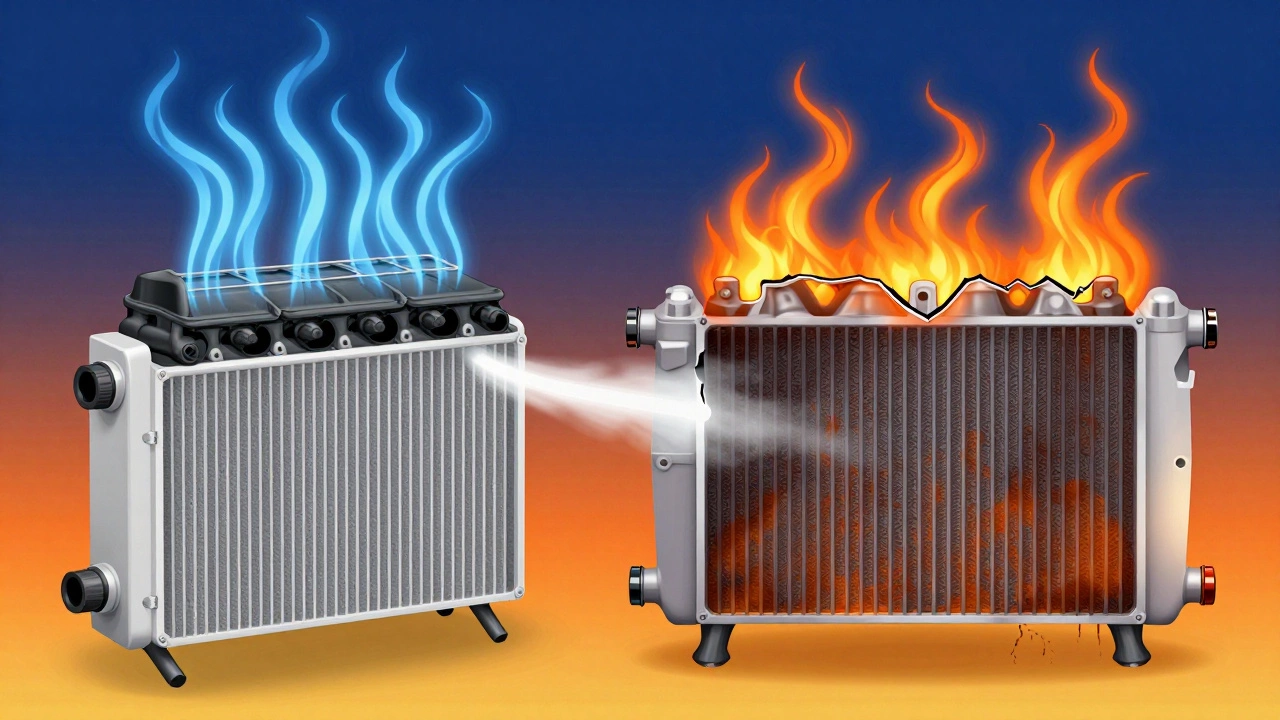
Modern engines run at around 195°F to 220°F. That’s hot, but designed for it. The coolant (usually a 50/50 mix of water and antifreeze) boils at about 265°F under pressure. But if your radiator is clogged, leaking, or has a bad thermostat, coolant temperatures can jump past 270°F, then 290°F, then 300°F. At that point, the metal parts of the engine-especially the cylinder head-start to warp.
The head gasket sits between the engine block and the cylinder head. It’s made of layers of metal and rubber, designed to seal high-pressure combustion gases and keep coolant and oil separate. When the cylinder head warps from heat, that seal breaks. Coolant leaks into the combustion chamber. Oil mixes with coolant. You start seeing white smoke from the tailpipe, milky oil on the dipstick, or bubbles in the coolant reservoir.
That’s a blown head gasket. But the root cause? A radiator that couldn’t keep up.
Signs your radiator is failing before it kills your head gasket
Most people don’t notice radiator problems until it’s too late. But there are clear warning signs if you know what to look for:
- Constantly low coolant levels-not because you’re leaking, but because the radiator can’t hold pressure and coolant evaporates faster.
- Overheating at idle or low speeds-this points to a broken electric fan or blocked airflow through the radiator fins.
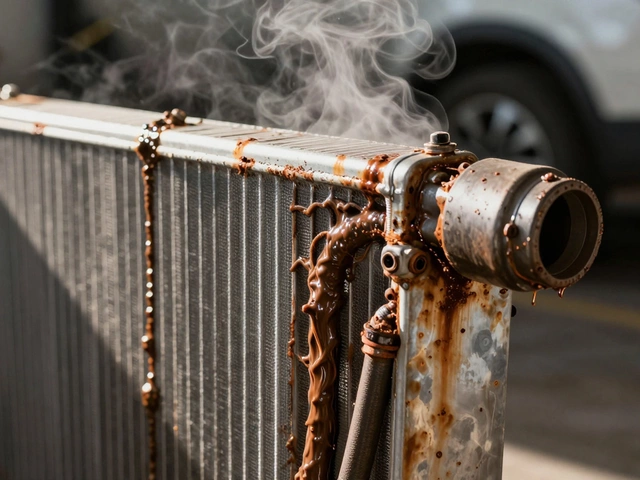
- Sludge or rust in the coolant-old coolant turns acidic and eats away at the radiator’s internal tubes, causing blockages.
- Visible corrosion on radiator tanks or hoses-especially around the filler neck or bottom tank.
- Steam or coolant smell under the hood-not from a burst hose, but from a slow leak inside the radiator core.
These aren’t "maybe" problems. They’re red flags. If you’ve got one, you’re already on the path to head gasket failure. If you’ve got two or more, your engine is under serious stress right now.
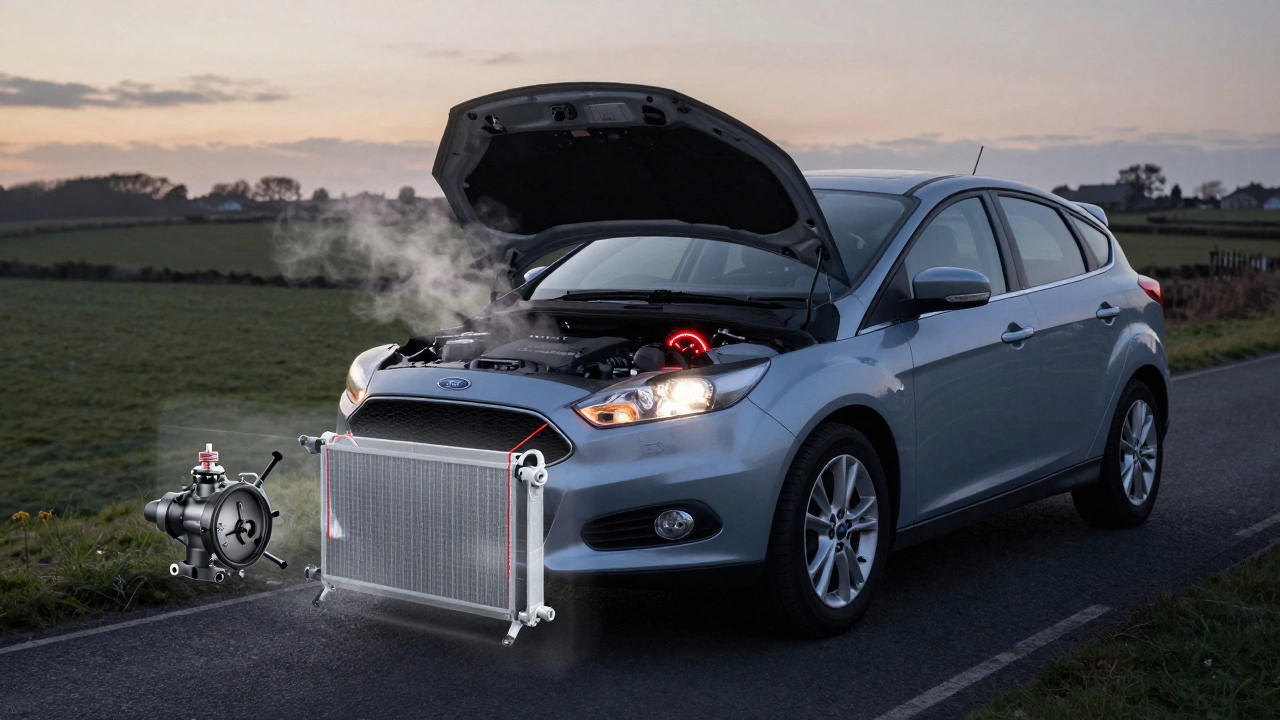
Real-world example: A 2015 Ford Focus in Manchester
Last winter, a customer brought in a 2015 Ford Focus with a blown head gasket. He thought it was just old age. But when we checked the radiator, we found it was full of thick, brown sludge. The coolant hadn’t been changed in over 80,000 miles. The radiator core was partially blocked. The thermostat was stuck closed. The water pump was making noise.
The head gasket failed because the engine ran at 250°F for over 200 miles-mostly on quiet back roads where he didn’t notice the temperature gauge creeping up. He thought the car was "just running warm." It wasn’t. It was dying.
We replaced the radiator, thermostat, water pump, and head gasket. The total cost? £1,400. If he’d replaced the radiator when the coolant turned dark (at 60,000 miles), it would’ve cost £300.
Why mechanics say "it’s the head gasket"-and why they’re only half right
When a car comes in with overheating and white smoke, the first thing a mechanic checks is the head gasket. That’s because the symptoms are dramatic and easy to diagnose. A compression test or block test will show if coolant is leaking into the cylinders.
But few mechanics go back to ask: "Why did the head gasket fail?"
They see the damage. They fix the damage. But they rarely dig into the root cause. And that’s why the same problem comes back.
Replace the head gasket without fixing the radiator? You’re just buying time. The new gasket will fail again-because the engine is still overheating.
How to prevent this before it happens
Preventing a blown head gasket from a bad radiator is simple. It’s not about expensive upgrades. It’s about routine care:
- Change your coolant every 30,000 to 50,000 miles-even if the bottle says "lifetime." Real coolant breaks down faster than manufacturers admit.
- Flush the radiator every 2 years-this removes rust, scale, and sludge that clog the tiny cooling tubes.
- Check the radiator cap-it maintains pressure. A weak cap lets coolant boil at lower temps. Replace it every 5 years or if it’s cracked.
- Inspect the radiator fins-bent or clogged fins (from bugs, dirt, leaves) reduce airflow. Straighten them gently with a fin comb.
- Listen for the electric fan-if it doesn’t turn on when the engine is hot, the relay or sensor is failing. Don’t ignore it.
These steps take less than an hour and cost under £100. They’re not optional. They’re insurance.
What to do if you already have a blown head gasket
If you’ve got a blown head gasket, don’t panic-but don’t keep driving. Here’s what you need to do:
- Stop driving immediately-running the engine with coolant in the cylinders can warp the block or destroy the catalytic converter.
- Test the radiator-even if you’re replacing the head gasket, check the radiator for blockages, leaks, or corrosion. If it’s bad, replace it.
- Replace the thermostat and water pump-they’re cheap, and they’re usually the reason the radiator failed in the first place.
- Flush the entire cooling system-old coolant left in the system will ruin your new parts.
- Use OEM-spec coolant-cheap aftermarket coolant can cause corrosion. Stick to what your manual says.
Fixing just the head gasket without addressing the cooling system is like replacing a broken lock on a house that’s still on fire.
Bottom line: The radiator is the first line of defense
A blown head gasket is expensive. It’s messy. It’s a nightmare. But it’s rarely the start of the problem. It’s the end result.
Your radiator is the unsung hero of your engine. It’s not glamorous. It doesn’t make noise. But if it fails, your engine fails with it. Most people treat their radiator like a passive part-something that just sits there. It’s not. It’s active. It’s working every time you drive.
Check it. Clean it. Replace it when it’s old. Don’t wait for the temperature light to flash. Don’t wait for steam to rise. By then, it’s too late.
Fix the radiator before it kills your head gasket. It’s the smartest, cheapest repair you’ll ever make.