Engine Oil Viscosity Calculator
Find your vehicle's recommended oil viscosity grade based on year, make, model, and climate conditions. Always verify with your owner's manual.
Always consult your owner's manual for final verification. Modern vehicles often require specific synthetic formulations.
Choosing the right engine oil isn’t about guessing or copying what your neighbor uses. It’s about matching the oil to your car’s needs-otherwise, you risk reduced performance, shorter engine life, or even costly damage. The wrong oil can cause sludge buildup, poor fuel economy, or worse: engine failure. So what oil should you actually put in your car? The answer isn’t one-size-fits-all, but it’s simpler than you think.
Check Your Owner’s Manual First
Your owner’s manual is the only document that knows your engine’s exact requirements. It doesn’t guess. It doesn’t assume. It tells you exactly what viscosity grade (like 5W-30 or 10W-40) and what type (conventional, synthetic blend, full synthetic) your manufacturer recommends. Ignore this, and you’re rolling the dice.
For example, a 2023 Toyota Camry with a 2.5L four-cylinder engine requires 0W-20 full synthetic oil. A 2021 Ford F-150 with a 5.0L V8 needs 5W-30 synthetic blend. These aren’t interchangeable. Even small differences in viscosity affect how well the oil flows at cold starts and how it protects under load.
Don’t rely on memory. Don’t trust the mechanic who says, “We always use 10W-40.” Look it up. If you lost your manual, download a digital copy from the manufacturer’s website or use a trusted app like RepairPal or Edmunds. The correct oil is listed under “Maintenance” or “Specifications.”
Understand Viscosity Ratings
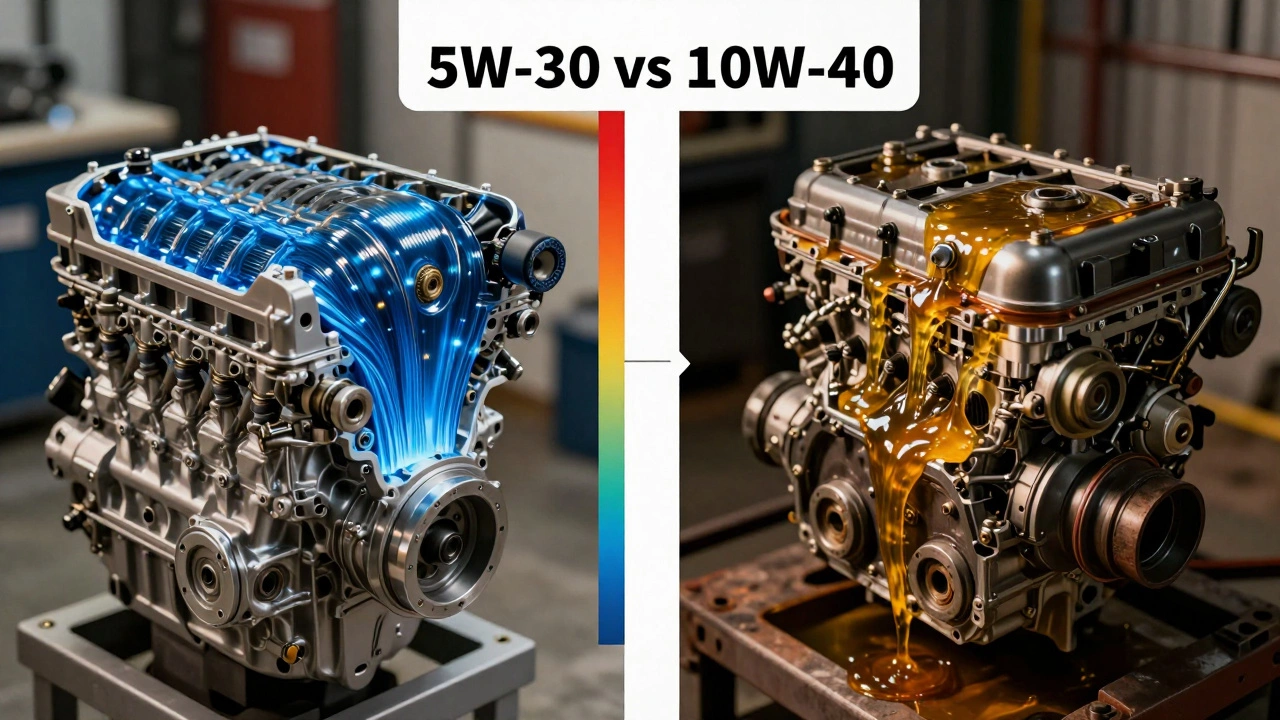
That weird number on the bottle-like 5W-30-is the oil’s viscosity rating. It tells you how thick or thin the oil is at different temperatures. The number before the “W” (Winter) shows how well it flows in cold weather. The number after shows how thick it stays when hot.
A 5W-30 oil flows like a 5-weight oil when cold (so it reaches engine parts quickly on startup) and thickens to a 30-weight when hot (so it doesn’t break down under pressure). If you live in Minnesota and use 10W-40 in winter, your engine might crank slowly or suffer wear during those first few seconds after starting. If you live in Arizona and use 0W-20 in summer, the oil might thin out too much and fail to protect under heavy loads.
Modern engines run tighter tolerances. They need thinner oils to reduce friction and improve fuel economy. That’s why most cars made after 2015 use 0W-20, 5W-20, or 5W-30. Older cars-especially those built before 2000-often need thicker oils like 10W-40 or 20W-50. Always stick to the manual’s recommendation.
Conventional vs. Synthetic vs. Synthetic Blend
Not all oils are created equal. There are three main types:
- Conventional oil: Refined from crude oil. Cheaper, but breaks down faster and doesn’t handle extreme heat or cold as well. Best for older cars with high mileage that don’t push the engine hard.
- Synthetic oil: Chemically engineered for performance. Stays stable under high heat, flows better in cold, and lasts longer. Recommended for most modern vehicles, especially turbocharged engines, hybrids, and performance cars.
- Synthetic blend: A mix of conventional and synthetic. Offers a middle ground-better than conventional, cheaper than full synthetic. Good for light-duty trucks or drivers who want a bit more protection without full synthetic prices.
Most cars made after 2010 require synthetic oil. Why? Because modern engines run hotter, have tighter clearances, and demand better protection. If your manual says “synthetic oil only,” don’t use conventional. It won’t protect properly, and you could void your warranty.
Real-world example: A 2020 Honda Civic with a 2.0L engine needs full synthetic 0W-20. If you put conventional 10W-30 in it, you’ll notice sluggish acceleration, worse fuel economy, and possibly increased engine noise. Honda’s warranty won’t cover engine damage caused by the wrong oil.
High Mileage Oil: Is It Worth It?
If your car has over 75,000 miles, you might see bottles labeled “High Mileage Oil.” These contain additives designed to condition seals, reduce leaks, and minimize oil consumption. They’re not magic, but they can help if your engine is already showing signs of wear-like oil drips or burning a bit of oil between changes.
But here’s the catch: If your engine runs fine, doesn’t leak, and doesn’t burn oil, you don’t need high mileage oil. It’s more expensive and offers no benefit if your seals are still healthy. Use it only if you’re seeing symptoms. Don’t use it as a preventative measure unless your mechanic recommends it.
Oil Change Intervals: Don’t Believe the Myths
“Change your oil every 3,000 miles” is an old myth. Modern oils and engines last much longer. Most manufacturers now recommend oil changes every 7,500 to 10,000 miles for synthetic oil. Some even stretch to 15,000 miles under ideal conditions.
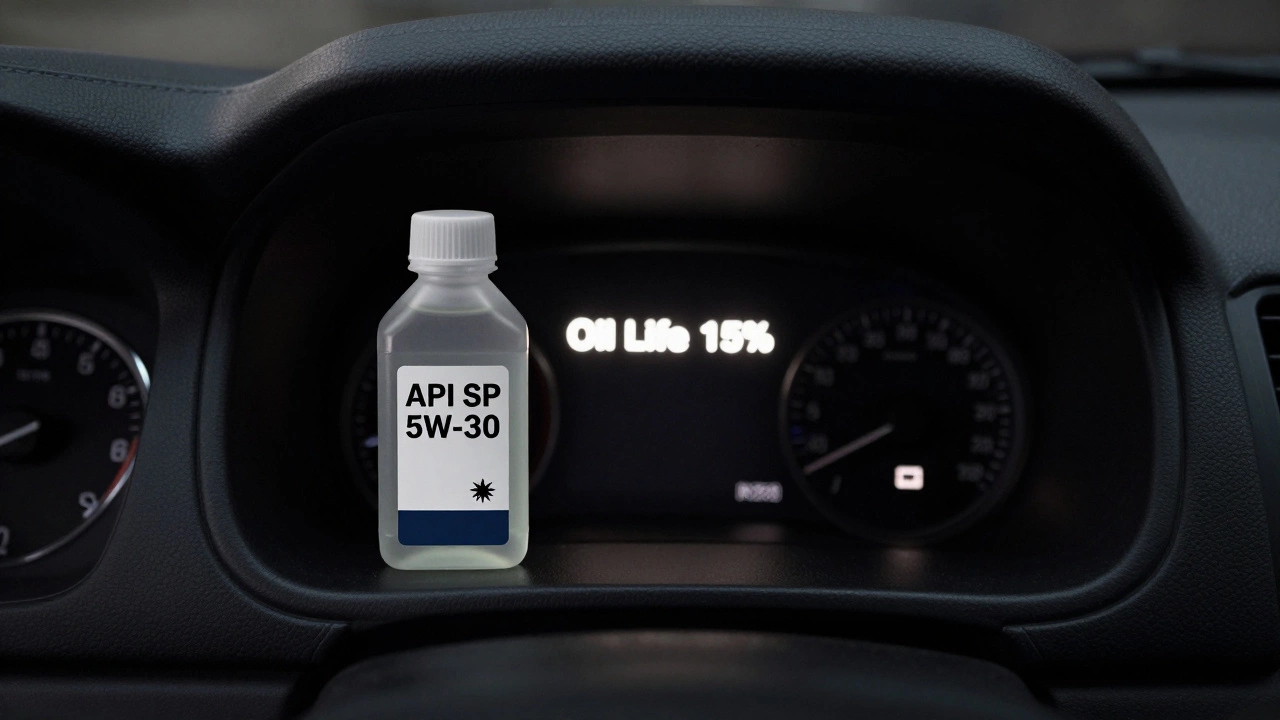
But don’t just go by mileage. Pay attention to your car’s oil life monitor. Most vehicles made after 2010 have sensors that track driving conditions-temperature, RPM, load, and time-and tell you when the oil is truly degraded. If your dashboard says “Oil Life 15%,” don’t ignore it. That’s your cue.
And if you drive in extreme conditions-frequent short trips, dusty roads, towing heavy loads, or stop-and-go traffic-you might need to change oil more often. Even with synthetic oil, extreme use can shorten its life by 20-30%.
What Happens If You Use the Wrong Oil?
Using oil that’s too thick? It won’t flow fast enough on startup. That means metal parts grind together for longer, increasing wear. You’ll also see lower fuel economy and higher engine temperatures.
Using oil that’s too thin? It can’t maintain proper pressure under load. Turbochargers, valve trains, and piston rings lose protection. In high-performance engines, this can cause bearing failure or even a blown turbo.
And if you use non-synthetic oil when the manual says synthetic? You risk sludge buildup, especially in direct-injection engines. Sludge clogs oil passages, starves components of lubrication, and leads to expensive repairs.
There’s no “better” oil if it’s not the right one. Using a premium synthetic in a car that needs conventional oil won’t make it run better-it might even cause leaks because the seals weren’t designed for it.
How to Pick the Right Oil: A Simple Checklist
- Step 1: Open your owner’s manual. Find the “Engine Oil” section.
- Step 2: Note the viscosity grade (e.g., 5W-30).
- Step 3: Note the oil type (conventional, synthetic blend, full synthetic).
- Step 4: Check if your car has a high-mileage designation (over 75,000 miles).
- Step 5: Buy oil that matches exactly. Don’t substitute unless you’re certain it’s within API/ILSAC specs.
- Step 6: Look for the API donut and ILSAC starburst on the bottle. These mean the oil meets current industry standards.
API SN or SP ratings are the latest standards. Avoid oils labeled only with older ratings like SJ or SL-they’re outdated and won’t protect modern engines.
Final Tip: Keep Records
Write down every oil change: date, mileage, oil type, and brand. You’ll thank yourself later if you sell the car or need to prove maintenance for warranty claims. And if you ever take it to a shop, they’ll know you’ve been careful.
There’s no need to spend extra on “premium” brands unless your car demands it. Mobil 1, Castrol EDGE, Pennzoil Platinum, and Shell Rotella are all excellent. But if your manual says “any API SP 5W-30,” a store-brand synthetic that meets that spec will work just fine.
Stick to the manual. Use the right viscosity. Choose the right type. Your engine will thank you for the next 150,000 miles.
Can I use synthetic oil in an older car?
Yes, you can. Synthetic oil is safe for older engines, even those built before 1990. It doesn’t cause leaks unless the seals are already worn. In fact, synthetic oil flows better and reduces wear in aging engines. If your older car has no oil leaks and runs well, switching to synthetic can improve performance and extend engine life.
What if I accidentally put the wrong oil in my car?
If you used oil with the wrong viscosity but the correct type (e.g., 10W-30 instead of 5W-30), you can usually drive it to your next oil change without damage. But don’t make it a habit. If you used the wrong type-like conventional instead of synthetic-you should drain and replace it as soon as possible. The longer it sits, the more risk you take to engine components.
Does oil brand matter?
Not significantly, as long as the oil meets the API and ILSAC standards listed in your manual. Major brands like Mobil 1, Castrol, and Valvoline all produce quality products. Store brands like AmazonBasics or Kirkland Signature (Costco) are also fine if they carry the correct viscosity and certification. The key is matching the specs-not the brand name.
Can I mix synthetic and conventional oil?
You can mix them in an emergency, but it’s not recommended. Mixing doesn’t harm the engine immediately, but it dilutes the performance benefits of synthetic oil. You’ll lose the improved heat resistance and longer life. If you do mix, plan to change the oil sooner than usual.
How do I know if my oil is degraded?
Check the dipstick. Fresh oil is amber and translucent. Old oil turns dark brown or black and feels gritty between your fingers. If it smells burnt or has metal flakes, it’s time for a change. Also, listen for engine noise-increased ticking or knocking can mean poor lubrication. Always trust your oil life monitor over a fixed mileage schedule.