Exhaust Tone Calculator
Exhaust Tone Calculator
Get the ideal exhaust system configuration for your vehicle's deep, resonant sound
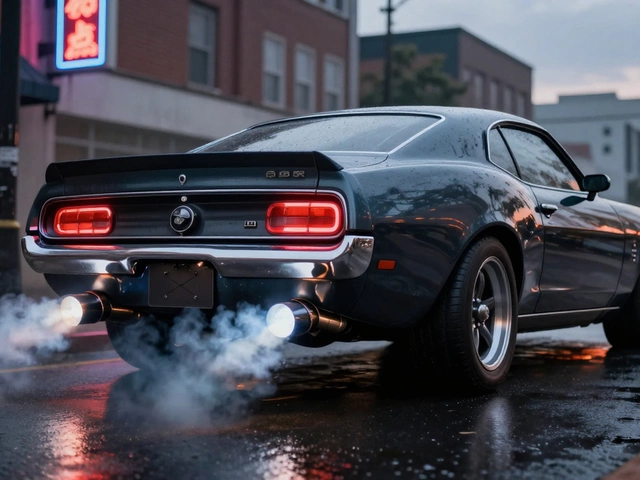
Want that low, rumbling growl that makes people turn their heads when you pull up? A deep exhaust sound isn’t just about volume-it’s about resonance, frequency, and how the system moves air. Most people think buying a louder muffler is the answer, but that’s not how it works. The deepest tones come from the right combination of pipe diameter, muffler design, and engine tuning-not just a flashy tip. If you’ve tried aftermarket parts and still sound like a lawnmower with a turbo, here’s what actually changes the tone.
Understand How Exhaust Notes Are Made
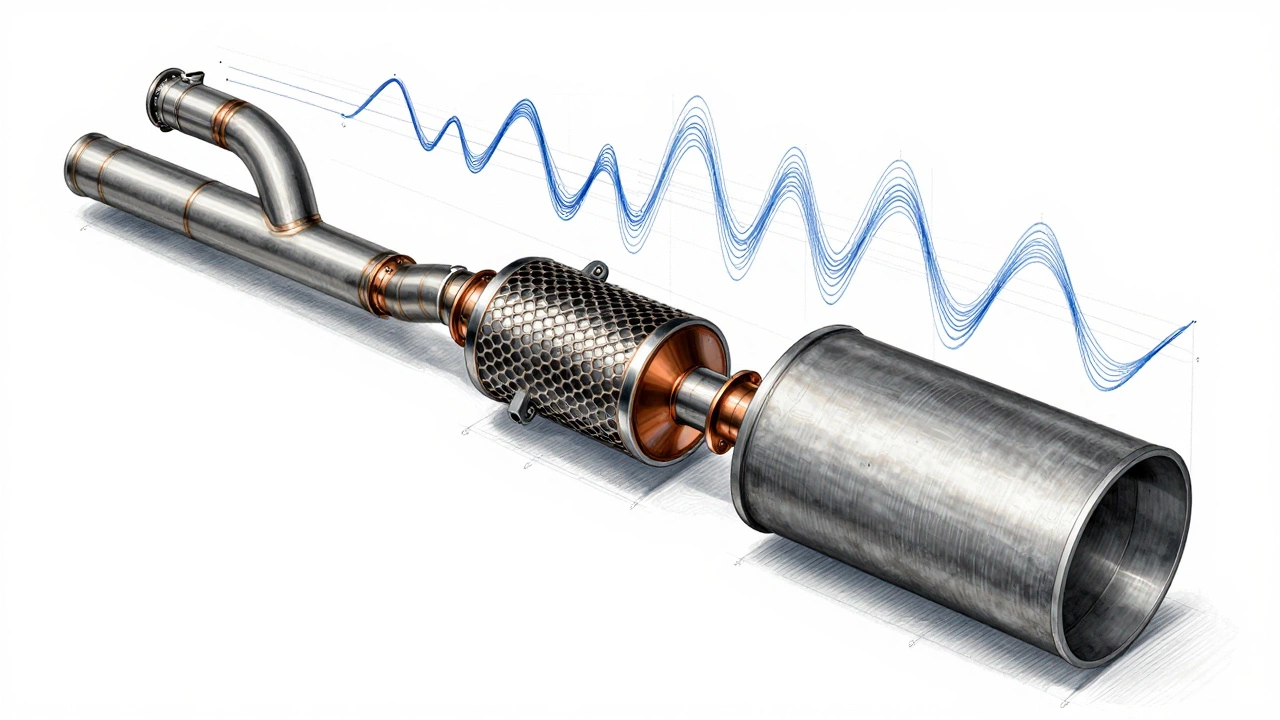
The sound of your exhaust isn’t random. It’s created by pressure waves from the engine’s combustion cycle. Each time a cylinder fires, it sends a pulse of hot gas down the exhaust pipe. These pulses bounce off walls, merge, and cancel out-creating the tone you hear. A deep sound means lower-frequency waves are dominant. High-pitched noises come from fast, sharp pulses that haven’t been smoothed out.
Think of it like a bass guitar. A thin string vibrates fast and makes a high note. A thick string vibrates slower and makes a low note. Your exhaust works the same way. Bigger pipes = slower-moving air = deeper tone. A small-diameter exhaust forces gas out too quickly, creating a raspy, high-pitched whine. That’s why stock exhausts on muscle cars often sound tinny-they’re designed for emissions, not sound.
Start with Pipe Diameter
Most factory exhausts are 2.0 to 2.25 inches in diameter. That’s fine for fuel economy and noise regulations, but it’s too small for a deep tone. To get that throaty rumble, you need at least 2.5 inches. For V6 and V8 engines, 3.0 inches is the sweet spot. Anything larger than 3.5 inches can hurt low-end torque and make the sound too hollow.
Here’s a simple rule: if your engine displacement is over 3.0 liters, go 2.5 inches. If it’s over 5.0 liters, go 3.0 inches. For turbocharged engines, add 0.25 inches because turbo backpressure changes airflow dynamics. A 2.0L turbo might need 2.75-inch pipes to sound right, even though it’s a small engine.
Don’t just swap the tailpipe. You need to upgrade the entire system from the catalytic converter back. A 3-inch tailpipe on a 2.25-inch system is like putting a wide door on a narrow hallway-it won’t help. The restriction upstream will still choke the flow and keep the tone high.
Choose the Right Muffler Type
Not all mufflers are created equal. There are three main types: straight-through, chambered, and glasspack. Each affects tone differently.
- Straight-through mufflers (like MagnaFlow or Borla) are the quietest on idle but get loud under load. They don’t add much depth-they just reduce restriction. Good for daily drivers who want a subtle growl.
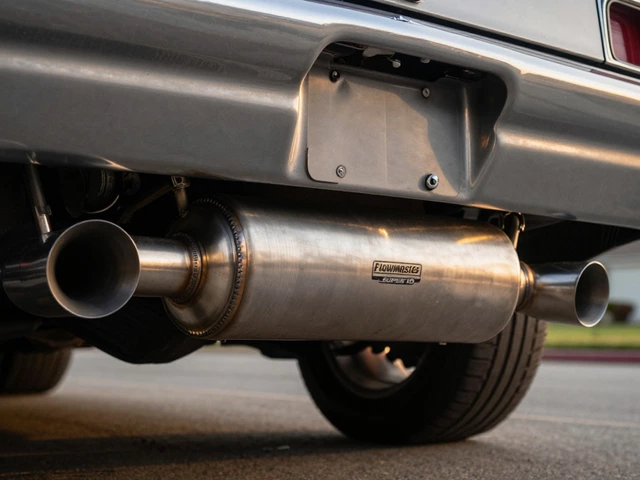
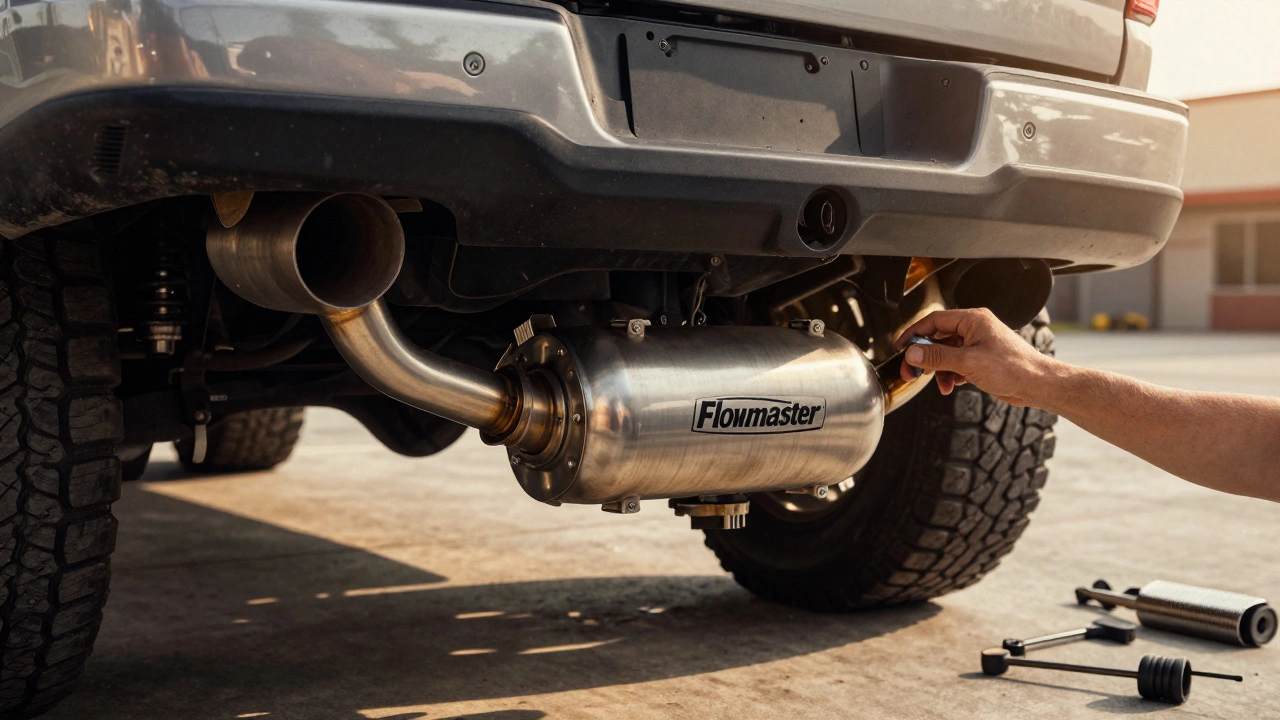
- Chambered mufflers (like Flowmaster 40 or Vibrant) use internal chambers to reflect and cancel sound waves. They’re the go-to for deep, resonant tones. The 40-series Flowmaster is legendary for its low rumble at cruise and aggressive bark on acceleration. Many drag racers use these because they don’t drone on highways.
- Glasspack mufflers (like Cherry Bomb) are cheap and loud, but they sound more like a buzz than a rumble. They’re great for show cars, but not for a true deep tone.
For the deepest sound, go with a chambered muffler. Avoid ones labeled “race” or “competition”-those are tuned for high-RPM noise, not low-end growl. Look for models labeled “muscle,” “classic,” or “road” series. They’re engineered to emphasize frequencies between 100-200 Hz, which is where human ears perceive depth.
Remove or Replace the Catalytic Converter
Factory catalytic converters are the biggest sound killers. They’re packed with honeycomb ceramic material that absorbs low-frequency waves. If you want real depth, you need to replace them with high-flow cats or delete them entirely.
But here’s the catch: deleting cats is illegal in most places for street use. High-flow cats are the legal alternative. They use metallic substrates instead of ceramic, which allow more sound to pass through. Brands like Kooks, MagnaFlow, and Corsa make high-flow cats that reduce backpressure by 40% compared to stock and let the low-end tone come through.
Don’t just remove the cat and slap on a straight pipe. You’ll get a harsh, raspy sound that’s unpleasant at low speeds. Pair a high-flow cat with a chambered muffler and 3-inch pipes for the best balance of legality, torque, and tone.
Use Resonators to Fine-Tune the Sound
Resonators aren’t mufflers-they don’t reduce volume. They cancel out specific frequencies. Think of them as noise-canceling headphones for your exhaust.
If your exhaust sounds good but has a droning buzz at 2,000 RPM on the highway, a resonator can fix that. Place it between the muffler and the tailpipe. A straight-through resonator tuned to 150 Hz will cancel out the annoying drone while leaving the deep rumble intact.
Many aftermarket systems come with built-in resonators. If you’re building your own, use one from Vibrant or DynoMax. They’re made of stainless steel and last longer than the muffler. Don’t overdo it-too many resonators can deaden the sound. One is usually enough.
Engine Tuning Matters More Than You Think
Even the best exhaust won’t sound deep if your engine isn’t tuned right. Exhaust note is tied to ignition timing, fuel delivery, and valve timing. A car with a stock ECU and a loud exhaust will often sound harsh because the engine is running lean or the timing is too aggressive.
Get a tune from a reputable shop that specializes in exhaust sound. They’ll adjust the air-fuel ratio to run slightly richer at low RPMs, which smooths out combustion pulses. They’ll also delay ignition timing slightly to create longer, slower pressure waves-exactly what you need for a deep tone.
Some tuners offer “sound packages” that specifically target exhaust frequency. For example, a tune for a 5.0L Ford Mustang might add 10% more fuel at 1,800-2,500 RPM to deepen the rumble. That’s not just about power-it’s about shaping the sound.
What Doesn’t Work
Let’s clear up some myths.
- Bigger tips won’t make it deeper. Tips are cosmetic. A 4-inch tip on a 2.25-inch system sounds the same as a 2-inch tip. The diameter of the pipe matters, not the end.
- Drilling holes in the muffler is a bad idea. It creates a raspy, uneven sound and can damage the muffler from heat stress. You’ll get noise, not tone.
- Adding a second muffler won’t help. Two mufflers just mean more restriction. It’s like wearing two pairs of noise-canceling headphones-it doesn’t make the sound deeper, it just makes it quieter.
- “Sound boosters” or electronic modules don’t work. These plug into the OBD port and play fake engine noise through the speakers. It’s a gimmick. Real exhaust tone comes from physics, not speakers.
Real-World Setup That Works
Here’s a proven combo for a V8 muscle car or truck:
- Start with 3.0-inch stainless steel pipes from the headers to the tailpipe.
- Install a high-flow catalytic converter (like Kooks 200-cell).
- Use a Flowmaster 40 Series chambered muffler.
- Add one Vibrant 17950 resonator just before the tailpipe.
- Get a tune that enriches the mixture at low RPMs.
This setup costs around $1,200-$1,800 installed, depending on labor. It’s not the cheapest, but it’s the only way to get that low, powerful rumble without drone, without legal trouble, and without sacrificing torque.
Test drive it. At idle, it should sound like a lion breathing. At 2,000 RPM under light throttle, it should be a steady growl. On hard acceleration, it should roar without turning into a jet engine. That’s the sound you want.
Final Tip: Let It Break In
New exhaust systems need time to settle. The first 500 miles are critical. Drive it gently at first-don’t blast it wide open. Let the heat cycles condition the metal. After that, the tone will deepen by 15-20%. The muffler material expands and settles into its optimal resonance. What sounded good at first will sound better after a few weeks.
And don’t rush. A deep exhaust isn’t bought-it’s built. It’s not about the loudest part on the shelf. It’s about the right combination of science, material, and tuning. Get those details right, and your car won’t just sound powerful. It’ll sound like it was meant to be heard.
Can I make my exhaust deeper without spending a lot of money?
Yes, but only if you’re willing to compromise. The cheapest option is to replace your muffler with a chambered model like the Flowmaster 40. That alone can add depth without changing pipes. But if your stock exhaust is 2.25 inches or smaller, the improvement will be limited. You won’t get the full rumble without upgrading the piping. A full system upgrade costs more upfront but delivers real results.
Will a deep exhaust hurt my engine?
No, if done right. A properly sized exhaust reduces backpressure, which actually helps engine efficiency. The myth that louder exhausts hurt engines comes from people who install oversized pipes without tuning. That can cause lean conditions and overheating. But with the right pipe size, high-flow cats, and a proper tune, your engine will run cooler and more efficiently.
Why does my exhaust sound different after a cold start?
Cold metal contracts, which changes how sound waves travel through the pipes. Also, the engine runs richer on cold starts, which creates more low-frequency pulses. After a few minutes, the system heats up, expands, and the tone settles into its normal pitch. This is normal. If the sound stays harsh after warming up, your system might be too restrictive or poorly tuned.
Can I make a 4-cylinder engine sound deep?
You can make it sound deeper, but not like a V8. Four-cylinder engines fire more frequently, which creates higher-pitched pulses. Even with a 3-inch system and chambered muffler, you’ll get a throaty rumble, but it’ll still have a higher pitch than a V6 or V8. Some tuners use sound-synthesizing speakers to fake a V8 tone-those are gimmicks. Real depth requires more cylinders and longer intervals between pulses.
Is a straight pipe the loudest and deepest option?
No. A straight pipe without any muffler or resonator sounds harsh and high-pitched at low speeds. It lacks the chambering that shapes low frequencies. You’ll get volume, but not depth. Most people hate the sound after a few weeks because it’s fatiguing. A well-tuned chambered system with resonators sounds louder and deeper than a straight pipe-without the headache.