Engine Wear and Suspension Issues: Signs, Causes, and What to Do
When your car feels shaky, noisy, or just off, it’s rarely just one thing. Engine wear, the gradual breakdown of internal engine parts due to friction, heat, and lack of maintenance. Also known as internal engine degradation, it doesn’t happen overnight—but when it’s ignored, it drags down everything else, including your suspension, the system that keeps your tires in contact with the road and your ride smooth. Also known as vehicle suspension system, it’s meant to absorb bumps, not compensate for a failing engine.
Engine wear and suspension problems don’t just happen side by side—they feed each other. A worn engine misfires, causing the car to jerk or vibrate. That shaking gets passed to the suspension, making shocks, struts, and bushings wear out faster. Meanwhile, a tired suspension lets the engine move more than it should, adding stress to mounts and internal parts. You might think you need new brake pads because the car pulls to one side, but if your suspension is loose, even perfect brakes won’t fix it. And if your engine is burning oil or losing power, you’re not just risking a breakdown—you’re accelerating wear on every connected part.
Here’s what you’ll find in the posts below: real, no-fluff guides on how to spot early signs of engine wear—like oil leaks, knocking sounds, or poor fuel economy—and how those symptoms connect to suspension trouble. You’ll learn how to test your suspension with a simple bounce test, what to look for when inspecting shocks, and why replacing a clutch might mean checking your engine mounts too. We cover what happens when you delay oil changes, how radiator failure can overheat your engine and warp components, and why worn spark plugs make your whole car feel unbalanced. These aren’t theory pages. These are the checks mechanics in the UK actually use to stop small problems from turning into £2,000 repairs. If your car feels different than it used to, you’re not imagining it. The signs are there. Let’s find them.
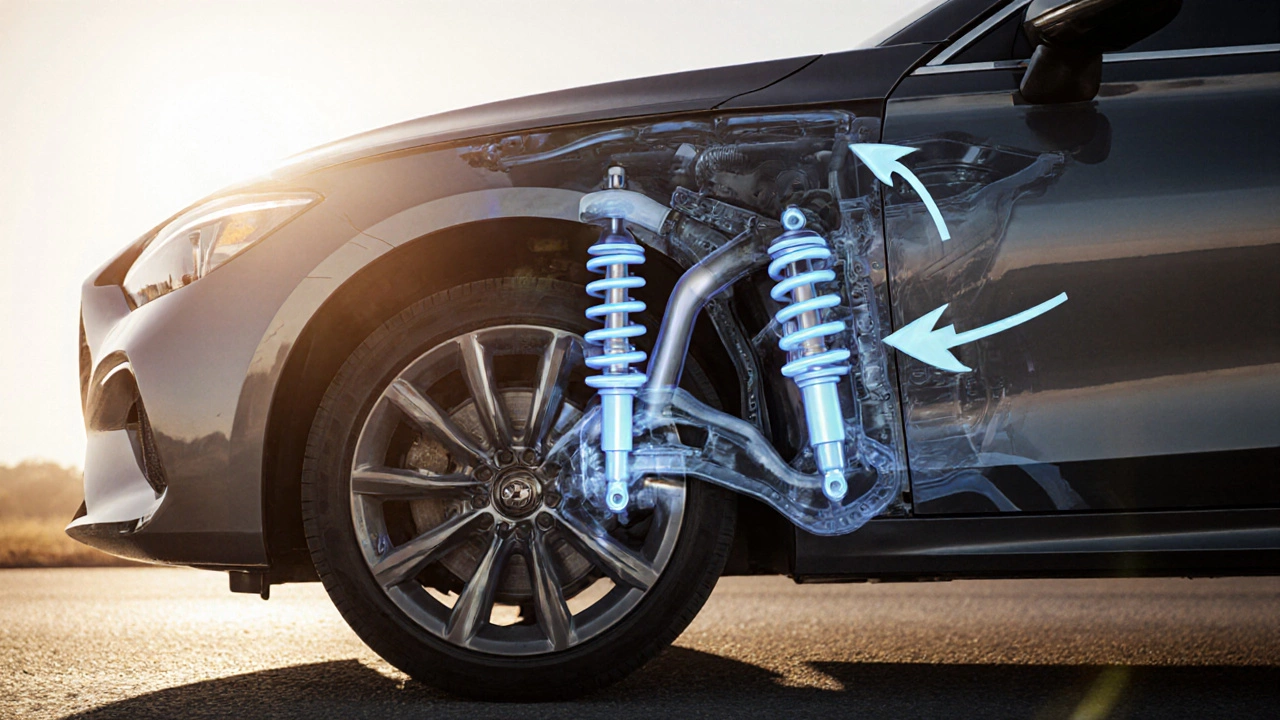
Does Bad Suspension Affect Engine? What Drivers Need to Know
Learn how a failing suspension can harm your engine, spot warning signs, and protect both systems with practical checks and repairs.
October 15 2025