Fuel Tank Safety Calculator
Calculate Your Safe Fuel Level
Determine if your fuel tank is at a safe level for fuel pump replacement. The article recommends keeping fuel level below 1/4 full to minimize vapor risk and spills.
Enter values to see your safe fuel level
When you hear a whining noise coming from the back of your car, or your engine sputters on the highway, it might be time to replace the fuel pump. But before you start pulling tools out of the toolbox, one question pops up: Do you need an empty fuel tank to change the fuel pump? The short answer? No - but you absolutely want to get it as close to empty as possible. Here’s why, and how to do it right.
Why Fuel Level Matters
Fuel pumps in most modern cars are mounted inside the fuel tank. That means to reach them, you have to drop the tank or remove a service panel underneath the rear seat. Either way, you’re working in a space filled with gasoline - a highly flammable liquid. Even a small spark from a metal tool or static electricity can turn a repair into a disaster.
Gasoline vapors are heavier than air. They sink and collect in low spots - like the bottom of a fuel tank. If the tank is half full, you’re dealing with gallons of vapor. That’s why most repair manuals and manufacturers recommend draining the tank to less than 1/4 full. Some even say 1/8. Why? Less fuel means less vapor, less risk, and easier handling.
Let’s say you try to pull the fuel pump with a half-full tank. You’ll be lifting a 15-20 pound assembly out of a tank sloshing with liquid. Gasoline will spill. You’ll likely get it on your clothes, your tools, and the garage floor. Cleanup is messy. More importantly, you’re creating a fire hazard just to save 10 minutes of driving to a gas station.
How Much Fuel Should You Leave?
There’s no official law that says you must have zero fuel. But here’s what works in practice:
- 1/4 tank or less - This is the sweet spot. Enough to keep the pump submerged during removal (if it’s still connected) and prevent air locks, but not enough to cause major spills or vapor buildup.
- Below 1/8 tank - Ideal for professionals. Minimal risk, minimal mess.
- Empty tank - Technically safest, but unnecessary. Modern fuel systems have check valves and seals that prevent fuel from flowing back. You don’t need to run the car dry.
Running the tank completely empty can actually cause problems. Fuel pumps rely on gasoline to cool and lubricate the motor. Running dry can overheat the pump, especially if you’ve already got a failing one. You don’t want to damage the new pump before it’s even installed.
How to Safely Drain the Tank
Here’s how most DIYers handle this step:
- Drive the car until the fuel gauge reads just above empty. Don’t wait for the warning light - it usually comes on when there’s still 1-2 gallons left.
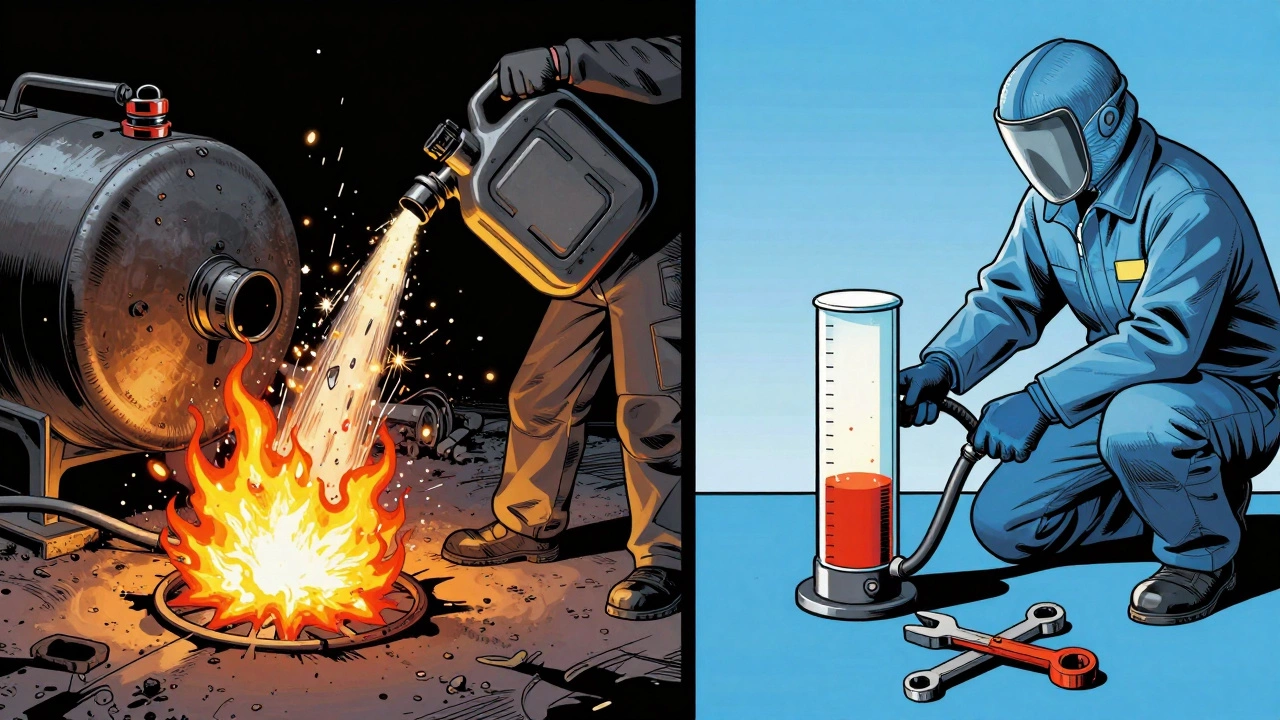
- If you’re still nervous, siphon out the remaining fuel using a hand pump or siphon hose. These cost under £10 at any auto parts store. Never use your mouth - gasoline is toxic.
- Disconnect the battery before you start working. This stops the fuel pump from accidentally turning on during the job.
- Relieve fuel pressure. Most cars have a fuel pressure relief valve or a fuse you can pull. Check your owner’s manual. If you skip this, fuel can spray out when you disconnect lines.
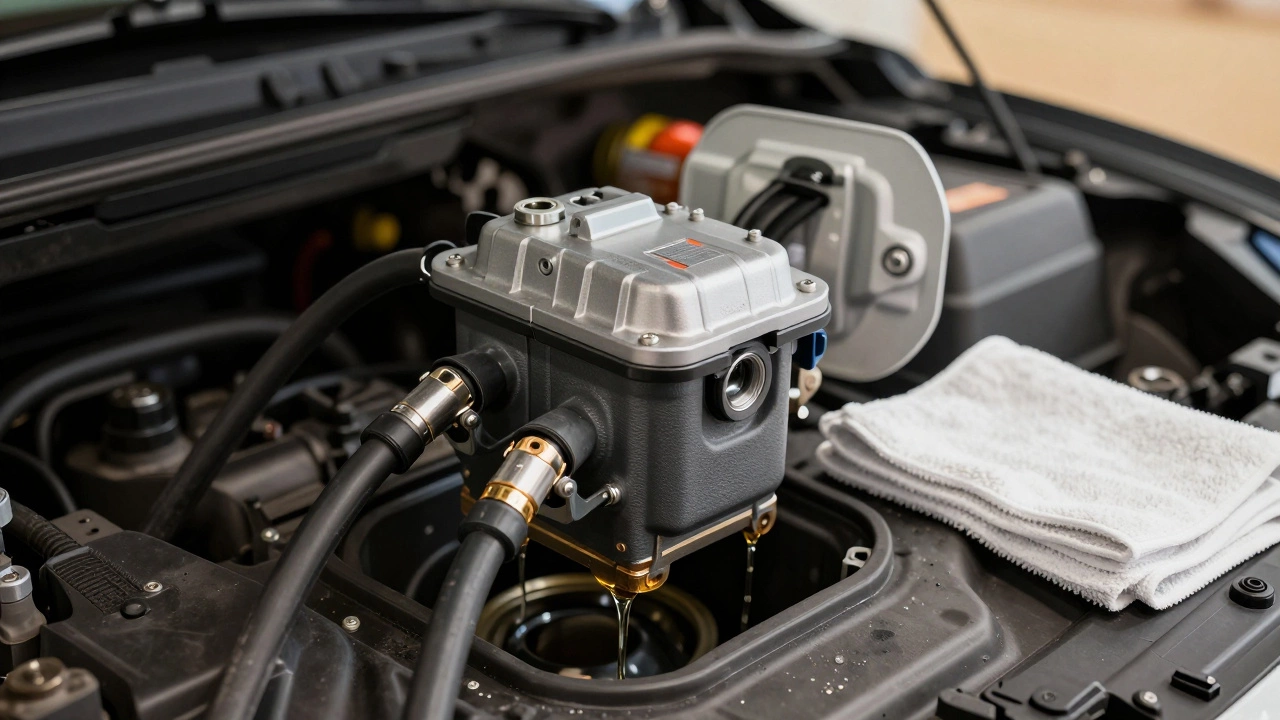
Once the tank is low, you’re ready to access the pump. Most vehicles have a service panel under the rear seat or in the trunk. Pop it off, unplug the electrical connector, disconnect the fuel lines, and lift the pump out. If your car requires tank removal, you’ll need jack stands, a torque wrench, and a helper. It’s not a one-person job.
What Happens If You Don’t Drain It?
Some people try to skip draining the tank. They say, “I’ve seen it done.” And yes, it’s been done - but not always safely.
Here’s what goes wrong:
- Spilled fuel - It gets on your hands, your tools, your clothes. It’s hard to clean and smells for days.
- Fire risk - A spark from a wrench, a static shock from sliding out of the seat, or even a faulty light can ignite vapors. Gasoline fires are fast and deadly.
- Damage to the fuel system - If fuel sprays into the air, it can get into electrical connectors or the engine bay. Corrosion follows.
- Insurance issues - If you cause a fire while working on your car, your home or auto insurance may deny the claim if you didn’t follow basic safety steps.
There’s no upside to leaving fuel in the tank. The time saved isn’t worth the risk.
Tools You’ll Need
Even if you’re not replacing the pump yourself, knowing what tools you’ll need helps you plan:
- Fuel siphon pump
- Jack and jack stands
- Socket set and torque wrench
- Fuel line disconnect tool
- New fuel pump gasket or seal
- Electrical contact cleaner
- Shop towels and a spill kit
Don’t forget gloves and eye protection. Gasoline is not something you want on your skin.
Pro Tip: Replace the Fuel Filter Too
While you’ve got the fuel system open, check the fuel filter. Most filters are built into the pump module. If it’s not replaceable separately, you’re already paying for labor. Why not upgrade to a new pump with a fresh filter? It’s cheaper than doing it twice.
Also, clean the inside of the tank if you see rust or debris. A clogged fuel line can kill a brand-new pump in weeks. Use a fuel system cleaner and let it sit for an hour before reinstalling the pump.
Final Answer: Do You Need an Empty Tank?
No, you don’t need an empty tank. But you need a very low tank. Aim for 1/8 to 1/4 full. That’s the safest, cleanest, and smartest way to do this job. It takes five extra minutes of driving - but it saves you from a dangerous mess, costly repairs, or worse.
And if you’re not comfortable working with fuel? Take it to a shop. Fuel system repairs aren’t the place to cut corners. A professional has the right tools, ventilation, and training to do it right. Your safety is worth more than the labor cost.
Can you change a fuel pump with a full tank?
Technically, yes - but it’s extremely dangerous. A full tank creates a high concentration of gasoline vapors. A single spark from a tool or static electricity can ignite those vapors, leading to fire or explosion. Never attempt this. Always drain the tank to 1/8 or 1/4 full before starting.
What happens if you run the tank completely empty?
Running the tank dry can damage the fuel pump. Modern pumps rely on gasoline for cooling and lubrication. Without fuel, the motor overheats and can fail prematurely. You don’t need to empty the tank - just get it as low as safely possible, ideally below 1/4 full.
Is it safe to siphon fuel from the tank?
Yes, if you use a proper hand siphon pump. Never use your mouth - gasoline is toxic and can cause serious harm if swallowed. Siphon pumps cost less than £10 and are designed for this exact purpose. They’re safe, clean, and effective.
Do all cars have the fuel pump inside the tank?
Almost all modern cars (since the 1990s) have in-tank fuel pumps. Older vehicles, especially those with carburetors, may have external pumps mounted on the frame or engine. But if your car is from 2000 or later, the pump is inside the tank. That’s why tank access is required for replacement.
How long does it take to replace a fuel pump?
For a DIYer, it usually takes 2 to 4 hours. If the tank needs to be dropped, expect the longer end of that range. Professionals can do it in about 1.5 hours. The biggest time-suck is safely draining the tank and disconnecting the fuel lines without spilling.