Radiator Repair vs Replacement Calculator
Enter your vehicle details to determine the best course of action
Your Recommendation
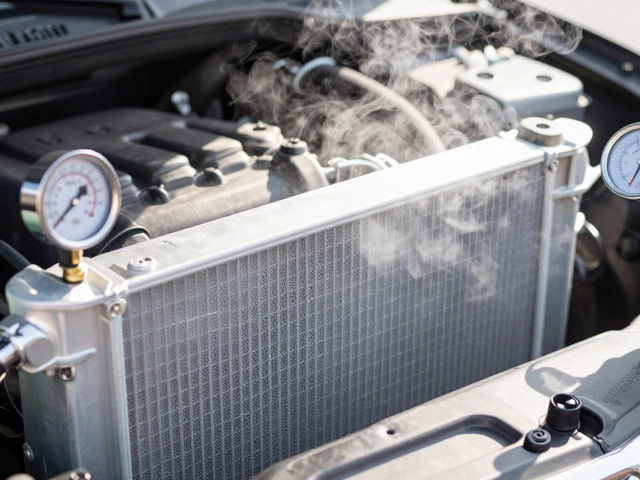
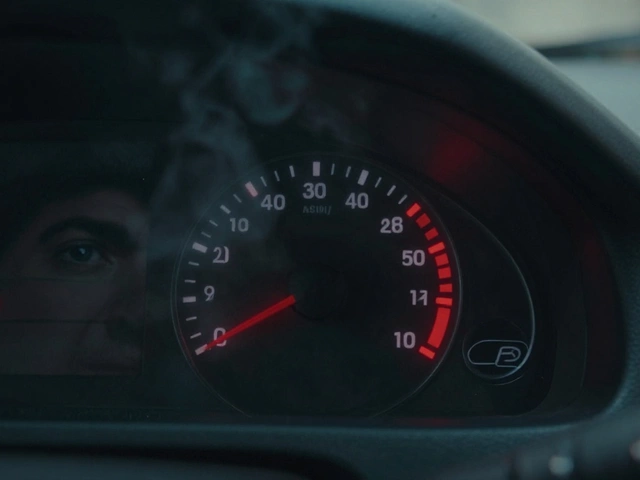
Your car overheats. Steam curls from under the hood. You check the coolant level-empty. The radiator’s the likely culprit. Now you’re staring at a big question: is it worth repairing a radiator, or should you just replace it?
How Radiators Fail-And Why It Matters
Radiators don’t just wear out. They fail in specific ways, and each one tells a different story. The most common problems are leaks, clogs, and damaged fins.
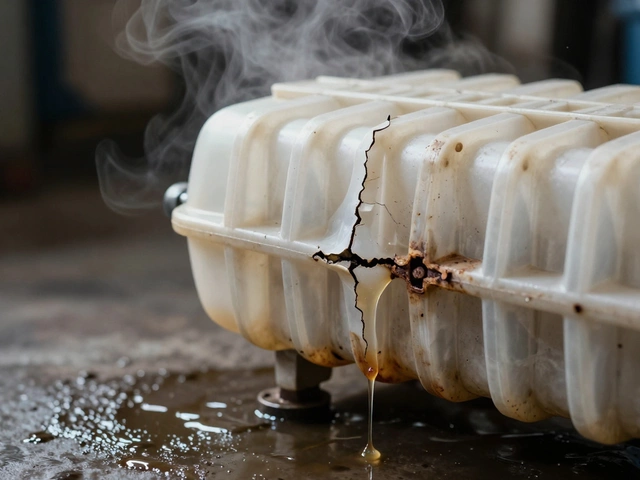
Leak? That’s usually from a cracked tank, a corroded seam, or a loose hose connection. If it’s a small drip from a hose clamp, you’re looking at a $20 fix. But if the plastic end tank has split-common in older cars built after 2000-you’re not fixing it with epoxy. Those tanks are molded, not welded. Once they crack, they keep cracking.
Clogs happen when rust, scale, or old coolant builds up inside the tubes. A flush might help-if the tubes aren’t already blocked solid. But if coolant flow is restricted, the engine runs hot even with fresh fluid. That’s a sign the core is compromised.
Damaged fins? Those thin metal strips between the tubes help pull heat away. If they’re bent from road debris or insects, airflow drops. You can straighten a few with a fin comb, but if more than 15% are crushed, cooling efficiency plummets.
Repair Costs vs. Replacement Costs
Let’s talk money. In the UK, a basic radiator repair-like re-soldering a small leak or replacing a hose-costs between £80 and £150. That includes labour and parts. It’s fast. Often done in a couple of hours.
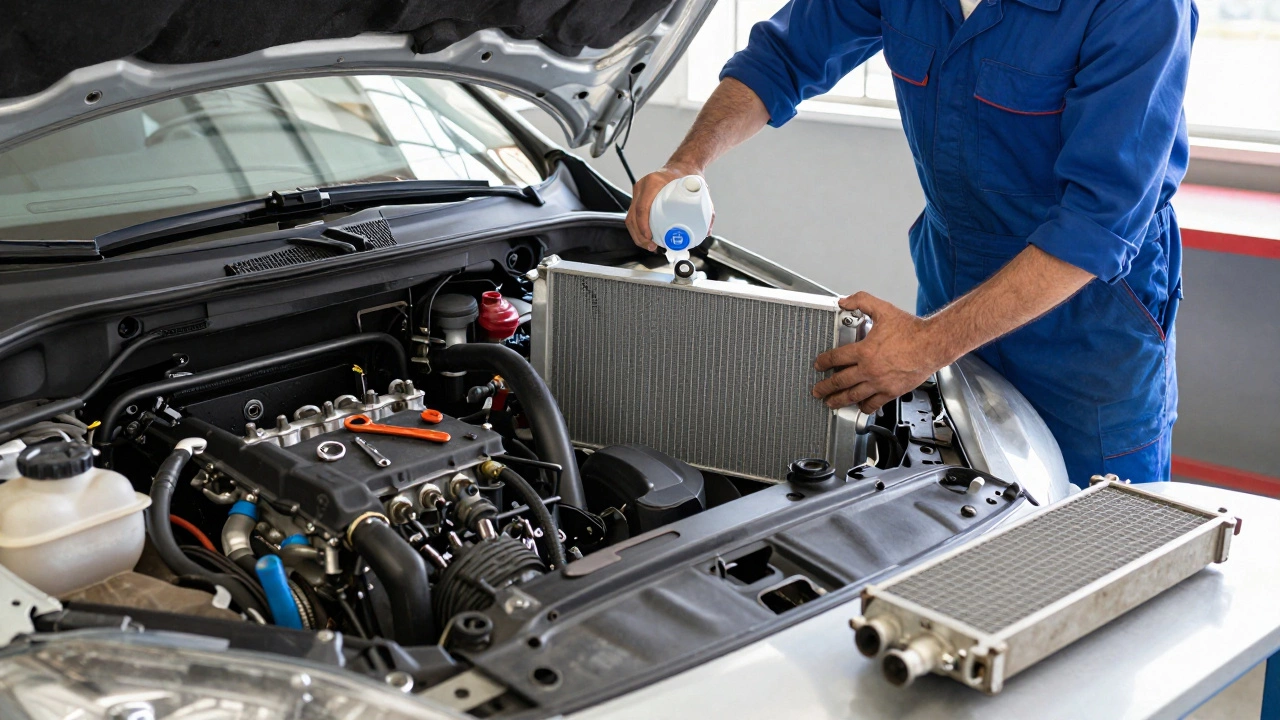
But if the radiator core is damaged? You’re looking at a full replacement. A new OEM radiator for a common family car like a Ford Focus or Vauxhall Astra runs £200-£350. Aftermarket options? £120-£250. Labour? Another £100-£180. Total? £220-£530.
So why pay more to replace? Because repair isn’t always reliable. A patched radiator might hold for six months. Or it might blow again next week. And if it fails while you’re on the motorway? You’re stranded. And that’s not just inconvenient-it’s dangerous.
Age and Condition of the Car
Here’s the real deciding factor: how old is your car? And what’s its overall health?
If you’ve got a 2010 Toyota Corolla with 120,000 miles, clean service history, and no other major issues? Repairing the radiator might make sense. Especially if you’re planning to keep it another 2-3 years.
But if your car is 15 years old, has a worn timing belt, failing suspension, and the transmission’s starting to slip? Spending £200 on a radiator repair is like putting a bandage on a broken leg. You’re not fixing the problem-you’re delaying the inevitable.
And here’s something most people forget: old radiators often mean old coolant systems. If your radiator’s leaking, chances are your water pump, thermostat, or hoses aren’t far behind. Replacing just the radiator and ignoring the rest? You’ll be back in the garage in three months.
What Happens If You Don’t Fix It?
Overheating isn’t just about discomfort. It’s engine suicide.
A single episode of overheating can warp the cylinder head. That’s a £1,500+ repair. It can blow the head gasket. That’s £1,200-£2,500. In diesel engines, it can crack the block. That’s a write-off.
And it doesn’t take much. Modern engines run hot-sometimes over 100°C. A small leak that loses just half a litre of coolant over 30 minutes can trigger a shutdown. Many cars today shut down automatically to protect the engine. You think you’re saving money by not fixing it? You’re just waiting for the bill to get bigger.
When Repair Makes Sense
There are real cases where repair is the smart move:
- You’ve got a tiny leak at a hose connection or clamp-simple to tighten or replace.
- The radiator’s from a 2015-2020 model with a metal core and plastic tanks, and the leak is isolated to a single tube.
- You’re using a reputable garage that offers a 12-month warranty on the repair.
- Your car is low-mileage, well-maintained, and you plan to keep it for at least three more years.
In these cases, repair is a low-risk, low-cost option. It’s not a gamble-it’s a sensible fix.
When You Should Replace It
Replace the radiator if:
- The core is corroded, clogged, or damaged-no patch will fix that.
- The plastic end tanks are cracked or brittle (common in cars built after 2005).
- You’ve had multiple leaks in the past year.
- Your car is over 10 years old and you’re not sure what else might fail next.
- You’re planning to sell the car soon. A new radiator adds value and peace of mind for the buyer.
Replacing it means you’re not just fixing a leak-you’re upgrading the whole cooling system. New radiators come with better materials, improved flow design, and often include a new thermostat or cap. It’s a one-time fix that lasts.
What About DIY?
Can you replace a radiator yourself? Yes. But only if you’ve done it before.
It’s not just about removing bolts. You have to drain the coolant properly, disconnect electrical sensors, move the AC lines (if equipped), and bleed the system after refilling. Mess up the bleeding process, and you’ll get air pockets. That means overheating. Again.
And if you’re not careful, you’ll damage the radiator fins, crack the hoses, or spill coolant on the alternator or belts. One slip and you’ve got a £400 repair bill instead of a £200 one.
Unless you’ve got a lift, a coolant flush kit, and experience with cooling systems-leave it to the pros.
The Bottom Line
Is it worth repairing a radiator? Sometimes. But only if the damage is minor and your car is in good shape.
Most of the time? Replacement is the better choice. It’s more expensive upfront, but it’s reliable. It protects your engine. And it stops you from being stuck on the side of the road with a broken car and a full tank of rage.
Think of it this way: your radiator isn’t just a part. It’s your engine’s lifeline. Don’t gamble with it. Fix it right the first time.
Can a radiator be repaired permanently?
Small leaks, like those from hose connections or loose fittings, can be fixed permanently. But if the radiator core is corroded, cracked, or clogged, repairs are temporary. Plastic tanks on modern radiators can’t be welded properly, and patched metal cores often leak again within months. Permanent fixes mean replacement.
How long does a repaired radiator last?
A properly repaired minor leak might last 6 to 18 months. But if the radiator is old or the damage is structural, it could fail again in days. Most mechanics won’t warranty a repair on a radiator older than 8 years-because the risk is too high.
Is it cheaper to repair or replace a radiator?
Repair is cheaper upfront-£80 to £150 versus £300 to £500 for replacement. But if the repair fails and you need to replace it anyway, you’ve paid twice. Replacement costs more at first, but it’s a one-time fix. In most cases, it saves money over time.
What happens if I drive with a leaking radiator?
Driving with a leaking radiator risks engine overheating. That can warp the cylinder head, blow the head gasket, or crack the engine block. Repairs for those issues cost £1,200 to £4,000. A £200 radiator replacement is a small price to avoid that.
Should I replace the radiator if my car is over 10 years old?
Yes-if it’s showing signs of failure. Older cars often have degraded cooling systems. Even if the radiator isn’t leaking yet, the hoses, thermostat, and water pump are likely near the end of their life. Replacing the radiator now gives you peace of mind and prevents a bigger breakdown later.