Clutch Lifespan Calculator
How long will your clutch last based on your driving habits? Enter your details to see your estimated clutch lifespan.
Estimated Clutch Lifespan
Tips to Extend Your Clutch Life
Most drivers don’t think about their clutch until it starts slipping, squeaking, or refusing to engage. But if you’ve ever stalled on a hill or felt the pedal go soft under pressure, you know how expensive and inconvenient a failed clutch can be. So how long should you actually expect your clutch to last? The short answer: between 60,000 and 100,000 miles. But that number means very little without context.
What Really Determines Clutch Life?
The factory claim of 100,000 miles is based on ideal conditions - smooth city driving, gentle takeoffs, and minimal towing. Real life rarely matches that. A clutch in a delivery van hauling 2,000 pounds every day might fail at 40,000 miles. A commuter driving a manual Toyota Corolla on quiet roads could hit 150,000 miles without a single issue.
Clutches don’t wear out from age. They wear out from friction. Every time you ride the clutch pedal, slip it to creep in traffic, or ‘rev-match’ too aggressively, you’re burning off the friction material. That’s why driving style matters more than mileage. Drivers who treat the clutch like a brake - holding it halfway down at traffic lights - often see their clutch fail before 50,000 miles. Those who fully release the pedal and use the brake instead? Their clutch lasts longer than the engine.
Signs Your Clutch Is Wearing Out
You don’t need a mechanic to tell you your clutch is dying. Here’s what to watch for:
- Slipping under load: The engine revs higher but the car doesn’t accelerate - especially when climbing hills or pulling away from a stop.
- Soft or spongy pedal: The pedal feels easier to press, or you have to push it closer to the floor to engage gears.
- Grinding or unusual noises: A squeaking or rattling sound when pressing the pedal isn’t normal. It often means the release bearing is failing.
- Difficulty shifting: Gears feel harder to find, or the car refuses to go into gear even when the pedal is fully depressed.
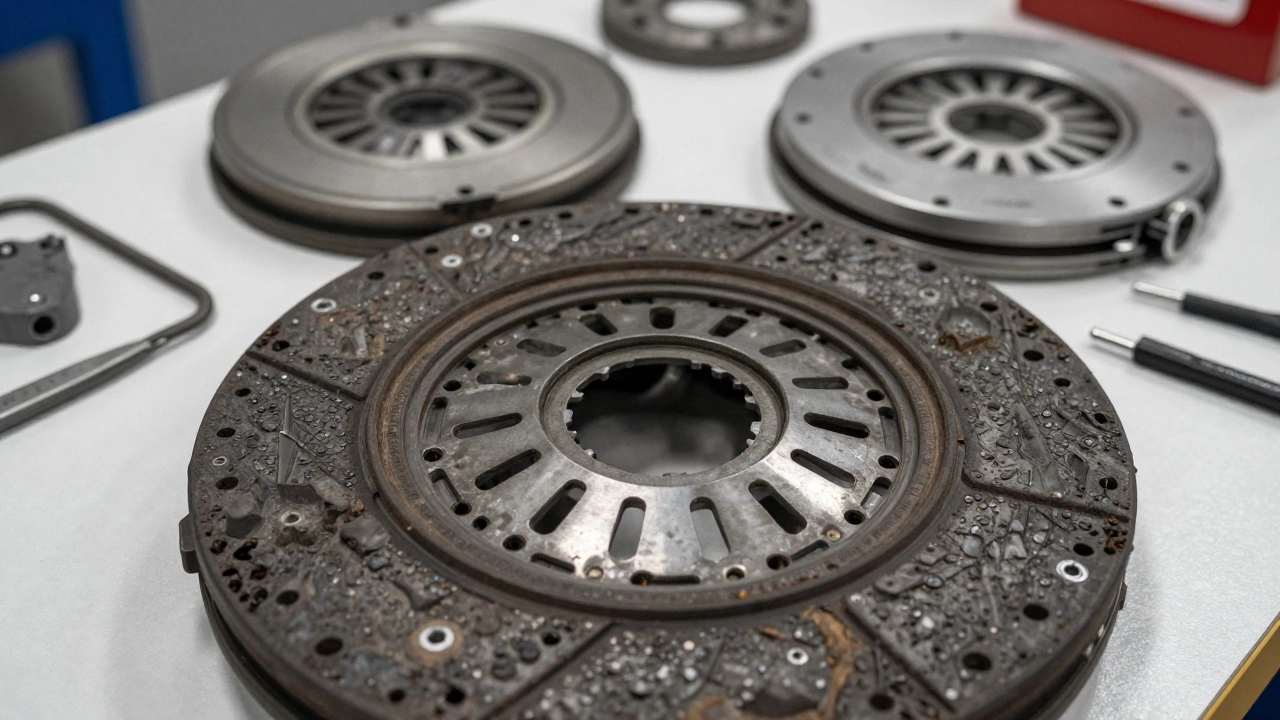
- Burning smell: A sharp, acrid odor like burnt toast or overheated plastic means the clutch disc is overheating from excessive slippage.
Any of these signs mean it’s time to get it checked. Waiting until the clutch fails completely can damage the flywheel or pressure plate - adding £300 to £500 to your repair bill.
How Driving Habits Kill Clutches Faster
It’s not the car. It’s the driver.
Here are the top three habits that shorten clutch life:
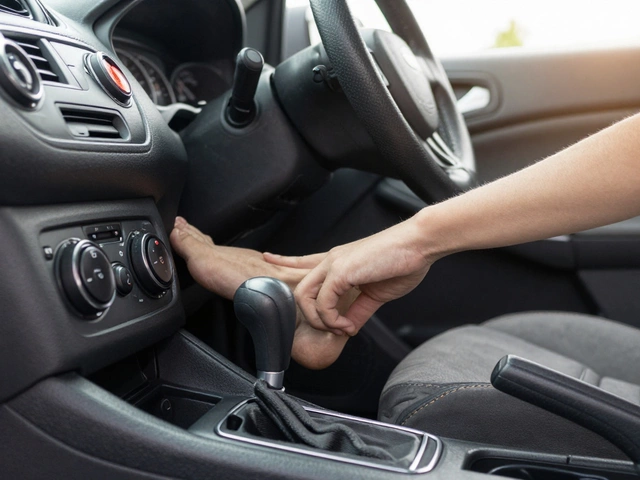
- Riding the clutch: Keeping your foot on the pedal while stopped, even slightly, creates constant friction. In heavy traffic, this can burn through material in under 10,000 miles.
- ‘Hill-holding’ with the clutch: Instead of using the handbrake or brake pedal on inclines, many drivers hold the car in place by partially engaging the clutch. This generates heat and wears the disc unevenly.
- Aggressive launches: Flooring it from a stop, especially in a high-torque diesel or modified car, puts extreme stress on the clutch. Street cars aren’t built for drag-strip starts.
One mechanic in Manchester told me he sees the same pattern every winter: drivers who use their manual cars as snow plows, slipping the clutch to get unstuck. By spring, the clutch is gone. A better move? Clear the snow, use traction aids, or call for help.
Clutch Kits: What’s Inside and What Matters
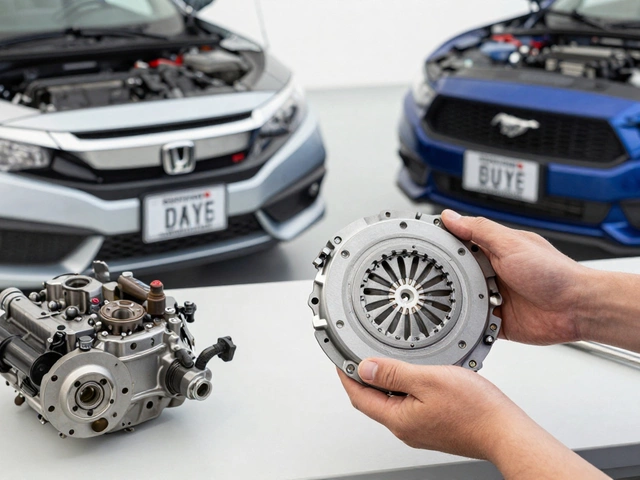
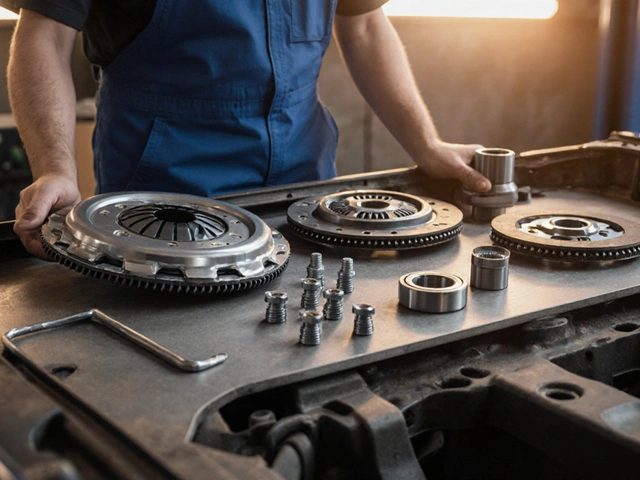
When you replace a clutch, you’re not just swapping one part. A full clutch kit includes three critical components:
- Clutch disc: The friction surface that connects the engine to the transmission. Made of organic, ceramic, or metallic materials - each with different durability and feel.
- Pressure plate: Applies force to clamp the disc against the flywheel. Diaphragm-style is standard; coil-spring is for high-performance.
- Release (throw-out) bearing: Reduces friction when disengaging the clutch. Often the first part to fail if the clutch is misused.
Not all clutch kits are equal. A budget kit from a no-name brand might cost £150 but last only 30,000 miles. A reputable brand like Sachs, LUK, or Valeo can cost £300-£400 but deliver 80,000+ miles with proper use. The difference isn’t just material - it’s precision engineering. A poorly balanced pressure plate causes vibrations. A low-quality disc can chatter or warp under heat.
Always replace the release bearing with the clutch. It’s cheap insurance. If you reuse an old one, you’re just delaying the next repair.
Does Clutch Type Affect Lifespan?
Yes - and it’s not always what you think.
There are three main types of friction materials used in clutch discs:
- Organic: Smooth engagement, quiet operation, best for daily driving. Lasts 60,000-90,000 miles. Common in factory clutches.
- Ceramic: Handles more heat and torque. Used in performance cars and light towing. Lasts 70,000-110,000 miles. Can be noisy and harsh in stop-and-go traffic.
- Metallic: Built for racing and heavy loads. Extremely durable but rough to drive daily. Can last 100,000+ miles - if you’re okay with jolting gear changes and loud engagement.
Most drivers should stick with organic. If you tow regularly or drive a modified car, ceramic is a smart upgrade. Metallic? Only if you’re racing on weekends and commuting on weekdays.
How to Make Your Clutch Last Longer
You can’t stop wear entirely - but you can slow it down dramatically.
- Use the brake, not the clutch: At traffic lights, put the car in neutral and apply the brake. Lift your foot off the clutch pedal completely.
- Shift smoothly: Don’t rush gear changes. A quick, firm press is better than a sloppy, slow one.
- Avoid ‘riding’ the clutch in traffic: If you’re stopped for more than 10 seconds, go into neutral.
- Don’t overload your car: Exceeding your vehicle’s towing capacity puts extra strain on the clutch. Check your owner’s manual.
- Get it inspected every 30,000 miles: A quick check during an oil change can catch early signs of wear before it’s too late.
One driver I spoke to in Salford replaced his clutch at 120,000 miles - on the original factory unit. He drove a 2010 Ford Focus. His secret? He never rested his foot on the pedal. Ever.
When to Replace Your Clutch
Don’t wait for it to die. If you’re noticing any of the symptoms above - slipping, grinding, soft pedal - get it checked. Delaying the repair risks damage to the flywheel, which can cost an extra £400 to resurface or replace.
Here’s a simple rule: if your clutch has passed 80,000 miles and you’re starting to feel changes in how it engages, plan for replacement. It’s not a question of if - it’s when.
Replacing a clutch is a labor-heavy job. Most garages charge between £500 and £800 for parts and labor. If your car has high mileage and you’re planning to keep it, it’s worth doing the job right. Use a reputable brand, replace the release bearing, and make sure the flywheel is inspected.
If you’re thinking about selling the car, a fresh clutch adds value. Buyers of manual cars look for evidence the drivetrain’s been cared for. A new clutch is a selling point.
Clutch Myths Debunked
There’s a lot of misinformation out there.
- Myth: Automatic transmissions don’t have clutches. Truth: They do - just not a pedal. They use torque converters and multi-plate clutches inside the transmission.
- Myth: A clutch lasts longer in diesel cars. Truth: Diesels have more torque, which puts more stress on the clutch. They often wear out faster unless upgraded.
- Myth: You can ‘fix’ a slipping clutch with additives. Truth: No fluid or chemical can repair a worn friction disc. It’s mechanical wear. Only replacement works.
Don’t fall for quick fixes. They waste money and time.
What Happens If You Ignore a Failing Clutch?
Ignoring a worn clutch doesn’t just mean you’ll get stranded. It can lead to:
- Damage to the flywheel surface - requiring a £250-£400 resurfacing or replacement.
- Warping of the pressure plate - leading to vibrations and uneven engagement.
- Transmission damage - if the clutch slips too much, heat builds up and can affect gear synchronizers.
- Complete failure while driving - leaving you stranded on a motorway with no warning.
It’s not a matter of ‘it’ll hold out.’ It’s a matter of when you’ll pay more.
How many miles should a clutch last?
Most clutches last between 60,000 and 100,000 miles, but this varies widely based on driving style, vehicle type, and load. Aggressive driving or frequent towing can reduce this to 40,000 miles, while careful drivers may get 120,000+ miles.
Can a clutch last 200,000 miles?
Yes - but only under ideal conditions. Drivers who avoid riding the clutch, don’t tow heavy loads, and shift smoothly have been known to reach 150,000 to 200,000 miles on factory clutches. This is rare and usually happens in low-mileage commuter cars like the Toyota Corolla or Honda Civic.
Is it expensive to replace a clutch?
Clutch replacement typically costs between £500 and £800, with labor making up the majority of the cost. Parts alone (a quality clutch kit and release bearing) run £150-£400. The job takes 4-8 hours, depending on the car model.
Should I replace the flywheel when replacing the clutch?
Not always, but you should have it inspected. If the surface is glazed, scored, or warped, it needs resurfacing or replacement. A damaged flywheel will ruin a new clutch within weeks. Most mechanics recommend replacing it if the car has over 80,000 miles.
Do clutch kits come with a warranty?
Yes - reputable brands like Sachs, LUK, and Valeo offer 12-month to 2-year warranties on their clutch kits. Budget brands may offer little to no warranty. Always check the warranty terms before buying.
Clutches are simple in design but sensitive in use. They don’t fail because they’re old - they fail because they’re abused. Treat yours with respect, and it’ll outlast your next car. Skip the bad habits, choose quality parts, and get it checked before it’s too late.