Car Wiper Replacement: When, Why, and How to Do It Right
When your car wiper replacement, the process of swapping out worn windshield wiper blades to maintain clear visibility while driving. Also known as wiper blade replacement, it’s one of the simplest yet most critical maintenance tasks for any UK driver. Rain, snow, dust, and sun don’t care if you’re busy—your wipers need to work every time. If you’re seeing streaks, smears, or hearing that squeaky chirp, it’s not just annoying. It’s unsafe. A study by the AA found that 40% of drivers in the UK have driven with failing wipers, and nearly a third admitted they hadn’t checked them in over a year. That’s not laziness—it’s ignorance. And it’s dangerous.
Your wiper blades, the rubber strips that sweep water off the windshield. Also known as windscreen wipers, they’re made of rubber and metal, and they degrade faster than you think. Most last 6 to 12 months, depending on weather and how often you use them. In the UK, with its mix of wet winters and sudden sunburns, rubber hardens, cracks, and loses grip. You can’t fix worn rubber. You can’t clean it back to life. You just need to replace it. And while you’re at it, check the wiper arm, the metal frame that holds the blade and applies pressure to the glass. Also known as wiper linkage, it’s often overlooked until the blade won’t stay flat against the windshield. A bent arm means even new blades won’t work right. Then there’s the windshield washer fluid, the liquid sprayed onto the glass to help wipers clean effectively. Also known as screen wash, it’s not just water—it’s a blend designed to cut through bugs, salt, and grime without freezing or leaving streaks. Running out of fluid means your wipers are just dragging dirt across the glass. That scratches the windshield. Fast.
Replacing wipers isn’t rocket science. No tools needed. Most blades snap on or clip in. But getting the wrong size? That’s a waste of time and cash. Your car’s make, model, and year matter. Don’t guess. Check your manual or use a simple online fitment guide. And don’t buy the cheapest set you can find. Cheap blades warp, chatter, and leave streaks. Good ones have a curved frame, a soft rubber compound, and a design that hugs the glass evenly. Brands like Bosch, Michelin, and Rain-X make reliable ones that last longer and work better in heavy rain.
Don’t wait until your wipers fail in a downpour. Check them every time you fill up. Look for cracks, splits, or stiff edges. Test them on a dry windshield—no spray, no water. If they jump or skip, it’s time. Replace both blades at once. Even if one looks fine, the other is close behind. And always top up the washer fluid. It’s cheap. It’s easy. It’s the difference between seeing the road clearly and seeing nothing but a blurry mess.
Below, you’ll find real-world guides from drivers and mechanics who’ve been there—what went wrong, what worked, and what you should never skip when doing your own car wiper replacement.
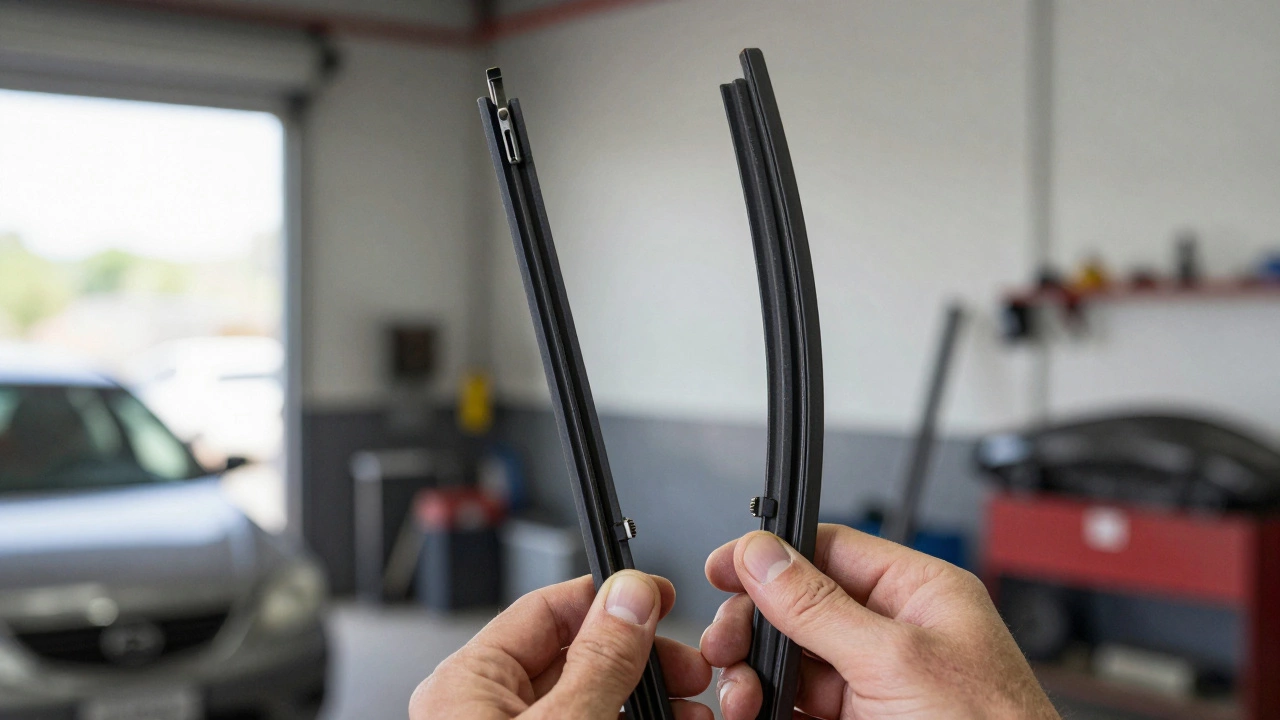
Are Windshield Wipers Universal? What You Need to Know Before Buying
Windshield wipers aren't universal - they vary by car make, model, and year. Learn how to find the right size and type to avoid streaks, noise, and damage. Replace them every 6-12 months for clear visibility.
December 1 2025