Car Suspension Problems: Signs, Causes, and How to Test It Yourself
When your car suspension, the system that connects your wheels to the chassis and absorbs road shocks. Also known as vehicle suspension, it keeps your tires on the road, controls body movement, and makes driving smooth and safe. starts failing, you don’t just get a bumpy ride—you risk losing control. A worn shock absorber, broken spring, or loose ball joint doesn’t just annoy you; it makes braking longer, steering less precise, and tires wear out faster. If you’ve noticed your car dipping when you brake, pulling to one side, or bouncing like a trampoline over speed bumps, you’re not imagining it. These are classic signs of suspension problems, a breakdown in the components that manage ride quality and handling.
Most people wait until their car feels like it’s falling apart before they check the suspension. But the truth is, suspension parts wear slowly. You won’t hear a loud crash—you’ll just notice your car doesn’t feel right anymore. A bad strut might make your steering feel loose. Worn control arms can cause uneven tire wear on the inside or outside edges. And if your car leans too much in turns, that’s your sway bar or bushings giving out. These aren’t just repair shop buzzwords—they’re real safety issues. The suspension test, a simple visual and physical check of suspension components. takes under 10 minutes and can save you from a costly accident. You don’t need fancy tools. Just look for leaks on shocks, check for cracked rubber bushings, and do the bounce test: push down hard on each corner of the car. If it bounces more than once, your shocks are worn out.
And here’s what most guides don’t tell you: suspension problems often hide behind other symptoms. That weird clunk when you go over a bump? Could be a ball joint. Your tires wearing unevenly? Might not be alignment—it’s the suspension. Even your brakes can feel off if the suspension isn’t holding the car level. That’s why checking your suspension isn’t just about comfort—it’s tied to your brakes, tires, steering, and overall safety. The posts below give you step-by-step ways to test your suspension, spot the damage early, and know exactly what parts need replacing. No guesswork. No overpriced shop quotes. Just clear, practical advice from people who’ve seen it all—whether you drive a hatchback or a family SUV.
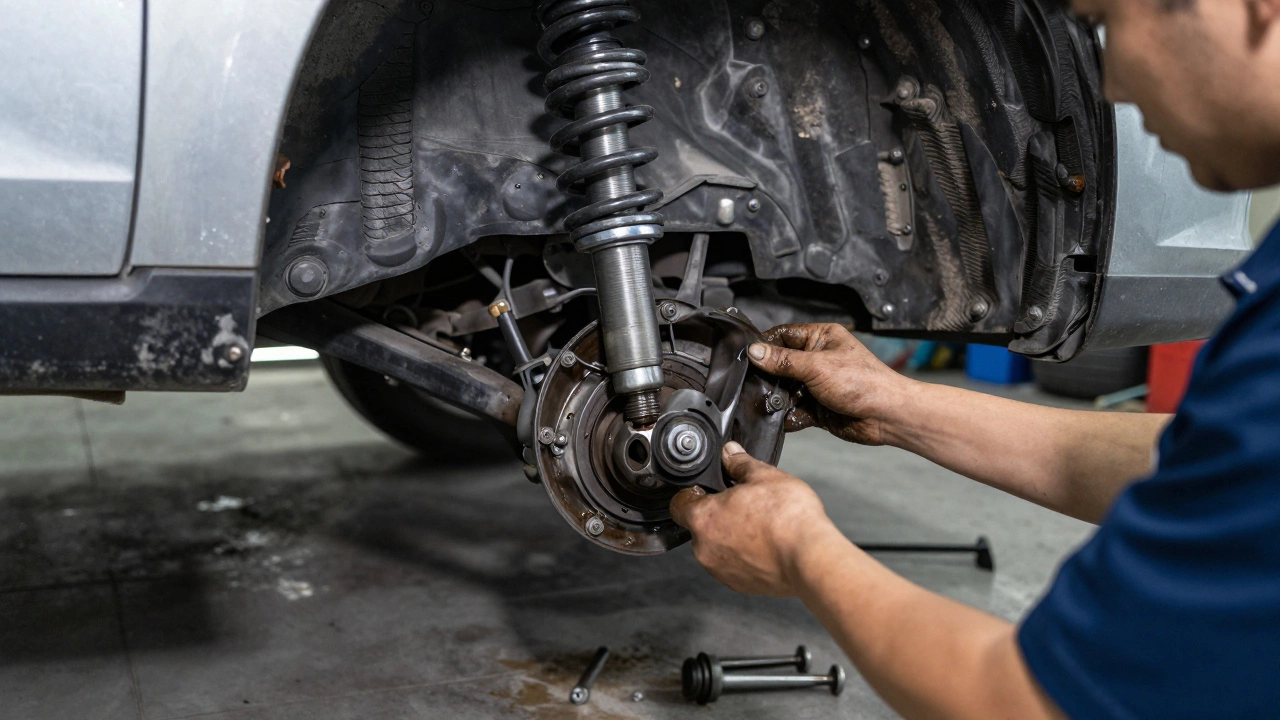
How Do I Know If I Need a New Front Suspension?
Learn the top signs your front suspension is failing-bouncing, clunking, uneven tire wear-and what to do before it becomes dangerous or costly. Get real advice for UK drivers.
January 26 2026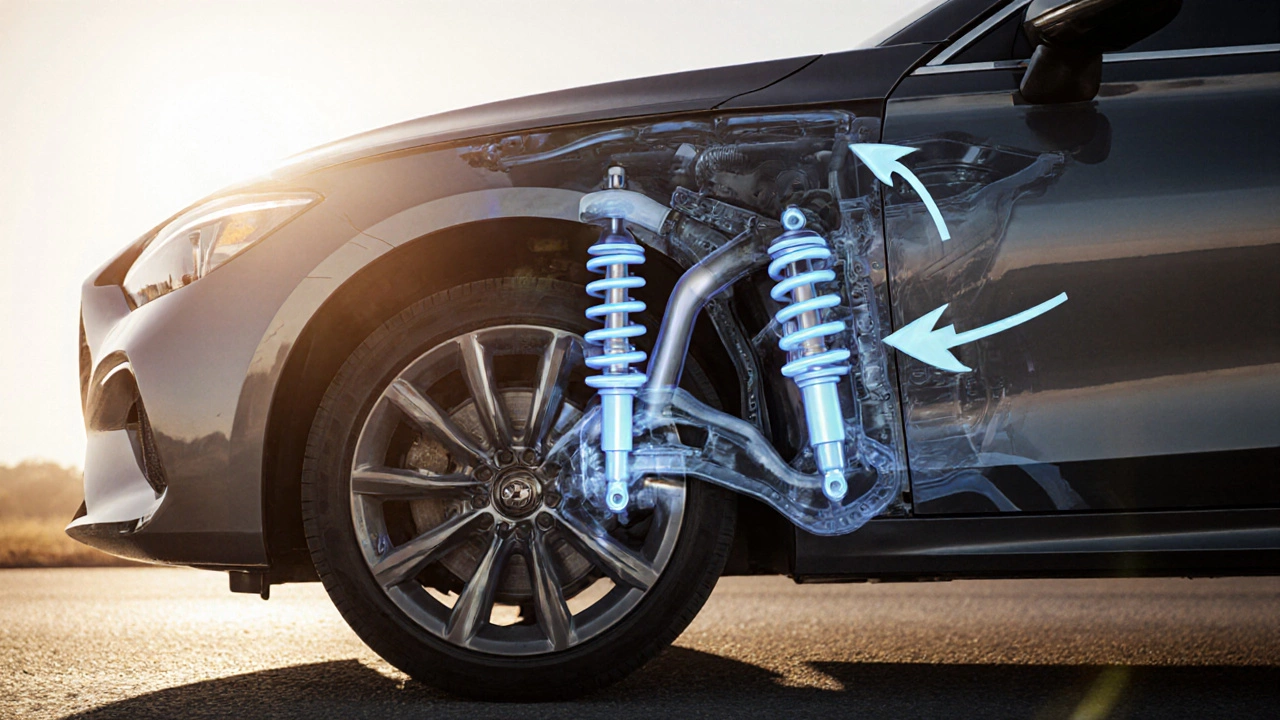
Does Bad Suspension Affect Engine? What Drivers Need to Know
Learn how a failing suspension can harm your engine, spot warning signs, and protect both systems with practical checks and repairs.
October 15 2025