Suspension Bounce Test Calculator
How to Perform the Bounce Test
Push down firmly on the front bumper and release. Count how many times your car bounces before settling.
Enter your bounce count to see your suspension status
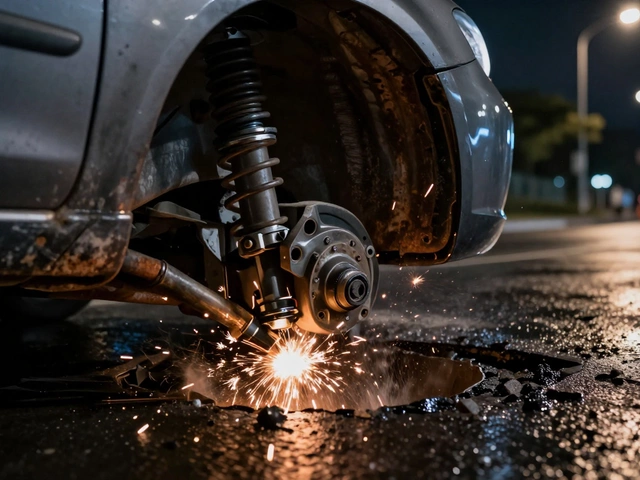
Your car feels bouncier than usual. You hear clunking when you hit a pothole. The steering feels loose, or your tires are wearing unevenly. These aren’t just annoying quirks-they’re warning signs your front suspension might be failing. And if you ignore them, you could end up with more expensive damage-or worse, a dangerous situation on the road.
What Even Is a Front Suspension?
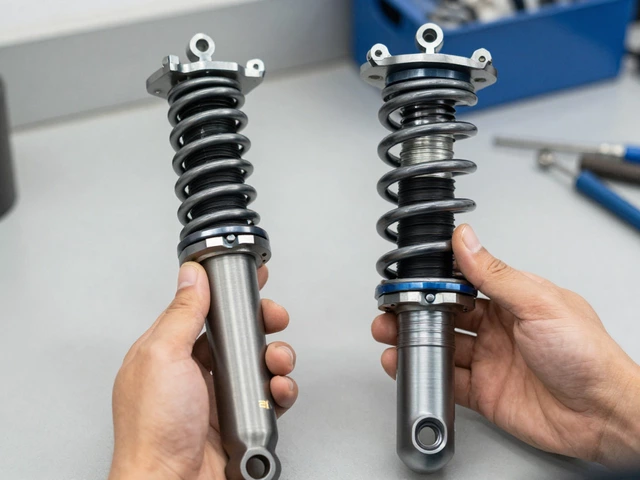
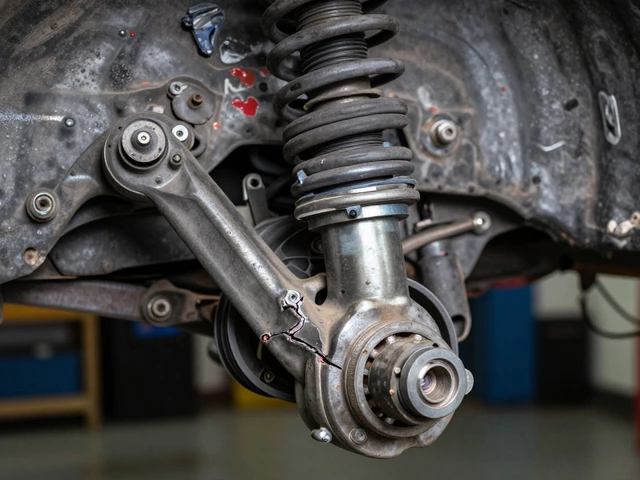
The front suspension is the system that connects your wheels to the car’s body. It’s made up of shocks, struts, control arms, ball joints, bushings, and springs. Its job? To absorb bumps, keep your tires on the road, and help you steer smoothly. It’s not just about comfort-it’s about control and safety. A worn suspension doesn’t just make your ride rough; it makes your car harder to stop and less stable in turns.
Most cars in the UK get around 50,000 to 80,000 miles out of their front suspension before parts start wearing out. But if you drive on rough roads, carry heavy loads, or frequently hit potholes (which we all know too well around Manchester), that number drops fast.
5 Clear Signs You Need a New Front Suspension
- Excessive bouncing after hitting a bump-If your car keeps bobbing up and down after you go over a speed bump or pothole, your shocks or struts are worn out. A healthy suspension should settle in one or two bounces. If it’s still rocking after five, it’s time to check it.
- Clunking or knocking noises-That loud clunk when you drive over uneven surfaces? It’s usually a sign of worn ball joints, control arm bushings, or strut mounts. These parts are made of rubber and metal, and over time, the rubber cracks and the metal grinds. You won’t hear it every day, but you’ll hear it when you hit the wrong patch of road.
- Uneven tire wear-If one side of your front tires is bald while the other still has tread, your suspension is misaligned. Worn control arms or ball joints let the wheel tilt inward or outward, causing the tire to scrub against the road. This isn’t just a tire problem-it’s a suspension problem.
- Front end dipping when braking-When you brake hard, your car should stay level. If the front end dives down like a diving board, your shocks aren’t controlling the weight transfer. This increases your stopping distance and makes braking less predictable.
- Steering feels loose or wobbly-If your steering wheel shakes at highway speeds or the car feels like it’s drifting side to side, worn suspension parts are to blame. Ball joints and tie rod ends loosen over time, and that looseness translates into poor steering response.
How to Test Your Suspension at Home
You don’t need a garage or special tools to do a basic check. Here’s what to do:
- The bounce test-Push down hard on the front bumper, then let go. Count how many times the car bounces. One or two? Good. Three or more? Your shocks are worn.
- Look for oil leaks-Shocks and struts are filled with hydraulic fluid. If you see oily residue on the outside of the shock body, it’s leaking. That means it’s losing pressure and won’t work properly.
- Check for physical damage-Crawl under the front of your car (safely, on level ground). Look for cracked or broken rubber bushings, bent control arms, or rusted bolts. Even a small crack in a bushing can cause big problems.
- Inspect tire wear-Look at your front tires from above. If you see cupping (scalloped dips along the tread) or excessive wear on the inside or outside edge, suspension wear is likely the cause.
What Happens If You Don’t Fix It?
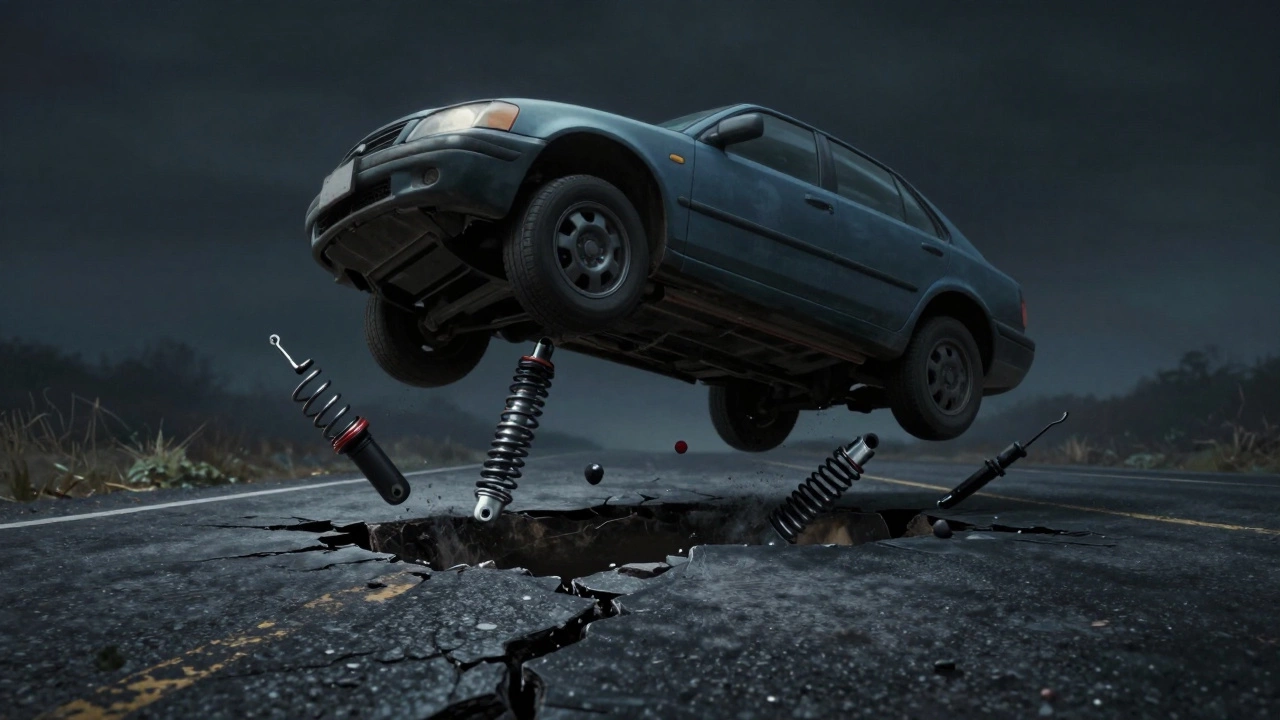
Driving with bad suspension isn’t just uncomfortable-it’s risky. Here’s what you’re risking:
- Longer stopping distances-Worn shocks reduce tire contact with the road. That means less grip when you brake. In wet conditions, that could mean a 20% longer stopping distance.
- More damage to other parts-A failing suspension puts extra stress on your tires, brakes, steering components, and even the frame. Replacing worn suspension parts early can save you hundreds in other repairs.
- Loss of control in emergencies-If you need to swerve suddenly to avoid an obstacle, a weak suspension won’t hold the car steady. You could lose traction or even roll over in extreme cases.
- Failed MOT-In the UK, worn suspension components are a common reason for MOT failure. Ball joints with more than 3mm of play, leaking shocks, or broken springs will all fail the test.
When to Replace vs. Repair
You don’t always need to replace the whole system. But you do need to know what’s worth fixing:
- Replace shocks or struts-These are wear items. Once they’re worn, they can’t be repaired. Replacing them in pairs (front left and right) is always recommended.
- Replace ball joints or bushings-Sometimes only one part is worn. But if one ball joint is bad, the other is probably close behind. Replacing both saves you a second trip to the garage.
- Don’t just replace springs-Springs rarely fail unless they’re broken or sagging badly. If your car sits lower on one side, that’s a sign. But if your shocks are worn and the springs are still good, you might only need shocks.
Most mechanics will recommend replacing shocks and struts together, even if only one side is bad. It’s not about being greedy-it’s about balance. Uneven suspension leads to uneven handling.

What to Expect in Cost and Time
Front suspension repair costs vary by car make and part quality. Here’s a rough idea for a typical family car in the UK:
| Part | Parts Only | Parts + Labour |
|---|---|---|
| Front shock absorber (pair) | £120-£250 | £300-£500 |
| Front strut assembly (pair) | £300-£600 | £600-£1,000 |
| Ball joint (single) | £30-£80 | £100-£180 |
| Control arm bushings (pair) | £50-£120 | £200-£350 |
Labour usually takes 2-4 hours per axle. If you’re replacing struts, the job takes longer because the spring needs to be compressed safely. Always get a quote that includes wheel alignment after the job-this is essential and often overlooked.
How to Make Your Suspension Last Longer
Good maintenance helps:
- Avoid potholes when you can. Even small ones add up.
- Don’t overload your car. Excess weight stresses springs and shocks.
- Get your alignment checked every 10,000 miles or after hitting a major bump.
- Replace worn parts in pairs. Don’t wait for the other side to fail.
- Have your suspension inspected every 20,000 miles if you drive in rough conditions.
Many people wait until they hear a noise or feel a shake. But the best time to fix suspension is before it breaks-when you still have control, safety, and options.
Can I drive with a bad front suspension?
You can, but you shouldn’t. Driving with worn suspension reduces braking performance, makes steering unpredictable, and increases the risk of losing control. It also causes extra wear on your tires and brakes, leading to higher repair bills. If you notice any of the warning signs, get it checked within a week.
Do I need to replace both front shocks at the same time?
Yes. Even if only one side is leaking or noisy, the other side is likely just as worn. Replacing them together ensures even handling and prevents uneven ride height or pulling to one side. It’s not optional-it’s a safety standard.
How often should front suspension be inspected?
Check it every 20,000 miles if you drive on rough roads, or every 40,000 miles under normal conditions. Many mechanics include a suspension check during a service, but if you’re unsure, ask for it. A visual inspection takes less than 10 minutes and can save you hundreds.
Is it cheaper to repair or replace suspension parts?
Most suspension parts can’t be repaired-they must be replaced. Ball joints, bushings, shocks, and struts are designed as sealed units. Trying to rebuild them isn’t safe or cost-effective. Replacement is the only reliable fix.
Will new suspension make my car ride smoother?
Absolutely. New shocks and struts restore the original ride quality. You’ll notice less bouncing, better road grip, and more stable steering. Many people are surprised how much better their car feels after a suspension upgrade-even if they didn’t realize how bad it had become.
Next Steps
If you’re noticing any of these signs, don’t wait. Book a suspension check with a trusted mechanic. Bring your car in before your next MOT-it’s cheaper, safer, and less stressful than failing the test. And if you’re replacing parts, go for quality. Cheap shocks might save you money now, but they’ll wear out in 10,000 miles. Good ones last 50,000+.
Your suspension isn’t flashy. But it’s one of the most important systems in your car. When it works, you don’t notice it. When it fails, you feel it-hard.