Car Radiator Install: How to Do It Right and Avoid Costly Mistakes
When your engine starts running hot, the car radiator, a key part of your vehicle’s cooling system that circulates coolant to keep the engine at a safe temperature. Also known as engine radiator, it’s not just a metal box under the hood—it’s the first line of defense against overheating and engine failure. A bad radiator doesn’t always scream for help. Sometimes it just leaks a little, bubbles quietly, or makes your temperature gauge creep up during a long drive. That’s why knowing how to car radiator install correctly matters—not just for saving money, but for keeping your engine alive.
A radiator doesn’t work alone. It’s tied to the coolant system, the network of hoses, water pump, thermostat, and coolant fluid that moves heat away from the engine. If you’re replacing the radiator, you’re not just swapping one part—you’re maintaining the whole system. A clogged hose, a worn thermostat, or old coolant can kill a brand-new radiator before it even starts working. That’s why most professionals check all those parts during a radiator install. You don’t want to spend hours and cash only to find out the real problem was a stuck thermostat or dirty coolant.
The engine overheating, a dangerous condition where the engine runs too hot, leading to warped parts, blown head gaskets, or total engine seizure. is the biggest risk if your radiator fails. And it doesn’t take long. In hot weather or heavy traffic, a weak radiator can push your engine past its limit in minutes. That’s why signs like coolant leaks under the car, white smoke from the exhaust, or a sweet smell inside the cabin aren’t just annoyances—they’re warnings. If you’ve seen those signs, you’re not just looking at a radiator replacement—you’re looking at a potential engine rescue mission.
Doing a radiator install yourself? It’s doable, but don’t rush it. Drain the coolant properly, mark your hoses, and never force a connection. A loose clamp or crossed hose can lead to a mess—or worse, a breakdown on the highway. And always flush the system before installing the new radiator. Old coolant turns acidic over time and eats away at metal parts. If you skip that step, you’re setting up your new radiator to fail early.
And don’t forget the basics: use the right coolant type for your car. Mixing wrong fluids or using plain water can cause corrosion or overheating. Check your owner’s manual—or better yet, look up your exact model. A radiator install isn’t just about the part. It’s about understanding how your cooling system works as a whole.
Below, you’ll find real-world guides from people who’ve been there—how to spot radiator failure before it hits, what tools you actually need, why some replacements fail within months, and how to avoid the traps that cost drivers hundreds in extra repairs. Whether you’re a DIYer or just trying to understand what your mechanic is telling you, these posts give you the facts—not the fluff.
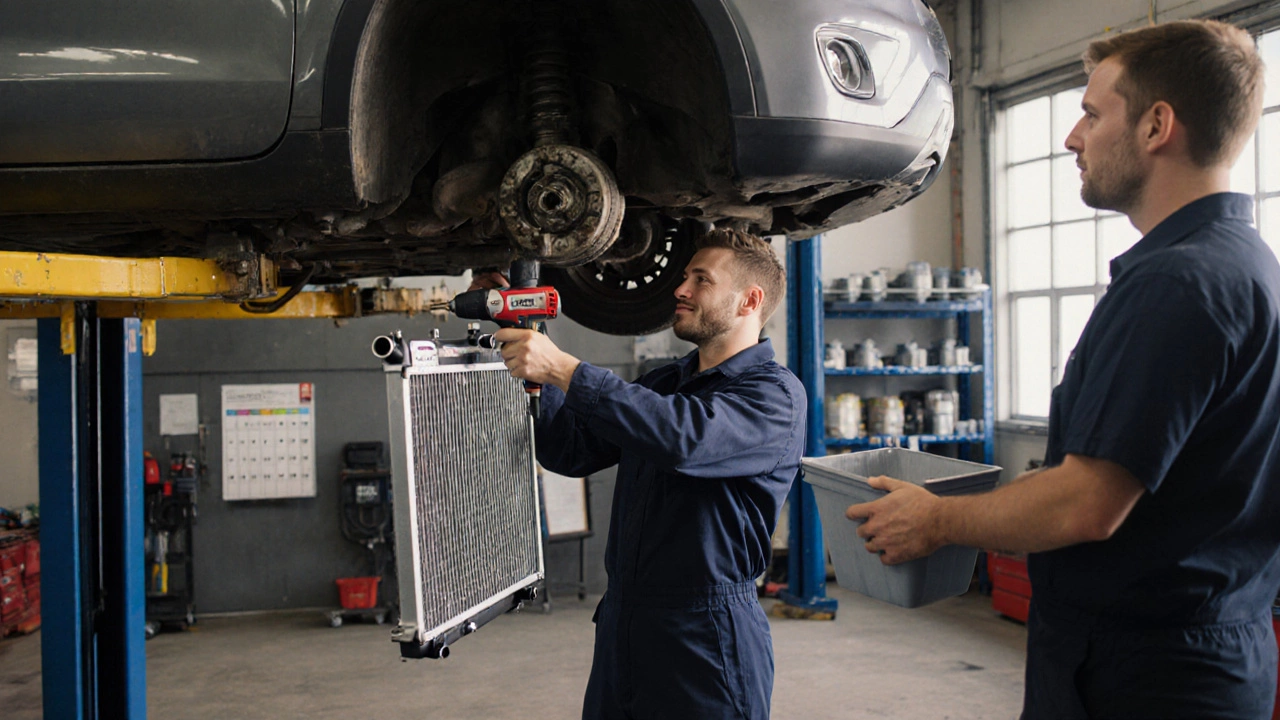
Radiator Replacement Time: How Many Days Does It Really Take?
Learn the typical calendar days for a radiator swap, factors that affect timing, DIY vs. professional estimates, and a step‑by‑step guide to avoid delays.
October 7 2025