Bad Suspension Engine Damage: How Faulty Suspension Can Destroy Your Engine
When your suspension, the system that connects your car to the road, absorbing bumps and keeping tires in contact with the surface goes bad, you don’t just get a bumpy ride. You invite serious damage to your engine. A worn-out suspension doesn’t just make your car feel loose or noisy—it changes how weight shifts under acceleration, braking, and cornering. That extra stress doesn’t stay in the suspension. It travels straight into your engine mounts, exhaust system, and even the crankshaft. Think of it like walking on uneven ground while carrying a full glass of water. Eventually, it spills. And in your car, that spill is engine damage.
Engine mounts, rubber-and-metal brackets that hold the engine steady and absorb vibrations are the first to suffer. When your suspension, the system that connects your car to the road, absorbing bumps and keeping tires in contact with the surface can’t control wheel movement, the engine jerks sideways and up-and-down with every bump. Over time, those mounts crack, break, or come loose. Once they do, the engine moves more than it should—hitting the firewall, rubbing against hoses, or straining the exhaust system. That’s how a bad suspension leads to cracked exhaust manifolds, broken sensor wires, or even oil leaks from shifted seals. And if your control arms, components that connect wheels to the chassis and allow them to move up and down are bent or worn, your wheels tilt inward or outward. That causes uneven tire wear, which makes your car pull to one side. The engine then works harder to keep the car straight, increasing load on the transmission and drivetrain.
You can’t fix this by just replacing shocks or struts. You need to test the whole system. A simple bounce test—pressing down on each corner of your car and watching how it rebounds—can reveal if your shocks are dead. If it bounces more than once, your suspension is worn. Look for leaking fluid, cracked rubber bushings, or rusted links. Listen for clunks when going over bumps. These aren’t just annoying sounds—they’re warning signs your engine is taking the hit. And if you’ve been ignoring them for months, you might already be dealing with hidden damage: misaligned sensors, stressed engine components, or even a warped flywheel from the extra vibration.
That’s why checking your suspension isn’t just about comfort. It’s about protecting your engine. A car with bad suspension doesn’t just drive poorly—it runs poorly. Fuel economy drops. Engine sensors get confused. Oil pressure fluctuates. And eventually, the stress adds up to a repair bill that’s way bigger than replacing a set of shocks. The posts below give you the exact steps to test your suspension, spot early warning signs, and understand how one failing part can trigger a chain reaction that ends with your engine in trouble. You’ll learn what to look for, what to ignore, and when to act before the damage becomes irreversible.
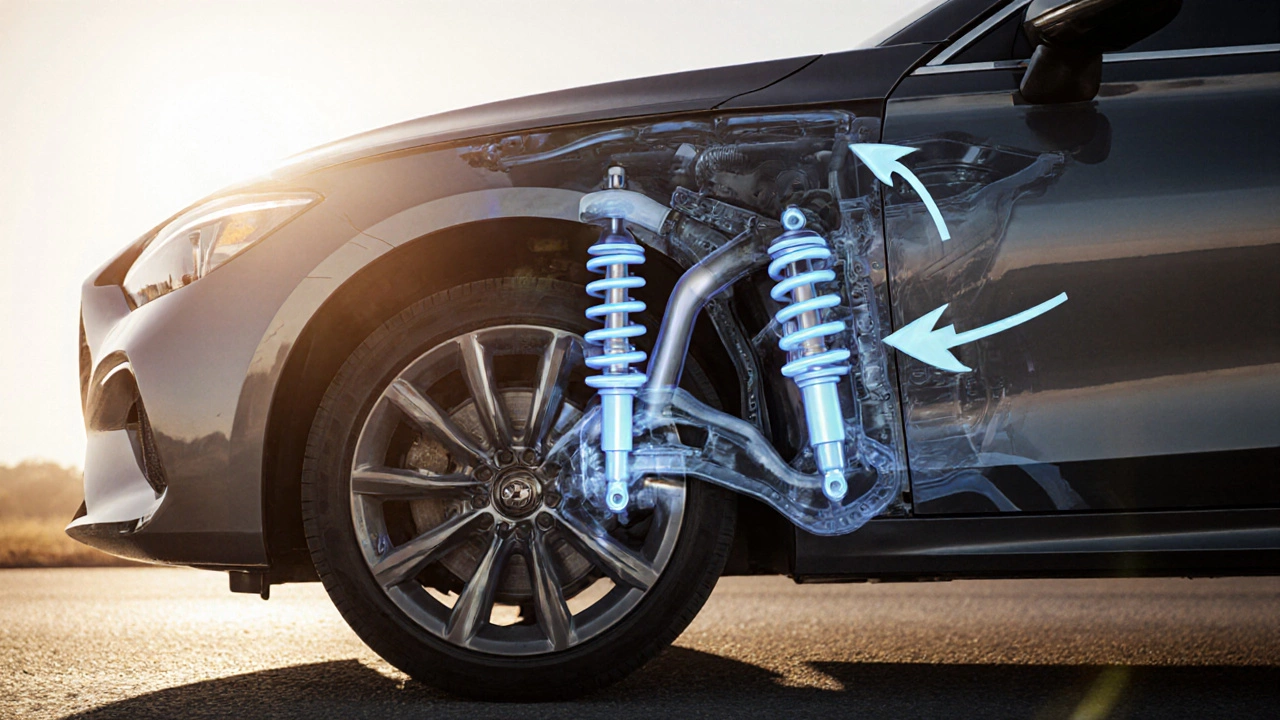
Does Bad Suspension Affect Engine? What Drivers Need to Know
Learn how a failing suspension can harm your engine, spot warning signs, and protect both systems with practical checks and repairs.
October 15 2025