Air Filter Fuel Savings Calculator
The engine air filter affects your fuel efficiency. A dirty filter can reduce fuel economy by up to 10%. Calculate your potential savings from replacing it.
Your current fuel consumption:
With dirty filter:
Potential savings: liters per year
Why this matters: A dirty engine air filter can cause your engine to work harder, leading to reduced fuel efficiency and increased emissions. Replacing it restores optimal performance.
Most people don’t think about air filters until their car starts running poorly or the air inside feels dusty. But air filters do more than just keep dirt out-they protect your engine, improve fuel efficiency, and even keep your lungs safe. There are two main types in every car: the engine air filter and the cabin air filter. They look similar, but they serve completely different jobs.
Engine Air Filter: Keeping Your Engine Alive
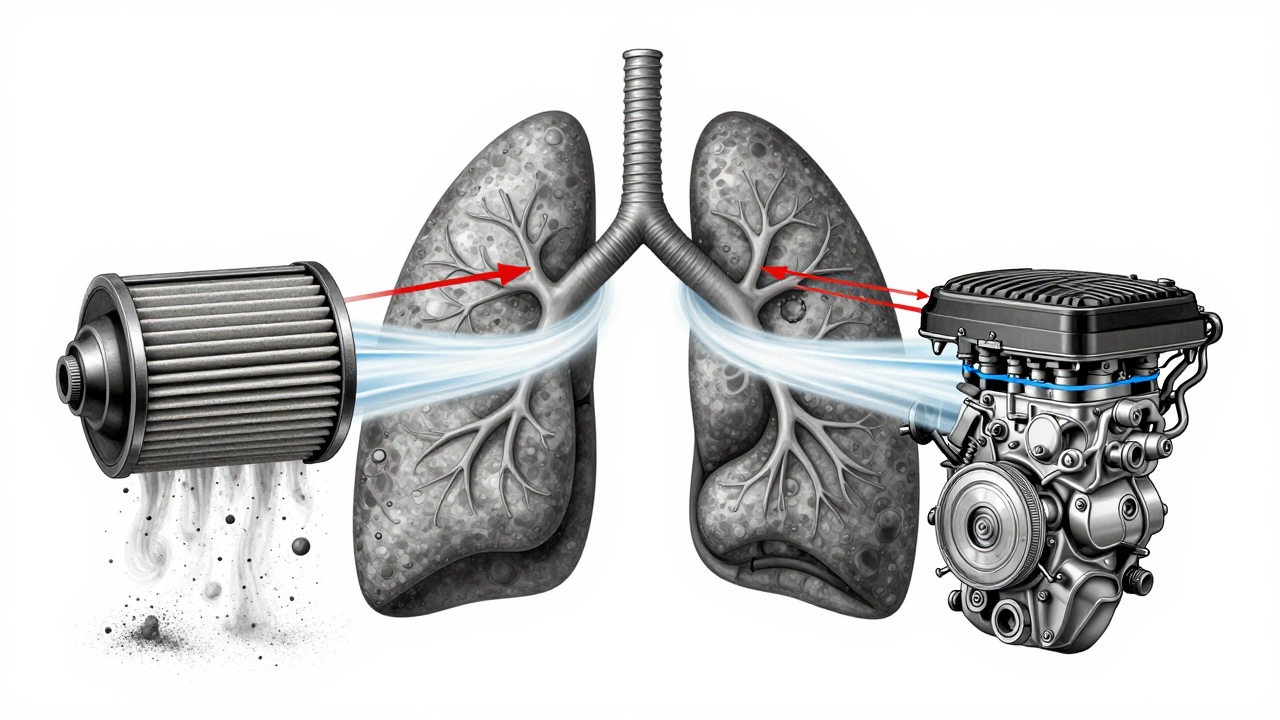
The engine air filter sits between the outside world and your car’s intake system. Its only job? Block dust, pollen, sand, leaves, and bugs from getting into the engine. Sounds simple, right? But here’s the catch: even a tiny amount of dirt can wreck an engine. Modern engines run with tight tolerances-sometimes less than the width of a human hair between moving parts. One grain of sand can scratch a cylinder wall, wear down piston rings, or clog fuel injectors. That’s not a repair you want to face at 70 mph.
Think of it like this: your engine breathes about 10,000 gallons of air for every gallon of fuel it burns. That’s a lot of air. And with that air comes everything else-road dust in Manchester, pollen in spring, even ash from nearby fires. The filter traps it all. A clean filter lets air flow smoothly so the engine can mix the right amount of fuel and air. A clogged one? It forces the engine to work harder. That means less power, worse fuel economy, and higher emissions. In fact, a dirty engine air filter can drop your fuel efficiency by up to 10%, according to the U.S. Department of Energy.
Cabin Air Filter: Breathing Easy Inside
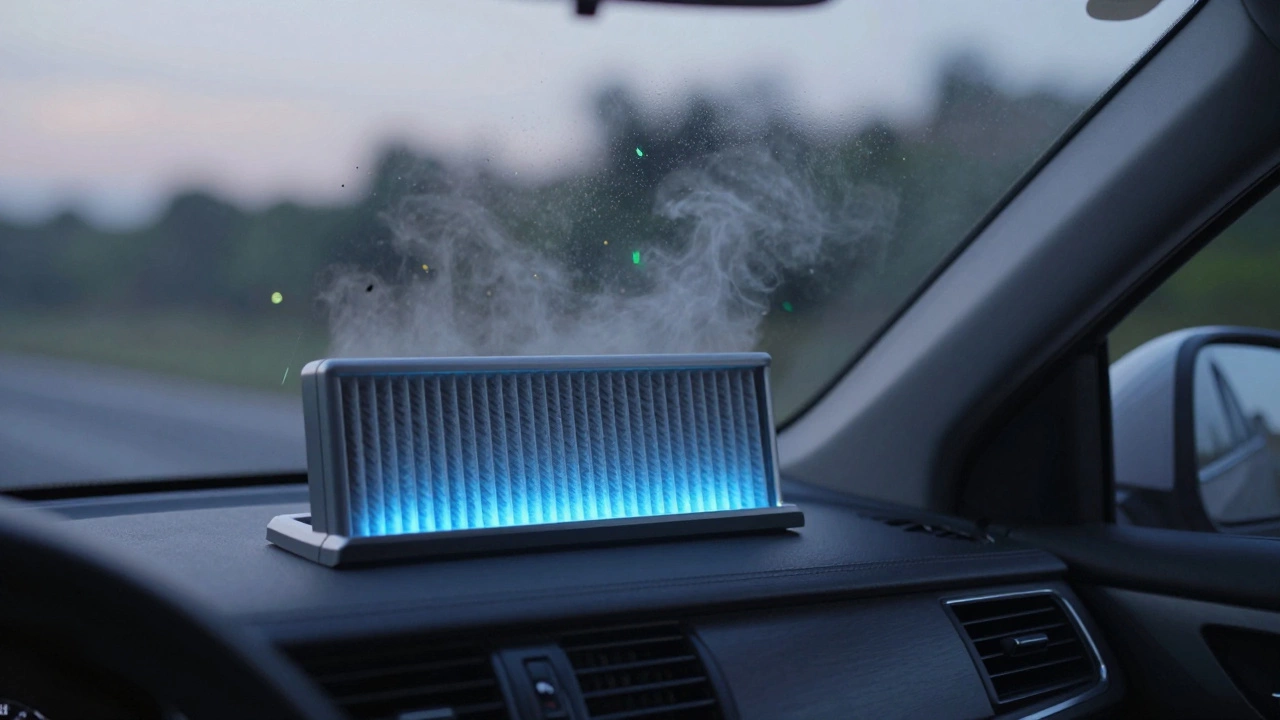
While the engine filter protects metal parts, the cabin air filter protects you. It’s usually located behind the glovebox or under the dashboard, and it cleans the air that flows through your HVAC system. Without it, every sneeze, exhaust fume, and pollen cloud from the road gets blown straight into your lungs. In cities like Manchester, where traffic and damp weather mix, that’s a big deal. Pollutants like soot, brake dust, and industrial particles are common. A good cabin filter blocks 90% of those.
Modern cabin filters don’t just catch dirt. Many use activated carbon layers to absorb odors-like exhaust fumes, cigarette smoke, or damp car smells. Others are designed for allergies, trapping pollen, mold spores, and pet dander. If you’ve ever sneezed the moment you turned on the heater, you probably have a clogged or missing cabin filter. Replacing it takes 15 minutes and costs less than £20. It’s one of the cheapest health upgrades you can make in your car.
What Happens When You Ignore Them?
Some drivers wait until the check engine light comes on. Others don’t even know these filters exist. Both are risky.
If the engine air filter is too dirty, the engine may run rich (too much fuel, not enough air). That leads to carbon buildup on valves and spark plugs. You’ll notice sluggish acceleration, rough idling, or even hard starts. In extreme cases, dirt sneaks through and scores the inside of cylinders. That’s not a filter replacement-that’s a rebuild.
For the cabin filter, the signs are more obvious. Weak airflow from vents, foggy windows (because moisture builds up when air can’t circulate), and that stale, musty smell when you turn on the AC. That’s not just unpleasant-it’s a sign the filter is full of mold. And mold spores? They can trigger asthma attacks or allergic reactions, especially in kids or elderly passengers.
How Often Should You Replace Them?
There’s no universal rule. It depends on where you drive and how much you drive.
- Engine air filter: Most manufacturers recommend replacement every 15,000 to 30,000 miles. But if you drive on gravel roads, in dusty areas, or in heavy city traffic, check it every 10,000 miles. A quick visual inspection works: hold it up to a light. If you can’t see light through it, it’s time.
- Cabin air filter: Replace it once a year, or every 12,000 to 15,000 miles. If you have allergies, or drive in high-pollution areas, replace it every 6 months. Don’t wait for the smell-it’s already too late.
Many people skip cabin filters because they’re hidden. But they’re just as important as oil changes. In fact, the cabin filter degrades faster than the engine filter because it’s exposed to moisture and organic matter-perfect conditions for mold.
Types of Filters and What to Choose
Not all filters are created equal. Here’s what’s out there:
| Filter Type | Engine Air Filter | Cabin Air Filter |
|---|---|---|
| Standard Paper | Most common. Affordable, effective. Replace every 15k-30k miles. | Basic protection. Blocks dust and pollen. Replace annually. |
| Performance (Cotton Gauze) | Reusable. Better airflow. Popular with enthusiasts. Requires cleaning. | Not used in cabin filters. |
| Activated Carbon | Not used in engine filters. | Best for odors and fumes. Ideal for city driving. |
| HEPA-Style | Too restrictive for engines. | Traps 99.97% of particles. Great for allergies. May reduce airflow. |
For most drivers, stick with the manufacturer’s recommendation. But if you live in a dusty area or have allergies, upgrading to a carbon or HEPA-style cabin filter is worth it. Engine filters? Stick with OEM or a trusted brand like K&N or Mann-Filter. Avoid cheap no-name filters-they often don’t seal properly, letting dust sneak in.
Real-Life Impact: A Manchester Example
Take a 2020 Ford Focus driven daily in Manchester. It’s wet, urban, and busy. The driver doesn’t change the cabin filter for two years. By the third winter, the heater barely blows air. The vents smell like wet socks. The driver starts getting headaches after short drives. They replace the filter. Instantly, airflow returns. The smell vanishes. Headaches stop. That’s not magic-it’s science.
On the engine side, a driver who went 45,000 miles without a filter change noticed a 12% drop in fuel economy. After replacing it, their mpg jumped back up. That’s £150 saved in fuel over a year.
Final Thought: It’s Not a Luxury, It’s a Necessity
Air filters are invisible, easy to ignore, and cheap to replace. But they’re also critical. One filter keeps your engine from turning into scrap metal. The other keeps your family from breathing in poison. You don’t need to spend hours on maintenance. Just check them once a year. Replace them when they’re dirty. It’s one of the smartest, simplest things you can do for your car-and your health.