Suspension Stiffness Diagnostic Tool
Select all the symptoms you currently experience while driving your vehicle.
Stiffness Index
Ready to Test
Ever get into your car after a drive over potholes or speed bumps and feel like you’ve just been in a minor accident? If your spine feels compressed and your coffee is sloshing out of its cup with every small bump, your suspension might be fighting against you rather than working for you. We often obsess over how a car handles corners, but we forget that the primary job of the suspension is comfort and tire contact. When things go wrong-or when modifications go too far-the result is a harsh, jittery ride that ruins the driving experience.
Identifying whether your suspension is simply worn out or actually tuned too stiffly requires looking at both how the car behaves on the road and what physical changes have been made under the hood. It’s not always obvious, especially if you’ve recently upgraded parts thinking it would improve performance. Let’s break down exactly what to look for, how to test it yourself, and when it’s time to make adjustments.
The Physical Symptoms of an Over-Stiff Setup
Your body is the best sensor you have. If the car feels disconnected from the road in a violent way, pay attention to specific sensations. A properly tuned stiff suspension (like on a sports car) should feel planted and controlled, not chaotic. Here is the difference between "sporty" and "too stiff":
- The "Bouncing" Effect: After hitting a single bump, does the car settle immediately, or does it oscillate up and down two or three times before stopping? This is called excessive rebound. It happens when the dampers are too hard to control the spring energy quickly enough, causing the chassis to bounce like a pogo stick.
- Numbness in the Steering Wheel: You shouldn’t feel every pebble on the road through your palms. If your hands are constantly vibrating or jerking, the front suspension isn’t absorbing high-frequency vibrations. This leads to driver fatigue very quickly.
- Passenger Complaints: Ask your passengers. If they describe the ride as "choppy," "harsh," or say they feel nauseous on bumpy roads, your setup is likely too aggressive for daily driving. Motion sickness in cars is often caused by rapid, uncontrolled vertical movements.
- Noise Intrusion: A stiff suspension transmits more noise into the cabin. You’ll hear distinct thuds, clunks, or rattles from the wheel wells and subframe that were previously muffled by softer bushings and dampers.
Performance Paradox: Why Stiffer Isn’t Always Faster
Many drivers believe that stiffer equals better handling. While true for track days on smooth surfaces, this logic fails on real-world roads. The goal of suspension tuning is to keep the tires in contact with the asphalt. If the suspension is too stiff, the wheels will skip over imperfections in the road surface.
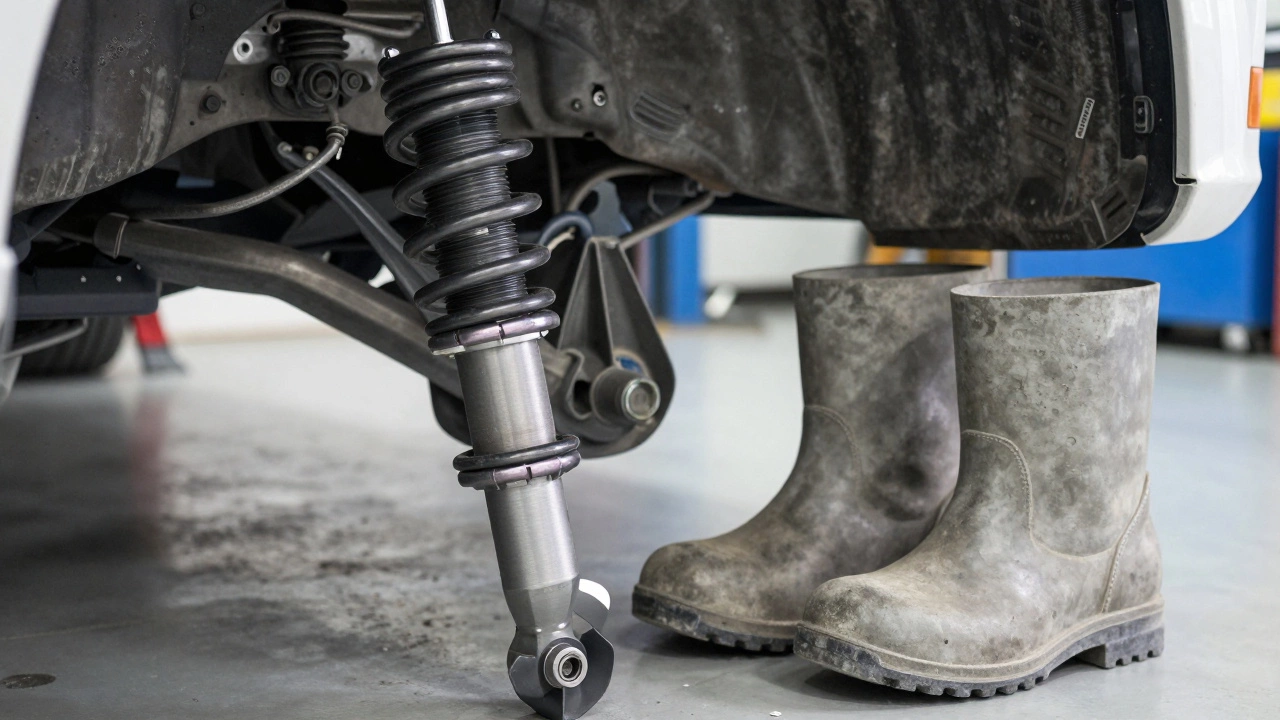
Imagine running on pavement while wearing concrete boots. You can stand still fine, but try to run over gravel. Your feet will slip because they aren’t conforming to the ground. Similarly, if your shocks are too stiff, the tires lose grip during braking and cornering because they are bouncing off the road texture instead of hugging it. This results in longer stopping distances and unpredictable steering inputs, particularly in wet conditions where traction is already compromised.
Common Culprits: What Causes Excessive Stiffness?
If you haven’t modified your car, wear and tear can sometimes make the ride feel harsher, though usually, worn parts make it feel *looser*. However, certain aging components lose their ability to flex, turning rubber into brittle plastic. But most often, stiffness comes from aftermarket upgrades or incorrect maintenance.
| Component | Why It Increases Stiffness | Solution |
|---|---|---|
| Coilover Springs | Higher spring rates (e.g., jumping from 100 N/mm to 250 N/mm) resist compression more aggressively. | Install progressive springs or lower rate coils suitable for street use. |
| Shock Absorbers | Track-focused dampers have high valving for rebound and compression, transmitting road shock directly to the chassis. | Swap to monotube shocks with adjustable damping or OEM-spec replacements. |
| Anti-Roll Bars | Thicker bars reduce body roll but increase unsprung weight transfer, making each wheel act independently and harshly. | Use thinner bars or end-links with some compliance. |
| Tire Pressure | Over-inflated tires act like secondary springs, adding to the overall system stiffness. | Check pressures against door jamb recommendations, not max sidewall PSI. |
How to Test Your Suspension at Home
You don’t need a professional alignment rack to diagnose a harsh ride. You can perform several simple tests in your driveway or on a quiet neighborhood street.
- The Bounce Test: Push down firmly on one corner of the car and release. Watch how it moves. It should return to its resting position within one or two cycles. If it keeps bouncing, your shocks are weak (which can feel unstable), but if it doesn’t move much at all and feels rigid, your springs may be excessively rate-heavy for the damper’s capability.
- The Speed Bump Audit: Drive over a standard speed bump at 10 mph. Listen and feel. A healthy suspension absorbs the impact with a soft "thump." A too-stiff suspension will produce a sharp "clack" or transmit a jolt straight up through the seat. Do this for all four corners.
- The Uneven Road Check: Find a road with expansion joints or mild ruts. Drive slowly. If the car feels like it’s skipping or chattering across the surface, the suspension isn’t compliant enough to maintain tire contact. This is a clear sign of over-damping.
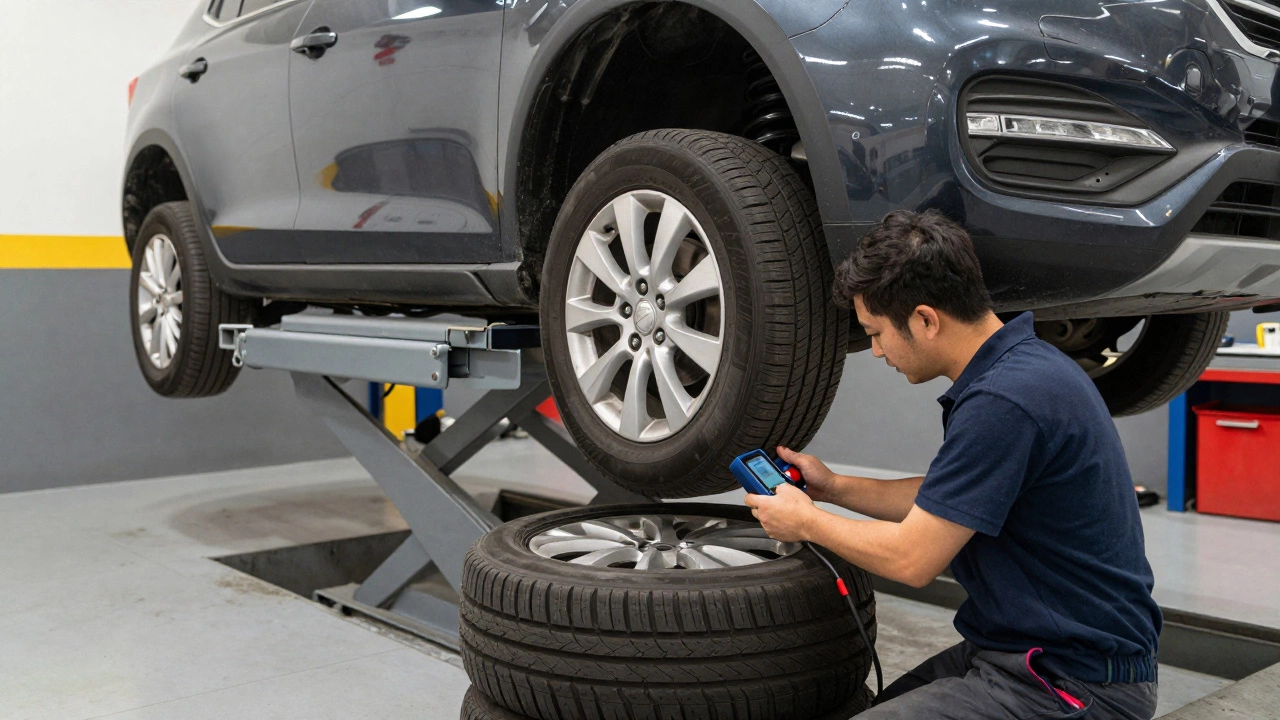
- Visual Inspection for Binding: Jack up the car safely and push the tire up and down by hand. It should move smoothly with resistance from the spring/shock. If you feel grinding, sticking, or uneven resistance, there may be mechanical binding in the strut mounts or bushings, which creates artificial stiffness.
Fixing the Problem: Adjustments and Upgrades
Once you’ve confirmed the suspension is too stiff, the solution depends on your current setup. If you’re on stock equipment, the issue might be something simpler, like tire pressure or worn bushings that have hardened with age. In these cases, replacing control arm bushings with polyurethane or softer rubber options can restore compliance.
If you’ve installed aftermarket parts, here is how to dial it back:
- Adjust Rebound Damping: Most coilovers allow you to adjust rebound (the speed at which the spring extends). Turning the knob toward "soft" allows the suspension to recover faster after compression, reducing the bouncing sensation.
- Lower Tire Pressures: Dropping your tire pressure by 5-10 PSI (within safe limits) can significantly soften the ride without changing any hardware. This is the cheapest and easiest fix.
- Switch to Progressive Springs: These springs start soft for daily bumps and get stiffer only when heavily compressed during hard cornering. They offer the best of both worlds for street-driven cars.
- Replace Shocks with Street-Oriented Units: Look for shocks labeled "street performance" or "comfort." Brands like Bilstein, Koni, and Kayaba offer specific lines designed to retain handling while improving ride quality over track-only alternatives.
When to Seek Professional Help
Sometimes, the issue isn’t just stiffness-it’s geometry. If your suspension was lowered incorrectly, the camber angles might be off, causing the tires to scrub against the road, creating vibration that feels like stiffness. An alignment check can rule this out.
Additionally, if you hear knocking noises accompanied by the harsh ride, you may have damaged internal components in the struts or broken mounting points. Ignoring this can lead to catastrophic failure while driving. Visit a trusted mechanic who specializes in suspension work if you suspect internal damage or if simple adjustments don’t resolve the harshness.
Can old shock absorbers make the ride feel stiffer?
Usually, worn shocks make the ride feel looser or bouncier because they leak fluid and lose damping capacity. However, if the internal valves seize due to lack of maintenance or corrosion, the shock can lock up, acting like a solid bar. This makes the ride extremely harsh and stiff. If your shocks are old and the ride has suddenly become brutal, they may be seized and need replacement.
Does lowering my car automatically make the suspension stiffer?
Not necessarily, but it often correlates. Lowering springs are typically wound tighter (higher spring rate) to support the car at a reduced height without bottoming out. Additionally, lowering changes the suspension geometry, which can cause components to bind if not adjusted correctly. To lower a car without sacrificing too much comfort, consider using lowering springs paired with high-quality, adjustable shock absorbers designed for street use.
How do I know if my anti-roll bar is too thick?
A thick anti-roll bar reduces body lean in corners but connects the left and right wheels more rigidly. On uneven roads, this means when one wheel hits a bump, the other wheel is pulled upward, causing the car to feel twitchy or harsh. If you notice the car feeling unsettled on rough patches or one side of the road is worse than the other, your anti-roll bars might be too aggressive for daily driving. Swapping to thinner bars or adding flexible end-links can help.
Will new tires fix a stiff suspension?
New tires won’t fix a fundamentally stiff suspension setup, but they can mitigate the harshness. Tires act as the first layer of suspension. Run-flat tires, performance summer tires, or low-profile tires tend to be stiffer and transmit more road noise and vibration. Switching to a tire with a higher aspect ratio (taller sidewall) or a touring compound can absorb more impact before it reaches the suspension, making the ride feel smoother even if the underlying hardware remains unchanged.
Is it safe to drive with a suspension that is too stiff?
It is generally safe in terms of mechanical failure risk, provided no components are broken or seized. However, it is less safe in terms of vehicle control. A suspension that is too stiff loses tire contact with the road more easily on imperfect surfaces, increasing the risk of skidding during braking or cornering. It also causes driver fatigue, which can lead to slower reaction times. For optimal safety and comfort, the suspension should be tuned to match your typical driving conditions.