Suspension Safety Risk Assessment Tool
Select all the symptoms your vehicle is currently exhibiting to assess the risk level:
Analyzing...
Potential Impact:
Recommended Action:
Quick Takeaways
- Driving with bad suspension increases your braking distance significantly.
- Worn parts cause rapid, uneven tire wear (cupping), leading to expensive premature replacements.
- Severe failure can lead to complete loss of control or mechanical collapse while driving.
- Small leaks in shocks are warning signs; total failure is a critical emergency.
The Short Answer: Can You Actually Do It?
Technically, yes, your car will still move forward. But whether you should drive is a different story. If your car is just slightly "floaty," you can likely make it to a garage. However, if you hear loud clunking, feel the steering wheel shaking, or notice the car dipping dangerously during braking, you are risking a mechanical failure that could lock your wheels or snap a component.
When we talk about Suspension is the system of springs, shock absorbers, and linkages that connects a vehicle to its wheels, we aren't just talking about comfort. It's what keeps your tires in contact with the road. If the suspension fails, the tire loses its grip, and once that happens, you're no longer steering the car-you're just suggesting a direction while the physics of the road take over.
How Your Shock Absorbers Control the Chaos
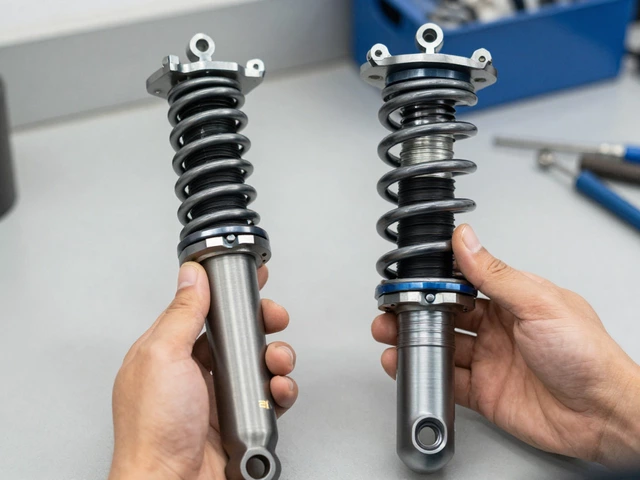
Most people use the terms "shocks" and "struts" interchangeably, but they do different jobs. Shock Absorbers are the dampers that stop your car from bouncing. They convert the kinetic energy of the spring's movement into heat. When the internal seals fail and the hydraulic fluid leaks out, the spring just keeps bouncing.
Struts, on the other hand, are structural components. They act as the shock absorber but also support the weight of the vehicle and hold the spring in place. If a strut fails or bends, your wheel alignment goes completely sideways, making the car pull hard to one side. This puts immense stress on the Control Arms, which are the hinges that allow your wheels to move up and down.
| Component | Warning Sign | Risk of Ignoring | Urgency |
|---|---|---|---|
| Shock Absorber | Excessive bouncing / Fluid leaks | Longer braking distance | Moderate |
| Strut | Leaning / Poor alignment | Rapid tire wear / Loss of control | High |
| Ball Joint | Clunking sounds during turns | Wheel detachment (Critical) | Immediate |
| Bushings | Squeaking / Vibration | Erratic steering / Parts wear | Low to Moderate |
The Hidden Danger: The Braking Distance Trap
This is the part most drivers miss. You might think your Brake Pads and rotors do all the work, but they rely on the suspension to keep the tire pressed firmly against the asphalt. When you slam on the brakes, the weight of the car shifts forward, causing the front end to "dive."
If your shocks are shot, that dive is uncontrolled. The tire can actually bounce off the road surface during a hard stop. This is called "tire hop." Instead of the rubber gripping the road, it's essentially hopping like a pogo stick. This can add several meters to your stopping distance-which is often the difference between a close call and a rear-end collision.
The Cost of Procrastination: Tire Cupping
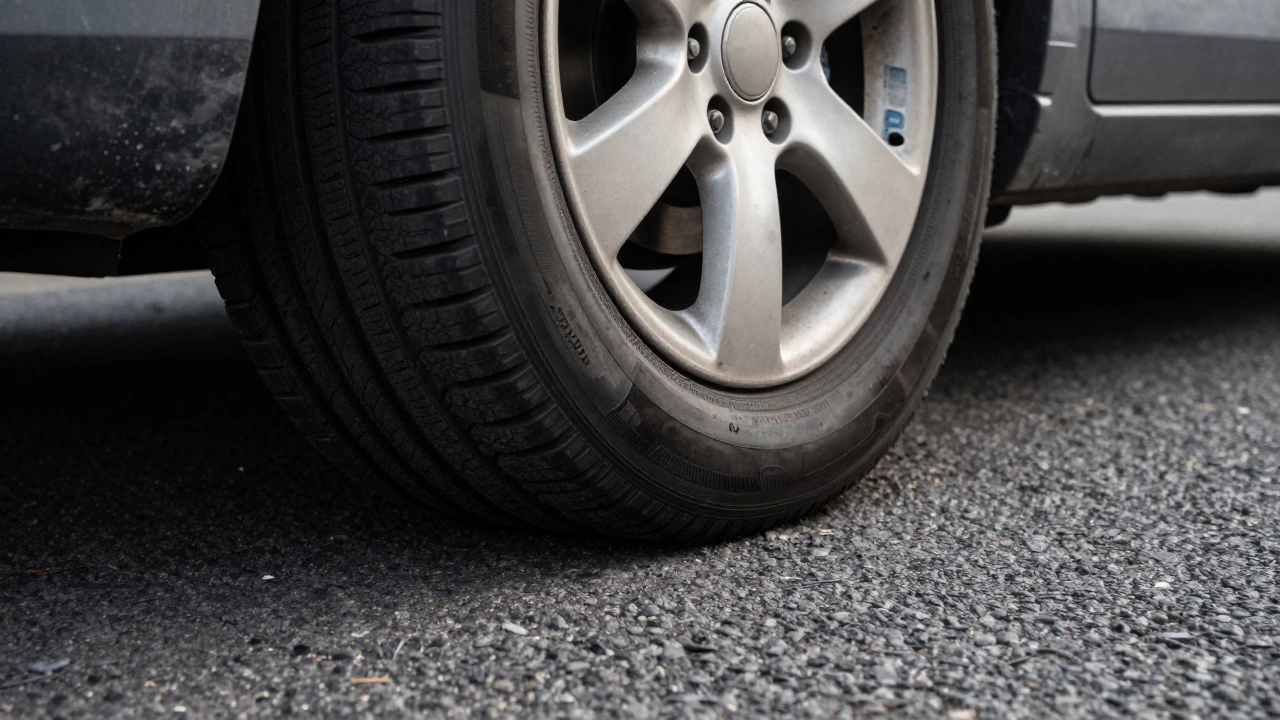
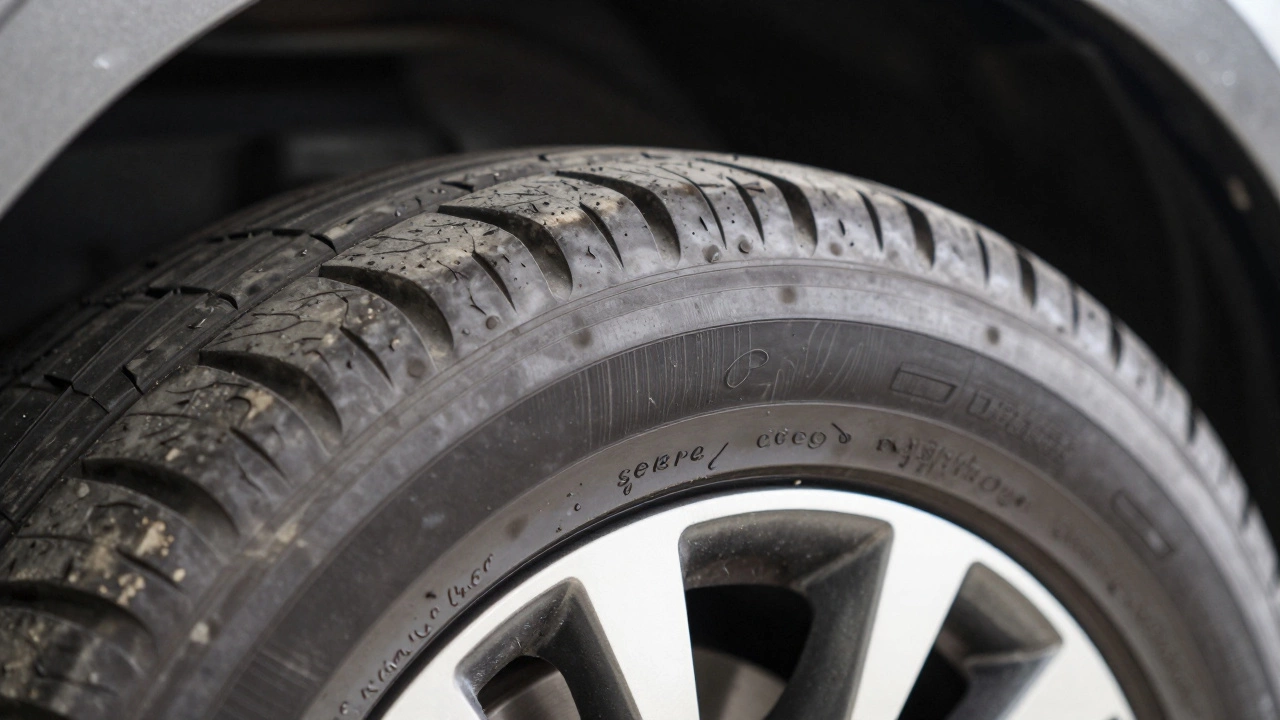
If you keep driving on bad suspension, you'll soon notice your tires look weird. Look closely at the tread; if you see scalloped dips or "cups" in the rubber, you have tire cupping. This happens because the tire is bouncing up and down as it rolls, wearing the rubber unevenly.
Here is the brutal truth: replacing a set of shock absorbers is a few hundred dollars. Replacing a set of tires that have been ruined by bad shocks is much more. Even worse, if you replace the shocks but keep the cupped tires, the car will still vibrate and make a loud humming noise because the tires are no longer perfectly round. You end up paying for both the suspension and the tires at the same time because you waited too long.
Warning Signs You Need to Stop Driving Immediately
Some suspension issues are "annoyances," and some are "emergencies." If you experience any of the following, pull over or call a tow truck:
- The "Death Clunk": A loud, metallic popping or clunking sound when turning the wheel or hitting a bump. This usually indicates a failed Ball Joint. If this snaps, the wheel can literally fold outward, leaving you with zero steering and a crashed car.
- Severe Pulling: If the car drifts toward the shoulder so aggressively that you have to fight the steering wheel to stay in your lane.
- Extreme Sway: If the car feels like it's tipping over during a moderate turn, your Anti-Roll Bar or stabilizer links may have snapped.
How to Check Your Suspension at Home
You don't need a lift to find the first red flags. Try the "Bounce Test": Go to one corner of your car and push down hard on the fender or bumper. Let go quickly. The car should come up and settle immediately. If it bounces two or three times like a toy, your dampers are dead.
Next, check for "wet" shocks. Look behind the wheel with a flashlight. Shocks are designed to hold oil; if you see a thick coating of oil dripping down the side of the cylinder, the seal has blown. While a tiny bit of misting is common on high-mileage cars, a visible drip means the component is no longer doing its job.
How long can I drive with a leaking shock absorber?
If it's a slow leak (misting), you can usually drive for a few weeks while you save for the repair. However, if the oil is actively dripping, your ride quality and braking safety are already compromised. You should replace them as soon as possible, ideally in pairs (both fronts or both rears) to keep the car balanced.
Will bad suspension affect my fuel economy?
Indirectly, yes. When your suspension is worn, your wheels aren't maintaining an optimal contact patch with the road. This increases rolling resistance and can lead to poor wheel alignment, which forces the engine to work harder to push the car forward, slightly dropping your MPG.
Can I replace just one shock absorber?
It's strongly discouraged. Suspension components wear at similar rates. If you replace only the left shock, the right one (which is likely also worn) will cause the car to handle unevenly. This creates a "lopsided" feeling during cornering and can make the car feel unstable during emergency maneuvers.
Does a bad suspension cause steering wheel vibration?
Yes. Worn-out bushings or loose ball joints can cause vibrations that travel up through the steering rack. While this can also be caused by unbalanced tires, a suspension-related vibration often changes depending on whether you are braking or turning.
What is the difference between a shock and a strut?
A shock absorber is a standalone component that dampens spring movement. A strut is a structural part of the suspension that incorporates the shock absorber and supports the vehicle's weight, often acting as the upper pivot point for the steering.
Next Steps: Getting Back on the Road
If you suspect your suspension is failing, the first move is a professional inspection. A mechanic will put the car on a lift and use a pry bar to check for "play" in the joints-this reveals looseness that you can't feel while driving.
If you're on a budget, prioritize the components that affect steering first (ball joints and tie rods) before moving to the comfort and braking components (shocks and struts). Always remember that after any major suspension work, you MUST get a wheel alignment. If you don't, you'll ruin your brand-new parts and your tires within a few hundred miles.