Radiator Replacement Cost Calculator
Estimate Your Radiator Replacement Cost
Your Estimated Cost
Breakdown
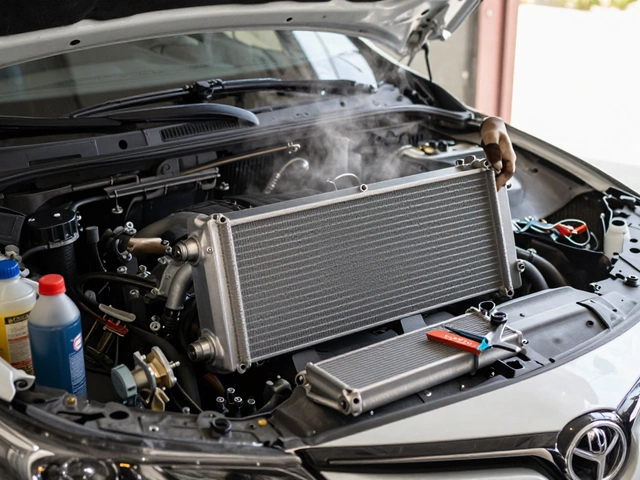
When your car starts overheating, the last thing you want is to be stuck on the side of the road with steam rising from the hood. A broken radiator isn’t just an inconvenience-it can wreck your engine if you ignore it. But before you panic, you need to know: how much should it cost to replace a radiator? The answer isn’t simple. It depends on your car, where you live, and whether you’re paying for parts alone or the whole job done right.
What’s Included in a Radiator Replacement?
Replacing a radiator isn’t just swapping out a metal tank. It’s a multi-step process that affects other parts of your cooling system. Most shops will replace the radiator itself, but they’ll also check or replace related components to make sure the fix lasts. Here’s what’s typically part of the job:
- The radiator itself (aluminum or plastic with metal tubes)
- New coolant (antifreeze) - usually 5 to 7 liters
- New radiator cap
- Thermostat (often replaced at the same time)
- Upper and lower radiator hoses (if cracked or leaking)
- Water pump (sometimes, if it’s worn or hard to access)
- Flush of the entire cooling system
Some mechanics will try to upsell you on replacing the water pump or thermostat just because they’re “in the way.” Don’t automatically say yes. If your car has under 80,000 miles and the thermostat hasn’t failed before, you might not need it. But if your car is older or the coolant has never been changed, replacing those parts at the same time saves you from paying labor twice.
Parts Cost: What You’re Actually Paying For
The radiator itself can cost anywhere from £80 to £400. Why such a big range? It comes down to three things: your car model, whether it’s OEM or aftermarket, and the material.
For a basic Honda Civic or Ford Focus, a standard aftermarket radiator runs £90-£150. For a luxury car like a BMW 3 Series or Audi A4, expect £200-£350. High-performance or older classic cars? Those can hit £400+ because they’re harder to source.
OEM parts (from the original manufacturer) cost more but last longer and fit better. Aftermarket parts are cheaper, but some are made with thinner plastic or weaker end tanks that crack after a year. Stick to brands like Denso, Valeo, or Behr. Avoid no-name brands sold on eBay or Amazon.
Labor: The Hidden Cost
Labor is where most people get surprised. In the UK, labor rates vary wildly. In Manchester, you’ll pay £70-£100 per hour at an independent garage. At a dealership, it’s £120-£150. The job usually takes 2 to 4 hours, depending on the car.
Here’s a quick look at labor time by car type:
- Front-wheel drive compact cars (Toyota Corolla, VW Golf): 2-2.5 hours
- Mid-size sedans (Honda Accord, Ford Mondeo): 2.5-3 hours
- SUVs and trucks (Range Rover, Ford Ranger): 3-4 hours (because of extra shielding and complex plumbing)
- Transverse-engine cars (most modern cars): easier access - faster job
- Longitudinal-engine cars (older BMWs, Mercedes): harder to reach - more time
So if your labor rate is £85/hour and the job takes 3 hours, you’re looking at £255 in labor alone. Add parts and coolant, and you’re already over £400.
Real-World Cost Examples (UK, 2026)
Here’s what real quotes look like across different vehicles:
| Car Model | Parts Cost | Labor Cost | Total Estimate |
|---|---|---|---|
| Toyota Corolla (2018) | £110 | £180 | £290 |
| BMW 3 Series (2015) | £280 | £320 | £600 |
| Ford Focus (2020) | £130 | £210 | £340 |
| Land Rover Discovery (2017) | £350 | £400 | £750 |
| Vauxhall Astra (2019) | £100 | £170 | £270 |
Notice how the BMW and Land Rover costs are nearly double? That’s because of complex plumbing, more parts to remove, and tighter engine bays. Also, dealerships charge more for labor but often include a 12-month warranty. Independent garages might be cheaper but only offer 6 months.
When You Can Save Money
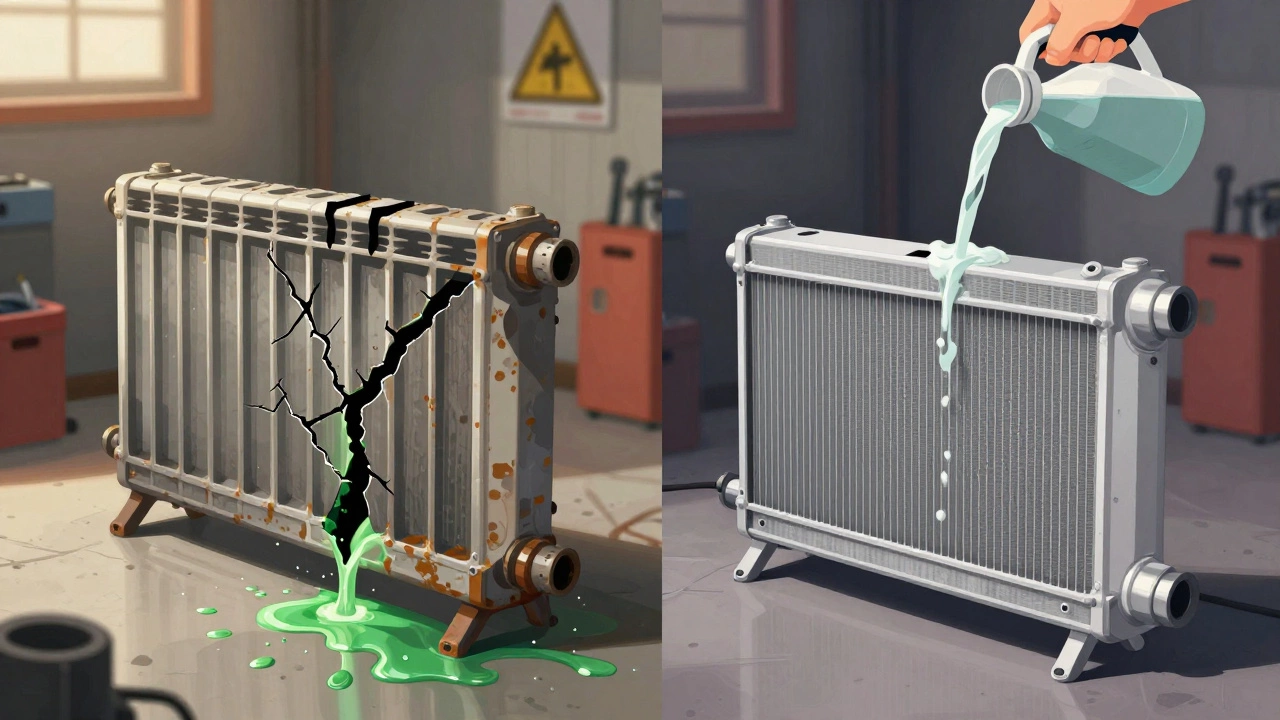
You don’t always need a full replacement. Sometimes a radiator leak is just a loose hose clamp or a cracked plastic tank. If you catch it early, you might get away with a £30 repair. But if you’re seeing coolant on the ground, white smoke from the tailpipe, or your temperature gauge is in the red, don’t delay.
Here’s how to cut costs:
- Buy the radiator yourself and bring it to the garage. You save 20-30% on parts.
- Get quotes from 2-3 local garages. Don’t just go to the nearest one.
- Ask if they’ll reuse your existing coolant if it’s still clean. Some shops will.
- Don’t let them replace the water pump unless it’s leaking or making noise. It’s an extra £150-£250.
One mechanic in Salford told me he once replaced a radiator on a 2012 Honda Civic and charged £280. The customer had tried to fix it themselves, broke a hose, and ended up paying more than if they’d just called a pro in the first place.
What Happens If You Don’t Replace It?
Ignoring a bad radiator doesn’t just mean a hot engine. It means:
- Head gasket failure - £1,200+ repair
- Warped cylinder head - £2,000+
- Engine seizure - £3,000-£6,000 for a rebuild or replacement
That’s why spending £300 now to replace a radiator is cheaper than risking £4,000 later. A coolant leak is a silent killer. It doesn’t make noise. It doesn’t throw a warning light until it’s too late.
Should You DIY?
Replacing a radiator yourself? Possible - but only if you’ve done engine work before. You need to:
- Drain coolant safely (it’s toxic and environmentally hazardous)
- Disconnect electrical sensors and fans
- Remove the condenser (AC unit) or bumper on some models
- Refill and bleed the system properly - air bubbles cause overheating
YouTube videos make it look easy. But if you get the coolant refill wrong, you’ll have a problem in 2 weeks. And if you damage a sensor or hose, you’re looking at another £200 in repairs. For most people, it’s not worth the risk.
What to Ask When Getting a Quote
Before you sign off on any repair, ask these questions:
- “Is the quote for OEM or aftermarket parts?”
- “Will you replace the thermostat and flush the system?”
- “Do you reuse my old coolant or use new?”
- “What’s the warranty on parts and labor?”
- “Will you test the system after the job?”
A reputable shop will answer all of these without hesitation. If they brush you off, walk away.
How to Prevent Future Problems
Once you’ve replaced the radiator, keep it working:
- Check coolant levels every 3 months - even if you think it’s fine
- Replace coolant every 5 years or 60,000 miles (check your manual)
- Don’t ignore a low coolant warning light - it’s not a suggestion
- Use the right type of coolant - mixing types causes sludge
- Inspect hoses annually for cracks or bulges
Most radiator failures happen because of neglect, not age. A simple visual check every few months can save you hundreds.
Is it worth replacing a radiator on an old car?
Yes, if the car is otherwise in good condition. A radiator replacement costs less than half the value of most used cars. If your engine is healthy and the body isn’t rusted, spending £300-£600 to fix the cooling system makes sense. If the car has over 150,000 miles and multiple other issues, it might be time to consider a replacement vehicle.
Can a radiator be repaired instead of replaced?
Sometimes, if it’s a small leak in the end tank. Some shops offer epoxy repairs or solder fixes, but these rarely last more than 6-12 months. For anything beyond a tiny drip, replacement is the only reliable fix. Don’t trust a quick patch - it’s a temporary band-aid that could leave you stranded.
Why do radiator costs vary so much between garages?
Labor rates differ by location - dealerships charge more than independents. Also, some shops include the thermostat and coolant in the price; others charge extra. Always ask for a detailed breakdown. A £250 quote might seem cheap, but if it doesn’t include coolant or a new cap, you’re paying more later.
Do I need a new radiator cap?
Yes. The cap maintains pressure in the cooling system. If it’s worn, coolant boils at a lower temperature, which causes overheating. Most mechanics replace it as standard because it costs less than £10 and prevents future problems. Don’t skip this.
How long does a new radiator last?
A quality radiator lasts 8-12 years, or 100,000-150,000 miles, if the cooling system is maintained. Using the right coolant, flushing it every 5 years, and replacing hoses on time can extend its life. Cheap radiators or neglect can cut that to 3-4 years.
If you’re facing a radiator replacement, don’t panic - but don’t delay either. Get a few quotes, ask the right questions, and make sure the job includes a coolant flush and new cap. A well-done replacement can give you another 5 years of trouble-free driving. And that’s worth every pound.