Oil Change Interval Calculator
Cost Comparison: Maintenance vs. Neglect
Bottom Line: Regular maintenance costs less than 3% of potential repair bills. Don't risk catastrophic engine failure to save small amounts.
Warning Signs to Watch For:
There is a dangerous myth floating around car forums that you can stretch your oil change interval the recommended time or distance between oil changes to maintain engine health indefinitely if you just use high-quality additives. It’s not true. Skipping an oil change isn’t just about saving money on the service bill; it’s about whether your engine survives the next thousand miles. So, how long can you actually go without changing your oil? For most modern cars using synthetic oil engine oil made from chemically modified petroleum components rather than direct distillation of crude oil, the absolute maximum is usually 10,000 to 15,000 miles or one year, whichever comes first. But pushing it to that limit requires perfect driving conditions, which most of us don’t have.
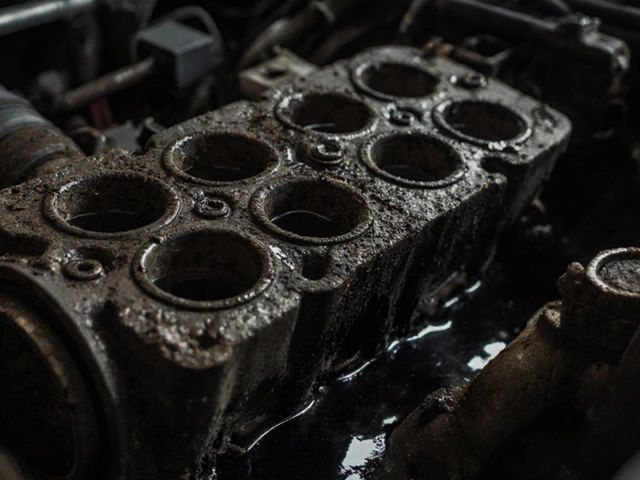
To understand why there is a hard limit, we need to look at what engine oil actually does. It’s not just a lubricant. It cools the engine by carrying heat away from metal parts, cleans sludge and debris, and prevents corrosion. Over time, the additives in the oil break down. The detergent gets saturated with dirt. The viscosity-the thickness of the oil-changes. When this happens, your engine starts eating itself from the inside out. I’ve seen engines seize because owners ignored the 'Maintenance Required' light for six months, thinking they had plenty of time left. They didn’t.
The Two Clocks: Time vs. Mileage
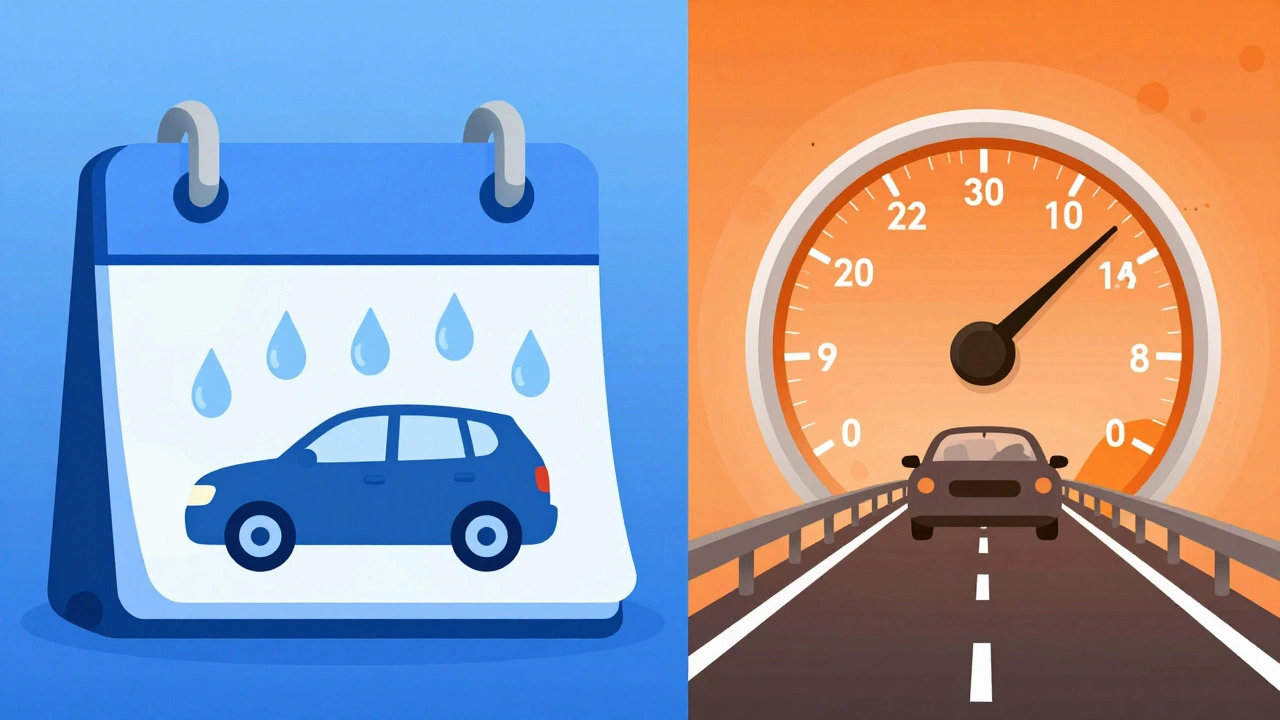
Most drivers focus on mileage, but time is often the silent killer. Even if you park your car in the garage and drive it only twice a month, the oil degrades. Moisture from condensation builds up in the crankcase, mixing with the oil to form acid. This acid eats away at bearings and seals. That’s why manufacturers always say 'miles OR months.' If you hit 12 months before you hit the mile marker, change it anyway. In my experience living here in Manchester, where our weather is damp and cold much of the year, moisture buildup is a real issue even for low-mileage cars.
Conversely, if you drive a lot but mostly on the motorway, your oil might last longer than someone who drives the same number of miles through stop-and-start city traffic. High-speed cruising puts less stress on the oil than constant idling and short trips. Short trips are particularly damaging because the engine doesn't get hot enough to burn off the water vapor that accumulates during startup. This leads to sludge formation much faster.
Synthetic vs. Conventional Oil Lifespans
The type of oil you use dictates your ceiling. Conventional oil engine oil derived directly from crude oil without extensive chemical processing breaks down faster. It has more impurities and fewer stable molecules. Most manufacturers recommend changing conventional oil every 3,000 to 5,000 miles. Pushing it beyond 7,500 miles is risky unless you’re driving in ideal conditions. On the other hand, full synthetic oil engine oil engineered from basic petrochemical building blocks to provide superior performance is designed to resist breakdown. It handles higher temperatures and shear forces better. Many modern cars come with 'extended drain intervals' of 10,000 to 12,000 miles specifically because they use synthetic blends or full synthetics.
| Oil Type | Max Miles (Ideal) | Max Months | Best For |
|---|---|---|---|
| Conventional | 3,000 - 5,000 | 6 | Older cars, budget maintenance |
| Synthetic Blend | 5,000 - 7,500 | 9 | Mixed driving, moderate climates |
| Full Synthetic | 10,000 - 15,000 | 12 | Turbo engines, extreme temps, new cars |
If your owner's manual says '15,000 miles,' it assumes you are using the specific grade of synthetic oil they tested. Don’t swap to cheap conventional oil and expect the same results. The chemistry won’t hold up.
Severe Driving Conditions: The Hidden Factor
This is where most people get caught out. Manufacturers define 'severe service' differently than we do. To them, severe doesn’t mean driving fast on a racetrack. It means:
- Frequent short trips under 5 miles (engine never reaches operating temperature).
- Driving in dusty or sandy environments.
- Extreme temperatures, either very hot or very cold.
- Towing heavy loads or carrying heavy cargo regularly.
- Stop-and-go traffic in urban centers like London or Manchester.
If any of these apply to you, cut your recommended interval in half. If your manual says 10,000 miles, aim for 5,000. Why? Because dust acts as an abrasive, grinding against cylinder walls. Towing creates immense heat, which thins the oil and accelerates oxidation. Cold starts cause fuel dilution, where unburnt gasoline mixes with the oil, washing away its protective film. Ignoring these factors is the fastest way to ruin an expensive turbocharger or camshaft.
Signs Your Oil Is Past Its Prime
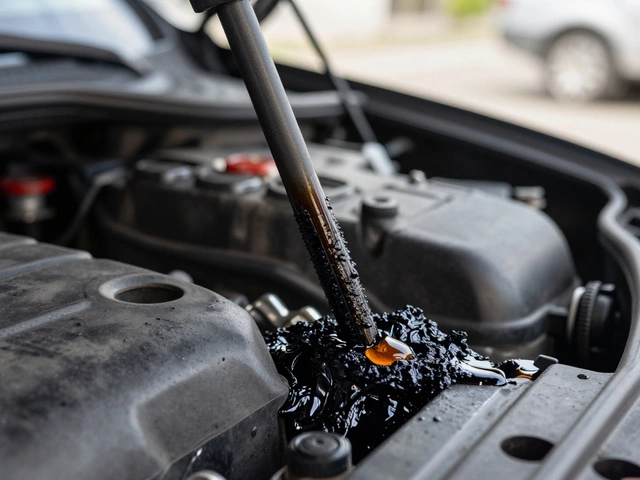
You don’t always need a mechanic to tell you when to change your oil. Your car will give you clues. First, check the dipstick. Pull it out, wipe it clean, reinsert it, and pull it out again. Look at the color and texture. Fresh oil is amber or light brown and translucent. Old oil turns dark brown or black. While some darkness is normal due to detergents cleaning the engine, if it looks like molasses or smells burnt, it’s done. If you see metal flakes or a gritty feeling between your fingers, stop driving immediately. That’s metal shavings from internal wear.
Listen to the engine too. A healthy engine hums. An engine starving for proper lubrication makes noise. Rattling or ticking sounds from the valve train often indicate low oil pressure or thickened sludge blocking oil passages. If your dashboard warning lights up-specifically the red oil can icon-pull over and shut off the engine. Do not ignore it. That light means you have lost oil pressure, and continuing to drive will weld your pistons to the cylinders within minutes.
The Cost of Waiting Too Long
Let’s talk numbers. An oil change costs between £40 and £80 depending on where you live and what shop you use. A new engine? £3,000 to £6,000 plus labor. Or the cost of a used replacement engine if you’re lucky. Sludge buildup can clog the oil pickup screen, leading to immediate engine failure. It can also cause the Variable Valve Timing (VVT) system to fail, which is common in many modern cars. Repairing VVT solenoids and gears often costs hundreds of pounds. Is saving £40 worth risking a £4,000 repair? Not even close.
Furthermore, dirty oil affects fuel economy. Increased friction means the engine works harder, burning more fuel. You might lose 1-2% in MPG efficiency, which adds up over a year. Clean oil ensures smooth operation, better acceleration, and lower emissions. It’s not just about longevity; it’s about daily performance.
High Mileage Oil: Does It Help?
If your car has over 100,000 miles, you might see bottles labeled 'High Mileage Oil.' These oils contain seal conditioners that help swell aging gaskets and prevent leaks. They also have extra detergents to handle the increased sludge potential of older engines. Switching to high mileage oil can extend the life of an older engine slightly, but it doesn’t magically double your oil change interval. You still need to change it regularly. In fact, older engines often benefit from more frequent changes because their tolerances are worn, allowing more contaminants to circulate.
DIY vs. Professional Service
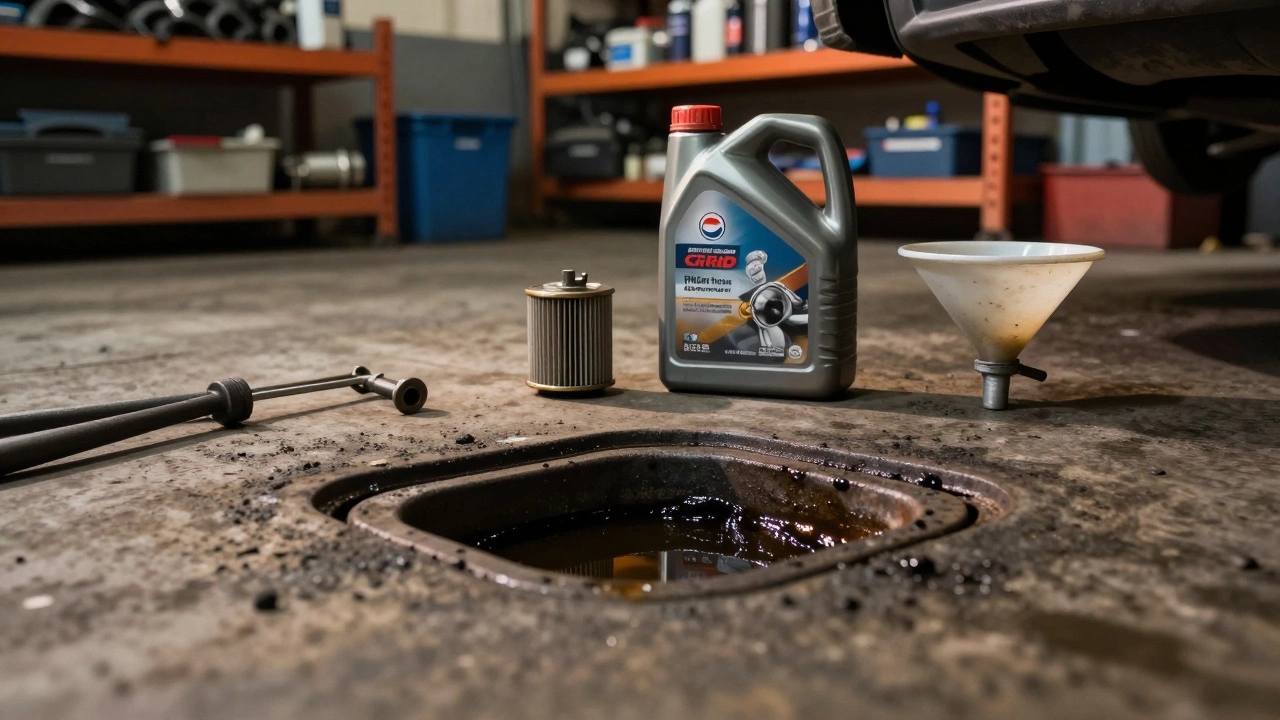
Doing your own oil change saves money but requires effort. You need the right tools: an oil filter wrench, a drain pan, and a funnel. You also need to dispose of the old oil properly. In the UK, you cannot pour used oil down the drain or into the ground. Take it to a recycling center or a garage that accepts it for free. Many garages will change your oil for a small fee even if you bought the parts yourself. This ensures the filter is torqued correctly and the oil level is set precisely. Under-filling or over-filling both cause problems. Too little oil leads to starvation; too much causes foaming, which reduces lubrication effectiveness.
Can I go 20,000 miles between oil changes?
No, this is extremely risky for almost all vehicles. While some diesel engines with advanced filtration systems may claim such intervals, doing so voids warranties and risks catastrophic engine failure. Even with full synthetic oil, 10,000 to 12,000 miles is the safe upper limit for most cars.
Is it okay to top up oil instead of changing it?
Topping up oil maintains the quantity but not the quality. Old oil loses its additive package and becomes contaminated with dirt and acids. Adding fresh oil to dirty oil doesn’t reset the clock. You must drain and replace the entire volume to restore protection.
What happens if I miss an oil change by one month?
Missing by one month is usually fine, especially if you haven’t exceeded the mileage limit. However, make sure to change it as soon as possible. Consistently missing deadlines by weeks adds up and accelerates wear.