Fuel Pump Replacement Cost Estimator
Enter your vehicle details to get a realistic estimate for 2026. Remember that actual prices vary by region and shop.
Vehicle & Repair Details
Estimated Cost Breakdown
You’re driving down the highway, and suddenly your car starts sputtering. It hesitates at stoplights, loses power on hills, or just refuses to start altogether. Your mechanic points a finger at the fuel pump, an electric component inside the gas tank that pushes gasoline to the engine under pressure. Now you’re staring at a bill estimate that seems way too high-or maybe suspiciously low. So, what is the real average cost to fix a fuel pump? Is it $300? $800? Why does the quote vary so wildly?
The short answer: Most drivers pay between $500 and $1,200 for a full fuel pump replacement in 2026. But that number hides a lot of variables. The part itself might only cost $100, but labor can triple that figure depending on where the pump lives in your car. Let’s break down exactly where your money goes, why some cars are cheaper to fix than others, and when you might actually be able to save a few hundred bucks.
Why Fuel Pump Costs Vary So Wildly
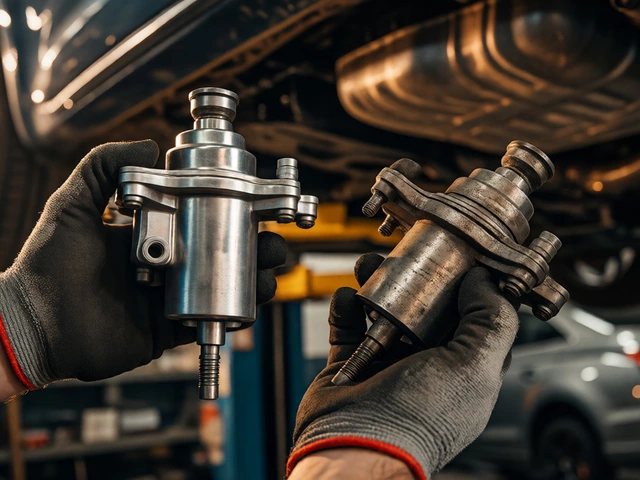
Not all fuel pumps are created equal. The biggest factor in pricing isn’t the brand-it’s location. Older vehicles often have external fuel pumps mounted along the frame rail or near the tank. These are relatively easy to access. A mechanic can slide under the car, unplug two connectors, unbolt the old unit, and bolt in a new one. Labor here might run 1-2 hours.
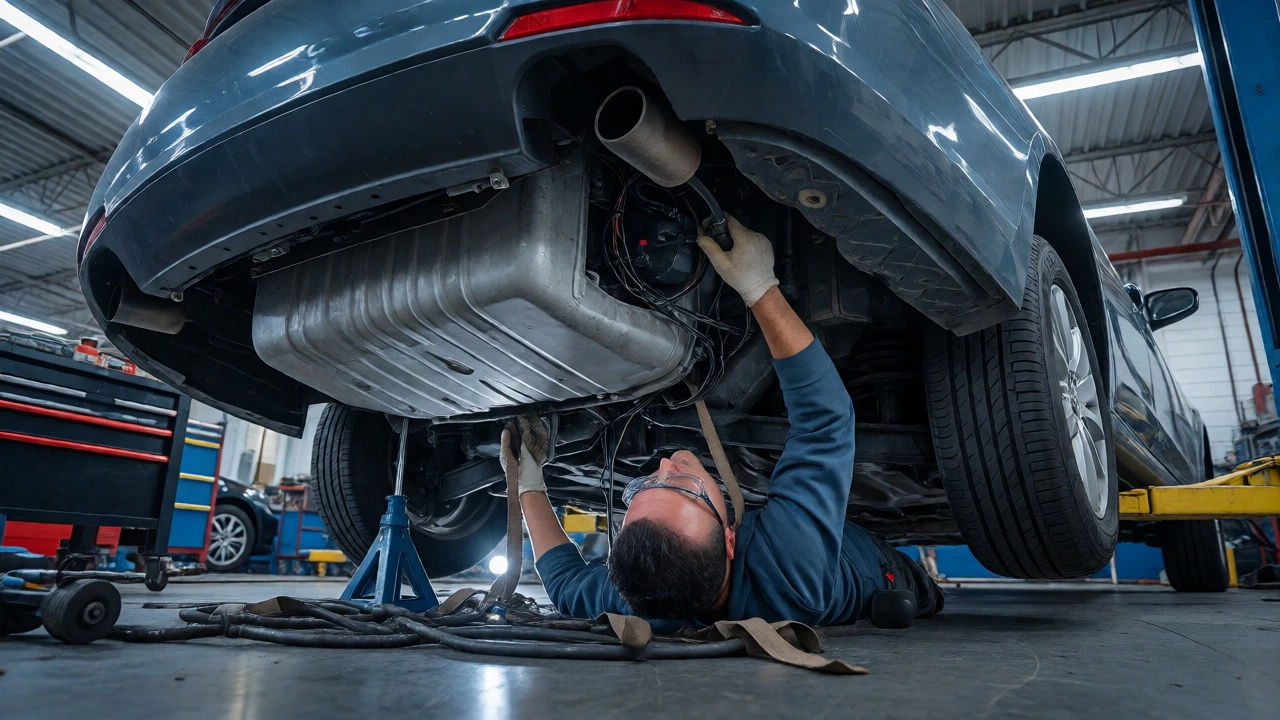
Modern cars? They almost always use in-tank fuel pumps, submersible pumps located inside the fuel tank that rely on gasoline for cooling and lubrication. To replace these, the tech has to drop the entire fuel tank or remove a service hatch under the rear seat. That’s messy, time-consuming work. Dropping a tank takes 2-4 hours alone, plus another hour to swap the pump assembly. No wonder labor costs jump.
Here’s a quick look at how location impacts your bill:
| Pump Type | Part Cost (USD) | Labor Hours | Avg. Total Cost (USD) |
|---|---|---|---|
| External (Frame-mounted) | $80 - $150 | 1 - 2 hrs | $300 - $500 |
| In-Tank (Service Hatch Access) | $120 - $250 | 2 - 3 hrs | $450 - $750 |
| In-Tank (Full Tank Drop Required) | $150 - $300 | 3 - 5 hrs | $600 - $1,200+ |
Notice how the part cost barely changes, but total price doubles or triples based on access difficulty. If your mechanic quotes $900 for a Honda Civic with an in-tank pump, they’re not ripping you off-they’re accounting for dropping a heavy, fuel-filled tank.
Parts vs. Labor: Where Your Money Really Goes
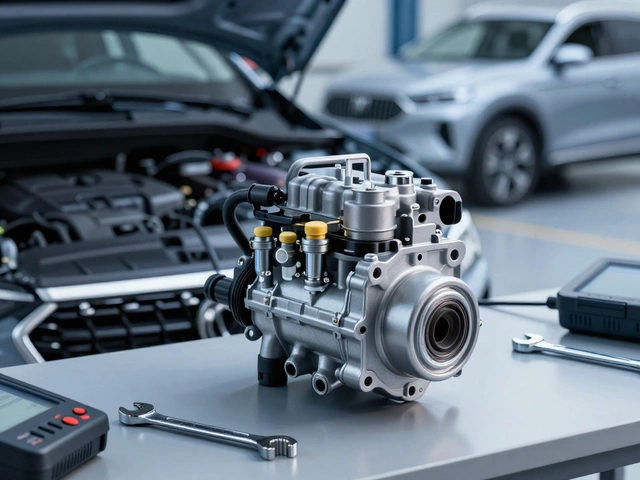
Let’s dissect the invoice. In most cases, the fuel pump module, the complete assembly including the pump, filter sock, sending unit, and wiring harness costs between $100 and $300 for economy cars. Luxury brands like BMW, Mercedes-Benz, or Audi can see parts prices hit $400-$600 because their modules integrate more sensors and use proprietary connectors.
Labor rates in 2026 average $120-$180 per hour at independent shops, while dealerships charge $150-$250 per hour. Here’s the math:
- Economy Car (e.g., Toyota Corolla): Part ($140) + 2.5 hrs labor @ $140/hr = $490
- Mainstream SUV (e.g., Ford Explorer): Part ($220) + 3.5 hrs labor @ $150/hr = $745
- Luxury Sedan (e.g., BMW 3 Series): Part ($450) + 4 hrs labor @ $200/hr = $1,250
See the pattern? The luxury premium comes from both higher part costs and dealership labor rates. If you drive a German import, expect to pay closer to the top end of the range.
Signs You Actually Need a New Fuel Pump
Before you hand over cash, make sure the diagnosis is right. Mechanics sometimes misdiagnose fuel pump failure because symptoms overlap with other issues. Common red flags include:
- Whining noise from the rear: A failing pump often emits a loud hum or whine, especially when the tank is low.
- Engine sputters at high speed: The pump can’t maintain pressure under load, causing momentary lean conditions.
- Hard starting after sitting: Pressure leaks back through check valves overnight, so the system needs priming each time.
- Sudden loss of power uphill: The pump overheats or fails intermittently under stress.
But wait-these same symptoms could point to a clogged fuel filter, a mesh screen or paper element that traps debris before fuel reaches the injectors, bad spark plugs, or even a faulty crankshaft position sensor. Always ask for a fuel pressure test before approving a replacement. A healthy system should hold 40-65 psi (depending on model). If pressure drops below spec and voltage to the pump is good, then yes, the pump is likely dead.
Can You Save Money With DIY?
If you’re handy, replacing an external fuel pump is doable in a weekend. You’ll need basic sockets, safety glasses, and a helper to support the tank if needed. For in-tank pumps with a service hatch under the rear seat, DIY is possible but risky. One wrong move with the locking ring can crack the plastic flange, turning a $150 job into a $500 mess.
Consider DIY if:
- Your car has external access or a simple under-seat hatch.
- You’ve dropped a fuel tank before (or watched detailed YouTube tutorials).
- You own a torque wrench and know proper reassembly specs.
Skip DIY if:
- The tank must be fully dropped and your garage lacks a lift or jack stands rated for fuel tanks.
- You’re uncomfortable working around flammable vapors.
- Your vehicle uses complex electronic locking rings or integrated sensor modules.
Remember: if you botch the seal and cause a leak, you’ll pay double for professional cleanup and resealing. Weigh the savings against the risk.

How to Avoid Getting Ripped Off
Fuel pump scams aren’t common, but upsells are. Some shops will recommend replacing the entire fuel tank if the old one shows rust, even if it’s still sealed. Others might push a “complete fuel system cleaning” alongside the pump swap. Here’s how to stay sharp:
- Get two quotes: Compare an independent specialist vs. a general mechanic. Specialists often have faster procedures for specific brands.
- Ask for OEM vs. aftermarket options: Aftermarket pumps from reputable brands like ACDelco, Denso, or Bosch perform well and cost 30-50% less than dealer parts.
- Verify warranty coverage: Many manufacturers extend warranties on fuel systems up to 10 years/100,000 miles due to past recall campaigns (especially GM trucks from the early 2000s). Check your VIN first.
- Insist on a written estimate: Make sure labor hours are itemized. If the shop charges flat-rate labor, confirm the book time matches reality.
Also, beware of shops that claim “your fuel pump failed because you didn’t change the filter.” While neglect contributes, most modern pumps are designed to last 100,000+ miles regardless. Don’t let guilt pressure you into unnecessary add-ons.
When Replacement Isn’t the Answer
Sometimes, the problem isn’t the pump itself. Before authorizing replacement, rule out these cheaper fixes:
- Clogged fuel filter: Replacing a filter costs $50-$100 and restores flow if it’s partially blocked.
- Bad fuel relay: A $20 electrical relay can mimic pump failure. Swap it first.
- Corroded connectors: Moisture causes resistance at plug terminals. Cleaning them with dielectric grease might solve intermittent cutouts.
- Low-quality fuel: Ethanol-heavy blends attract water, which corrodes pump internals. Switching to top-tier gasoline with detergents can extend life.
A competent mechanic will test voltage at the pump connector while cranking. If you get 12V but no pump operation, the motor is dead. If voltage is low (<10V), chase the wiring issue instead.
How long does a fuel pump last?
Most fuel pumps are designed to last between 100,000 and 150,000 miles. However, frequent driving with a nearly empty tank accelerates wear because the pump relies on gasoline for cooling. Running on fumes regularly can cut lifespan in half.
Is it safe to drive with a bad fuel pump?
Short trips are usually fine, but avoid long drives or highways. A failing pump may cut out unexpectedly, leaving you stranded. If you notice sputtering or hard starts, schedule repairs within a week to prevent being stuck in traffic or remote areas.
Why did my new fuel pump fail quickly?
Premature failure often stems from contaminated fuel, a clogged pickup strainer left unchanged during installation, or poor grounding. Always replace the fuel filter and clean the tank inlet when installing a new pump to ensure longevity.
Does insurance cover fuel pump replacement?
No. Insurance covers accidents and weather-related damage, not mechanical wear and tear. Fuel pump failure is considered routine maintenance, similar to brake pads or oil changes, so it’s typically an out-of-pocket expense unless covered by an extended warranty.
Can I replace just the pump motor, not the whole module?
On older cars, yes-you can buy just the motor. On newer models, the pump is sealed inside a plastic housing with the sending unit and filter. Attempting to separate them often breaks the housing, making full module replacement more cost-effective and reliable.