Air Filter Impact Calculator
How much are you losing?
See the real impact of a clogged air filter on your fuel economy and engine performance
Your Annual Savings
$0.00 per year by replacing your air filter
Engine Performance Impact
0% loss in horsepower
Why this matters
A clogged air filter causes your engine to work harder, reducing fuel efficiency by up to 10%. This calculator shows the real financial impact of waiting too long to change your air filter.
In our example with 15,000 miles at 25 MPG and $4.00 fuel, you could be losing up to $240 annually. That's more than the cost of the filter itself.
It’s easy to forget about the air filter. It’s hidden under the hood, doesn’t make noise, and doesn’t light up a warning light when it’s dirty. But if you haven’t changed it in a year - or worse, two - your car is paying the price in ways you might not even notice until it’s too late.
Your engine is starving for air
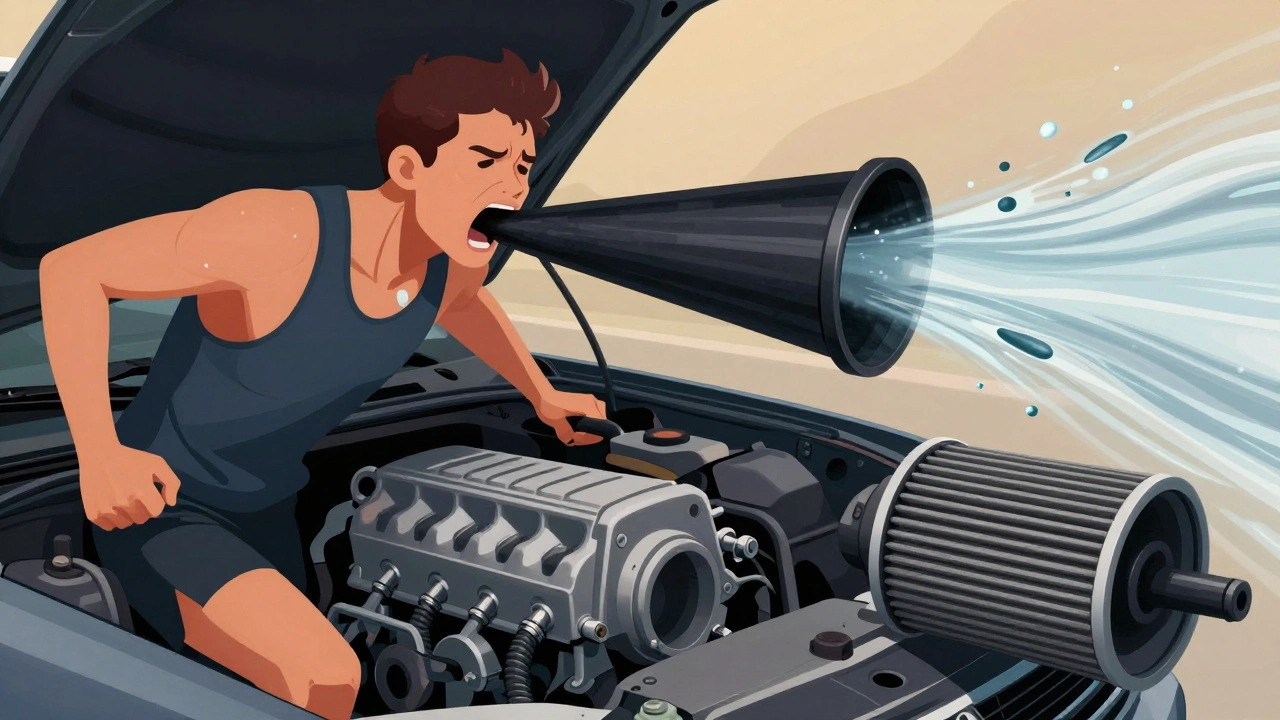
The air filter’s job is simple: keep dirt, dust, leaves, and bugs out of your engine. When it’s clean, air flows freely into the combustion chamber. When it’s clogged, the engine struggles to breathe. That’s like trying to run a marathon while holding your breath. Your car’s computer tries to compensate by adjusting the fuel mixture, but it can’t fix a lack of air. The result? Reduced power, sluggish acceleration, and a throttle that feels disconnected from your foot.
Real-world example: A 2020 Honda Civic with a year-old air filter lost 12% of its horsepower in a dyno test. That’s not just a number - it’s the difference between merging safely on the highway and having to wait for a gap that never comes.
Fuel economy takes a hit
Every time your engine works harder to pull air through a dirty filter, it burns more fuel. The EPA estimates that a severely clogged air filter can reduce fuel efficiency by up to 10%. For someone driving 15,000 miles a year with a car that gets 25 mpg, that’s an extra 60 gallons of gas - or about $240 at $4 per gallon.
It’s not just about the money. That extra fuel burn means more carbon monoxide and unburned hydrocarbons escaping through the exhaust. You’re not just wasting cash - you’re polluting more than you need to.
Carbon buildup starts eating your engine from the inside
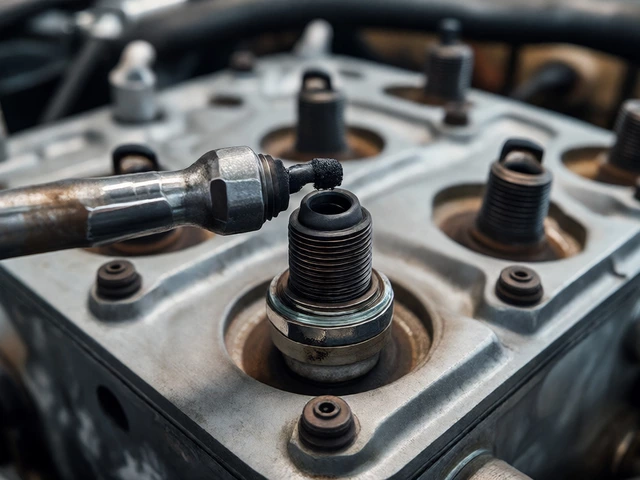
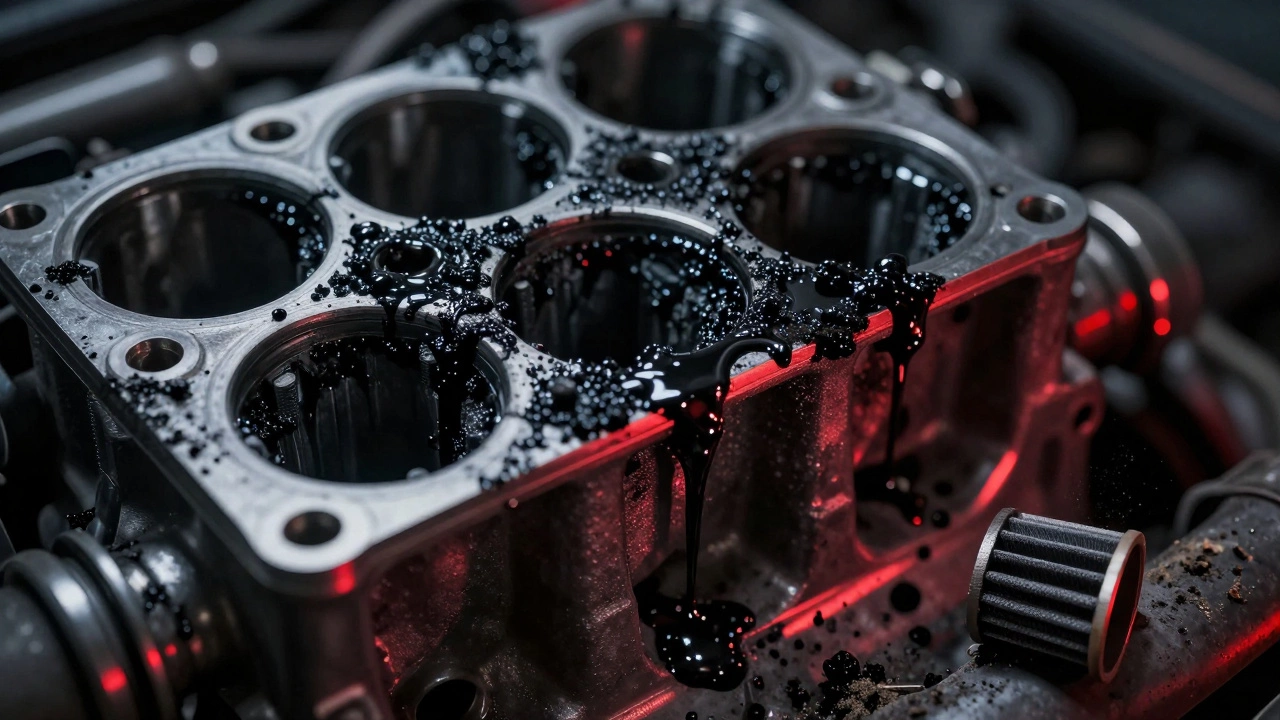
When air can’t flow properly, the engine runs rich - meaning too much fuel and not enough oxygen. That unburned fuel turns into sticky carbon deposits on valves, pistons, and spark plugs. Over time, these deposits harden. They can cause misfires, rough idling, and even trigger the check engine light with codes like P0300 (random misfire) or P0172 (fuel system too rich).
One mechanic in Ohio replaced a 2018 Toyota Camry’s air filter and found carbon buildup so thick on the intake valves that the engine was knocking. Cleaning the valves cost $800. The air filter? $20.
Long-term damage: The real cost of waiting
Most people think a dirty air filter just means poor performance. But if it’s been a year or more, you’re risking permanent engine damage. In extreme cases, a filter so clogged it’s literally falling apart can let debris into the engine. That grit can scratch cylinder walls, wear out piston rings, or even destroy the mass airflow sensor - a $300+ part that’s sensitive enough to be ruined by dust.
There’s no magic number where damage instantly happens. But studies from the Society of Automotive Engineers show that after 12 months without replacement, 78% of vehicles show measurable wear on intake components. That’s not speculation - it’s lab-tested data.
What about those "lifetime" air filters?
You might’ve heard claims about "lifetime" or "washable" filters. Some brands market them as a one-time purchase. But here’s the truth: even the best reusable filters need cleaning every 15,000 to 30,000 miles. And if you drive on dusty roads, in construction zones, or during pollen season, you might need to clean them every 6 months. They’re not magic. They’re still filters.
And if you’re using a cheap aftermarket filter that doesn’t seal properly? You’re better off with a stock paper filter. A poorly sealed filter lets dust right in - even if it looks clean.
How to know if yours is bad
You don’t need a diagnostic tool to check your air filter. Just open the hood, locate the airbox (usually a black plastic box near the front of the engine), and pull out the filter. Hold it up to a bright light.
- If you can see light through it - it’s fine.
- If it’s dark gray or black, with clumps of dirt packed in - it’s overdue.
- If you see leaves, bugs, or debris stuck in the folds - replace it now.
Most manufacturers recommend replacement every 12,000 to 15,000 miles. But if you drive in dusty areas, off-road, or near unpaved roads, check it every 6,000 miles.
What to do next
Don’t wait for the check engine light. Don’t wait until your car feels slow. If you haven’t changed your air filter in a year, do it today. It takes 10 minutes. You don’t need tools. Most filters just snap in and out.
Buy the right one. Use your owner’s manual or an online parts lookup. Don’t guess. A filter that doesn’t fit right is worse than no filter at all.
Keep a note in your phone or on your dashboard calendar: "Air filter: replace every 12 months or 15K miles." Set a reminder. It’s one of the cheapest, easiest, and most effective things you can do for your car.
Why this matters more than you think
Changing your air filter isn’t about being a "car person." It’s about keeping your car alive. It’s about avoiding $1,000 repairs for a $20 part. It’s about not being stranded on the side of the road because your engine couldn’t get enough air.
It’s also about respect. Your car works hard for you. It takes you to work, to school, to the doctor, to family. The least you can do is give it clean air.
Can a dirty air filter cause my car to stall?
Yes. A severely clogged air filter can starve the engine of air, causing it to run too rich and misfire. This can lead to rough idling, hesitation, or even stalling - especially when accelerating or climbing hills. It’s not the most common cause of stalling, but it’s one of the easiest to fix.
Does a dirty air filter affect the AC in my car?
No, the cabin air filter (which cleans air for the interior) is separate from the engine air filter. A dirty engine air filter won’t directly impact your cabin air quality or AC cooling. But if you’re confused because your cabin smells musty or your AC airflow is weak, you likely need to replace the cabin air filter - not the engine one.
How often should I really change my air filter?
Most manufacturers say every 12,000 to 15,000 miles. But if you drive in dusty, sandy, or polluted areas - like near construction, unpaved roads, or heavy traffic - check it every 6,000 miles. If you live in a city with high pollution, replace it yearly. If you drive mostly on clean highways, you might stretch to 18 months. But never go beyond two years.
Can I clean my air filter instead of replacing it?
Only if it’s a reusable performance filter designed for cleaning - and even then, you need the right cleaner and oil. Standard paper filters can’t be cleaned. Trying to vacuum or tap them just pushes dirt deeper into the fibers. A dirty paper filter is a failed filter. Replace it.
Will a new air filter improve my car’s sound?
A clean air filter won’t make your car louder. But if your engine was struggling to breathe, you might notice smoother acceleration and a more responsive throttle. Some people think they hear a "change" in engine noise, but that’s usually just the engine running more efficiently - not louder. Performance intakes can change sound, but a standard replacement filter won’t.