Radiator Replacement Cost Calculator
What to Expect
This calculator provides estimated costs based on UK radiator replacement data. Actual prices may vary depending on your location, garage, and specific vehicle model.
Estimated Cost Breakdown
Total Cost:
Parts:
Labor:
Disposal & Fluids: £15
Important Warning
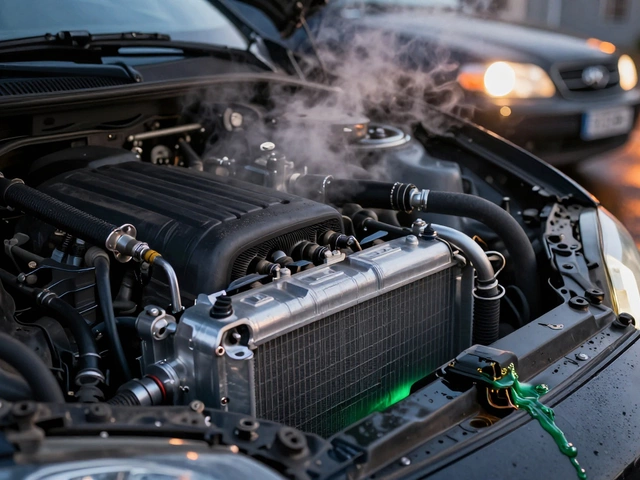
Replacing a car radiator isn’t something most drivers plan for - until the temperature gauge hits red and steam starts rolling out from under the hood. If you’re reading this, chances are you’re staring at a puddle of green or orange fluid under your car, wondering how much this is going to cost. The good news? You’re not alone. In the UK alone, over 120,000 radiator failures are reported each year, and most of them happen in winter or after a long summer drive. The bad news? The price tag can swing from £200 to over £800 depending on your car, your garage, and whether you’re lucky or not.
What’s Inside a Car Radiator?
A radiator isn’t just a metal box with tubes. It’s part of a closed-loop cooling system that includes the thermostat, water pump, hoses, coolant, and the radiator cap. The radiator’s job is simple: pull heat away from the engine. Hot coolant flows in from the engine, passes through hundreds of thin aluminum tubes and fins, and cools down as air flows over them - either from driving or from the electric fan. If any part of this system fails, your engine overheats. And overheating can wreck your head gasket, warp your cylinder head, or even seize your engine. That’s why replacing a failing radiator isn’t optional - it’s urgent.
Cost Breakdown: Parts vs. Labor
Most people assume the radiator itself is the biggest expense. It’s not. The part usually costs between £80 and £250. But labor? That’s where the real money goes. On average, you’ll pay £120 to £300 for labor, depending on how hard it is to get to the radiator. A simple setup in a Ford Focus might take an hour. A BMW X5 with a tight engine bay? That could take three hours or more.
Here’s what you’re actually paying for:
- Parts: The radiator itself, plus any new hoses, clamps, or coolant needed. Some shops bundle these in.
- Labor: Drain the old coolant, disconnect hoses and electrical connectors, remove the radiator, install the new one, refill with fresh coolant, bleed air from the system, and test for leaks.
- Disposal fee: Old coolant is toxic. Reputable garages charge £5-£15 to dispose of it properly.
So if you’re quoted £450, that’s probably £180 for the part, £240 for labor, and £30 for disposal and fluids. If you’re quoted £220, you’re probably getting a cheap radiator and rushed labor - which could mean a leak in a month.
How Your Car Model Affects the Price
Not all radiators are created equal. A basic radiator for a 2010 Toyota Yaris might cost £90. A radiator for a 2023 Audi A4 with dual electric fans and integrated transmission cooler? That’s £320. Here’s a rough guide by car type:
| Car Type | Part Cost | Labor Cost | Total Estimate |
|---|---|---|---|
| Compact (e.g., Ford Fiesta, Vauxhall Corsa) | £80-£130 | £120-£180 | £200-£310 |
| Family Sedan (e.g., Honda Civic, Skoda Octavia) | £120-£180 | £150-£220 | £270-£400 |
| SUV (e.g., Toyota RAV4, Volkswagen Tiguan) | £150-£250 | £180-£280 | £330-£530 |
| Luxury/Performance (e.g., BMW 3 Series, Mercedes C-Class) | £200-£350 | £220-£350 | £420-£700 |
| Electric Vehicles (e.g., Tesla Model 3, Nissan Leaf) | £250-£400 | £200-£300 | £450-£700 |
Electric cars don’t have traditional engines, but they still need radiators - just for the battery and power electronics. Those radiators are more complex, often integrated into the chassis, and harder to access. That’s why EV radiator replacements often cost more than you’d expect.
Why You Shouldn’t Go Cheap on Parts
You might see a radiator online for £45. It looks like the same shape. Why not save £150? Because cheap radiators often use thinner metal, weaker end tanks, or inferior seals. I’ve seen three cases in Manchester where people saved money upfront - then had the new radiator leak after 6 weeks. One guy had coolant drip onto his alternator, frying it. The total bill? £780. He’d have been better off spending £300 the first time.
Stick with OEM-equivalent brands like Valeo, Behr, or Denso. They’re not factory parts, but they’re built to the same specs. Avoid no-name brands from Amazon or eBay unless you’re willing to risk a repeat visit.
Can You Replace It Yourself?
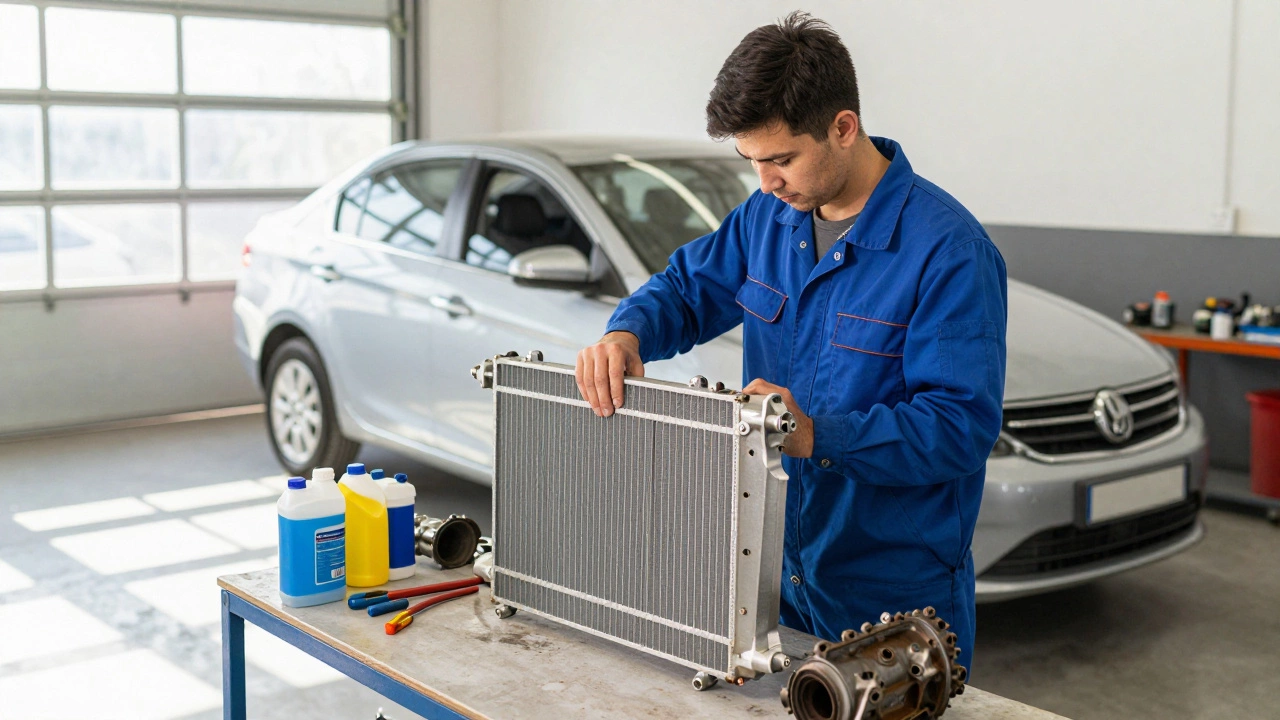
Yes - if you’ve got a weekend, a basic tool kit, and zero fear of coolant spills. Here’s what you’d need:
- Drain pan (coolant is toxic - don’t let it hit the ground)
- Socket set and wrenches
- New radiator, hoses, and coolant (use the type your manual says - mixing wrong types causes corrosion)
- Funnel and gloves
- Time - at least 4 hours for a first-timer
Step one: disconnect the battery. Step two: drain the coolant. Step three: remove the fan shroud, hoses, and mounting bolts. Step four: slide out the old radiator. Step five: install the new one. Step six: refill slowly, start the engine, let it warm up, then top up as needed. Bleed the air out - otherwise, you’ll get overheating even with a perfect radiator.
But here’s the catch: if you mess up the coolant fill or don’t bleed the system properly, you’ll end up with air pockets. That causes overheating. And overheating means a new head gasket - which costs £1,200+.
For most people, it’s not worth the risk. Save your weekend for something fun.
What to Watch Out For
Some garages will try to upsell you. They’ll say, “While we’re in there, you should replace the thermostat and water pump too.” That’s not always true. If your car has under 80,000 miles and the coolant looks clean, you probably don’t need to replace those parts. But if your car is over 10 years old or has over 100,000 miles, it’s smart to replace them at the same time. Why? Because the water pump is usually behind the radiator. Once you’ve paid for labor to remove the radiator, adding another hour for the pump costs £80 extra - instead of £250 later.
Also, check if your radiator cap is included. A faulty cap can cause pressure loss and overheating. It’s a £15 part - make sure it’s replaced.
How to Save Money Without Getting Ripped Off
- Get three quotes. Independent garages often charge 20-30% less than dealerships.
- Ask if they use OEM-equivalent parts. If they say “we use original,” ask for the brand name.
- Don’t pay upfront. Pay only after the job is done and you’ve tested the car.
- Ask for a written warranty. Good shops offer 12 months on parts and labor.
- Check reviews on Google or Trustpilot. Look for mentions of “transparent pricing” or “no upsells.”
One garage in Salford I’ve used for years gives a fixed price of £340 for a Honda Civic radiator replacement - part, labor, coolant, and disposal. No surprises. That’s the kind of shop you want.
When to Just Walk Away
If your car is over 15 years old and has over 150,000 miles, ask yourself: is this repair worth it? A radiator replacement might cost £500. But if your transmission is starting to slip, your suspension is worn, or your timing belt is overdue, you’re throwing good money after bad.
Use this rule: if the repair cost is more than 30% of your car’s current value, consider selling it. A 2010 Ford Focus is worth £1,500-£2,000 in good condition. Paying £500 to fix the radiator? Maybe. Paying £500 to fix the radiator and then needing a new clutch next month? Probably not.
What Happens If You Don’t Replace It?
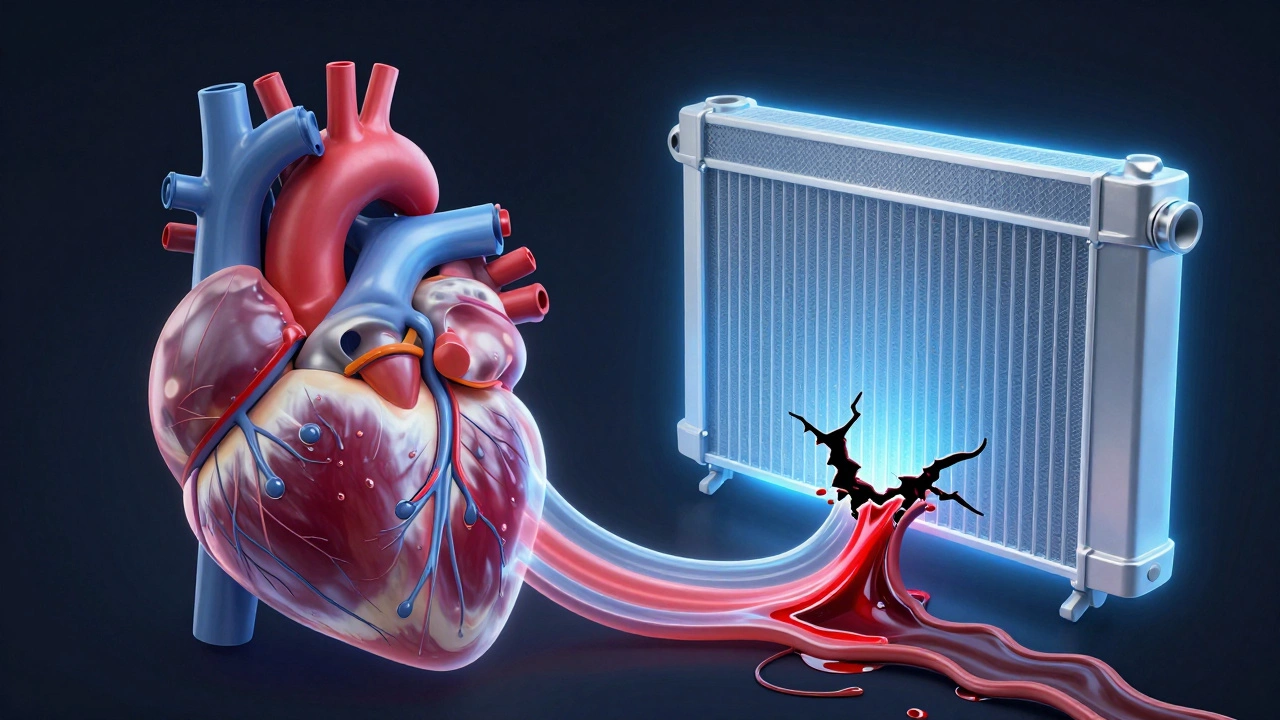
Ignoring a leaking or clogged radiator doesn’t make the problem go away. It makes it worse. First, your engine runs hot. Then, it runs hotter. Then, it overheats. That causes the head gasket to blow. That causes coolant to mix with oil. That causes your engine to seize. And when your engine seizes, you’re looking at a £2,000-£4,000 engine replacement - or a new car.
One mechanic in Stockport told me about a customer who drove 40 miles with a cracked radiator. He thought he could make it home. He didn’t. The engine was toast. He paid £3,200 for a rebuilt engine. The radiator cost £220. He lost £3,000 because he delayed.
How long does a radiator replacement take?
Most radiator replacements take between 2 and 4 hours. Simple cars like a Ford Focus or Vauxhall Astra take about 2-3 hours. Complex setups in SUVs or luxury cars can take 4-5 hours, especially if the radiator is buried behind other components. Electric vehicles often take longer due to additional cooling lines and electrical connections.
Can a radiator be repaired instead of replaced?
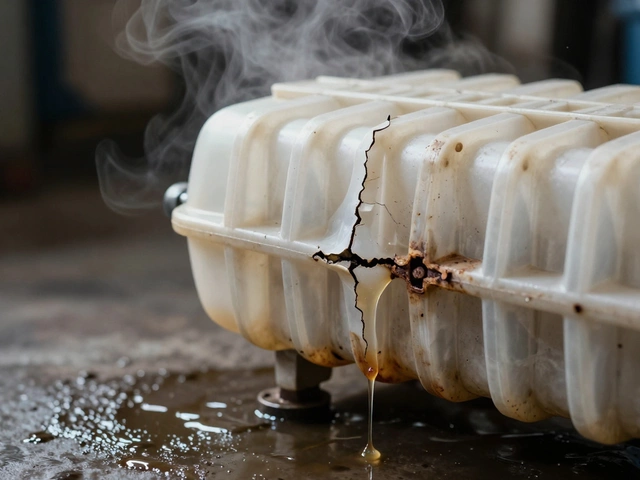
Small leaks in metal radiators can sometimes be patched with epoxy or solder, but it’s rarely a long-term fix. Plastic end tanks, which are common in modern radiators, crack and can’t be reliably repaired. Even if you fix a leak, the radiator is likely clogged inside from years of rust and debris. Replacement is almost always the smarter, safer choice.
Do I need to flush the cooling system when replacing the radiator?
Yes. Old coolant contains rust, scale, and contaminants that can clog the new radiator or damage the water pump. A proper flush removes all old fluid and cleans the system before refilling with fresh coolant. Most reputable garages include this in the service - if they don’t, find another one.
What coolant should I use?
Never guess. Your car’s manual will specify the type - usually OAT (Organic Acid Technology), HOAT (Hybrid Organic Acid Technology), or IAT (Inorganic Acid Technology). Mixing types can cause sludge and corrosion. In the UK, most modern cars use G12 or G13 coolant. Always check the label on the bottle and match the colour and specification - not just the brand.
Why does my radiator keep failing?
Repeated radiator failures usually point to a bigger issue. Common causes include using the wrong coolant, not flushing the system regularly, a faulty thermostat causing overheating, or a leaking head gasket letting combustion gases into the cooling system. If you’ve replaced the radiator twice in under two years, get the whole cooling system checked - especially the head gasket and water pump.
Final Thoughts
Replacing a radiator isn’t just about fixing a leak. It’s about protecting your engine - and your wallet. A £300 repair today can save you £3,000 later. Don’t wait until steam is billowing out of your hood. If your radiator’s leaking, rattling, or your temperature light is on, get it checked. And when you do, choose quality parts, a reputable garage, and don’t be afraid to ask questions. Your engine will thank you.