Universal Wipers: What They Are and How They Fit Your Car
When your windscreen wipers start streaking or chattering, you might reach for a pack of universal wipers, a type of replacement blade designed to fit a wide range of vehicles without needing exact model matching. Also known as universal fit wiper blades, they’re sold in packs with adapters to connect to different wiper arm styles—hook, pin, or side-lock. They’re popular because they’re cheap, easy to find, and seem like a one-size-fits-all fix. But here’s the catch: just because they fit doesn’t mean they perform well.
Universal wipers rely on adjustable arms and multiple mounting clips to work across dozens of car models. That flexibility comes at a cost. They often don’t sit flush against the glass like OEM or vehicle-specific blades, leading to gaps, lifting at high speeds, or uneven pressure. This isn’t just about visibility—it’s about safety. A poorly fitting blade can leave streaks during heavy rain, or worse, skip entirely over part of your windscreen. Many drivers don’t realize that wiper arm tension, blade length, and even the curve of the windshield matter. A blade that’s too long can hit the hood or A-pillar; one that’s too short leaves blind spots. And while universal wipers claim to fit 90% of cars, they rarely fit all of them perfectly.
That’s why many mechanics and serious drivers stick with exact-fit blades. Brands like Bosch, Rain-X, and Michelin make blades designed specifically for your make and model. They match the original curvature, pressure points, and connector type. But if you’re in a pinch, need a quick replacement, or drive an older car with no exact match available, universal wipers can work. Just don’t skip the fit check. Always test the blade on your windscreen before driving. Look for gaps, listen for noise, and check the wipe pattern after a few sweeps. If you see streaks or hear squeaking, swap them out. A good wiper isn’t just about rubber—it’s about how it connects to the arm and hugs the glass.
Below, you’ll find real-world guides on wiper replacement, common mistakes, and how to tell if your blades are failing. Some posts even compare universal blades to OEM ones, so you know exactly when to save money and when to invest in the right fit.
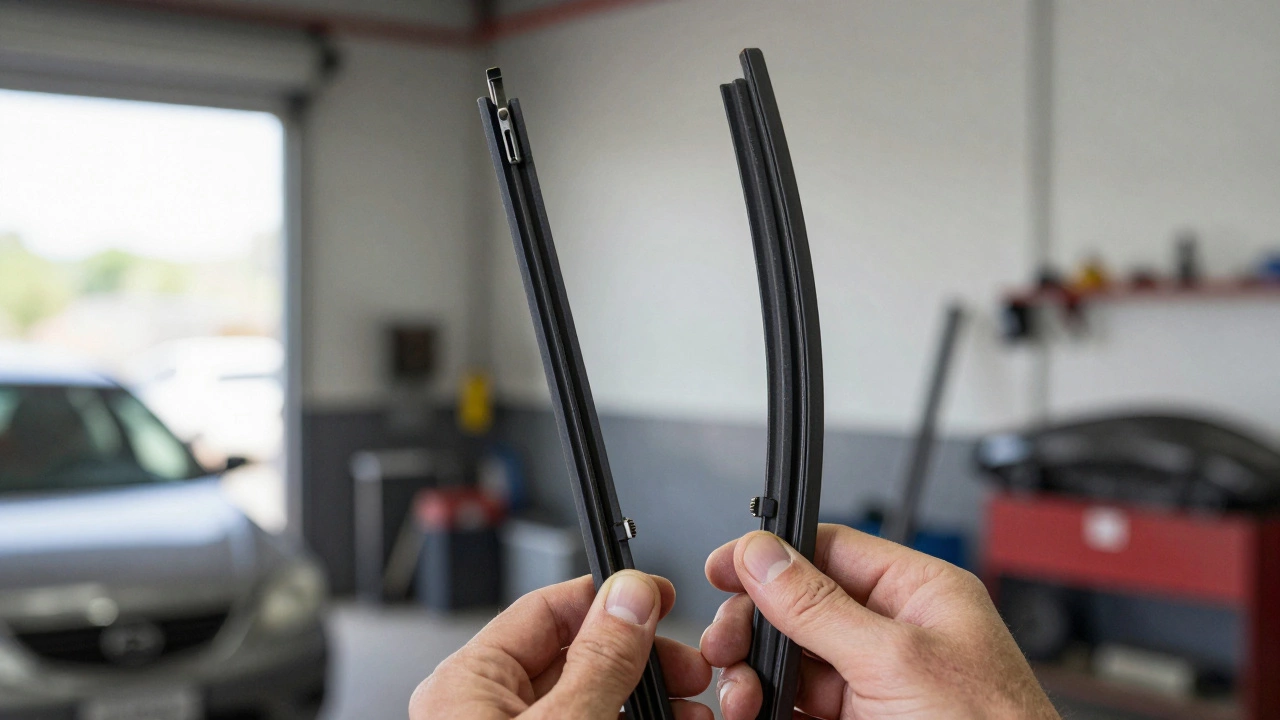
Are Windshield Wipers Universal? What You Need to Know Before Buying
Windshield wipers aren't universal - they vary by car make, model, and year. Learn how to find the right size and type to avoid streaks, noise, and damage. Replace them every 6-12 months for clear visibility.
December 1 2025