Release Bearing: What It Is, How It Fails, and When to Replace It
When you press the clutch pedal, a small but vital part called release bearing, a component that applies pressure to the clutch pressure plate to disengage the engine from the transmission. Also known as throw-out bearing, it’s the silent hero that lets you shift gears smoothly. Without it, your clutch can’t disengage—meaning you can’t change gears at all. It’s not something you think about until it fails, and when it does, you’ll know. A grinding noise when you press the pedal? That’s not your exhaust. That’s your release bearing screaming for help.
This part works under constant stress. Every time you shift, it moves, spins, and bears pressure from the clutch fork. Over time, the lubrication wears off, the bearings get pitted, and metal starts to grind against metal. It’s not rare for a release bearing to go bad before 80,000 miles, especially if you ride the clutch or shift roughly. It’s closely tied to the clutch kit, the complete set of parts that transfer engine power to the transmission, and often fails around the same time. That’s why mechanics usually replace the release bearing when doing a clutch job—it’s cheaper to do both at once than to pay for a second labor bill later.
It also connects to the clutch pressure plate, the component that clamps the clutch disc against the flywheel. If the release bearing is worn, it won’t push evenly on the pressure plate. That leads to incomplete disengagement, gear grinding, or even clutch slippage. You might think it’s the clutch disc wearing out, but sometimes, it’s just the bearing failing to do its job.
What does a bad release bearing sound like? Not a squeak. Not a rattle. A deep, rhythmic grinding that happens only when you press the clutch pedal. It goes away when you let go. That’s the classic sign. If you hear it, don’t wait. The bearing can seize, lock up the input shaft, and leave you stranded. Or worse—it can damage the clutch fork, the pressure plate, or even the transmission input shaft. Repair costs jump from a few hundred pounds to over a grand if you delay.
There’s no easy way to check it without removing the transmission, which is why most drivers rely on symptoms. But knowing what to listen for helps you act fast. And since the release bearing is almost always replaced during a clutch service, you’ll find plenty of guides here on how to spot clutch failure early, what parts to replace together, and how to avoid costly mistakes. Whether you’re a DIYer or just trying to understand your mechanic’s quote, this collection gives you the facts you need to make smart decisions.
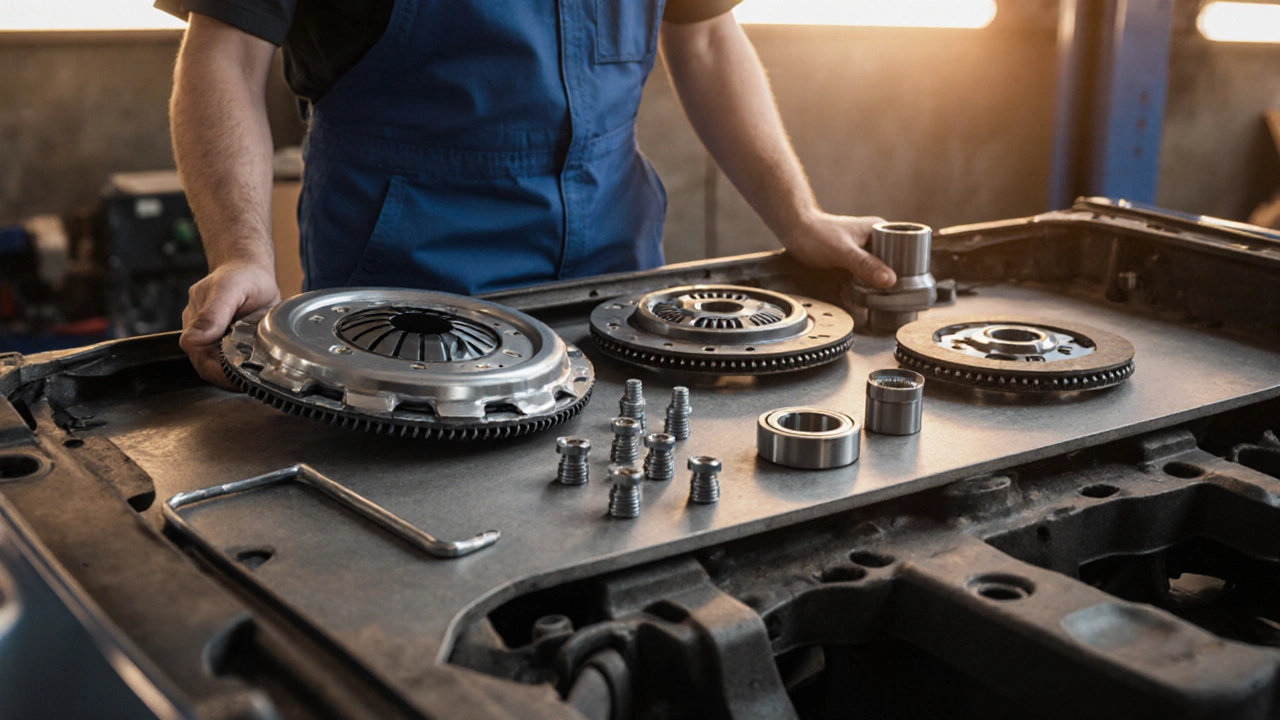
Additional Parts to Replace When Changing a Clutch
Learn which extra components to swap when you replace a clutch, from flywheel and pressure plate to hydraulic lines and engine mounts, with a full checklist and FAQs.
October 20 2025