Radiator Replacement Time: How Long It Takes and What to Watch For
When your car starts overheating or you notice coolant pooling under the hood, you’re probably thinking about radiator replacement time, the duration and process involved in swapping out a failing radiator in a vehicle. Also known as cooling system repair, this isn’t just a simple parts swap—it’s often a sign that other parts of your engine’s cooling system are wearing out too. Most radiators last between 8 and 12 years, but that’s only if you keep up with basic maintenance. If you’ve been ignoring coolant changes or driving with low fluid levels, your radiator could fail in half that time. And when it does, the clock starts ticking on your engine.
Replacing a radiator isn’t just about the part itself. It’s tied to coolant leak, a common symptom of radiator failure where fluid escapes from cracks, hoses, or seals. Also known as engine overheating, this problem doesn’t just waste fluid—it can melt engine components if left unchecked. You’ll also need to check the radiator lifespan, how long a radiator typically lasts before corrosion, debris, or stress cause it to fail. Also known as car radiator replacement interval, this varies wildly based on driving habits, climate, and maintenance. A radiator in a city car with short trips and stop-and-go traffic wears out faster than one in a highway-driven vehicle. And if you live in a place with salty roads in winter, rust can eat through the metal faster than you think.
Most radiator replacements take between 2 and 4 hours for a skilled mechanic. But if the hoses are brittle, the thermostat is stuck, or the water pump is leaking too, you might be looking at a full cooling system overhaul. That’s why it’s smart to check your radiator failure signs, visible or audible clues that your radiator is nearing the end of its life. Also known as cooling system warning signs, these include sweet-smelling steam, discolored coolant, bulging tanks, or a temperature gauge that spikes even after the engine warms up. If you’ve seen any of those, don’t wait for the engine to overheat on the highway. The cost of a new radiator is nothing compared to a blown head gasket or warped cylinder head.
What you’ll find below are real-world guides from drivers and mechanics who’ve been there. You’ll learn how to spot a failing radiator before it leaves you stranded, what parts usually need replacing at the same time, and how to avoid being upsold on unnecessary repairs. Whether you’re planning to DIY or just want to know what to expect at the shop, these posts give you the facts—not the fluff.
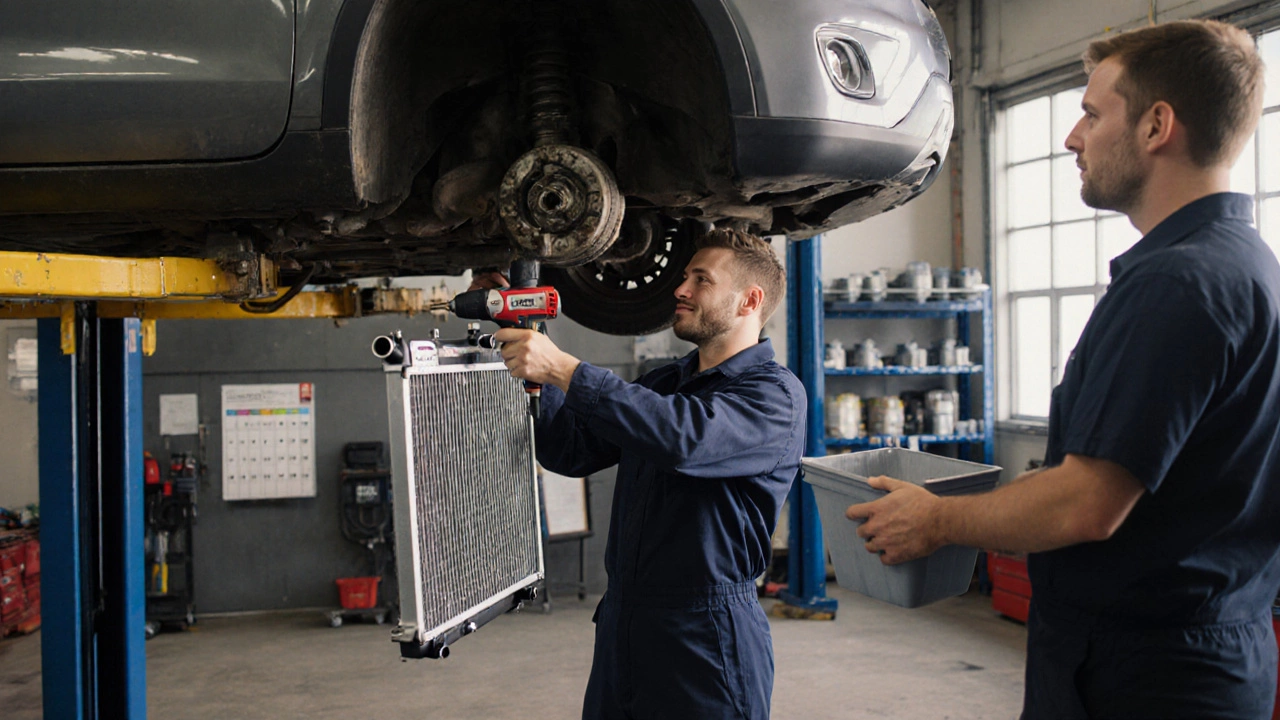
Radiator Replacement Time: How Many Days Does It Really Take?
Learn the typical calendar days for a radiator swap, factors that affect timing, DIY vs. professional estimates, and a step‑by‑step guide to avoid delays.
October 7 2025