Pressure Plate: What It Is, How It Fails, and When to Replace It
When your clutch starts slipping or the pedal feels weird, the pressure plate, a key part of the clutch system that clamps the friction disc against the flywheel to transfer engine power to the transmission. Also known as clutch cover, it’s not something you notice until it breaks—then it’s too late. This isn’t a flashy part like a turbo or exhaust, but without it, your car won’t move properly. It’s the unsung hero that holds your clutch together under extreme heat and pressure every time you shift.
The pressure plate works with two other parts: the flywheel, the heavy metal disc bolted to the engine crankshaft that stores rotational energy, and the clutch disc, the friction-lined component sandwiched between the pressure plate and flywheel. Together, they form the clutch system. If any one of these fails, the whole thing fails. A worn pressure plate won’t grip tightly enough, causing slippage. A warped one will make the clutch chatter. A broken spring will leave you stuck in gear or unable to disengage.
Most pressure plates last as long as the clutch disc—usually between 60,000 and 100,000 miles. But if you ride the clutch, tow heavy loads, or drive in stop-and-go traffic, it can wear out much faster. You won’t always hear it fail. Sometimes it just starts to feel like the car isn’t responding right. The pedal feels softer. The engine revs higher than it should when accelerating. Or worse, you let the clutch out and the car doesn’t move, even though the engine is spinning.
Replacing just the clutch disc without checking the pressure plate is a common mistake. Mechanics often recommend replacing both at the same time because the pressure plate is already exposed when you pull the transmission. It’s cheaper to do it all once than to pay for another labor job six months later. And if your flywheel is scored or warped from overheating, it needs resurfacing or replacement too. These parts don’t work in isolation—they’re a system.
UK drivers see this most in older manual cars, especially those used for commuting or delivery work. You’ll find more clutch failures in cities like London or Manchester where traffic is heavy and gear changes are constant. But it’s not just about mileage. Driving style matters more. If you’re the type who lets the clutch slip while waiting at lights, or you downshift aggressively on hills, you’re putting extra stress on that pressure plate.
There’s no simple test you can do at home to check the pressure plate’s health—unless you’re already taking the transmission out. But you can watch for the signs: unusual noises when pressing the pedal, a clutch that engages too high or too low, or a burning smell after heavy use. These aren’t just "clutch problems." They’re pressure plate problems.
Below, you’ll find real-world guides from UK drivers and mechanics on how to spot failing clutch components before they leave you stranded. From how to tell if you need a full clutch kit replacement to why some people replace the pressure plate even when it looks fine—this collection cuts through the myths and gives you what actually works on the road.
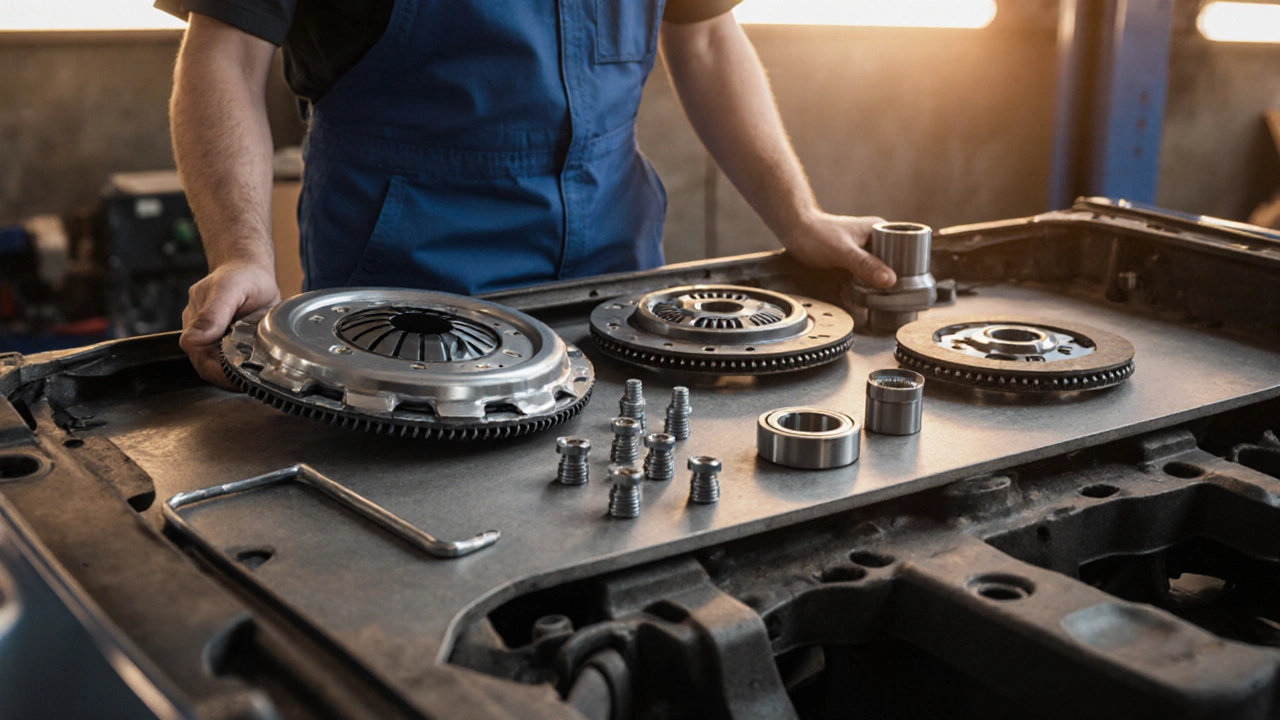
Additional Parts to Replace When Changing a Clutch
Learn which extra components to swap when you replace a clutch, from flywheel and pressure plate to hydraulic lines and engine mounts, with a full checklist and FAQs.
October 20 2025