Muffler Noise: What It Means and How to Fix It
When your car starts making a loud, rumbling, or hissing sound, it’s often the muffler, a key part of the exhaust system that reduces engine noise. Also known as a silencer, it’s designed to keep your ride quiet—but when it fails, the noise tells you exactly what’s wrong. A healthy muffler shouldn’t make any noticeable sound at all. If you hear a deep roar, a rattle, or a sudden change in exhaust tone, you’re not imagining it. Something’s broken, rusted, or loose.
Muffler noise usually links to three main problems: a hole in the muffler itself, a broken hanger letting it drag, or an exhaust leak, a breach in the exhaust pipe before the muffler that lets loud gases escape. These aren’t just noise issues—they’re safety risks. Carbon monoxide can leak into your cabin, and a loose muffler can fall off while driving. You might also notice a drop in fuel economy, because a damaged exhaust system messes with engine pressure and efficiency. The exhaust system, the full path exhaust gases take from engine to tailpipe, including pipes, catalytic converter, and muffler works as a team. If one part fails, the whole system suffers.
Some sounds are easy to spot. A loud, low roar means the muffler is worn through. A rhythmic rattle often points to broken internal baffles or a loose heat shield. A hissing or puffing noise usually means a crack or loose connection in the exhaust pipe. And if you hear a sudden change after hitting a pothole or curb, you’ve likely damaged a hanger or bent a pipe. These aren’t guesses—you’re hearing the physical failure of metal under stress. You don’t need a diagnostic tool to know something’s wrong. Your ears are enough.
What you find in the posts below are real-world fixes and checks from UK drivers and mechanics. You’ll see how to tell if your muffler is beyond repair or just needs a tighten-up. You’ll learn why a Flowmaster 40 sounds different from a 44, how to spot a failing exhaust system before it fails completely, and what parts you might need to replace alongside the muffler. Some posts even show you how to test your exhaust for leaks using simple household tools. No fluff. No jargon. Just what actually works when your car sounds like a lawnmower on a bad day.
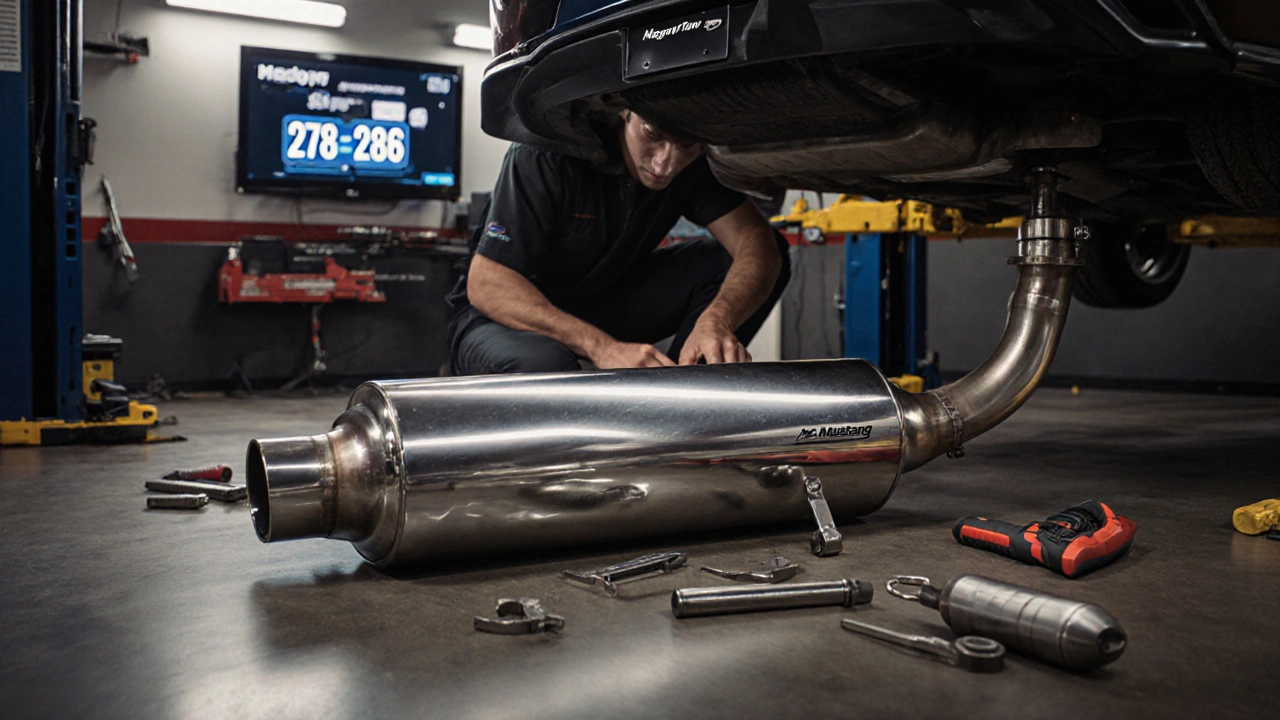
Does a MagnaFlow muffler increase horsepower? Real-world performance facts
A MagnaFlow muffler can add 5-10 horsepower by reducing exhaust backpressure, but real gains depend on your car’s setup. It’s best for sound and modest performance gains, not big power upgrades.
October 30 2025