Brake System Symptom Checker
Identify Your Brake Issue
Select the symptoms you're experiencing to determine which brakes need attention.
Front Brake Symptoms
Rear Brake Symptoms
Results
Ever hit the brake pedal and felt something just… off? Maybe a squeal, a vibration, or a longer stopping distance? You’re not imagining it. Your brakes are trying to tell you something - and ignoring it could cost you more than just a repair bill. Knowing whether it’s your front brakes or rear brakes going bad can save you time, money, and maybe even your safety. Here’s how to spot the difference.
Front Brakes Do Most of the Work
Over 70% of your car’s stopping power comes from the front brakes. That’s because when you brake, your car’s weight shifts forward. The front pads and rotors handle the bulk of the friction, and they wear out faster as a result. If your front brakes are failing, you’ll notice it quickly.
- Squealing or screeching when you slow down - especially at low speeds - is often the first sign. Most brake pads have a small metal tab that rubs against the rotor when the pad material gets thin. It’s designed to be annoying so you don’t ignore it.
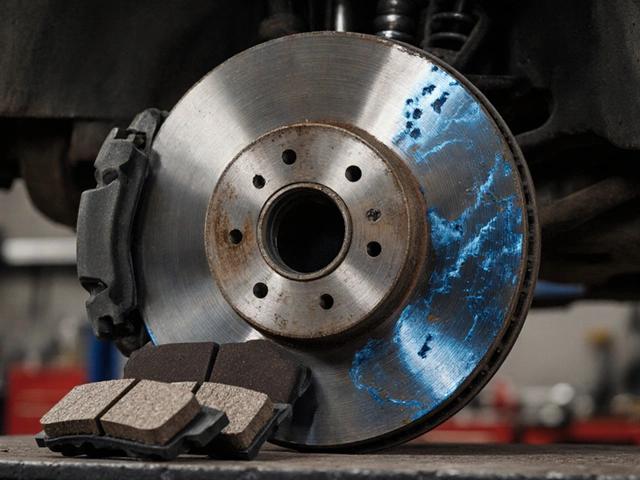
- Vibrations in the steering wheel while braking? That’s usually a warped front rotor. Heat builds up during hard stops, and if the rotor gets unevenly worn, it won’t make smooth contact with the pad. The wobble travels up through the suspension into your hands.
- Longer stopping distances mean your pads are worn thin or the hydraulic system is losing pressure. If you need to press harder or farther to stop, don’t wait. Front brake failure is the most common cause of rear-end collisions.
In Manchester, where winter rain and occasional frost make braking conditions unpredictable, worn front brakes are a major risk. A 2023 AA report found that 41% of brake-related breakdowns in the North West were due to front pad wear beyond 3mm. That’s less than the thickness of a credit card.
Rear Brakes Are Quieter - But Still Critical
Rear brakes don’t get as much attention, but they’re just as important. In many cars, especially older models or those with drum brakes, the rear system is simpler - but that doesn’t mean it’s less likely to fail.
- Grinding noises from the back end? That’s metal-on-metal. Rear pads are often made of cheaper material, and when they’re gone, the backing plate scrapes directly on the rotor. You’ll hear it clearly when you’re slowing down in traffic - especially in quiet residential streets.
- Handbrake feels loose or doesn’t hold your car on a slope? That’s a classic rear brake issue. In drum systems, the cables stretch or the shoes wear down. In disc systems, the parking brake mechanism itself can seize or corrode.
- Car pulls to one side when braking? If the pull happens only under light braking, it could be a stuck rear caliper. The brake on one side isn’t releasing, causing uneven drag. You’ll notice it more when you’re cruising slowly, like in a supermarket car park.
Many drivers assume rear brakes last longer because they’re used less. That’s true - but it also means they’re more likely to rust or seize up if the car sits for days. In damp climates like Manchester, rear drum brakes can corrode internally, even if the pads look fine.
How to Tell Which Ones Are Failing
Here’s a simple way to narrow it down:
- Listen while braking gently at 20 mph. If the noise is coming from the front - like under the hood - it’s likely the front pads. If it’s coming from the rear - like near the trunk - it’s probably the rear.
- Feel the brake pedal. If it vibrates through the steering wheel, it’s front. If the pedal feels spongy or sinks slowly, it could be air in the lines or a rear caliper leak.
- Check for uneven tire wear. If the front tires are wearing faster on the inside edge, it could mean the rear brakes aren’t helping enough, forcing the fronts to overwork.
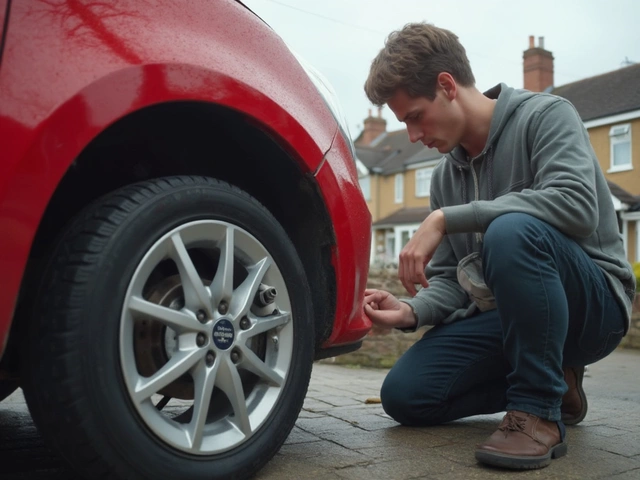
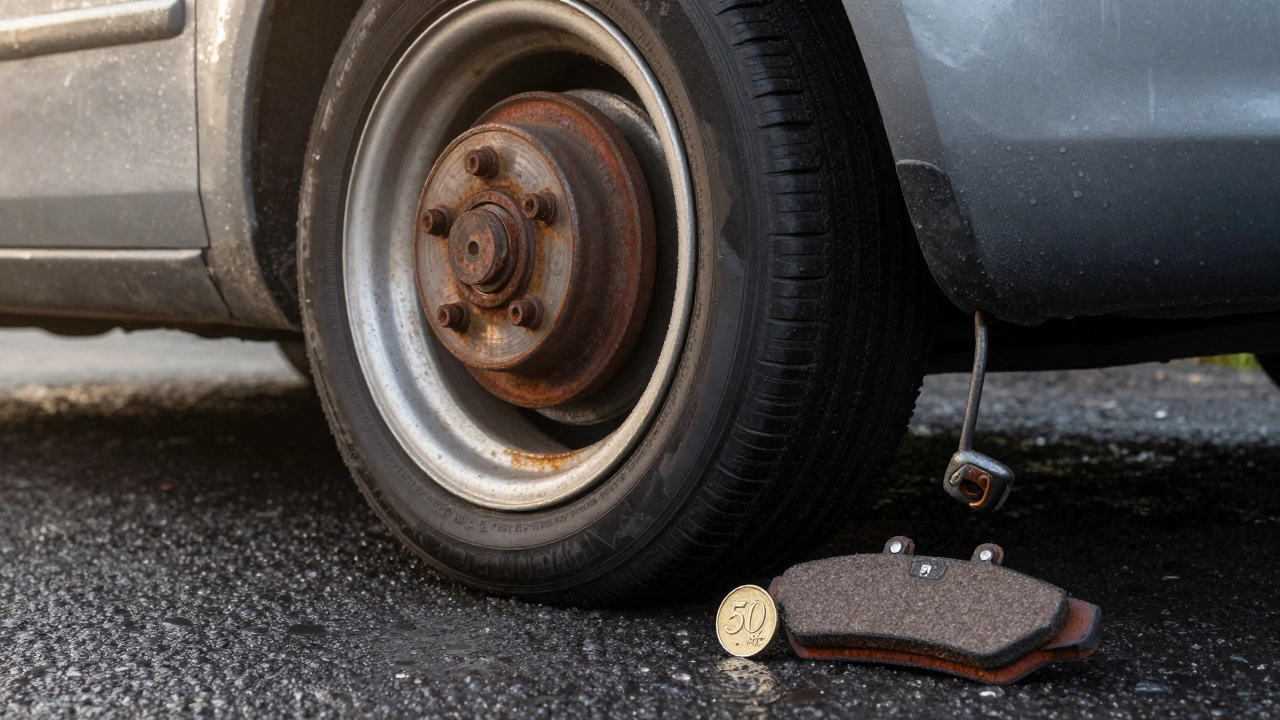
There’s also a quick visual check you can do without tools. Look through the wheel spokes. If you can see the brake pad - and it’s thinner than a 50p coin (about 3mm), it’s time to replace it. If you can’t see the pad at all, you’re already in danger zone.
What Happens If You Ignore It?
Worn brake pads don’t just stop working - they destroy other parts. When the friction material disappears, the metal backing plate grinds into the rotor. That scratches the rotor surface, making it uneven. You’ll need a new rotor, not just pads. And if it goes on long enough, you can warp the hub or damage the caliper.
Insurance claims data from the UK’s ABI shows that drivers who waited over 1,000 miles past recommended brake replacement were 3x more likely to need a full brake overhaul - and 7x more likely to be involved in a minor collision.
It’s not just about safety. In the UK, brake failure is a common reason for an MOT failure. If your brake pads are below 1.5mm, you’ll fail. Even if you pass, driving with worn brakes increases your risk of being pulled over - and fined up to £2,500 per axle.
What Should You Do?
Don’t wait for the noise to get worse. If you’re unsure:
- Get a visual inspection every 6 months - especially before winter.
- Ask your garage to measure pad thickness, not just eyeball it. Most places do this for free.
- Replace pads in pairs. Always change both fronts or both rears together. Mixing old and new pads causes uneven braking.
- Consider upgrading to ceramic pads if you do a lot of city driving. They last longer, produce less dust, and are quieter.
Most brake pads last between 20,000 and 50,000 miles, depending on your driving. If you’re stopping a lot in traffic - like in Manchester’s rush hour - you’re probably on the lower end. Keep a log. Note when you last had them checked. That way, you won’t be guessing.
Common Misconceptions
Let’s clear up a few myths:
- Myth: Rear brakes last twice as long as front ones. Truth: They wear slower, but in wet climates, they can corrode and seize before they wear out.
- Myth: If the car stops fine, the brakes are okay. Truth: You can still have worn pads and a warped rotor without feeling it - until you need to stop hard.
- Myth: Brake fluid doesn’t need checking. Truth: Brake fluid absorbs moisture over time. If it’s over 2 years old, it can boil under heavy use and cause brake fade. Check it every 2 years.
| Symptom | Most Likely Cause | Urgency |
|---|---|---|
| Squealing during light braking | Front brake wear indicator | High - replace within 1,000 miles |
| Vibration in steering wheel | Warped front rotor | High - inspect immediately |
| Grinding from rear | Rear pad completely worn | Emergency - don’t drive |
| Handbrake doesn’t hold | Rear drum or cable failure | High - needs repair |
| Car pulls to one side | Stuck rear caliper or uneven pad wear | Medium to High - get checked |
When to Replace
There’s no universal mileage. It depends on:
- Driving style: Aggressive braking? You’ll wear them out faster.
- Climate: Wet, salty roads in winter speed up corrosion.
- Vehicle weight: SUVs and vans wear brakes quicker than small hatchbacks.
- Pad material: Organic pads wear faster but are quieter. Ceramic lasts longer. Semi-metallic handles heat better.
As a rule of thumb: if your pads are under 3mm, replace them. If they’re under 1.5mm, you’re already risking MOT failure and safety.
Can I just replace the front brakes and leave the rears?
No. Always replace brake pads in pairs - both fronts or both rears. Mixing old and new pads causes uneven braking force, which can lead to pulling, overheating, or even loss of control. It’s not worth the risk.
How often should I check my brake pads?
Check them every 6 months or 6,000 miles - whichever comes first. If you drive mostly in the city, check every 3 months. A quick visual through the wheel is enough. If you can’t see the pad clearly, get a professional inspection.
Do rear brakes wear out slower than front brakes?
Yes, but not always. Front brakes do most of the stopping, so they wear faster. But in damp climates like the UK, rear brakes can corrode or seize before they wear down. So even if they look thick, they might not be working properly.
Is it safe to drive with worn brake pads?
No. Driving with pads below 3mm is risky. Below 1.5mm, you’re not just unsafe - you’re breaking the law. Your car will fail MOT, and you risk damaging rotors, calipers, or even losing braking power entirely.
Can I hear the difference between front and rear brake noise?
Yes. Front brake noise usually comes from under the hood or near the front wheels - you’ll feel it in the steering wheel. Rear brake noise is more likely to come from the back of the car, especially if it’s a grinding sound. Try braking gently at 20 mph and listen carefully.
Final Tip
Don’t wait for the warning signs to get loud. Brake systems don’t fail suddenly - they degrade. By the time you hear it, you’re already overdue. Make checking your brake pads part of your regular car care routine - like oil changes or tire rotations. A few minutes every few months could save you hundreds - and maybe your life.