Engine Oil Level: How to Check It and Why It Matters for Your Car
When you think about your car’s health, engine oil level, the amount of lubricating fluid in your engine’s crankcase. Also known as motor oil level, it’s the first thing you should check before any long drive or if your engine starts acting up. It’s not just a number on a dipstick—it’s the lifeblood of your engine. Too low, and metal starts grinding against metal. Too high, and you risk foaming, pressure build-up, and even catalytic converter damage. A simple check takes two minutes, but skipping it can cost you thousands.
The engine oil, the liquid that cools, cleans, and lubricates moving engine parts doesn’t last forever. Even if you don’t drive much, oil breaks down over time. Heat, dirt, and moisture turn it into sludge. That’s why oil degradation, the process where oil loses its protective properties matters just as much as how much you have. A car that sits for months can still suffer from old oil—even if the level looks fine. And if you’ve gone over 5,000 miles between changes, you’re already playing Russian roulette with your engine.
Your engine damage, the irreversible harm caused by lack of lubrication or contaminated oil doesn’t happen overnight. It creeps in slowly: a slight knock here, a drop in fuel economy there. But once it hits, you’re looking at a rebuild—or a new engine. That’s why checking your oil level isn’t a chore. It’s your cheapest insurance policy. Most cars show warning signs before total failure: a glowing oil light, a strange smell, or even just a quieter engine than usual. But by then, it’s often too late.
Here’s the truth: you don’t need to be a mechanic to protect your engine. You just need to know where to look and when to act. The dipstick isn’t magic—it’s your direct line to your engine’s condition. Pull it, wipe it, reinsert it, then pull it again. Look for the marks. Is the oil dark and gritty? Is it below the minimum line? That’s your signal. Don’t wait for the car to scream. Check it every time you fill up. Keep a bottle of the right oil in your trunk. Learn what your car actually needs—not what the ad says.
The posts below cover everything from what happens when you ignore oil levels, to how synthetic oil behaves differently, to why skipping oil changes leads to sludge buildup and engine failure. You’ll find real-world advice from people who’ve been there—what they saw, what they did, and what it cost them. No fluff. No theory. Just what works on UK roads, in winter rain, and after 100,000 miles. This isn’t about being perfect. It’s about being smart before it’s too late.
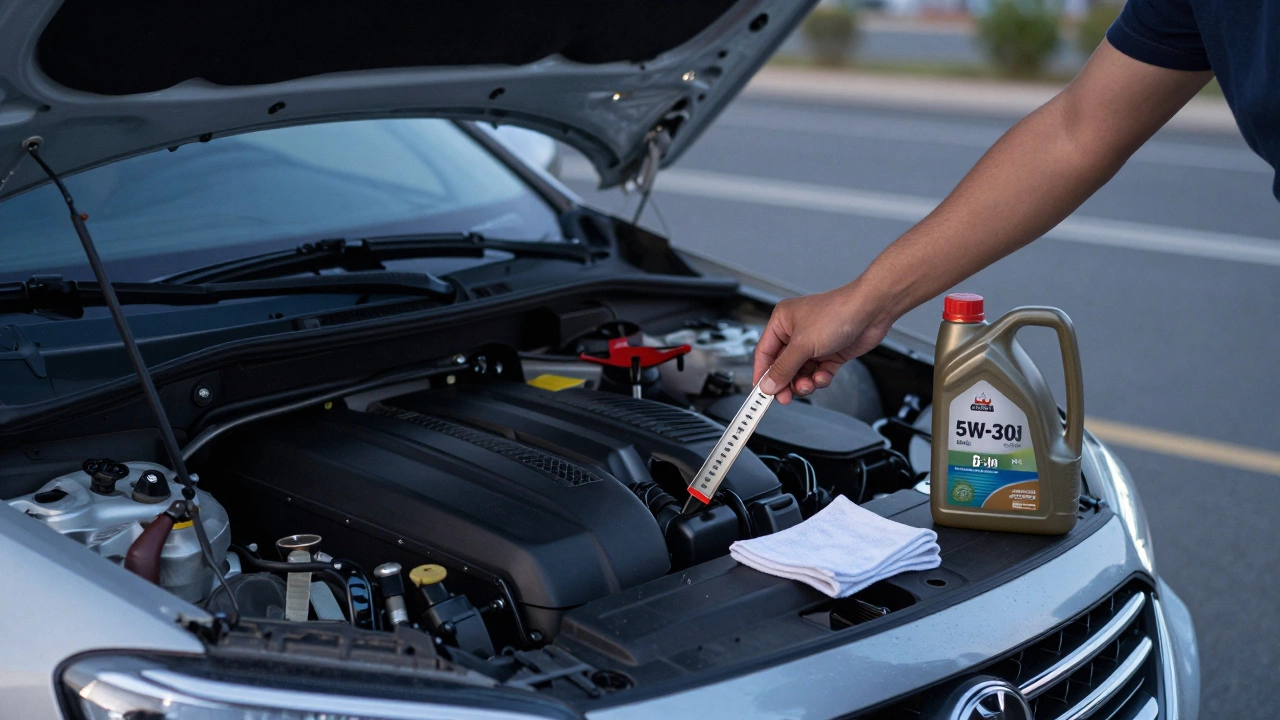
How Much Oil Should I Add If It's Low? A Simple Guide for Every Driver
Learn exactly how much oil to add when your engine is low. No guesswork - just clear steps, real numbers, and what happens if you get it wrong. Save your engine before it's too late.
March 23 2026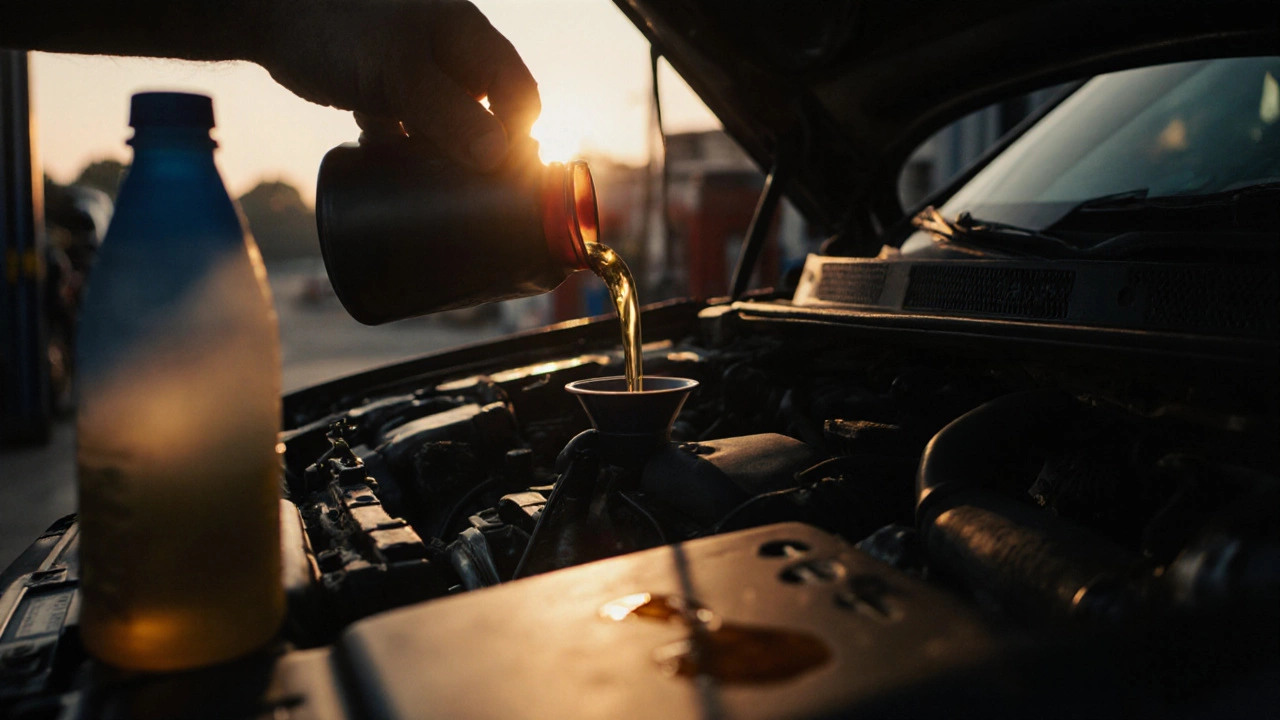
Does the Engine Need to Be Running When Adding Oil? Here's What Really Happens
Adding oil to a running engine is dangerous and inaccurate. Learn the correct way to check and add engine oil without risking overfill, foaming, or engine damage. Simple steps for every car owner.
November 17 2025