Car Battery Compatibility Checker
Check Your Battery Compatibility
Enter your vehicle details and battery specifications to see if they match
Enter your vehicle details to see if the battery matches your requirements
Important: For vehicles with start-stop systems, you must use an AGM or EFB battery. Incorrect battery type may cause system errors or reduced lifespan.
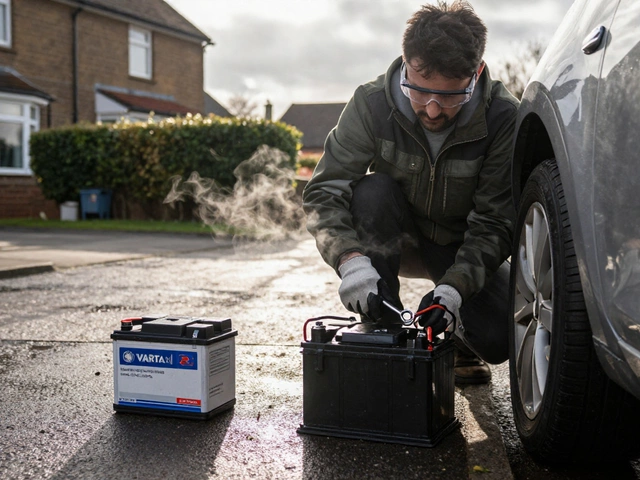
Most car batteries last between 3 and 5 years. If your car struggles to start on cold mornings, or the dashboard lights dim when you turn the key, it’s probably time for a new one. You don’t need to pay £100+ to a garage to swap it out. With basic tools and a little care, you can replace your car battery yourself - and save money in the process.
Why replacing your own battery makes sense
Garages often charge £50-£80 just to install a new battery, even if you bought it yourself. That’s money you can keep. Plus, you’ll know exactly what you’re putting in your car. Many garages use cheap, generic brands. You can pick a reliable one like Interstate is a leading automotive battery brand known for its long lifespan and strong cold cranking amps, especially suited for UK winters, Varta is a German-engineered battery brand with high reliability and low self-discharge, popular across Europe, or Bosch is a trusted automotive supplier offering durable batteries with advanced AGM technology for modern cars.
Replacing the battery yourself also means you don’t have to wait for a mechanic’s slot. If your car dies on a Saturday morning, you can fix it before lunch.
What you’ll need
- A new battery (match the size, terminal type, and cold cranking amps of your old one)
- Wrench or socket set (usually 10mm or 13mm for terminal nuts)
- Wire brush or battery terminal cleaner
- Baking soda and water (for cleaning corrosion)
- Gloves and safety glasses
- Anti-corrosion spray or petroleum jelly (optional)
Don’t skip the gloves and glasses. Battery acid can cause burns, and sparks from metal tools can ignite hydrogen gas.
Step-by-step: How to replace your car battery
- Turn off the car and remove the keys. Make sure the engine is cold. Open the bonnet and locate the battery. Most are under the hood, but some newer cars (like Volkswagen or BMW models) have them in the trunk or under the rear seat.
- Disconnect the negative terminal first. This is the black cable marked with a minus (−) sign. Loosen the nut with your wrench and pull the cable off. Never disconnect the positive first - you risk shorting the system if your tool touches metal.
- Disconnect the positive terminal. This is the red cable marked with a plus (+) sign. Remove it the same way.
- Remove the hold-down clamp. Most batteries are secured with a metal or plastic bracket. Use a screwdriver or wrench to loosen it. Some cars have a bolt on top; others have a side clamp.
- Lift out the old battery. Batteries are heavy - around 15-20kg. Use both hands and lift straight up. Watch out for acid leaks or cracks.
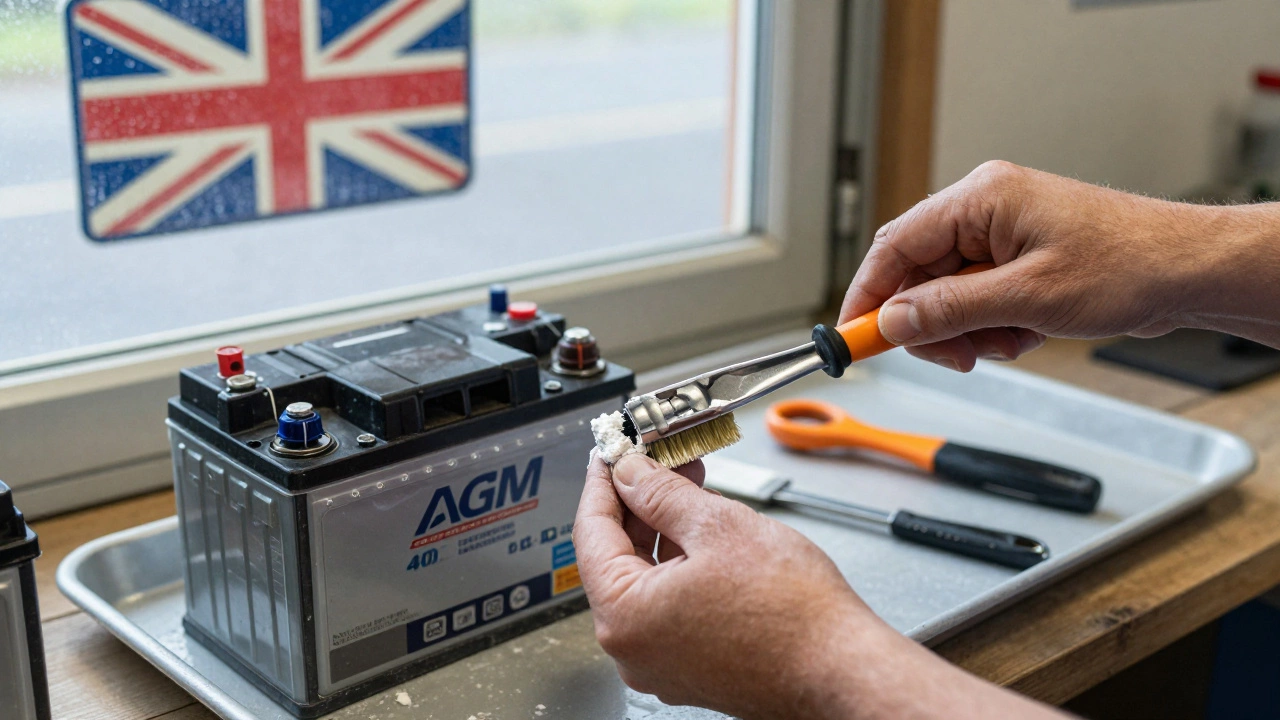
- Clean the battery tray and terminals. Mix a spoonful of baking soda with water. Brush the tray and terminals with it to neutralise acid buildup. Rinse with clean water and dry with a cloth. Use a wire brush on the terminals to remove white or green corrosion.
- Place the new battery in. Make sure it’s the same size and terminal layout. If the terminals are reversed, you’ll damage your car’s electronics. Double-check the orientation.
- Reattach the hold-down clamp. Tighten it securely so the battery doesn’t rattle.
- Connect the positive terminal first. Put the red cable back on and tighten the nut. Then connect the black negative cable.
- Apply anti-corrosion spray or grease. Dab a little petroleum jelly on each terminal to prevent future corrosion.
- Start the car. It should turn over smoothly. If it doesn’t, double-check your connections.
What to watch out for
Modern cars have complex electronics. If you disconnect the battery without a memory saver, you might lose your radio code, clock settings, or even trigger error codes in the engine control unit. Some vehicles - especially those with start-stop systems - need the battery registered with a diagnostic tool after replacement.
Check your owner’s manual. If your car has a start-stop system (common in Ford Focus, Vauxhall Astra, or BMW 3 Series from 2018 onwards), it likely uses an AGM battery is Absorbent Glass Mat technology, a type of lead-acid battery with higher cycle life and better performance in stop-start systems. You can’t replace it with a standard battery. The car’s system will detect the mismatch and throw a fault code.
If you’re unsure, take the old battery to a parts store. Most will test it for free and match the replacement by size, terminal position, and CCA (cold cranking amps). Look for the code on the label - it’s usually something like 063, 075, or 124R.
How to choose the right battery
Don’t just buy the cheapest one. Here’s what matters:
- Size - The battery must fit your tray. Measure length, width, and height.
- Terminal position - Positive on the left or right? Wrong placement means you can’t connect the cables.
- CCA (Cold Cranking Amps) - UK winters can drop below 0°C. Choose a battery with at least 450 CCA for petrol cars, 500+ for diesel. Higher is better.
- Reserve Capacity - How long the battery can power essentials if the alternator fails. Look for 80+ minutes.
- Type - Standard flooded, EFB (Enhanced Flooded Battery), or AGM. Match what your car originally had.
For most UK drivers, a Varta Silver Dynamic is a high-performance EFB battery designed for vehicles with basic start-stop systems, offering 20% more cycle life than standard batteries or Bosch S5 is a reliable AGM battery with high vibration resistance, ideal for modern European cars will work well. Prices range from £60-£120 depending on brand and capacity.
When to call a professional
You should get help if:
- Your car has a start-stop system and you’re not sure what battery type to use
- You don’t have the right tools or feel uncomfortable working near the battery
- The battery is in a hard-to-reach spot (under the seat or in the trunk)
- Your car throws error codes after replacement that won’t clear
Some garages offer free battery fitting if you buy the battery from them. That’s often a fair deal if you’re not confident.
How long does a car battery last?
In the UK, most batteries last 3-5 years. Cold weather, short trips, and leaving lights on drain them faster. If you drive less than 5,000 miles a year, your battery won’t recharge fully - that kills its life. A battery maintainer (a small trickle charger) plugged in monthly can extend its life by years.
Signs your battery is dying:
- Slow engine crank when starting
- Dashboard warning light (usually a battery icon)
- Swollen or bloated case
- Older than 4 years
Test it for free at any Halfords, Kwik Fit, or Euro Car Parts. They’ll check voltage and cranking power in under 5 minutes.
What to do with the old battery
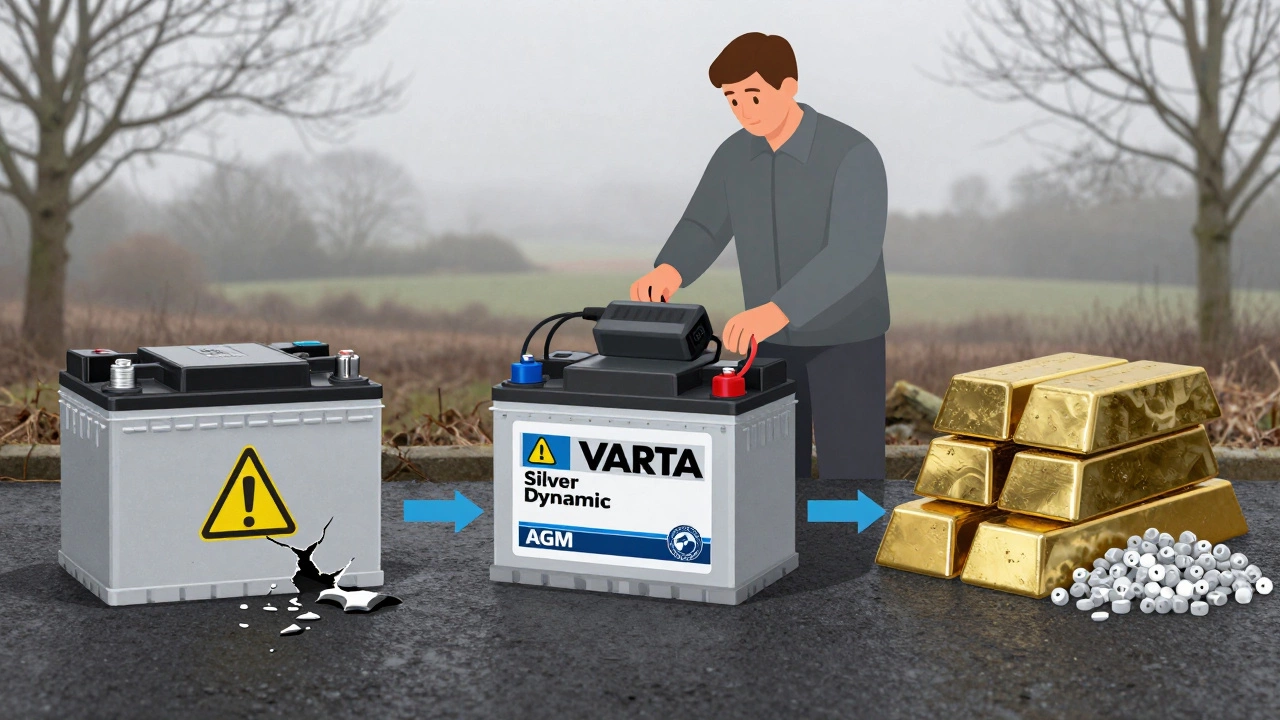
Never throw it in the bin. Car batteries contain lead and acid - both toxic. Most retailers take back old batteries for free when you buy a new one. If you’re not buying one, take it to a local recycling centre. Some councils offer free collection for hazardous waste.
Recycling rates for car batteries are over 99% in the UK. The lead is melted down and reused. The plastic casing gets recycled into new battery cases. It’s one of the most sustainable parts of your car.
Can I replace a car battery without disconnecting the negative terminal first?
No. Always disconnect the negative terminal before the positive. If your wrench touches metal while loosening the positive terminal, you could create a short circuit. This can fry your car’s electronics, blow fuses, or even cause a spark that ignites battery gas. Safety first - negative off first, then positive. When reinstalling, connect positive first, then negative.
Will my car lose its settings if I disconnect the battery?
Yes. You’ll likely lose radio presets, clock time, and sometimes adaptive settings like window auto-up or seat positions. For cars with start-stop or advanced infotainment, you might get error codes. To avoid this, use a memory saver - a small 9V battery-powered device that plugs into the OBD port while you swap the battery. They cost under £10 and are worth it if you have a newer car.
Can I use any battery as long as it fits physically?
No. Even if it fits, the wrong CCA or type can cause problems. A battery with too low CCA won’t start your car in winter. Using a standard battery in a car designed for AGM will overwork the alternator and shorten its life. Always match the original battery’s specs - size, terminal position, CCA, and technology. The code on the old battery’s label tells you exactly what to buy.
Why does my car show a battery warning after I replaced it?
Many modern cars need the new battery registered in the car’s computer. If you install an AGM battery but the system still thinks it’s a standard one, it won’t charge correctly. This triggers a warning. You’ll need a diagnostic tool like a Launch CRP129 or a garage’s scanner to reprogram the battery. Some aftermarket batteries come with a reset code - check the packaging. If you’re unsure, get it done at a garage - it usually costs £20-£30.
How do I know if my battery is the problem or the alternator?
If your car starts fine after a jump but dies again after turning off, the battery is likely dead. If it won’t start even after a jump, or the dashboard lights dim while driving, the alternator may not be charging. The easiest way to tell: get a free test at Halfords or Kwik Fit. They’ll check both the battery and alternator output in minutes. A healthy battery reads 12.6V when off; a good alternator should output 13.8-14.7V when running.
If you’ve followed these steps and your car starts without issues, you’ve saved yourself time and money. Replacing a car battery isn’t hard - it just needs attention to detail. Keep your tools handy, check your battery every year before winter, and you’ll avoid most roadside surprises.