Coolant Leak: Signs, Causes, and How to Fix It Before It Kills Your Engine
When your car starts leaking coolant, a liquid that circulates through your engine to absorb and transfer heat. Also known as antifreeze, it’s the lifeline between your engine running smoothly and turning into a melted mess. A small drip might seem harmless, but ignoring it is like ignoring a slow heartbeat—you won’t feel the problem until it’s too late.
A radiator, the main heat exchanger that cools circulating coolant before it returns to the engine is the most common culprit, but it’s not the only one. Hoses, water pumps, heater cores, and even a blown head gasket, the seal between the engine block and cylinder head that prevents coolant from mixing with oil or combustion gases can leak too. You might see puddles under your car, notice the temperature gauge climbing, or smell sweet steam when you open the hood. Those aren’t just annoyances—they’re emergency signals.
Here’s the brutal truth: if your engine overheats just once from a coolant leak, you’re already risking warped cylinder heads, cracked blocks, or seized pistons. And once that happens, replacing the engine costs more than most people pay for a used car. The good news? Most coolant leaks start small. A cracked hose, a loose clamp, or a worn radiator cap can all cause the same symptoms. You don’t need a garage full of tools to spot them—just a few minutes, a flashlight, and some common sense.
Check your coolant level every time you fill up. If it’s dropping fast, don’t just top it off and forget it. Look for green, orange, or pink stains under the car, especially near the front. Smell for that sweet, syrupy odor—it’s coolant burning off. Watch your dashboard: if the temperature needle creeps into the red, pull over before you kill your engine. And if you see white, milky sludge under your oil cap? That’s coolant mixing with oil. That’s not a leak anymore—that’s a full-blown engine crisis.
Most of the posts below walk you through real cases: how one driver caught a radiator leak before it ruined his transmission, why a simple hose clamp fix saved someone $1,800, and how a faulty water pump hid behind symptoms that looked like a bad thermostat. You’ll find step-by-step checks for hoses, caps, and seals. You’ll learn what to look for when your car overheats on the highway. And you’ll see why some fixes are temporary—and why others are the only way to stop a slow-motion engine death.
This isn’t about being a mechanic. It’s about knowing when to act before your car becomes a scrap heap. A coolant leak isn’t a "maybe fix it later" problem. It’s a now-or-never one. The posts below give you the exact signs to watch for, the tools you need (if any), and the cheapest, fastest ways to stop it before it’s too late.
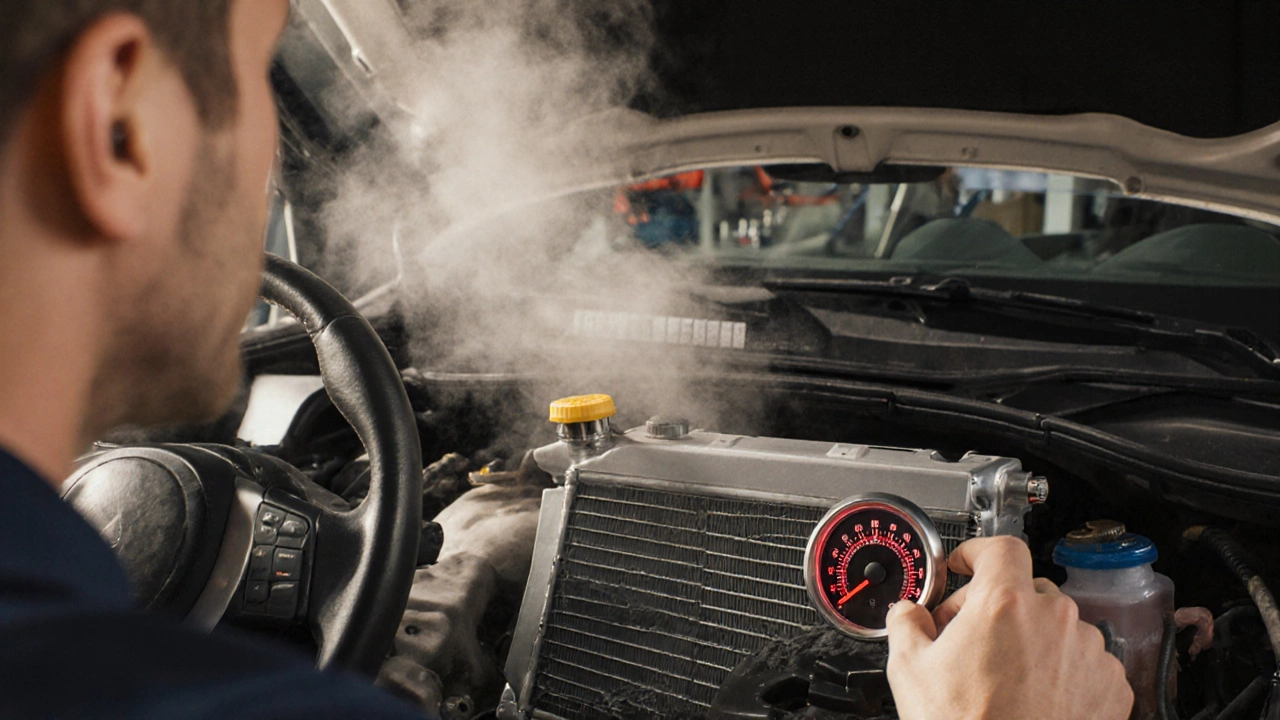
Why Do Car Radiators Fail? Common Causes and How to Prevent Them
Learn why car radiators fail, from corrosion and leaks to faulty thermostats. Spot early symptoms, follow a maintenance checklist, and know when to repair or replace.
October 8 2025