Exhaust Sound & Cost Simulator
Select your vehicle type and desired sound profile to see how a Muffler Delete compares to a Straight Pipe in terms of volume, comfort, and compliance.
You want your car to sound aggressive. You’ve seen the videos on YouTube where a Straight Pipe exhaust system removes all catalytic converters and mufflers for maximum volume rips down the street, shaking windows. Then you look at the Muffler Delete modification that only removes the silencer while keeping the rest of the exhaust intact, which is cheaper and easier to install. But here is the million-dollar question everyone asks in the garage: which one actually makes more noise?
The short answer? A straight pipe is almost always louder than a muffler delete. But "louder" isn't just about volume; it's about pitch, drone, and how annoying it sounds to your neighbours. If you are in Manchester, you know that local councils don't mess around with noise complaints. Choosing the wrong mod can result in hefty fines or a failed MOT test. Let’s break down exactly what happens to your car’s voice when you cut parts out of the back end.
Understanding the Difference
To understand the noise level, you have to understand what you are removing. Your factory exhaust system is a carefully tuned instrument. It has three main jobs: reduce noise, filter emissions, and manage exhaust flow.
- The Catalytic Converter: This cleans up harmful gases like carbon monoxide. It also creates backpressure, which helps low-end torque.
- The Muffler: This uses chambers and baffles to cancel out specific sound frequencies. It kills the harsh roar but leaves a deep rumble.
- The Resonator: Often found before the muffler, this targets specific high-pitched whines (drone) without reducing overall volume much.
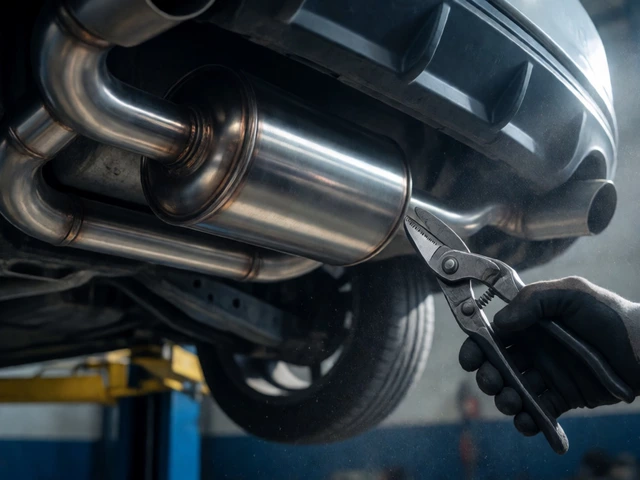
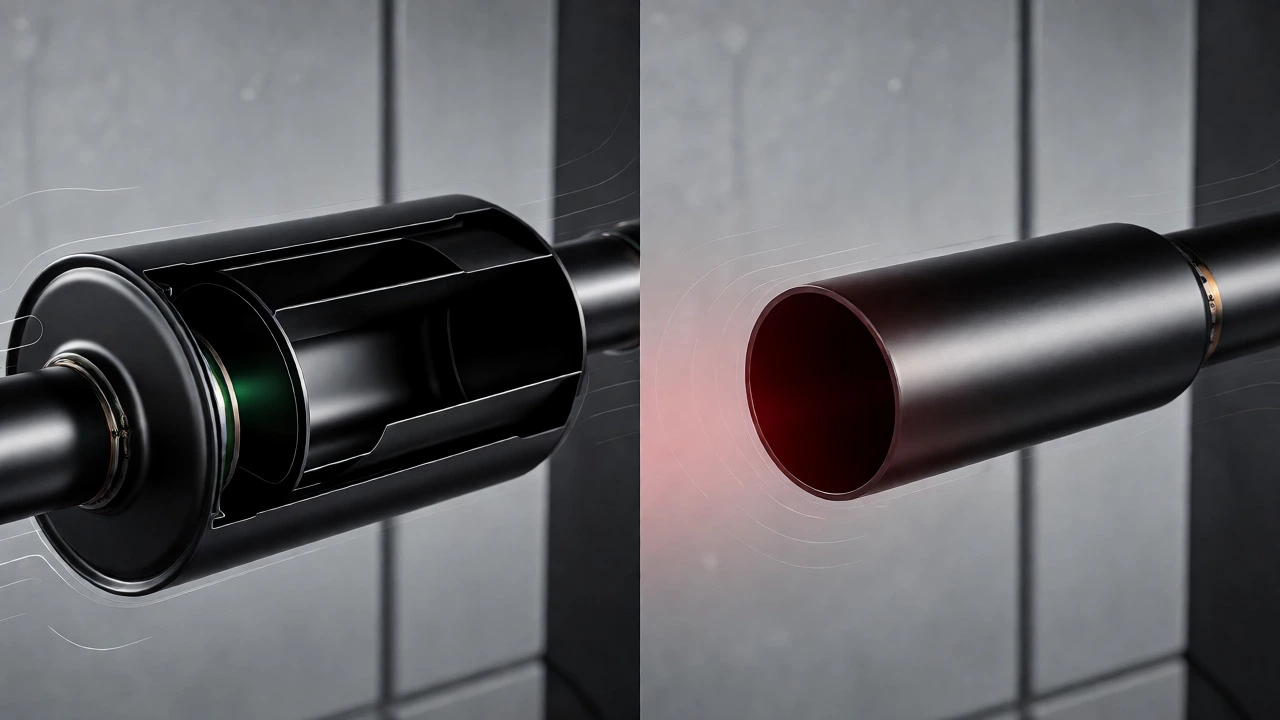
A muffler delete simply cuts out the muffler. You keep the catalytic converter and usually the resonator. The result? The engine breathes better, but the sound is rawer. It gets louder, yes, but it retains some character because the cat and pipes still dampen certain frequencies.
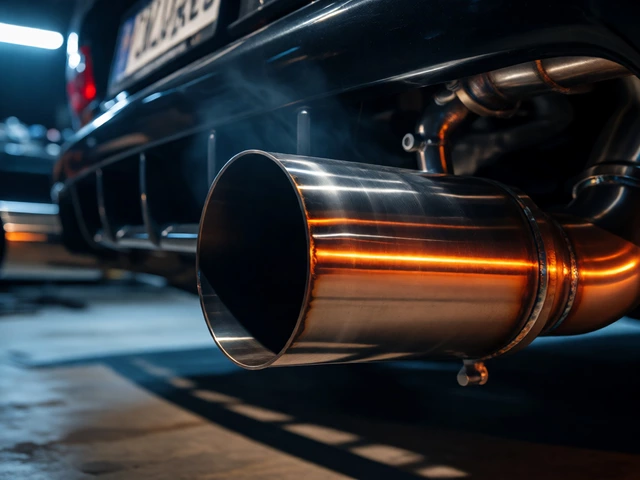
A straight pipe goes further. It removes the catalytic converter, the muffler, and often the resonators. It connects the headers directly to a single, large-diameter tube that exits the rear. There is nothing left to stop the sound waves from escaping freely. This is why it is significantly louder and produces a higher-pitched scream rather than a deep growl.
Decibel Levels: What Does the Data Say?
Numbers don't lie. While every car is different depending on its engine size and stock setup, we can look at average gains. Most stock cars idle between 60-70 dB and rev up to 85-95 dB. That is roughly the noise of a lawnmower or heavy traffic.
When you perform a muffler delete, you typically add 10-15 dB. This pushes your car into the 95-110 dB range. It is noticeable. People will turn their heads. But it is not deafening.
A straight pipe adds 20-30 dB or more. We are talking 110-125+ dB. For context, 120 dB is the threshold of pain. Standing next to a jet engine takes off at 140 dB. A straight-piped V8 or even a tuned four-cylinder can easily hit these numbers. The difference isn't just incremental; it is exponential in terms of perceived loudness.
| Modification | Average Noise Increase (dB) | Sound Character | Drone Level |
|---|---|---|---|
| Stock Exhaust | 0 dB (Baseline) | Quiet, Refined | None |
| Muffler Delete | +10 to +15 dB | Raw, Aggressive | Moderate to High |
| Straight Pipe | +20 to +30 dB | Loud, Screaming | Extreme |
Why Pitch Matters More Than Volume
Here is where most people get it wrong. They think "louder" means "cooler." In reality, human ears perceive high-frequency sounds as louder and more annoying than low-frequency bass. A subwoofer thumping at 80 dB feels powerful. A mosquito buzzing at 80 dB drives you insane.
A muffler delete tends to lower the pitch slightly because the exhaust gases exit faster, but the remaining components (like the cat) still filter out the highest frequencies. You get a deeper tone.
A straight pipe eliminates almost all filtering. The result is a high-pitched rasp or scream, especially on smaller engines like turbocharged four-cylinders. On a big V8, it might sound throaty, but on a Honda Civic or Ford Fiesta, it sounds like a angry wasp. If you want a muscle car rumble, a straight pipe on a small engine is a mistake. You need a larger diameter pipe and maybe an X-pipe to deepen the tone, but it will never be as refined as a well-tuned axle-back system.
The Drone Problem
If you drive long distances, drone is your enemy. Drone is that constant, droning hum inside the cabin at highway speeds. It causes fatigue and headaches.
With a muffler delete, you might experience moderate drone. Some drivers love it; they feel connected to the engine. Others hate it. It depends on your car’s interior insulation.
A straight pipe guarantees severe drone. Because there is no muffler to absorb the pressure pulses, they bounce back into the cabin. At 70 mph, a straight-piped car can make conversation difficult. You’ll find yourself turning the radio up just to hear your own thoughts. If you commute daily, this factor alone should push you toward a muffler delete or a performance muffler instead of a straight pipe.
Cost and Installation Complexity
Let’s talk money. A muffler delete is cheap. You can buy a universal clamp-on pipe for £20-£50. Installation takes 30 minutes if you have basic tools. You cut the old muffler, slide the new pipe in, and clamp it. Done.
A straight pipe is more involved. If you remove the catalytic converter, you need to weld or use expensive flex joints. Removing the cat also triggers check engine lights (CELs) on modern cars because oxygen sensors go haywire. Fixing CELs requires O2 sensor simulators or custom ECU tuning, which costs extra. A full straight pipe kit with proper welding can cost £200-£500 plus labour.
So, is the straight pipe worth double or triple the cost for an extra 10-15 dB? Only if you genuinely want the loudest possible sound and don’t mind the hassle.
Legal Issues and MOT Tests in the UK
In the United Kingdom, modifications must not increase noise beyond the manufacturer’s original specifications. The MOT test includes a noise check using a decibel meter. While they rarely fail cars solely for being "loud," they will fail you if the exhaust is leaking, missing components, or obviously modified to exceed limits.
Removing the catalytic converter is a major issue. Since 2012, removing the cat is a direct MOT failure if visible. Inspectors look for the honeycomb structure inside the canister. If you straight pipe by cutting out the cat, you risk failing the MOT unless you replace it with a high-flow sports cat. Even then, police can fine you under the Road Vehicles Lighting Regulations if the noise is deemed excessive and likely to cause disturbance.
Manchester City Council has strict noise abatement zones. Driving a straight-piped car through residential areas early in the morning or late at night invites attention. Fines start at £50 and can escalate quickly. A muffler delete is less likely to attract immediate police attention than a screaming straight pipe, but it is still a grey area.
Performance Trade-offs
People assume louder equals faster. Not necessarily. Backpressure exists for a reason. Engines need some resistance to optimize scavenging-the process where outgoing exhaust gases help pull in fresh air/fuel mixture.
A muffler delete reduces backpressure moderately. This can help top-end power on naturally aspirated engines but might hurt low-end torque. On turbocharged cars, the effect is minimal because turbos rely on exhaust flow speed, not just volume.
A straight pipe drastically reduces backpressure. This can help high-RPM power bands but often hurts low-end response. You might lose acceleration off the line. To fix this, you need to re-map the ECU. Without a tune, a straight pipe can actually make your car feel sluggish in city driving. So, you are paying for noise, not necessarily speed.
Which Should You Choose?
Choose a muffler delete if:
- You want a noticeable change in sound without going overboard.
- You are on a tight budget.
- You want to keep your catalytic converter for emissions compliance.
- You can tolerate some drone but want a deeper tone.
Choose a straight pipe if:
- You want the absolute loudest sound possible.
- You have a naturally aspirated engine that benefits from free-flowing exhaust.
- You plan to tune your ECU to match the new airflow.
- You live in a rural area where noise complaints aren’t a concern.
- You don’t mind dealing with check engine lights and potential MOT issues.
For most daily drivers in the UK, a high-quality performance muffler (like a Borla or MagnaFlow) offers the best balance. It gives you the sound you want without the headache of a straight pipe or the drone of a simple delete. But if you must choose between the two extremes, remember: the straight pipe wins on volume, but loses on refinement, legality, and comfort.
Is a straight pipe louder than a muffler delete?
Yes, a straight pipe is generally 10-15 decibels louder than a muffler delete. By removing the catalytic converter and resonators in addition to the muffler, a straight pipe allows sound waves to escape with minimal restriction, resulting in a significantly higher volume and pitch.
Does a straight pipe damage your engine?
Not directly. However, removing the catalytic converter can affect oxygen sensor readings, leading to poor fuel mixture if not tuned. This can cause long-term wear on spark plugs and sensors. Additionally, increased exhaust gas temperature near sensitive components could potentially cause heat-related issues if shielding is removed.
Will a muffler delete fail my MOT?
It depends. If the exhaust is not leaking and the noise level is within reasonable limits, it may pass. However, if the inspector deems the noise excessive or if you have removed the catalytic converter (which is mandatory for petrol cars since 2012), you will fail. Always ensure the modification does not create leaks or unusual rattles.
How much does a straight pipe cost compared to a muffler delete?
A muffler delete is very cheap, often costing £20-£50 for parts and DIY installation. A straight pipe is more expensive, ranging from £150 to £500+ depending on whether you include a high-flow cat, professional welding, and ECU tuning to address check engine lights.
Does a straight pipe improve horsepower?
On naturally aspirated engines, it can provide a slight gain at high RPMs due to reduced backpressure. On turbocharged engines, gains are negligible without other modifications. In many cases, low-end torque decreases, making the car feel slower in everyday driving unless the ECU is remapped.