MERV Filter Compatibility Checker
Not sure if MERV 12 is too restrictive for your home? Answer these questions to get a personalized recommendation.
Result Title
Result description will appear here.
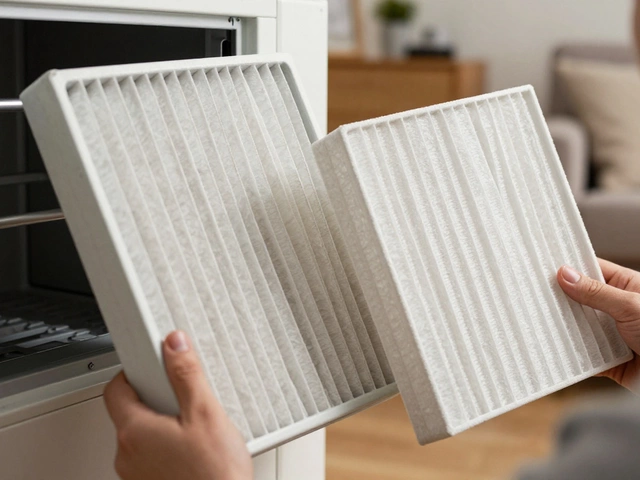
You just bought a box of MERV 12 filters rated to capture fine particles like pollen and mold spores, feeling pretty good about your indoor air quality. But two weeks later, your AC unit sounds like it’s wheezing after a sprint, and the room stays warm no matter how low you set the thermostat. Did you make a mistake? Is MERV 12 too high for your system?
The short answer is: maybe. It depends entirely on your specific HVAC setup. While higher numbers mean better filtration, they also mean more resistance to air. If your blower motor isn’t strong enough to push air through that dense mesh, you’re not getting cleaner air-you’re just stressing out your equipment. Let’s break down exactly when MERV 12 is a win and when it’s a headache.
What MERV Actually Measures (And Why It Matters)
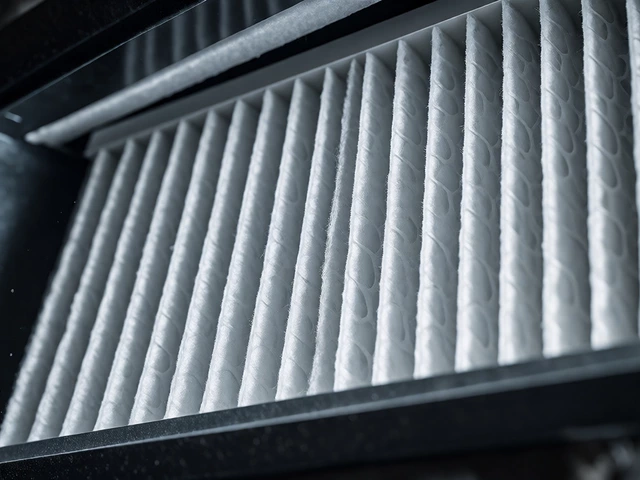
Minimum Efficiency Reporting Value (MERV) is a standard created by ASHRAE to rate how effectively an air filter captures particles. Think of it like a sieve with different hole sizes. A MERV 8 filter catches big stuff like lint and dust mites. A MERV 13 filter catches tiny things like bacteria and smoke particles. MERV 12 sits in the middle-high range, capturing about 75% of particles between 0.3 and 1.0 microns.
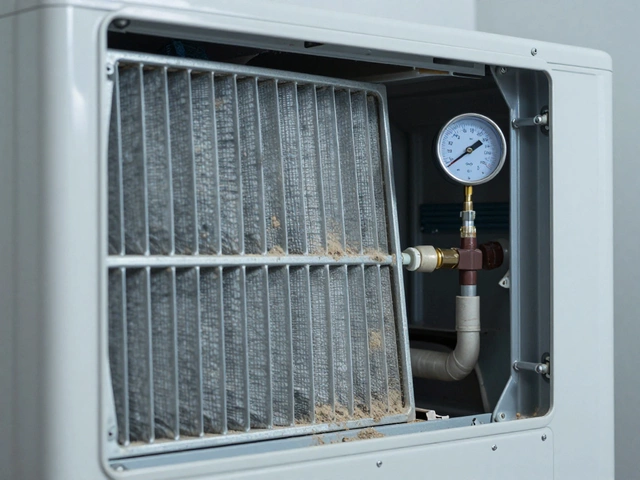
Here’s the catch: density equals resistance. The tighter the weave, the harder it is for air to pass through. In technical terms, this creates static pressure the resistance against airflow within the ductwork. Every HVAC system has a maximum static pressure limit it can handle before performance drops off a cliff.
The Airflow Bottleneck: When MERV 12 Chokes Your System
Your HVAC Blower Motor is the fan responsible for circulating conditioned air throughout your home is designed to work against a specific amount of resistance. Most standard residential systems are built for filters with a MERV rating of 8 to 11. They assume a certain level of airflow ease.
If you slap a MERV 12 into a system designed for MERV 8, the blower has to work significantly harder. This doesn’t just mean higher energy bills; it causes physical strain. You might notice:
- Reduced Airflow: Vents feel weak or barely whisper air.
- Frozen Coils: The evaporator coil freezes because there isn’t enough warm air passing over it to keep it thawed.
- Short Cycling: The system shuts off prematurely because it hits the target temperature too fast (due to poor distribution) or overheats due to strain.
- Noise: The blower sounds strained or whiny.
In Manchester, where humidity can be tricky, restricted airflow from a too-dense filter can also lead to excess moisture lingering indoors, potentially encouraging mold growth despite your efforts to filter it out.
When MERV 12 Is Actually Perfect
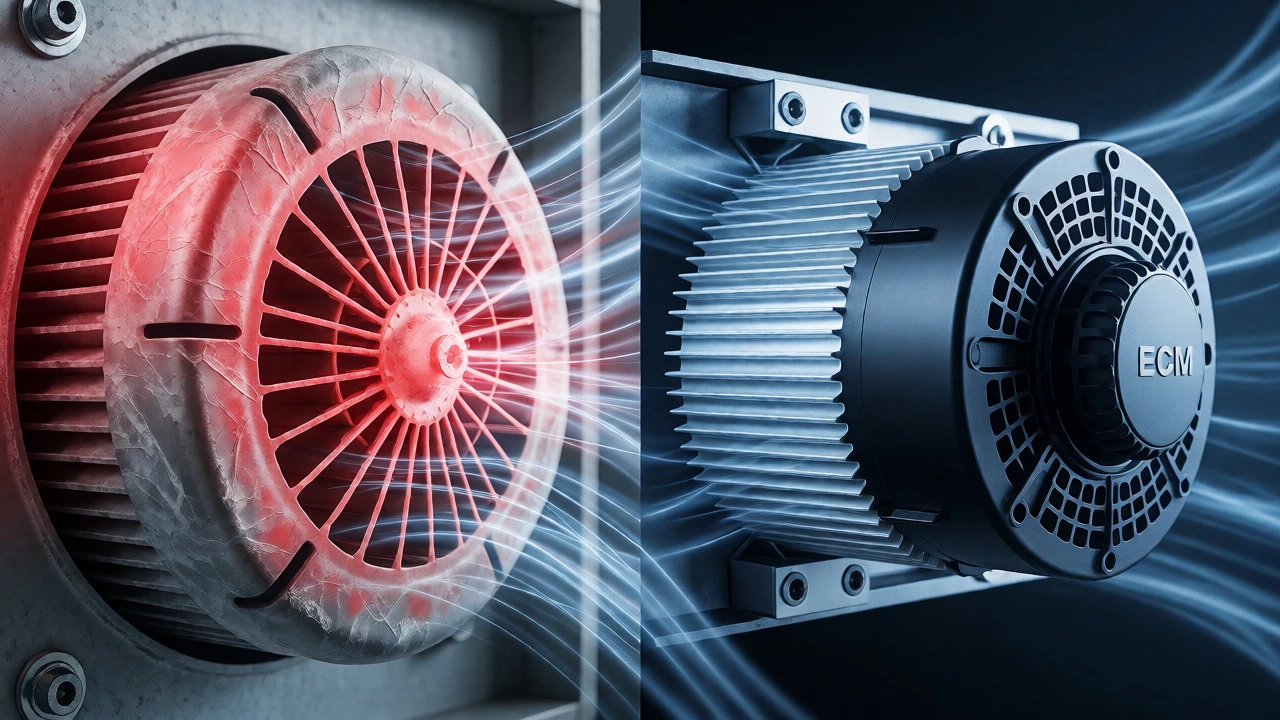
Don’t write off MERV 12 just yet. For many modern homes, it’s the sweet spot. Newer HVAC systems, especially those with variable-speed ECM motors, are engineered to handle higher static pressures. These smart blowers ramp up power automatically when they detect resistance, maintaining consistent airflow even with denser filters.
You should definitely consider MERV 12 if:
- You have allergies or asthma: MERV 12 captures pet dander and pollen far better than lower-rated filters.
- You live near a busy road: It helps trap finer particulate matter from traffic exhaust.
- Your system is newer: Installed after 2010, likely with an ECM blower.
- You have larger return vents: More surface area reduces the velocity of air hitting the filter, lowering the impact of static pressure.

How to Test If Your AC Can Handle MERV 12
You don’t need an engineering degree to figure this out. Here’s a simple field test to see if your current setup supports MERV 12 without choking.
- Check your manual: Look for the "Maximum External Static Pressure" spec. If it’s above 0.5 inches water column (i.w.c.), you’re likely safe with MERV 12.
- The Tissue Paper Test: Hold a single ply of tissue paper at a supply vent while the system runs. If it sticks firmly, airflow is decent. If it barely flutters or falls, your system is struggling.
- Monitor Temperature Drop: Measure the temperature of the air going into the return vent and coming out of the supply vent. A healthy drop is usually 14-20°F (8-11°C). If the delta-T is much higher, airflow is likely restricted.
Comparison: MERV Ratings and System Impact
To help you decide, here’s how common ratings stack up against typical residential needs.
| MERT Rating | Captures | Airflow Resistance | Best For |
|---|---|---|---|
| MERV 8 | Dust, lint, pollen | Low | Older systems, basic protection |
| MERV 11 | Pet dander, mold spores | Moderate | Most standard homes |
| MERV 12 | Bacteria, fine dust, smoke | High | Allergy sufferers, newer systems |
| MERV 13+ | Virus carriers, ultrafine particles | Very High | HEPA-like setups, medical facilities |
Troubleshooting: What to Do If MERV 12 Fails
If you installed MERV 12 and noticed issues, you don’t necessarily have to downgrade immediately. First, check the obvious culprits. Is the filter installed correctly? An arrow pointing the wrong way blocks airflow instantly. Is the ductwork leaking? Leaks reduce the volume of air reaching the filter, making the restriction seem worse than it is.
If installation is correct, try these steps:
- Inspect the Ducts: Kinked or crushed flexible ducts add massive resistance. Straightening them can free up enough capacity for a MERV 12.
- Adjust the Fan Setting: Set your thermostat fan to "On" instead of "Auto." Running the fan continuously keeps air moving, preventing the pressure buildup that happens during start-up cycles.
- Change Frequency: Dense filters clog faster. Swap them every 60 days instead of 90. A partially clogged MERV 12 behaves like a MERV 16-too restrictive.
The Verdict: Balance Cleanliness and Comfort
MERV 12 isn't inherently "too high," but it demands respect for physics. If your system is old, underpowered, or has undersized ducts, stick to MERV 8 or 11. You’ll get adequate cleanliness without risking compressor failure or frozen coils. If you have a robust, modern system, MERV 12 offers a tangible upgrade in air quality that’s worth the slight increase in maintenance.
Can I use a MERV 13 filter instead of MERV 12?
Generally, no, unless your system is specifically rated for it. MERV 13 has significantly higher static pressure than MERV 12. If MERV 12 was borderline too high, MERV 13 will almost certainly choke your blower motor and reduce cooling efficiency drastically.
Does a higher MERV rating always mean better air quality?
Only if the air actually flows through the filter. If a high-MERV filter restricts airflow so much that the system bypasses it or stops running frequently, overall air quality may actually worsen because stagnant air accumulates pollutants elsewhere in the home.
How often should I change a MERV 12 filter?
Check it monthly. While manufacturers often say 90 days, MERV 12 traps smaller particles which clog the media faster. In dusty environments or homes with pets, changing it every 60 days prevents excessive static pressure buildup.
Will MERV 12 affect my energy bill?
Yes, slightly. Because the blower motor works harder to overcome the resistance, it consumes more electricity. However, if the filter improves heat exchange efficiency by keeping coils clean, the net effect on your bill might be neutral or even positive, provided airflow remains adequate.
What is the difference between pleated and fiberglass filters regarding MERV?
Fiberglass filters typically have a MERV rating of 1-4 and offer minimal filtration. Pleated filters allow for higher MERV ratings (up to 16+) because their folded design increases surface area, allowing for finer mesh without completely blocking airflow as quickly as a flat pad would.