HVAC MERV Compatibility & Risk Calculator
Risk Assessment Score
Pending AnalysisEnter your details to begin
This tool calculates the likelihood of static pressure issues, motor strain, and reduced efficiency based on your HVAC configuration.
Have you ever stared at a box of MERV 14 is a high-efficiency air filtration standard rated on the Minimum Efficiency Reporting Value scale filters and wondered if your home’s heating and cooling system can actually handle them? It is a common dilemma. You want cleaner air, especially if you have allergies or pets, but you also do not want to break your furnace or spend a fortune on electricity. The short answer is: it depends entirely on your specific HVAC setup. For many modern systems, MERV 13 is the sweet spot. MERV 14 pushes into medical-grade territory and requires careful consideration.
Understanding the MERV Rating Scale
To understand why MERV 14 might be too much, we first need to look at what the numbers mean. The MERV rating is a standardized scale from 1 to 20 that measures an air filter's ability to capture particles of different sizes was created by ASHRAE (American Society of Heating, Refrigerating and Air-Conditioning Engineers). It is not just marketing fluff; it is a test of how well a filter catches dust, pollen, mold spores, and even bacteria.
- MERV 1-4: Basic protection. Catches large particles like lint and carpet fibers. Often found in cheap disposable fiberglass filters.
- MERV 5-8: Standard residential level. Good for pollen and dust mites. Most central air systems are designed for this range.
- MERV 9-12: High efficiency. Captures finer particles like lead dust and some bacteria. Common in newer homes and sensitive environments.
- MERV 13-16: Very high efficiency. Used in hospitals and clean rooms. Catches virus carriers, tobacco smoke, and cooking oil vapor.
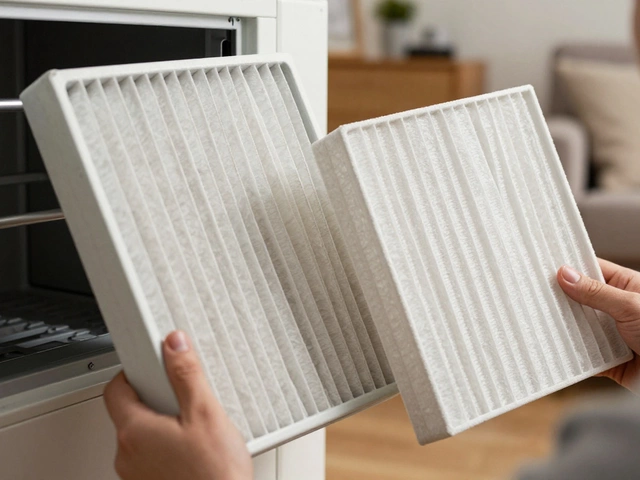
The jump from MERV 13 to MERV 14 seems small, but the physical structure of the filter changes significantly. Higher MERV ratings require denser media to trap smaller particles. This density creates resistance to airflow, which is where the trouble begins for residential units.
The Airflow Problem: Static Pressure Explained
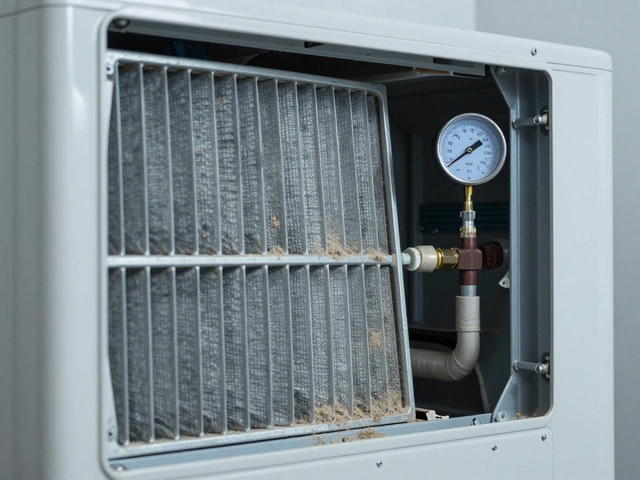
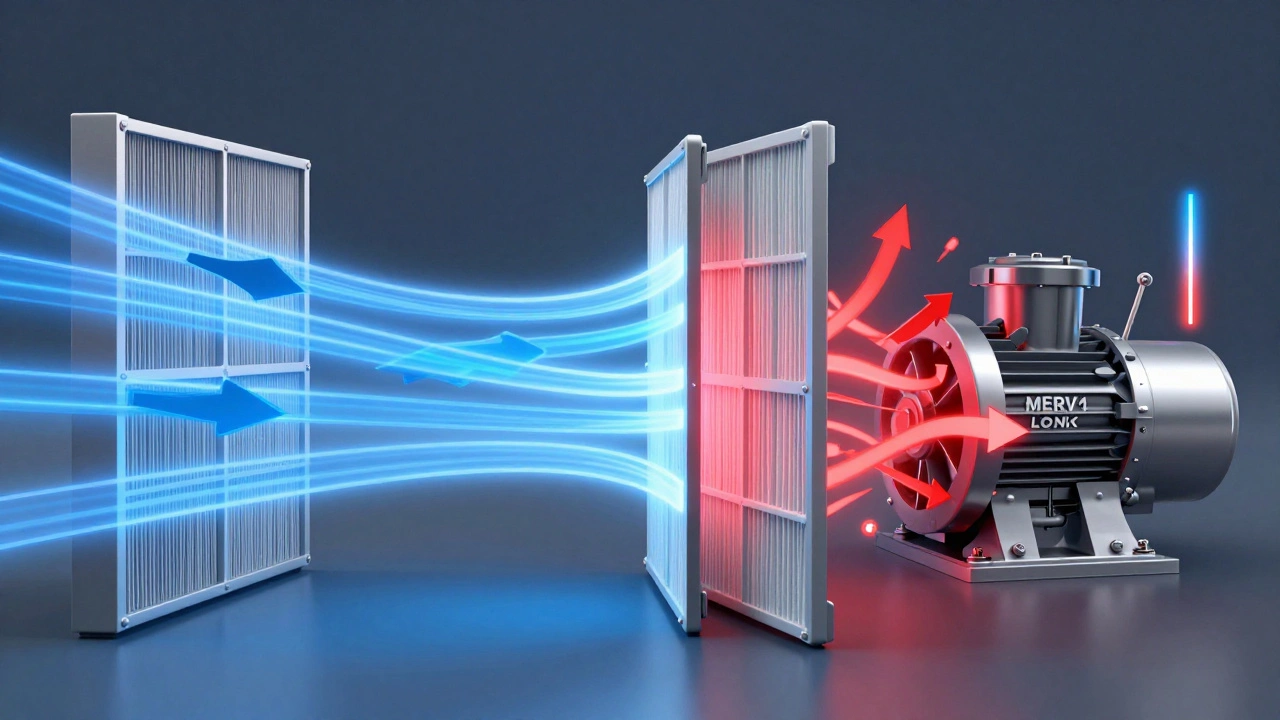
Your HVAC system works on balance. The blower fan pulls air through the return vent, pushes it through the filter, heats or cools it, and sends it back out through the supply vents. When you install a dense MERV 14 filter, you create a bottleneck. This restriction increases what engineers call static pressure is the resistance against airflow within the ductwork and components of an HVAC system.
Think of it like trying to breathe through a narrow straw versus a wide hose. Your lungs (the blower motor) have to work harder to pull the same amount of air. If the static pressure gets too high, several things can go wrong:
- Reduced Airflow: You feel drafts disappear from your vents. The house stays stuffy because air isn't circulating properly.
- Motor Strain: The blower motor runs hotter and longer, potentially leading to premature failure. Repairing a blower motor costs hundreds of dollars.
- Heat Exchanger Cracks: In furnaces, insufficient airflow can cause the heat exchanger to overheat and crack. This is dangerous because it can leak carbon monoxide into your home.
- Ice Buildup: In air conditioners, low airflow causes the evaporator coil to freeze up, stopping cooling entirely until the ice melts.
Most residential furnaces are designed to handle a static pressure drop of about 0.3 to 0.5 inches of water column when using a clean filter. A loaded MERV 14 filter can easily exceed this limit, pushing your system into the danger zone.
When Is MERV 14 Actually Safe?
Not every home is doomed to stick with cheap filters. Some systems are built to handle higher efficiency. Here is how to tell if your home can take MERV 14:
| Factor | Safe for MERV 14 | Risk of Damage |
|---|---|---|
| System Age | Installed after 2015 | Older than 10 years |
| Fan Type | Variable Speed ECM Motor | Single-Speed Permanent Split Capacitor (PSC) |
| Ductwork | New, sealed, minimal leaks | Old, dusty, leaking ducts |
| Manufacturer Spec | Explicitly states MERV 13+ support | Says "Use MERV 8 or lower" |
If you have a variable speed blower, your system can adjust its RPM to compensate for the increased resistance of a MERV 14 filter. These motors are smarter and more efficient. However, if you have an older single-speed fan, it simply cannot spin faster to overcome the blockage. In that case, MERV 14 is likely too high.
The Hidden Cost of High-Efficiency Filters
Even if your system can handle MERV 14, there is a financial trade-off. Higher MERV filters are more expensive upfront. A pack of four MERV 14 filters might cost $60-$80, whereas MERV 8 filters might cost $20-$30 for the same quantity. That is a significant difference over a year.
More importantly, consider energy consumption. Because your blower has to work harder, your electricity bill will rise. Studies suggest that moving from MERV 8 to MERV 13 can increase fan energy use by 10-15%. Jumping to MERV 14 could push that higher. You are paying more for the filter and more for the power to run it. Ask yourself: is the marginal gain in air quality worth the extra monthly cost?
For most households, the difference between MERV 13 and MERV 14 is negligible in daily life. MERV 13 already captures 90%+ of fine particles like pet dander and smoke. MERV 14 adds another layer for ultra-fine particles, but unless you have a specific medical need, you might not notice the difference.
Better Alternatives to MERV 14
If you want cleaner air without risking your HVAC system, consider these strategies instead of forcing a MERV 14 filter into a slot that may not support it:
- Stick to MERV 13: This is widely considered the maximum safe rating for most residential systems. It offers excellent filtration without excessive airflow restriction.
- Use a Whole-House HEPA Pre-Filter: Some companies make specialized pre-filters that attach before the main filter, catching larger debris so the main filter lasts longer.
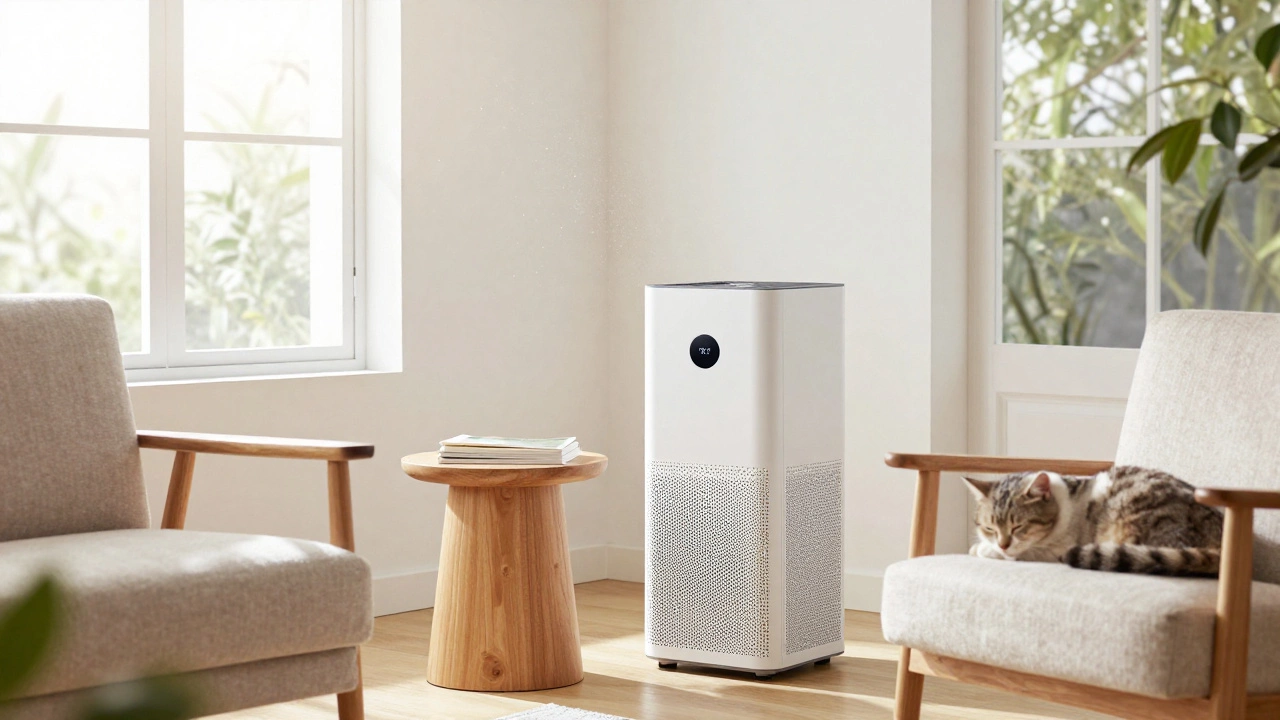
- Add Portable Air Purifiers: Instead of filtering all the air through your central system, place standalone HEPA purifiers in key rooms like bedrooms and living areas. They don't strain your furnace and provide targeted cleaning.
- Upgrade Ductwork: If you really want high-efficiency filtration, consult an HVAC pro about sealing and resizing your ducts to handle lower airflow volumes safely.
How to Check Your System's Limits
Before buying that box of MERV 14 filters, take five minutes to check your equipment. Look for the yellow warning sticker on your furnace or air handler. It often lists the recommended filter size and type. If it says "MERV 8" or does not mention MERV at all, assume MERV 8 is the limit.
You can also perform a simple airflow test. Turn on your system and hold your hand near a supply vent. Note the strength of the breeze. Replace the filter with a MERV 14 unit, wait an hour, and check again. If the airflow feels noticeably weaker, remove the MERV 14 immediately. Your system is telling you it is struggling.
Another sign of trouble is noise. If your furnace starts whistling, banging, or running continuously without shutting off, the static pressure is likely too high. Do not ignore these signs. They are early warnings of potential mechanical failure.
Special Cases: Allergies and Asthma
I know what you are thinking: "But I have severe allergies!" It is tempting to buy the highest-rated filter available. However, for allergy sufferers, a balanced approach works better. Use MERV 13 in your central system to catch the bulk of allergens. Then, supplement with portable HEPA filters in your bedroom. This combination gives you hospital-grade air in the rooms where you sleep, without overloading your entire house's HVAC infrastructure.
Also, remember that filters only help if they are changed regularly. A clogged MERV 8 filter performs worse than a clean MERV 13 filter. Set a reminder to change your filters every 90 days, or sooner if you have pets. Consistency matters more than peak performance.
Conclusion: Find Your Sweet Spot
So, is MERV 14 too high for residential use? For the average home with a standard furnace, yes, it is risky. It threatens airflow, increases energy bills, and strains equipment not designed for such density. For newer homes with variable-speed blowers and sealed ductwork, it might be acceptable, but MERV 13 usually offers 95% of the benefit with 50% of the risk.
Prioritize system health over maximum filtration specs. A broken furnace delivers zero clean air. Choose MERV 13 as your baseline, add portable purifiers for specific needs, and maintain a strict replacement schedule. Your lungs-and your wallet-will thank you.
Can I use a MERV 14 filter in my old furnace?
Generally, no. Older furnaces typically have single-speed motors that cannot compensate for the high resistance of a MERV 14 filter. Using one can cause overheating, reduced airflow, and potential damage to the heat exchanger. Stick to MERV 8 or 11 for older systems unless a professional confirms otherwise.
What is the best MERV rating for most homes?
MERV 13 is widely considered the best balance for most residential HVAC systems. It effectively captures pet dander, pollen, mold spores, and smoke without causing significant airflow restrictions or excessive energy usage.
Does a higher MERV rating always mean cleaner air?
Yes, but with diminishing returns. While MERV 14 captures smaller particles than MERV 13, the difference in real-world indoor air quality is often minimal for average households. Additionally, if the filter restricts airflow too much, air circulation drops, which can actually make the air feel stale.
How often should I replace a MERV 14 filter?
Because MERV 14 filters are denser, they clog faster than lower-rated filters. You should check them every month and replace them every 60 to 90 days, depending on household factors like pets, smoking, and local pollution levels. Never let a MERV 14 filter become completely clogged.
Will using a MERV 14 filter void my HVAC warranty?
It might. Many manufacturers specify maximum MERV ratings in their installation manuals. If you use a filter that exceeds those specifications and it causes damage (like a cracked heat exchanger), the warranty claim could be denied. Always check your owner's manual first.