HVAC MERV Filter Compatibility Checker
System Details
Analyze Your System
Enter your HVAC details to see which MERV rating is safe and effective for your home.
Recommendation
Why this matters:
Buying the highest-rated air filter you can find feels like a win. You’re trapping more dust, pollen, and even viruses, right? It seems like simple logic: higher number equals cleaner air. But if you’ve ever heard your furnace sound like it’s struggling to breathe or noticed your energy bills creeping up, you might be asking the wrong question. The real issue isn’t whether high MERV filters clean the air better-they definitely do-but whether your specific HVAC system can actually handle them.
Here is the uncomfortable truth: installing a filter that is too dense for your system can cause more harm than good. It doesn’t just make your house dusty; it can lead to frozen coils, cracked heat exchangers, and premature motor failure. Before you swap out that cheap fiberglass sheet for a premium pleated filter, let’s look at why "higher" isn’t always "better" in the world of home comfort.
Understanding the Trade-Off: Filtration vs. Airflow
To understand the downside, you have to understand how these filters work. MERV stands for Minimum Efficiency Reporting Value, a standard rating developed by ASHRAE (American Society of Heating, Refrigerating and Air-Conditioning Engineers) to measure how well an air filter captures particles. The scale runs from 1 to 16 for residential use. A MERV 1 filter lets almost everything through, while a MERV 13 or 14 traps microscopic particles like mold spores and bacteria.
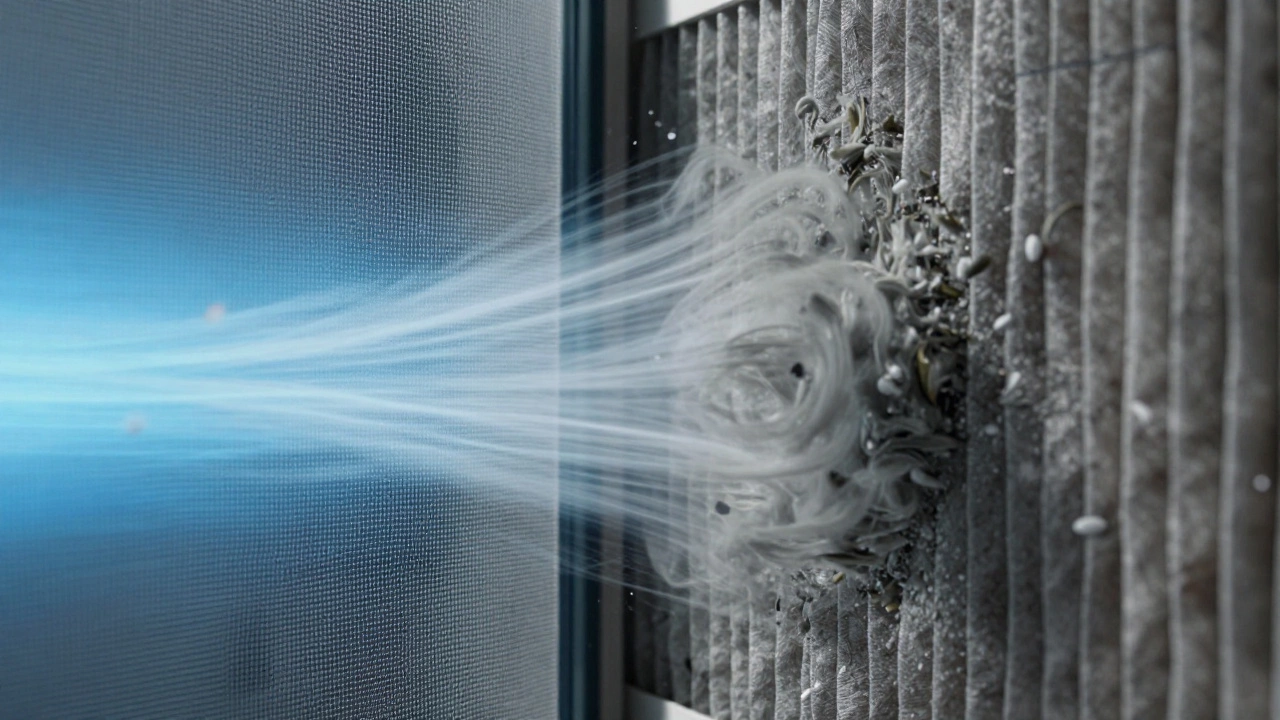
The catch lies in the physics of airflow. As the MERV rating goes up, the filter media becomes denser. Think of it like trying to walk through a crowded room versus an empty one. In an empty room (low MERV), you move fast with little effort. In a packed room (high MERV), every step requires more energy, and progress slows down. Your HVAC blower motor is designed to push a specific volume of air against a specific amount of resistance. When you introduce a high-resistance filter, you create what engineers call "static pressure."
If that static pressure exceeds what your system was built to handle, the airflow drops. And when airflow drops, two bad things happen simultaneously: your heating and cooling become inefficient, and the mechanical stress on your equipment increases. This is the core downside of high MERV filters-they restrict the very thing your HVAC system needs to function: moving air.
The Hidden Dangers of Restricted Airflow
You might think, "My system will just work harder," but HVAC systems don’t have infinite reserve power. When airflow is restricted by a high-density filter, the consequences cascade through the entire unit.
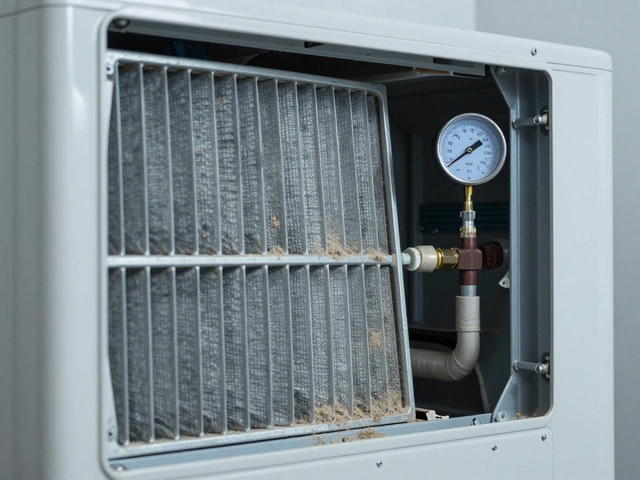
- Frozen Evaporator Coils: In cooling mode, the evaporator coil relies on warm air passing over it to absorb heat. If not enough air flows over the coil, the refrigerant inside gets too cold, causing moisture in the air to freeze on the fins. This ice buildup blocks airflow further, potentially leading to compressor damage-a repair that can cost thousands.
- Overheating Heat Exchangers: In winter, your furnace needs a steady stream of air to carry heat away from the combustion chamber. If the air doesn’t move, the heat exchanger can overheat. Over time, this thermal stress causes metal fatigue and cracks. A cracked heat exchanger is dangerous because it can leak carbon monoxide into your home.
- Blower Motor Burnout: The blower motor works against the resistance of the filter. Higher resistance means the motor draws more current and runs hotter. Eventually, the bearings wear out faster, or the windings burn out entirely.
- Poor Indoor Comfort: Even if nothing breaks, you’ll feel it. Rooms stay stuffy, temperatures fluctuate wildly, and humidity levels spike because the system can’t dehumidify effectively without proper airflow.
What Is the Safe MERV Rating for Your Home?
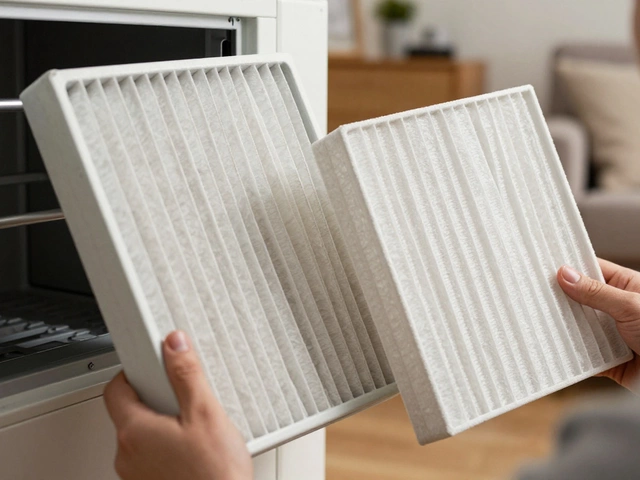
So, where is the sweet spot? For most standard residential central air systems installed before 2020, the manufacturer typically recommends a MERV rating between 8 and 11. These filters capture large particles like dust, lint, and pet dander without significantly impeding airflow. They offer a solid balance between indoor air quality and system health.
However, newer homes often come with systems designed for higher efficiency. Many modern furnaces and air handlers are rated to handle MERV 13 filters out of the box. Some high-end systems, particularly those with variable-speed blowers or dedicated return air ducts, can even support MERV 14 or 15. To know for sure, check your owner’s manual or look for a label on the side of your air handler. It will explicitly state the maximum recommended static pressure or MERV rating.
| System Type | Recommended MERV Range | Risk Level of High MERV (13+) |
|---|---|---|
| Older Furnace (Pre-2010) | MERV 8 - 11 | High (Risk of coil freeze/motor strain) |
| Standard Modern HVAC | MERV 11 - 13 | Low to Moderate (Check manual) |
| High-Efficiency / Variable Speed | MERV 13 - 14 | Low (Designed for higher static pressure) |
| ERV/HRV Integrated Systems | MERV 13 - 16 | Very Low (Often required for filtration) |
When High MERV Filters Are Worth the Risk
There are scenarios where pushing your system slightly beyond its original design specs makes sense. If you live in an area with severe wildfire smoke, high pollen counts, or industrial pollution, the health benefits of a MERV 13 or 14 filter may outweigh the minor increase in energy costs. Similarly, if household members have severe allergies or asthma, capturing smaller allergens can be a game-changer for quality of life.
In these cases, you aren’t just buying a filter; you’re upgrading your indoor environment. However, you should monitor your system closely. Listen for changes in noise-whistling or straining sounds indicate airflow issues. Check your thermostat for error codes related to airflow or temperature differentials. If you notice your utility bills jumping unexpectedly, it might be time to step back to a lower MERV rating.

Alternatives to Upgrading Your Central Filter
If you want hospital-grade air purification but your HVAC system can’t handle a high-MERV filter, don’t force it. There are smarter ways to improve air quality without risking expensive repairs.
- Portable HEPA Purifiers: These units have their own fans designed specifically to push air through dense HEPA filters. They don’t rely on your central HVAC blower, so there’s no risk of restricting airflow in your ducts. Place one in the bedroom or living room for targeted cleaning.
- Ductless Mini-Splits: If you’re renovating, consider switching to a zoned mini-split system. Many modern mini-splits include advanced multi-stage filtration, including UV-C lights and electrostatic collectors, which clean the air without the massive static pressure penalties of thick pleated filters.
- Electronic Air Cleaners: Devices like ionizers or bipolar plates can be installed in the ductwork. They charge particles so they stick to collector plates rather than getting trapped in a physical filter. While they require regular cleaning of the plates, they maintain consistent airflow.
Maintenance Tips for High-Density Filters
If you decide to stick with a high MERV filter, maintenance becomes critical. Because these filters trap more particles, they clog faster. A dirty MERV 13 filter acts like a MERV 16, creating a near-total blockage. Change your filters more frequently-every 60 to 90 days instead of the standard 90 to 120. During peak allergy season or after construction work, check them monthly.
Also, ensure your return air vents are unobstructed. Furniture covering return grilles creates additional static pressure. Combine that with a high-MERV filter, and you’re guaranteeing trouble. Keep the path clear from the room, through the duct, and across the filter.
Can I use a MERV 13 filter in my old furnace?
It depends on your specific model, but generally, no. Older furnaces (pre-2010) usually lack the powerful blowers needed to overcome the resistance of a MERV 13 filter. Using one can lead to reduced airflow, frozen coils in summer, and overheating in winter. Check your owner's manual; if it specifies MERV 8 or lower, stick to that range to avoid costly repairs.
Does a higher MERV rating mean higher energy bills?
Yes, typically. Because the blower motor has to work harder to push air through a denser filter, it consumes more electricity. Additionally, if the airflow is restricted, your heating and cooling cycles run longer to reach the desired temperature, further increasing energy usage. The exact impact varies by system, but expect a slight uptick in costs.
How do I know if my filter is restricting airflow?
Watch for these signs: weak airflow from your vents, whistling noises coming from the ductwork or filter slot, frequent cycling of your thermostat, ice forming on your outdoor AC unit's copper lines, or a sudden spike in your electric bill. If you experience any of these, try switching to a lower MERV rating immediately.
Is MERV 11 a safe middle ground?
For most homes, yes. MERV 11 filters capture small particles like mold spores and hair spray without adding significant resistance. They are widely compatible with both older and newer HVAC systems and offer a noticeable improvement in air quality compared to basic MERV 8 filters, making them the best all-around choice for general households.
Can I wash and reuse a high MERV filter?
Only if the packaging explicitly says "washable" or "permanent." Most high-MERV pleated filters are made of paper or synthetic media that disintegrates or loses its electrostatic charge when wet. Washing a disposable filter ruins it and can release trapped pollutants back into your home. Always replace disposable filters according to the manufacturer's schedule.