Fuel Pump Replacement Cost Estimator
Estimate Your Fuel Pump Replacement Cost
Get a personalized estimate based on your vehicle type and installation preferences
Estimated Cost Breakdown
This is an estimate based on industry averages. Actual costs may vary based on your location and specific vehicle.
When your car starts sputtering, losing power on the highway, or refuses to start after sitting overnight, the fuel pump might be the culprit. It’s not the part most people think about until it fails - and when it does, you’re left wondering: how much is a new fuel pump? The answer isn’t simple. It depends on your car, where you live, and whether you’re doing the work yourself or paying a shop. Let’s break it down.
What a Fuel Pump Actually Does
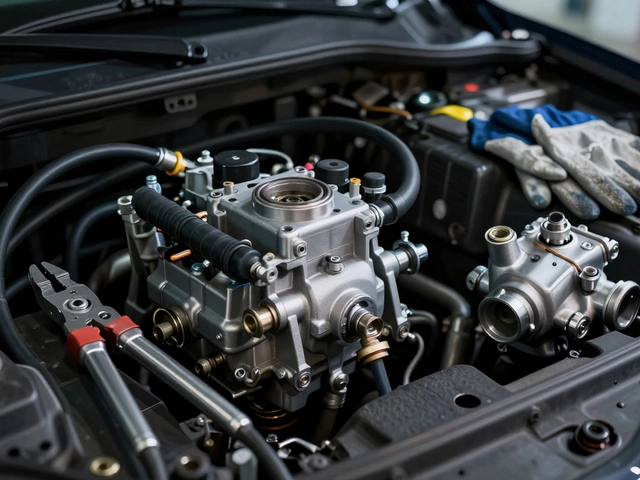
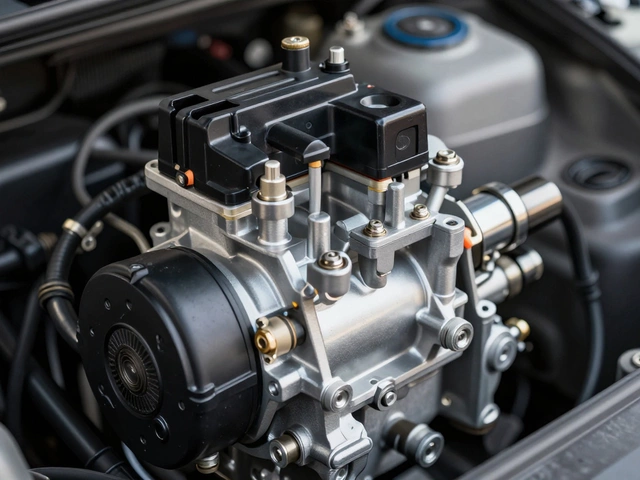
The fuel pump is the heart of your fuel system. It’s responsible for pulling gasoline from the tank and pushing it under pressure to the engine. Without it, your car won’t run - not even for a few seconds. Most modern cars use an electric fuel pump mounted inside the gas tank. Older models might have a mechanical pump on the engine, but those are rare now.
These pumps don’t last forever. They’re designed to run continuously for years, but they wear out. Dust, water, or low fuel levels can accelerate failure. Running your tank below a quarter full regularly? That’s like making your pump work harder than it should. It’s one of those parts you don’t notice until it stops working.
How Much Does a New Fuel Pump Cost?
The price of a new fuel pump can range from $100 to $1,000 - and that’s just for the part. Labor adds another $150 to $400. Here’s how it breaks down:
- Low-end vehicles (Toyota Corolla, Honda Civic, Ford Focus): $100-$250 for the part. Labor: $150-$250. Total: $250-$500.
- Mid-range vehicles (Honda Accord, Toyota Camry, Ford Mustang): $200-$400 for the part. Labor: $200-$300. Total: $400-$700.
- High-end or luxury vehicles (BMW 3 Series, Audi A4, Lexus ES): $300-$800 for the part. Labor: $300-$400. Total: $600-$1,200.
- Trucks and SUVs (Ford F-150, Chevrolet Silverado, Toyota Tacoma): $250-$600 for the part. Labor: $250-$400. Total: $500-$1,000.
Why such a big range? Some fuel pumps are simple and easy to access. Others require dropping the gas tank - which means removing the rear seats, draining the tank, and sometimes even unbolting the fuel lines. That’s labor-intensive. Luxury cars often use higher-pressure pumps with more complex electronics, which drives up the cost.
Aftermarket vs. OEM: What’s the Difference?
You’ll see two types of fuel pumps at auto parts stores: OEM (Original Equipment Manufacturer) and aftermarket.
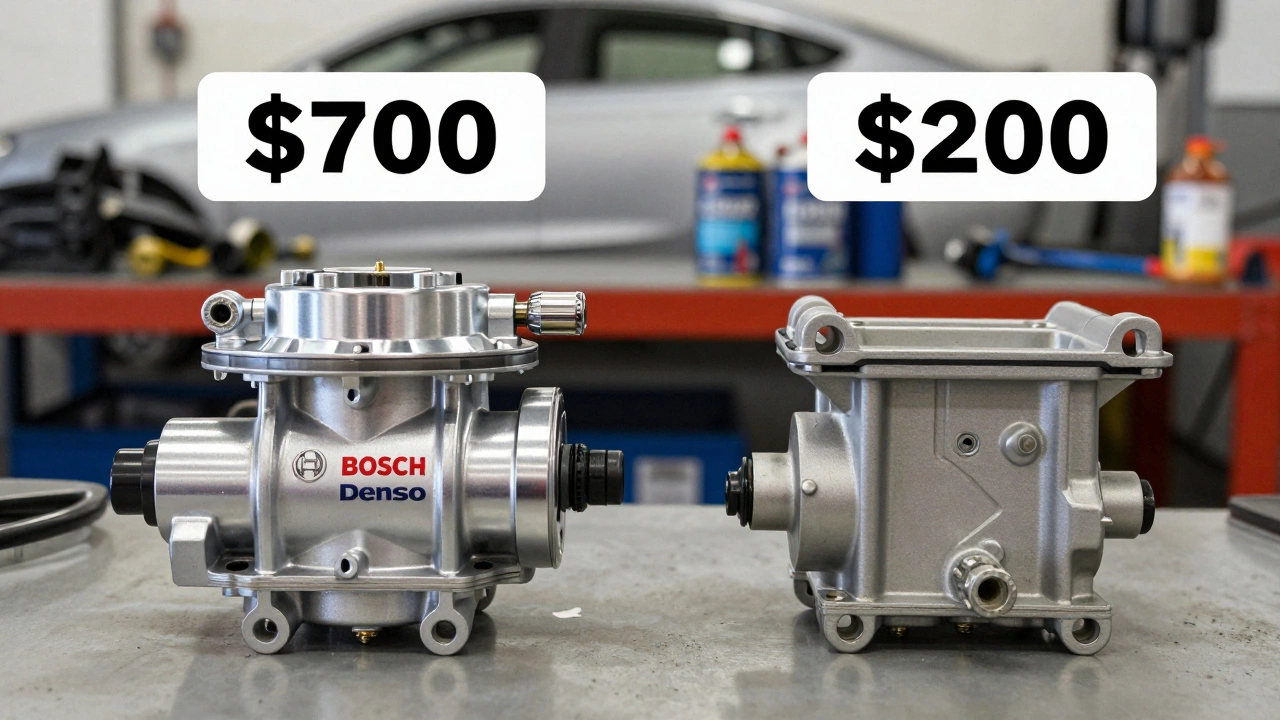
OEM means the pump was made by the same company that built your car. These are exact replacements. They cost more - sometimes 50% more than aftermarket - but they’re engineered to match the original specs. Brands like Bosch, Denso, and Delphi often supply OEM parts.
Aftermarket pumps are made by third-party companies like Airtex, Spectra, or AC Delco. They’re cheaper and often work just fine. But quality varies. Some aftermarket pumps fail within a year. Others last as long as OEM. Read reviews. Look for ones with at least 1,000 customer ratings and a 4+ star average.
Here’s a quick comparison:
| Category | OEM Fuel Pump | Aftemarket Fuel Pump |
|---|---|---|
| Price Range | $250-$800 | $100-$400 |
| Lifespan | Typically 100,000-150,000 miles | Varies: 50,000-120,000 miles |
| Warranty | Usually 1-2 years | Often 1 year, sometimes lifetime |
| Fit & Performance | Exact match to factory specs | May vary; check reviews |
For most people, a good aftermarket pump from a trusted brand is fine. But if you drive a high-end car or want to avoid future headaches, OEM is worth the extra cost.
How Long Does Replacement Take?
Most shops will take 2 to 4 hours to replace a fuel pump. But here’s the catch: some vehicles require the tank to be dropped. That means:
- Draining the fuel tank (safety first - fuel is flammable).
- Removing the rear seats or access panel.
- Disconnecting fuel lines, electrical connectors, and the pump module.
- Installing the new pump and reassembling everything.
- Refilling the tank and testing for leaks.
Some cars, like the Honda Civic or Ford Focus, have an access panel under the back seat. That cuts labor time in half. But if you drive a 2015 Subaru Outback or a 2020 Jeep Wrangler, you’re looking at a full tank drop. That’s why labor costs jump.

Signs You Need a New Fuel Pump
You don’t need to wait until your car won’t start to suspect a bad fuel pump. Watch for these signs:
- Engine sputters at high speeds - especially when climbing hills or passing.
- Car loses power under load - like when accelerating or towing.
- Engine won’t start, but you hear a humming noise from the tank when you turn the key.
- Gas mileage suddenly drops without a clear reason.
- Check Engine Light comes on with codes like P0190 (fuel pressure sensor) or P0087 (fuel system pressure too low).
If you notice any of these, get it checked. A failing fuel pump can leave you stranded. And if it dies completely, you might damage your fuel injectors or even the engine.
Can You Replace It Yourself?
Yes - if you’re comfortable with basic tools and have a safe workspace. You’ll need:
- A jack and jack stands
- A fuel line disconnect tool
- A new fuel pump and gasket kit
- Protective gloves and eye protection
- A container to catch spilled fuel
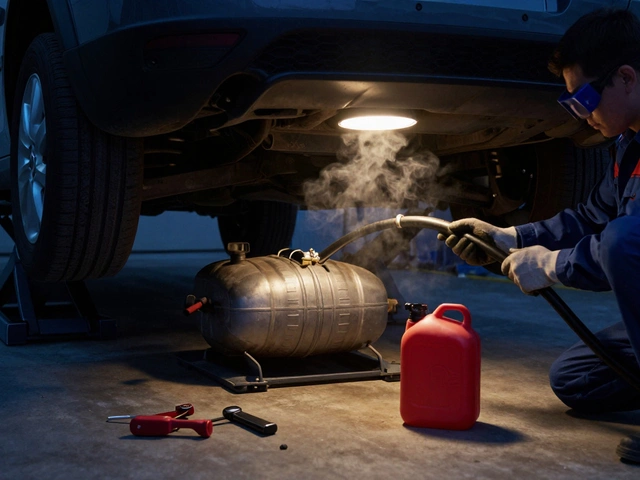
Start by disconnecting the battery. Then relieve fuel pressure by pulling the fuel pump fuse and running the engine until it stalls. Drain the tank to a quarter full or less. Remove the access panel or drop the tank. Replace the old pump, reconnect everything, and test.
Most DIYers save $200-$400 in labor. But if you’re not confident, don’t risk it. Fuel leaks are dangerous. One spark, one mistake - and you’re in trouble.
What Else Should You Replace at the Same Time?
When you’re replacing the fuel pump, it’s smart to replace a few other things too:
- Fuel filter - If it’s old, replace it. Many modern cars have filters built into the pump module. But if yours is separate, change it.
- Fuel tank strainer - This catches debris before it reaches the pump. If it’s clogged, your new pump won’t last long.
- Fuel tank sending unit - If your gas gauge is acting up, this might be the issue. It’s often part of the same module as the pump.
- Fuel lines and clamps - If they’re cracked or brittle, replace them now. Old rubber can fail later.
Adding these items might cost $50-$150 extra, but it saves you from doing the job twice.
How to Avoid Premature Failure
Want your new fuel pump to last? Here’s how:
- Never run your tank below 1/4 full. The fuel cools the pump. Running low makes it overheat.
- Use top-tier gasoline. It has detergents that keep the system clean.
- Don’t fill up at stations with visible dirt or debris around the pumps.
- Replace the fuel filter every 40,000-60,000 miles if it’s serviceable.
- Keep your tank clean. If you’ve been running on fumes for months, consider a fuel system flush before installing a new pump.
These habits can double the life of your fuel pump. That’s hundreds of dollars saved.
What If You Ignore It?
Ignoring a failing fuel pump doesn’t make it go away. It gets worse. Eventually, the pump stops delivering enough pressure. The engine runs lean - meaning it gets too much air and not enough fuel. That causes:
- Hard starts and stalling
- Reduced performance
- Overheating
- Damage to fuel injectors
- Even catalytic converter failure
Repairing a clogged catalytic converter? That’s $1,000-$2,500. Replacing a fuel pump? $500-$800. The math is clear: fix it early.
Can a bad fuel pump cause a car not to start?
Yes. A completely failed fuel pump won’t deliver fuel to the engine, so it won’t start. You might hear a quiet whirring noise from the tank when you turn the key - that’s the pump trying to prime the system. If you hear nothing, the pump or its relay is dead.
Is it worth replacing a fuel pump on an old car?
If your car is in good condition otherwise and has less than 150,000 miles, yes. A new fuel pump can extend its life by years. But if the car has major issues - transmission problems, rust, or high repair costs - it might not be worth the $600-$1,000 investment.
Do all fuel pumps go inside the gas tank?
Most modern cars do - it’s quieter and more efficient. But older vehicles, especially those made before 2000, often used mechanical pumps mounted on the engine. These are easier to replace and cheaper, but they’re rare today.
How long does a fuel pump usually last?
Most fuel pumps last between 100,000 and 150,000 miles. Some last longer - especially if you keep the tank above a quarter full. Others fail at 60,000 miles if they were run dry often or used low-quality fuel.
Can a fuel pump be repaired instead of replaced?
No. Fuel pumps are sealed units. There’s no practical way to repair them. Even if you open one up, the internal components are not replaceable. Replacement is the only reliable fix.
Final Thoughts
When you ask how much is a new fuel pump, the answer isn’t just about the part. It’s about your car, your budget, and your willingness to do the work yourself. For most drivers, spending $500-$700 for a quality replacement - done right - is the smartest move. It’s not just about getting the car running again. It’s about avoiding bigger, more expensive problems down the road.