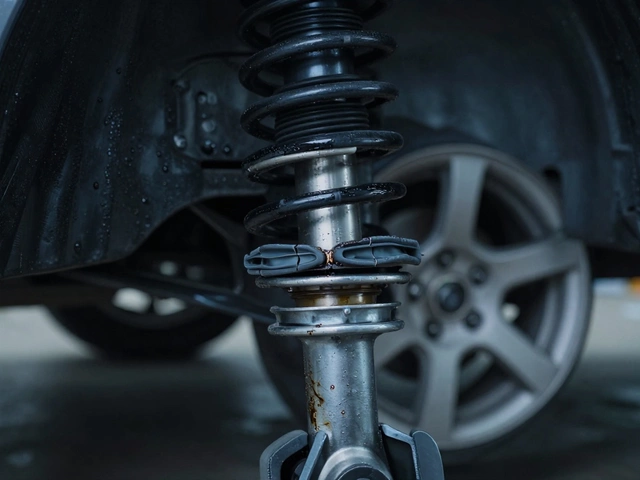
Suspension Noise Diagnostic Tool
Identify what your car's suspension issues might be based on the sounds you're hearing. Select the noise you're experiencing to learn more about the potential cause and necessary repairs.
Possible Issue
What it means:
Recommended action:
Ever hear a clunk, squeak, or rattle when you drive over a bump-and wonder if it’s just the road or something serious? If your car’s making strange noises over potholes or speed bumps, it’s probably not your tires. It’s likely your suspension. And ignoring it won’t make it go away. It’ll just get worse-and more expensive.
What a bad suspension actually sounds like
Most people think a worn suspension just makes the ride bumpy. But the first real warning sign is almost always sound. Different noises point to different problems, and knowing what to listen for can save you hundreds-or even thousands-on repairs.
Here’s what to listen for:
- Clunking or knocking when going over bumps or turning-this is the classic sign of worn control arm bushings or ball joints. The metal parts are hitting each other because the rubber that once held them apart has cracked or collapsed.
- Clicking or popping when turning-often caused by a failing CV joint or loose sway bar link. If it’s worse when you turn sharply, it’s likely the front suspension.
- Squeaking or creaking at low speeds, especially over uneven surfaces-this usually means dry or cracked rubber bushings. It’s not metal-on-metal yet, but it’s close.
- Springy or bouncing noise after hitting a bump-if your car keeps bouncing up and down like a trampoline, your shocks or struts are shot. They’re supposed to stop the spring from oscillating. If they can’t, you’re driving on worn-out springs.
- Rattling from under the car-this can come from loose mounting bolts, broken spring seats, or even a damaged sway bar end link. It sounds like loose change in a tin can.
These aren’t just annoying. They’re safety risks. A broken ball joint can cause a wheel to fall off. A failed strut can make steering unstable in an emergency. And worn suspension parts increase stopping distances, especially on wet roads.
Why suspension parts fail
Suspension components are built to last, but they don’t last forever. Most wear out between 50,000 and 100,000 miles, depending on how you drive and where you drive.
In the UK, road conditions make things worse. Potholes, salted winter roads, and uneven surfaces pound your suspension daily. A car that’s 8 years old with 70,000 miles on it might be showing signs of wear even if it’s been well-maintained.
Here’s what accelerates wear:
- Driving over speed bumps at high speed
- Regularly carrying heavy loads in the trunk or on a roof rack
- Driving on unpaved or gravel roads
- Not replacing worn parts in pairs-like only replacing one shock absorber
And here’s the thing: most people don’t notice the gradual decline. Your car doesn’t suddenly go from smooth to noisy. It gets a little bumpier each year. You start blaming the road. You adjust your driving. You think, “It’s just an old car.” But that’s how you end up with a dangerous failure.
How to check your suspension yourself
You don’t need a garage to spot early warning signs. Here’s a quick 5-minute check you can do at home.
- Push down firmly on each corner of the car-front left, front right, back left, back right. Let go. If the car bounces more than once or twice, your shocks or struts are worn.
- Look under the car (if you have a ramp or jack) for leaking fluid on the shocks or struts. Wet, oily residue means they’re failing.
- Check for visible cracks or splits in rubber bushings. They should be smooth and flexible. If they’re brittle or broken, they need replacing.
- Listen for noises while turning slowly in an empty parking lot. A clicking or popping sound means something’s loose in the steering or suspension linkage.
- Inspect the tires. If you see uneven wear-like one side of the tread is worn down faster than the other-it’s a sign your suspension is out of alignment, usually due to worn parts.
These aren’t professional diagnostics. But they’ll tell you if it’s time to call a mechanic.
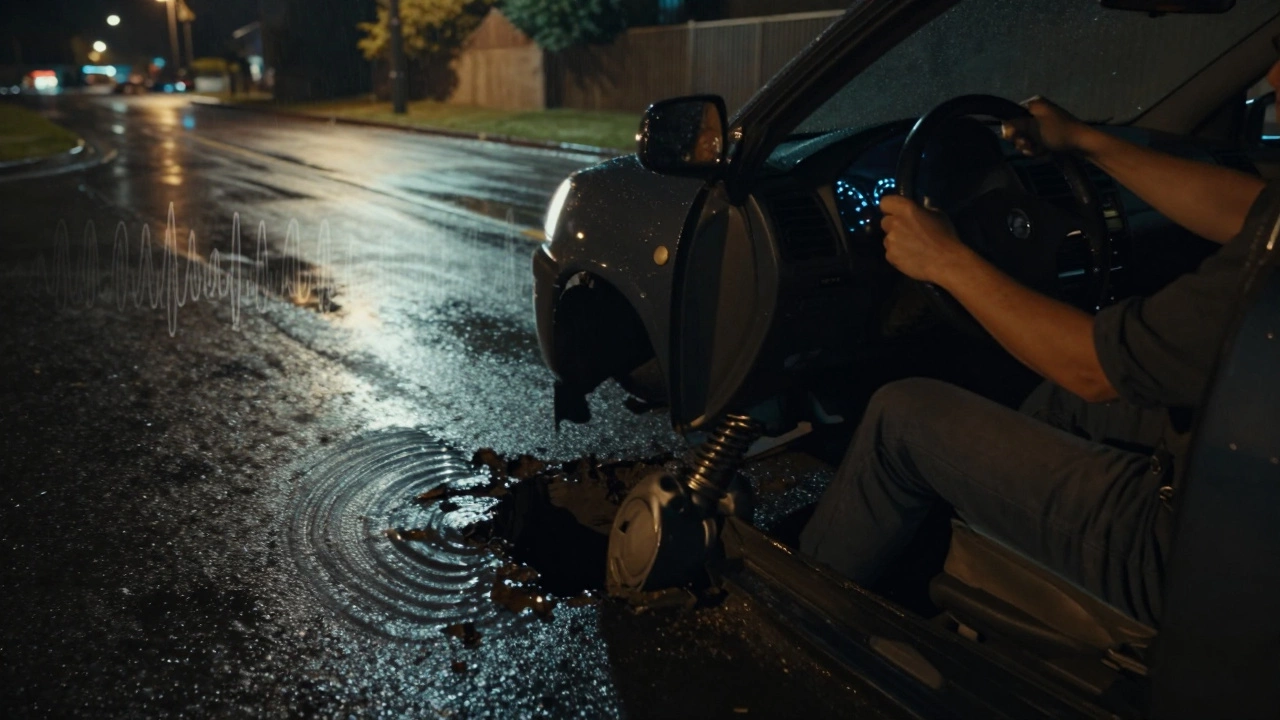
What happens if you ignore it
Driving with a damaged suspension isn’t just uncomfortable. It’s dangerous.
Worn shocks mean longer braking distances. A 2023 study by the AA found that cars with worn suspension took up to 20% longer to stop on wet roads. That’s the difference between stopping safely and hitting a car ahead of you.
Worn ball joints or control arms can fail without warning. If a ball joint breaks while you’re driving, the wheel can turn suddenly or detach. That’s not a minor repair-it’s a crash waiting to happen.
And the damage doesn’t stop at the suspension. Bad suspension puts extra stress on your tires, steering components, and even your brakes. You’ll wear out tires faster, need more frequent alignments, and risk damaging your steering rack.
One customer in Manchester brought in a 2018 Ford Focus. The front end was clunking loudly. He thought it was just the wheels. Turns out, both front lower control arms were broken. The bushings had completely disintegrated. The car had been driven like that for over six months. He ended up needing new control arms, ball joints, tires, and an alignment. Total cost: £1,400. Had he fixed it when the first squeak appeared, it would’ve been £350.
What to replace and when
Not every suspension part needs replacing at once. But they often wear together.
Here’s a rough guide:
- Shocks and struts: Replace every 50,000-100,000 miles. If they’re leaking or bouncing, replace them now.
- Control arm bushings: Check at 60,000 miles. Cracked or crumbling rubber means replacement.
- Ball joints: Inspect every 30,000 miles. Play in the joint = immediate replacement.
- Sway bar links: Often fail around 70,000 miles. Listen for clicking when turning.
- Mounting hardware: Bolts, nuts, and brackets can loosen or corrode. Always replace them with new ones when doing major suspension work.
Always replace parts in pairs-front left and right, or rear left and right. Uneven wear causes handling problems and accelerates damage to the other side.
When to see a mechanic
If you hear any of the noises listed above, or if your car feels unstable when braking or turning, don’t wait. A professional inspection costs between £50 and £80 in the UK. That’s less than a new set of tires.
Ask for a full suspension inspection. A good mechanic will check:
- Shocks and struts for leaks and wear
- Control arms and bushings for cracks
- Ball joints for play
- Sway bar links and mounts
- Steering linkage and tie rods
- Wheel alignment
Don’t let them just say, “It’s fine.” If you’ve heard the noise, trust your ears. Get a second opinion if needed.
Preventing future problems
Good suspension doesn’t just make your ride smoother. It keeps you safe. Here’s how to extend its life:
- Avoid potholes and speed bumps when you can. Slow down when you can’t.
- Don’t overload your car. Stick to the manufacturer’s weight limits.
- Get your alignment checked every 10,000 miles or after hitting a major pothole.
- Have your suspension inspected every 20,000 miles, especially if you drive on rough roads.
- Replace worn parts early. Don’t wait until they’re completely broken.
Most people think suspension is a luxury. It’s not. It’s critical safety equipment. And the sound it makes when it’s failing is your car’s way of screaming for help.
Can a bad suspension cause steering problems?
Yes. Worn ball joints, control arms, or tie rods can make your steering feel loose, vague, or pull to one side. If your car doesn’t track straight or you have to constantly correct the wheel, your suspension is likely the cause.
Is it safe to drive with a clunking suspension?
Not for long. A clunking sound usually means metal parts are hitting each other because rubber bushings or joints have failed. This can lead to sudden loss of control, especially at high speeds or during emergency maneuvers. Get it checked immediately.
Do I need to replace all suspension parts at once?
No, but you should replace them in pairs-both front shocks, both rear struts, both control arms. Replacing only one side creates imbalance, which stresses the other side and causes uneven wear on tires and brakes.
Can worn suspension affect fuel economy?
Indirectly, yes. If your tires are wearing unevenly due to bad suspension, your rolling resistance increases. This makes the engine work harder, which can reduce fuel efficiency by 5-10%. Proper alignment and suspension health help maintain optimal fuel economy.
How much does it cost to fix a damaged suspension?
It varies. Replacing a pair of shocks costs £200-£400. Control arms and ball joints run £150-£350 per side. Strut assemblies can be £300-£600 each. Labor adds £80-£150 per hour. Total repair can range from £400 for minor fixes to over £1,500 for major damage. Early intervention saves money.