Clutch Health Diagnostic Tool
Use the form on the left to describe your clutch behavior. This tool analyzes common symptoms like free play, slipping, and disengagement issues to suggest likely causes and fixes.
Reference: Ideal Free Play
Most manufacturers specify 10mm–25mm (0.4"–1") of free play.
You’re driving along, shifting gears like you’ve done a thousand times before, but something feels... off. The pedal sinks too far to the floor, or maybe it grabs right at the top, making your start jerky and uncomfortable. Before you panic about replacing your entire clutch kit or spending hundreds at the shop, there’s a good chance this is just an adjustment issue. Most drivers ignore their manual transmission until it fails completely, but catching a misadjusted clutch early can save you from premature wear and expensive repairs.
Figuring out if your clutch needs adjustment isn’t rocket science, but it does require paying attention to how your car behaves. Whether you drive an older vehicle with a cable-operated system or a newer one with hydraulic actuation, the symptoms are surprisingly similar. Let’s break down exactly what to look for, how to test it yourself, and when you actually need to grab a wrench versus when you should head to a mechanic.
The Golden Rule: What Is Proper Clutch Free Play?
Every clutch has a specific amount of "free play" required to function correctly. This is the distance the pedal moves before the release bearing actually touches the pressure plate diaphragm spring. Think of it as breathing room. Without free play, the release bearing stays engaged even when you’re not pressing the pedal, causing it to overheat and fail. Too much free play, however, means the clutch doesn’t fully disengage when you press the pedal down, leading to grinding gears.
Most manufacturers specify between 10mm and 25mm (roughly 0.4 to 1 inch) of free play. You can usually find this spec in your owner’s manual under the maintenance section. If you don’t have the manual, a general rule of thumb for most passenger cars is that the pedal should have a small, loose movement at the top before it starts to feel resistant. If you press the pedal and it feels rock solid immediately, you have zero free play. If you have to push it nearly halfway down before you feel any resistance, you have too much.
| Symptom | Pedal Feel | Likely Cause | Urgency |
|---|---|---|---|
| Grinding Gears | High bite point / Hard to shift | Too much free play (cable stretched or hydraulic air) | Medium - Can damage synchros |
| Slipping Under Load | Low bite point / Engine revs without speed | Too little free play (worn disc) or glazed friction surface | High - Will burn out clutch |
| Chattering on Start | Jittery engagement | Oil contamination or warped flywheel | High - Requires inspection |
| Pedal Stays Down | No return spring tension | Broken return spring or failed master cylinder | Critical - Car may not move |
Test 1: The Rev-Up Check (Is It Slipping?)
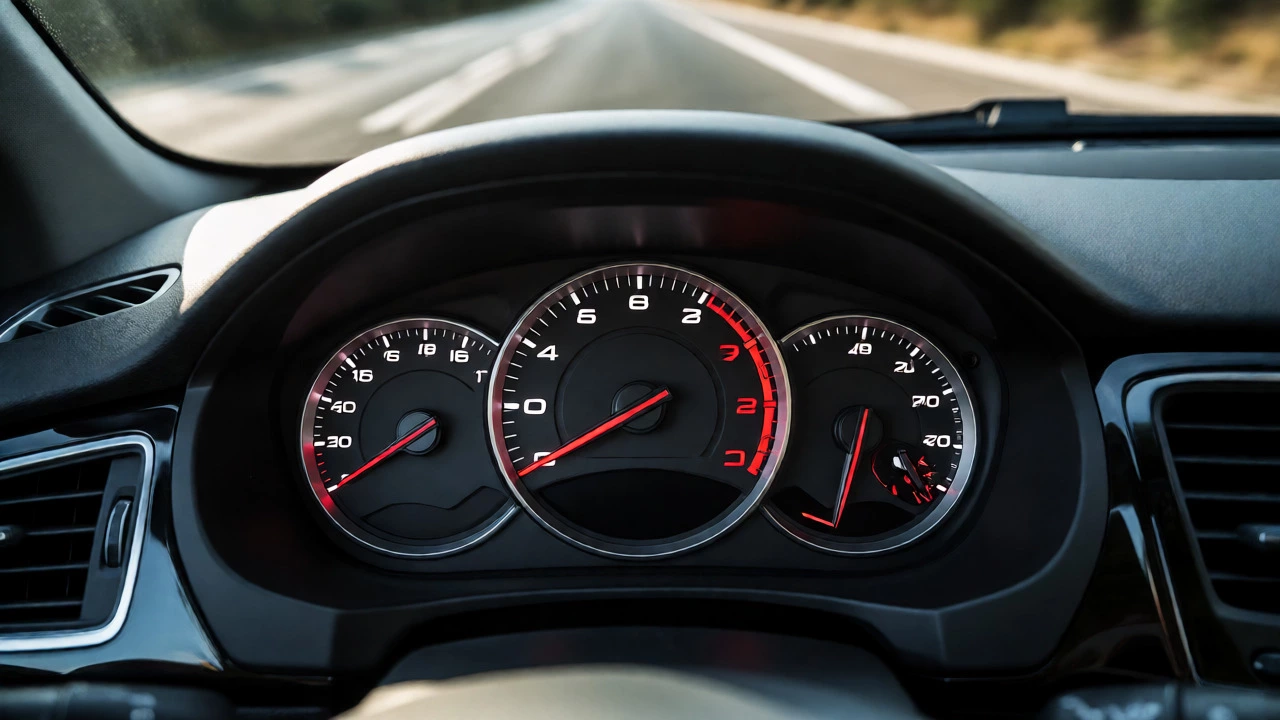
This is the quickest way to diagnose a slipping clutch, which often happens when the free play is set incorrectly or the friction material is worn thin. Find a safe, empty stretch of road or a large parking lot. Get up to about 30 mph (48 km/h) in third gear. Then, suddenly floor the accelerator pedal while keeping the car in gear.
Watch your tachometer closely. In a healthy drivetrain, the engine RPMs will rise, but the vehicle’s speed will increase proportionally. If the RPMs shoot up rapidly-say, jumping from 2,000 to 4,000 RPM-but the car barely accelerates, your clutch is slipping. The friction discs aren’t gripping the flywheel tightly enough to transfer power. While severe slipping usually means a new clutch disc is needed, mild slipping can sometimes be resolved by adjusting the linkage to ensure full clamping force is applied when the pedal is released.
Test 2: The Hill Hold Test (Is It Disengaging?)
If your clutch isn’t slipping, the next question is whether it’s fully disengaging when you press the pedal. This is crucial for smooth shifting. Park your car on a moderate hill, facing uphill. With the engine running and the transmission in neutral, press the clutch pedal all the way to the floor and hold it there. Now, try to shift into first gear.
If you hear a loud grinding noise, the clutch isn’t pulling away from the flywheel completely. This usually indicates too much free play in the cable or air in the hydraulic line. The release bearing isn’t pushing hard enough to separate the plates. Conversely, if you shift easily but the car lurches forward violently when you slowly release the pedal, the bite point might be extremely high, suggesting the linkage is out of adjustment or the clutch components are wearing unevenly.
Identifying Your System: Cable vs. Hydraulic
Before you try to fix anything, you need to know what kind of setup you have. This dictates how you adjust it. Older cars and many budget-friendly models use a mechanical cable connected directly to the clutch fork. Newer vehicles, especially those made after the mid-2000s, typically use a hydraulic system similar to your brakes, consisting of a master cylinder near the pedal and a slave cylinder at the transmission.
Look under your hood. If you see a fluid reservoir labeled "Clutch Fluid" (often shared with brake fluid), you have a hydraulic system. If you see a thick steel cable running from the firewall to the side of the transmission, you have a cable system. Some modern cars use self-adjusting cables or automatic hydraulic adjustments, meaning there’s no manual nut to turn. For these, if the pedal feel is wrong, it often points to internal component failure rather than simple misadjustment.
Adjusting a Mechanical Cable Clutch
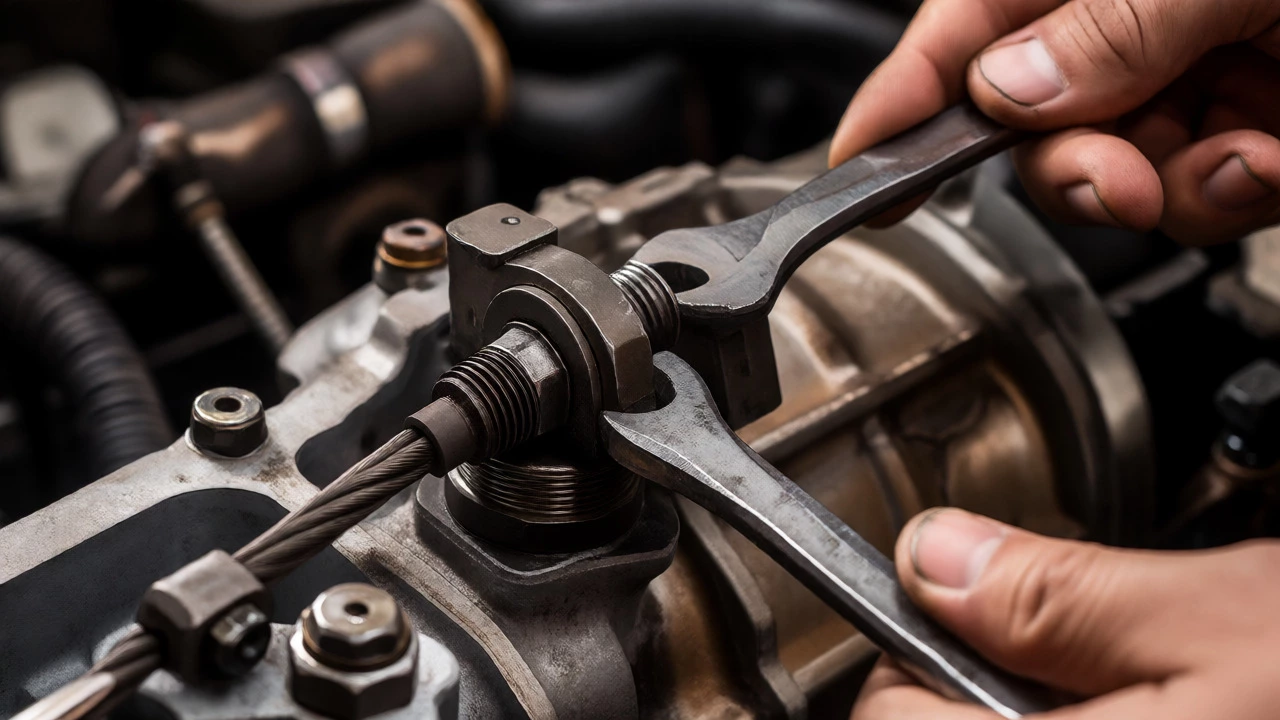
For cable systems, adjustment is straightforward. Locate the clutch cable where it connects to the clutch fork on the side of the transmission. You’ll usually see a threaded barrel or a series of washers used to set the length. The goal is to create that 10-25mm gap between the release bearing and the pressure plate fingers when the pedal is up.
- Loosen the locknut: Use two wrenches-one to hold the adjuster barrel, the other to loosen the locknut.
- Turn the adjuster: Turning it clockwise usually shortens the cable (increasing free play), while counter-clockwise lengthens it (decreasing free play). Small turns matter here; go quarter-turn at a time.
- Check the gap: Use a ruler or feeler gauge to measure the movement at the fork. Ensure there’s visible space before the bearing touches the fingers.
- Tighten and re-test: Lock the nut back down and take the car for a quick spin. If the gears grind, you have too much free play. If the clutch slips, you have too little.
Dealing with Hydraulic Clutch Issues
Hydraulic systems don’t have a simple turn-nut adjustment. Instead, they rely on fluid pressure. If your pedal feels spongy or goes to the floor, the primary suspect is air in the lines or low fluid levels. Air compresses, so when you press the pedal, the fluid pushes against an air bubble instead of moving the slave cylinder efficiently.
To fix this, check the clutch fluid level in the reservoir. If it’s low, top it up with DOT 3 or DOT 4 brake fluid (check your cap label). Next, bleed the system. Have a helper press the pedal repeatedly while you crack open the bleeder valve on the slave cylinder at the transmission. Keep doing this until a steady stream of fluid comes out with no bubbles. Many modern cars feature "self-adjusting" slave cylinders. If bleeding doesn’t help, the piston inside the slave cylinder might be stuck or leaking, requiring part replacement rather than adjustment.
When Adjustment Isn’t Enough: Signs of Wear
There comes a point where tweaking the linkage won’t solve the problem because the physical components are worn out. A clutch disc has a finite life. Once the friction material wears below a certain thickness, increasing free play won’t restore grip-it just makes the pedal harder to press.
Watch for these red flags that signal a replacement is due, regardless of adjustment:
- Burning Smell: A distinct acrid odor after aggressive driving or starting on a hill means the clutch is overheating and glazing.
- Hard Pedal: If the pedal becomes incredibly stiff to press, the pressure plate springs may be fatigued or the release bearing is binding.
- Visible Smoke: Seeing smoke from the exhaust during acceleration is a surefire sign of slipping.
- Age/Mileage: Most street-driven clutches last between 50,000 and 100,000 miles. If you’re past 80k and having issues, assume wear.
Ignoring these signs leads to catastrophic failure. A broken pressure plate fragment can destroy the throw-out bearing, and a seized input shaft seal can contaminate the new clutch with oil, forcing you to redo the job immediately. Always inspect the rear main seal and input shaft seal when replacing a clutch kit.
Can I drive my car with a bad clutch adjustment?
Yes, for a short time, but it’s risky. Driving with too much free play causes grinding, which damages the synchronizers in your gearbox-a repair that costs more than a clutch. Driving with too little free play causes slipping, which generates excessive heat and can warp the flywheel or destroy the clutch disc entirely. If the pedal feels normal, drive normally. If it feels extreme, limit your driving to essential trips only.
How much does it cost to adjust a clutch?
If it’s a simple cable adjustment, labor costs are minimal, often ranging from $50 to $100 at a shop. DIY is virtually free aside from basic tools. However, if the adjustment reveals a need for a new slave cylinder or master cylinder, parts plus labor can jump to $300-$600. Full clutch replacement is significantly more, typically $800-$1,500 depending on the vehicle.
Why is my clutch pedal getting higher?
A rising bite point (the point where the clutch engages) is the classic sign of a worn clutch disc. As the friction material thins out, the pressure plate must travel further to clamp down, effectively raising the engagement point. While you can temporarily compensate by adjusting the linkage to reduce free play, this is a warning that replacement is imminent.
Does clutch adjustment improve fuel economy?
Indirectly, yes. A properly adjusted clutch ensures full engagement, preventing slip. When a clutch slips, the engine works harder to maintain speed than necessary, burning extra fuel. Correct adjustment restores efficient power transfer, potentially recovering lost mpg, though it won’t make your car faster than factory specs.
What happens if I ignore a spongy clutch pedal?
A spongy pedal usually indicates air in the hydraulic system or a failing master/slave cylinder. Ignoring it can lead to total loss of clutch function. If the slave cylinder leaks internally, you might lose the ability to shift gears entirely, leaving you stranded. It’s safer to bleed the system or replace the cylinder promptly.