Suspension Noise Diagnostic Tool
Identify Your Suspension Issue
Describe the noise your car makes and when it occurs. This tool will help identify potential suspension problems based on the article content.
Ever hear a clunk, squeak, or rattle when you hit a bump and wonder if it’s just your car being old-or something serious? A bad suspension system doesn’t just make your ride uncomfortable. It makes noise. And those noises? They’re your car’s way of screaming for help before something breaks completely.
Most people think suspension issues are about how the car handles. But if you listen closely, the sounds tell you exactly what’s wrong. You don’t need a mechanic to tell you. You just need to know what to listen for.
Clunking When You Hit a Bump
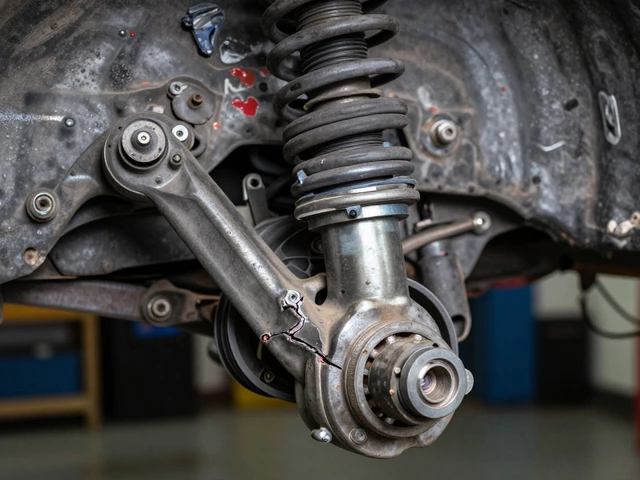
That heavy, metallic clunk when you go over a pothole or speed bump? That’s almost always worn control arm bushings or a loose ball joint.
Control arm bushings are rubber or polyurethane sleeves that connect the suspension arms to the car’s frame. Over time, they crack, dry out, and fall apart. When they do, the metal parts slam into each other. It’s not just noise-it’s metal on metal. And if you ignore it, the bushings will eventually fail, letting the control arm move where it shouldn’t. That throws off your alignment, wears out your tires faster, and can even make steering unpredictable.
Ball joints are another common culprit. They let the wheels move up and down while turning. When they wear out, they get loose. That looseness causes a clunk when the suspension shifts under load. You might notice it more when turning or braking. Some cars have visible ball joints you can inspect with a pry bar. If there’s more than a millimeter of play, it’s time to replace them.
Squeaking or Creaking Over Bumps
That high-pitched squeak or creak when you drive over uneven pavement? That’s usually a lack of lubrication-or worn rubber components.
Strut mounts, sway bar links, and even the rubber isolators around shock absorbers can dry out and start to squeak. In dry weather or cold temperatures, this gets worse. It’s not always dangerous, but it’s annoying. And if you hear it often, it means the rubber is breaking down. Rubber doesn’t just wear out-it becomes brittle. Once it cracks, water and road salt get in, and corrosion follows.
Try spraying a little silicone lubricant on the sway bar links and strut mount contacts. If the noise goes away for a day or two, you’ve found the source. But don’t just keep re-lubing. That’s a band-aid. The rubber parts are failing. Replace them before they cause more damage.
Knocking or Popping While Turning
When you turn the wheel and hear a knock or pop, especially at low speeds, it’s often the CV joint or steering linkage. But if you’re sure the noise is coming from the suspension-not the drivetrain-it’s likely the inner or outer tie rod ends.
Tie rods connect the steering rack to the wheels. When they wear out, the ball-and-socket joint inside gets sloppy. That causes a knocking sound when you turn. You might also feel a slight vibration in the steering wheel. Left unchecked, the tie rod can break while driving. That means you lose steering control. No warning. No time to react.
Check for wear by having someone turn the wheel while you look under the car. If the tie rod moves independently of the steering arm, it’s worn. Replace it immediately. This isn’t something you want to gamble with.
Thumping or Bouncing After a Bump
Ever hit a bump and feel like the car keeps bouncing after? That’s not just a rough ride. That’s a dead shock absorber.
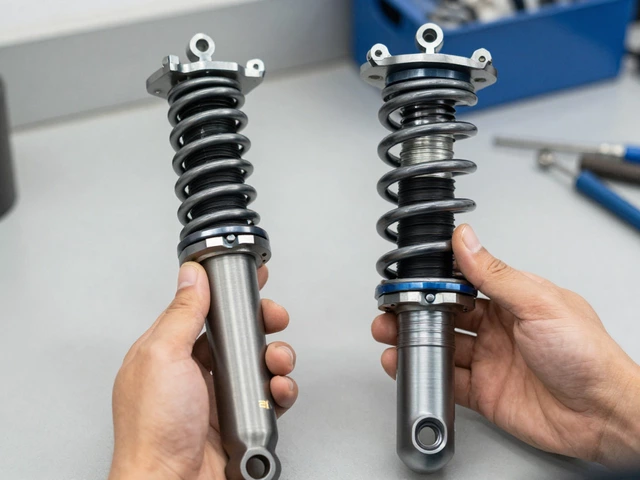
Shocks and struts don’t just soften bumps-they control how the suspension moves. If they’re worn, the spring keeps bouncing after the initial impact. That’s called oscillation. You’ll notice it most on uneven roads or when driving over expansion joints on highways.
Try the bounce test: push down hard on one corner of the car and let go. If it bounces more than once or twice, the shocks are done. Most manufacturers recommend replacing them every 50,000 to 100,000 miles. But if you drive on rough roads, gravel, or unpaved tracks (common in northern UK winters), they’ll wear out faster.
Bad shocks don’t just make noise-they make your car harder to control. Braking distances increase. Cornering becomes unstable. And your tires wear unevenly, often in a cupping pattern you can feel with your hand.
Grinding or Metallic Screeching
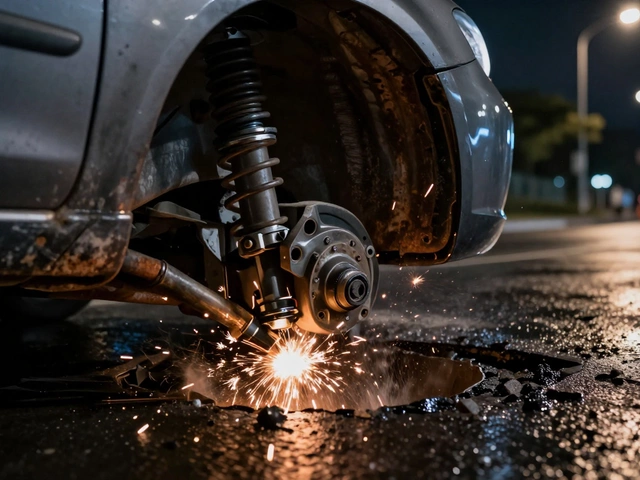
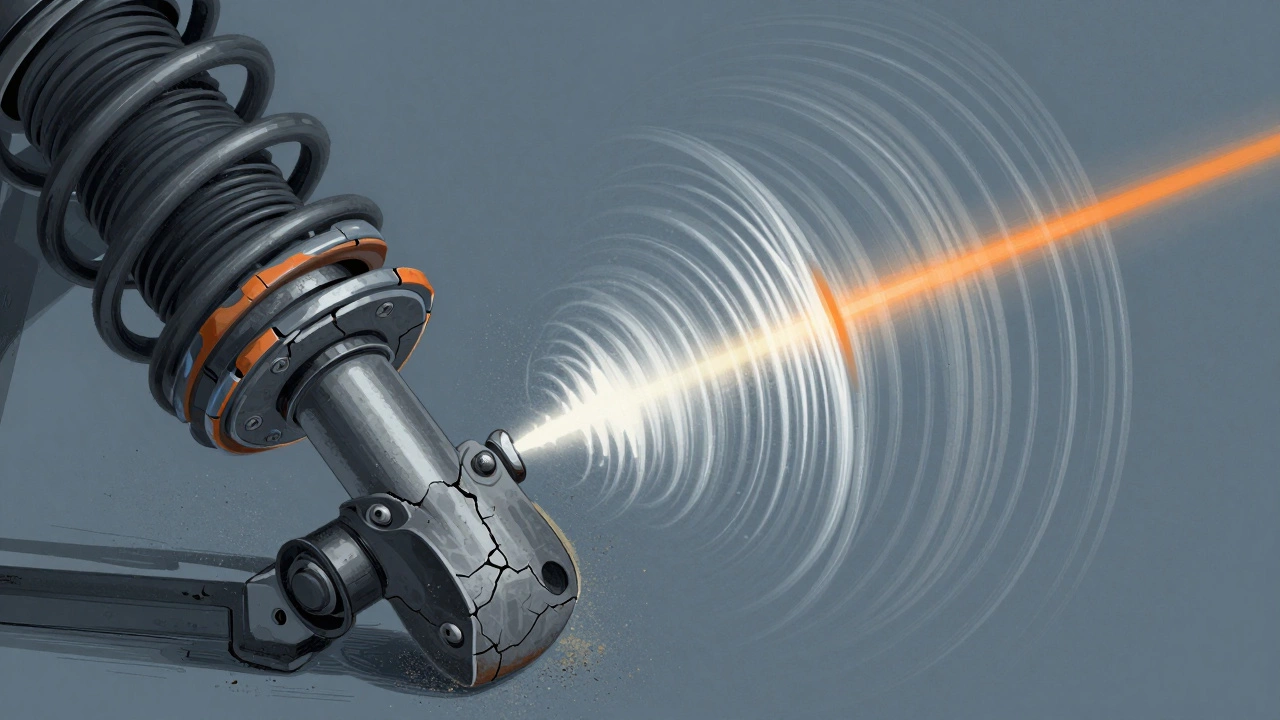
A grinding noise? That’s serious. It usually means metal is rubbing directly on metal-no rubber, no grease, no buffer left.
This can happen if a strut tower is rusted through, or if a spring has broken and is rubbing against the shock body. It can also come from a completely failed sway bar end link. In extreme cases, a broken spring can snap and hit the wheel well or brake line.
Don’t ignore this. Grinding means parts are already damaged. The longer you drive like this, the more you risk a sudden failure. You might not hear it until you’re on a busy road. That’s when it gets dangerous.
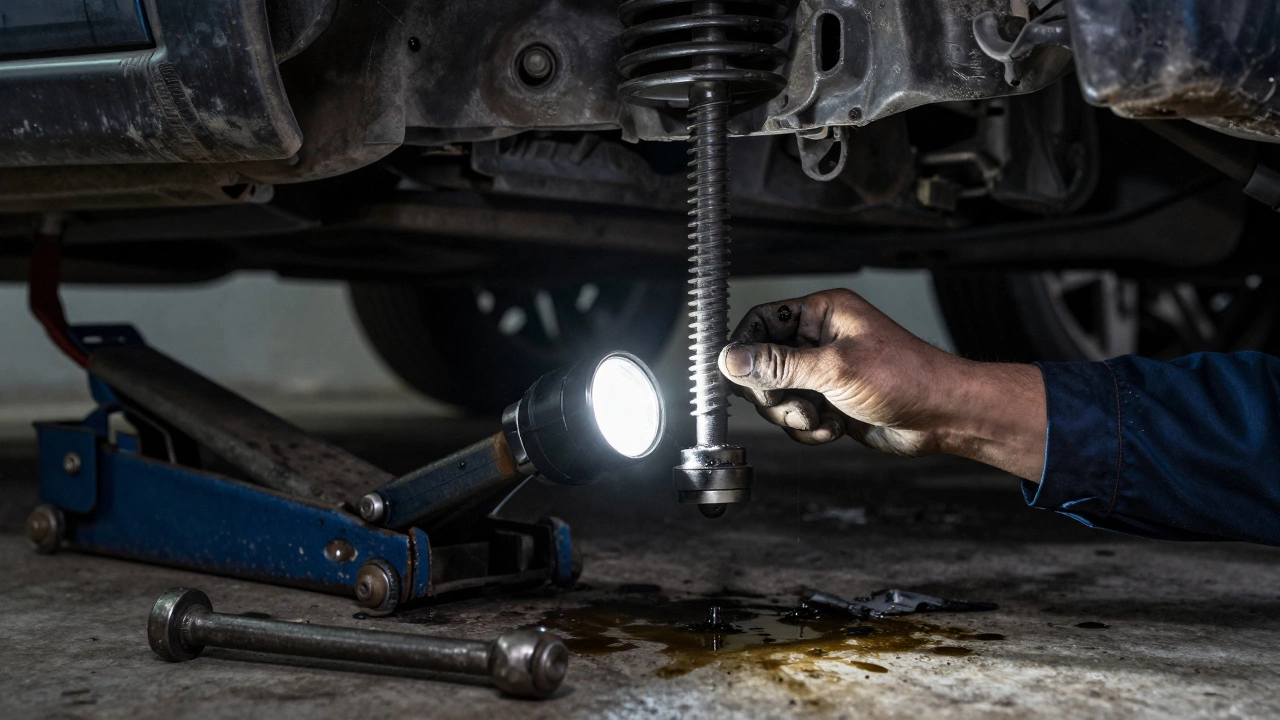
What Happens If You Ignore These Sounds?
Some people think, “It’s just noise. It’s not braking. I’ll wait.” But suspension isn’t like a squeaky brake pad. It’s not just an annoyance-it’s a safety system.
Worn suspension parts affect:
- Braking distance-up to 20% longer on wet roads
- Steering response-delayed or loose steering input
- Tire wear-uneven wear patterns that cost you hundreds in replacements
- Vehicle stability-especially in crosswinds or during emergency maneuvers
And in the UK, where roads are often pitted, wet, and covered in salt during winter, a failing suspension is a recipe for a serious accident. A 2024 AA report found that 17% of breakdowns in the North West were linked directly to suspension failure.
What Should You Do?
If you hear any of these sounds, don’t wait for it to get worse. Here’s what to do:
- Listen carefully and note when the noise happens: bump, turn, braking, speed?
- Check for visible damage: cracks in rubber, rusted metal, fluid leaks around shocks
- Do the bounce test on each corner
- Get a professional inspection-most garages offer a free suspension check
Don’t rely on a mechanic to guess. Tell them exactly what you heard. Say: “It clunks when I hit potholes,” or “It squeaks when I turn left at low speed.” Specifics help them find the problem faster.
Replacing worn suspension parts isn’t cheap, but it’s cheaper than replacing tires, brakes, or worse-dealing with an accident caused by a failed component.
Final Thought
Your car doesn’t talk. But it does make noise. And those sounds? They’re not random. They’re clues. A clunk isn’t just annoying-it’s a warning. A squeak isn’t just annoying-it’s a sign of decay. A knock isn’t just annoying-it’s a threat to control.
Listen. Act. Fix it before it fixes you.