Radiator Failure Risk Assessment Tool
Answer these questions to determine the likelihood of radiator failure for your vehicle.
Assessment Result
Fill out the form to check your radiator's health status.
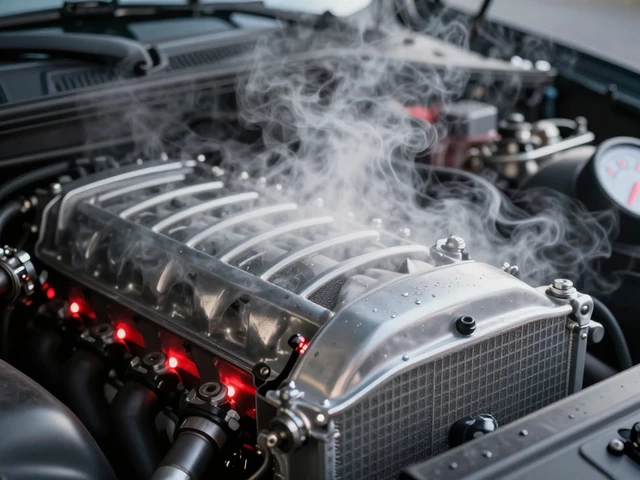
Your engine is running hot. The temperature gauge is creeping into the red zone, and you can smell that distinct sweet scent of burning coolant. It’s a stressful moment for any driver, especially if you’re stuck on a busy road or in the middle of nowhere. Most people assume their radiator just gave up on them without warning, but the truth is rarely that simple. Radiators don’t fail overnight; they deteriorate over time due to specific, predictable factors.
Understanding what actually kills a radiator is the primary heat exchanger in a vehicle's cooling system, responsible for dissipating heat from the engine coolant to the surrounding air can save you from catastrophic engine damage. By knowing the three main culprits behind these failures, you can spot the early warning signs before your car breaks down completely. Let’s break down exactly why radiators fail so you can keep your engine cool and your wallet intact.
1. Internal Corrosion and Chemical Breakdown
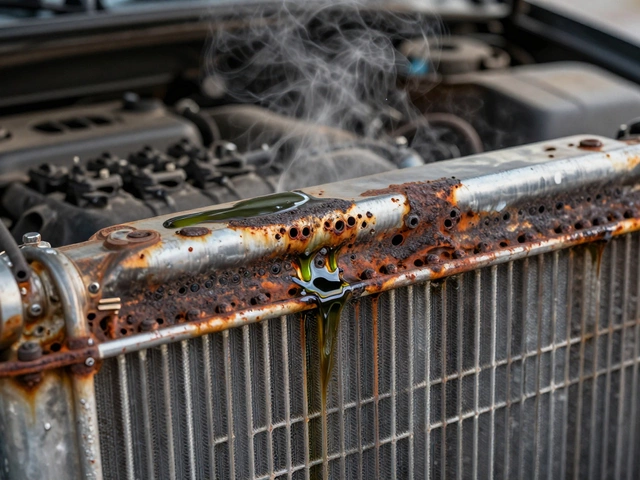
The first, and perhaps most insidious, cause of radiator failure is internal corrosion. You might think that because the coolant is sealed inside the system, it stays clean forever. That’s a dangerous myth. Coolant, also known as antifreeze, has a limited lifespan. Over time, the chemical additives that protect the metal surfaces inside your cooling system is a network of hoses, pumps, and reservoirs that circulate fluid to regulate engine temperature break down. When this happens, the protective barrier vanishes, leaving the raw aluminum or copper inside your radiator exposed to acidic byproducts.
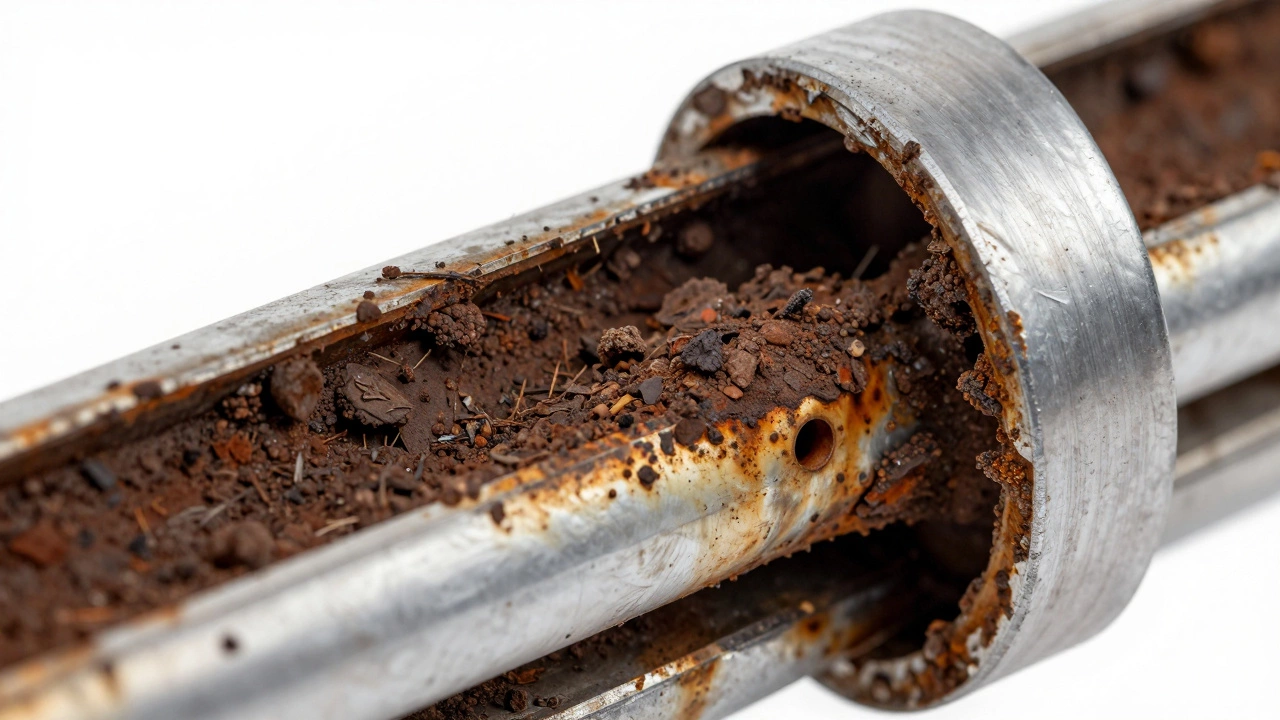
This process creates sludge-a thick, rusty gunk that clogs the tiny tubes inside the radiator core. Imagine trying to drink a milkshake through a straw that’s half-clogged with dried powder; that’s essentially what happens to your coolant flow. The radiator core is the central component consisting of thin tubes and fins where heat transfer occurs relies on unrestricted flow to pull heat away from the engine. When those tubes are narrowed by corrosion debris, heat builds up rapidly. This isn’t just about efficiency; it’s about survival. Severe internal corrosion can lead to pinhole leaks within the tubes themselves, causing coolant to seep out internally or externally, leading to sudden pressure loss and overheating.
To prevent this, you need to respect the service intervals recommended by your manufacturer. For most modern cars, this means flushing and replacing the coolant every 30,000 to 50,000 miles, depending on whether you use conventional green coolant or longer-life orange or pink variants. Ignoring this schedule turns your protective fluid into an acid bath that eats away at your radiator from the inside out.
2. Physical Damage and External Leaks
If corrosion is the slow killer, physical damage is the sudden accident. Radiators are mounted at the very front of your vehicle, directly in the line of fire for road debris. A small stone kicked up by a truck’s tires, a stray branch, or even a minor fender bender can compromise the integrity of the radiator tank or the delicate fins inside the core.
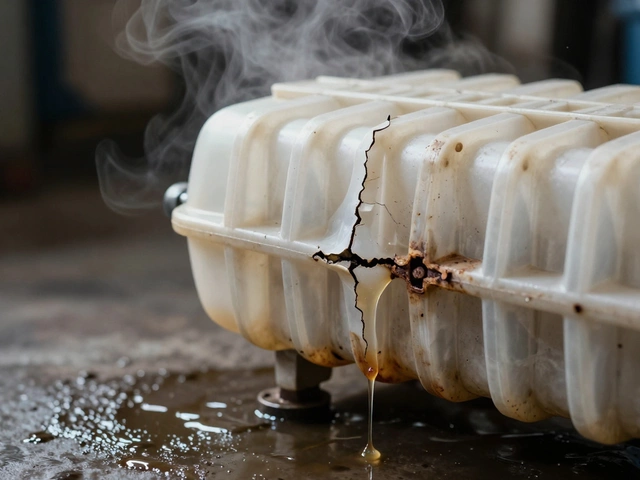
The most common point of failure here is the plastic overflow tanks found on either side of the radiator core. While plastic is lightweight and cost-effective, it becomes brittle with age and exposure to extreme heat cycles. Cracks often form around the hose connections or along the seams. You’ll usually notice this type of failure immediately: a visible puddle of colored liquid under your car after parking, or steam rising from the front grille while driving.
- Cracked Tanks: Look for white or yellowish stress marks on the plastic sides of the radiator.
- Bent Fins: If the aluminum fins between the tubes are crushed, airflow is restricted, reducing cooling capacity even if there’s no leak.
- Hose Failures: The upper and lower radiator hoses connect directly to the unit. If these burst or detach, the radiator loses its supply of hot coolant and its return path for cooled fluid.
In urban environments like Manchester, where traffic is dense and roads are often wet with debris, the risk of stone chips hitting the radiator face is higher than on open highways. Regular visual inspections of the front end of your car can catch minor cracks before they become major leaks. Sometimes, a simple epoxy repair kit can fix a small crack in the tank, but severe damage to the core usually requires a full replacement.
3. Overheating and Pressure Stress
The third major cause of radiator failure is chronic overheating, which creates a vicious cycle of pressure stress. Your cooling system is pressurized-usually between 13 to 16 psi-to raise the boiling point of the coolant. This allows the engine to run hotter without the fluid turning to steam. However, when the system fails to dissipate heat effectively, pressure spikes beyond design limits.
What causes this overheating? Often, it starts with a failing thermostat is a valve that regulates coolant flow based on engine temperature stuck in the closed position, or a broken water pump that stops circulating fluid. When coolant sits stagnant in the engine block, temperatures soar. This excess heat transfers back to the radiator, putting immense strain on its seals, gaskets, and welds. Eventually, the weakest point gives way. This could be the radiator cap, which might blow off, or a seam on the radiator itself that splits open under the pressure.
Additionally, external factors contribute to this stress. Driving in heavy traffic during summer months, towing heavy loads, or having a dirty radiator clogged with bugs and dirt all reduce airflow. Without adequate airflow across the radiator fins are thin metal plates attached to the tubes to increase surface area for heat dissipation, the coolant cannot release its heat. The result is a system that boils over, losing coolant and pressure, leading to further overheating and eventual structural failure of the radiator components.
| Failure Cause | Primary Symptom | Prevention Strategy | Repair Difficulty |
|---|---|---|---|
| Internal Corrosion | Gradual overheating, discolored coolant | Regular coolant flushes (every 3-5 years) | High (often requires replacement) |
| Physical Damage | Visible leaks, steam, cracked plastic | Visual inspections, bug screens | Medium (patchable if minor) |
| Overheating Stress | Sudden pressure loss, blown cap | Check thermostat, fan operation, airflow | High (system-wide diagnosis needed) |
Early Warning Signs You Should Never Ignore
Before your radiator completely fails, it will almost always give you hints. Paying attention to these signals can mean the difference between a cheap repair and a blown head gasket or warped cylinder head.
First, watch your dashboard. If the temperature needle fluctuates or stays higher than normal, your cooling system is struggling. Second, check your coolant reservoir. If the level drops consistently without any visible puddles underneath, you likely have an internal leak, possibly into the combustion chamber, indicated by white smoke from the exhaust. Third, look at the color of your coolant. Fresh coolant is bright green, orange, or pink. If it looks brown, rusty, or muddy, internal corrosion is already underway.
Finally, listen to your fans. Modern cars use electric cooling fans that kick in when the engine reaches a certain temperature. If you hear them running constantly, even when idling, or if they don’t turn on at all, your radiator isn’t getting the airflow it needs to cool down.
Maintenance Tips to Extend Radiator Life
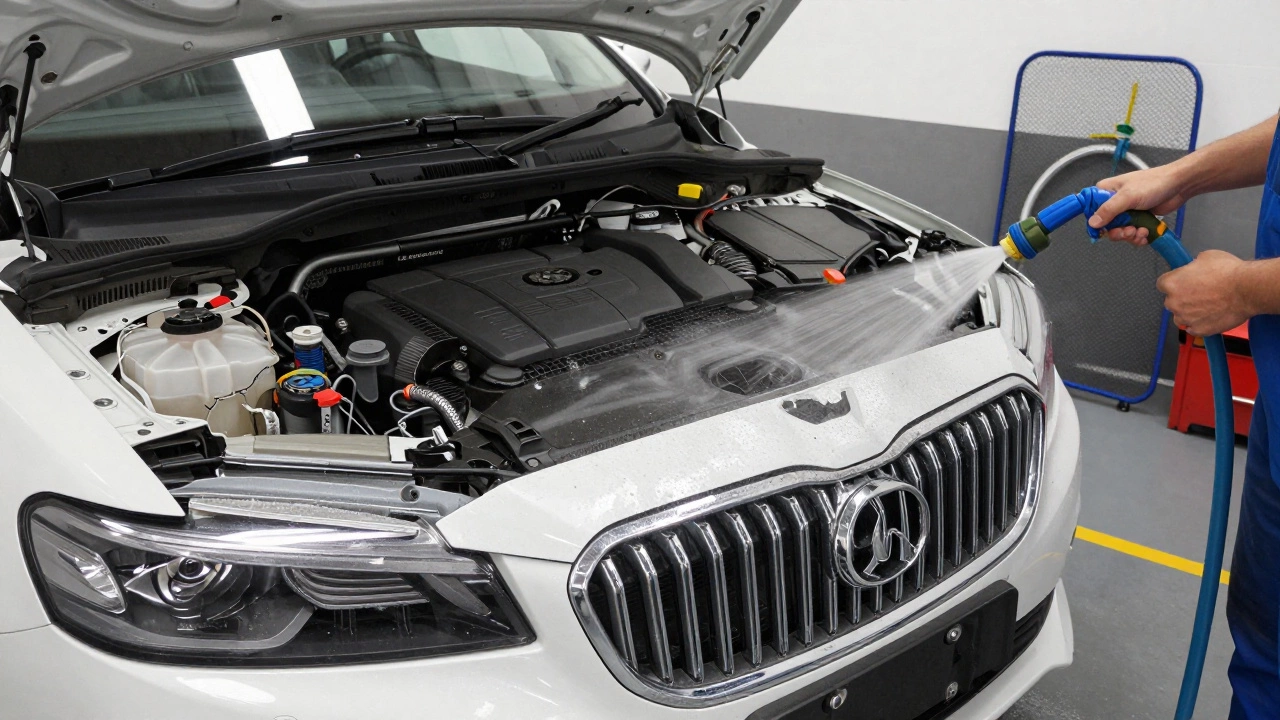
Keeping your radiator healthy doesn’t require advanced mechanical skills. Start by cleaning the exterior of the radiator regularly. Use a garden hose on a gentle setting to wash away bugs, leaves, and dirt from the fins. Be careful not to bend the fragile aluminum fins. Installing a mesh screen in front of the radiator can help keep larger debris out during summer drives.
Second, maintain proper coolant levels. Top up with the correct mixture of distilled water and antifreeze as specified in your owner’s manual. Never use tap water, as the minerals can accelerate corrosion. Third, inspect hoses and clamps annually. Replace any hoses that feel spongy, cracked, or swollen. Tighten loose clamps to prevent leaks at the connection points.
Lastly, never open the radiator cap when the engine is hot. The pressurized steam can cause severe burns. Always wait for the engine to cool down completely before checking or refilling the system. By treating your cooling system with respect, you ensure that your radiator lasts as long as the rest of your engine.
How long does a car radiator typically last?
With proper maintenance, a modern car radiator can last between 8 to 10 years or roughly 100,000 to 150,000 miles. However, neglecting coolant changes or exposing the vehicle to harsh conditions can significantly shorten this lifespan.
Can I drive my car if the radiator is leaking?
It is highly risky to drive with a leaking radiator. Even a small leak can lead to rapid coolant loss and engine overheating within minutes. Overheating can cause irreversible engine damage, such as warped heads or seized pistons. If you must move the car, do so only short distances to a repair shop while monitoring the temperature gauge closely.
What is the difference between a radiator and a heater core?
The radiator cools the engine by releasing heat outside the vehicle, while the heater core is a small radiator located inside the dashboard that provides warmth to the cabin. Both use the same coolant, but they serve opposite purposes. A failed heater core usually results in foggy windows and a sweet smell inside the car, whereas a failed radiator causes engine overheating.
Why does my radiator make a gurgling noise?
A gurgling sound often indicates air trapped in the cooling system, commonly known as an airlock. This can happen after coolant changes or if there is a leak allowing air to enter. Air pockets prevent proper coolant circulation, leading to localized overheating. Bleeding the system according to the manufacturer’s procedure usually resolves this issue.
Is it cheaper to repair or replace a radiator?
For minor issues like small leaks in the plastic tanks, repair kits or professional welding can be cost-effective. However, if the core is corroded or damaged internally, replacement is usually the better option. Reputable aftermarket radiators often match or exceed original equipment quality at a lower price than OEM parts, making replacement a practical choice for older vehicles.