Exhaust Sound Profile Recommender
Your Recommended Setup:
To get the sound you actually want, you have to understand that your best sounding exhaust depends on how air and sound waves move through the piping. If you just cut a hole in your muffler, you'll likely end up with a raspy, metallic noise that sounds cheap. Professional sound tuning involves balancing the diameter of the pipes, the material used, and where the restrictions are placed.
Quick Takeaways for Exhaust Sound
- Deep Tone: Go for larger diameter pipes and resonated chambers.
- Screamer Tone: Use smaller, thinner-walled piping and high-flow catalysts.
- Volume Control: Look for systems with valves or removable baffles.
- Avoid Drone: Ensure the system has a resonator or a high-quality muffler.
The Role of the Engine Type
Before buying parts, you have to look at what's creating the noise. The engine is the instrument; the exhaust is just the amplifier. V8 Engines is a large-displacement engine configuration known for producing a deep, rhythmic rumble. Because they have more cylinders and larger combustion chambers, they naturally produce lower frequency sounds. A V8 doesn't need much help to sound aggressive; often, a simple cat-back system is enough to make it roar.
On the flip side, Inline-4 Engines are smaller four-cylinder engines common in economy and sports cars. These tend to sound "buzzier." If you go too wide with the piping on a 4-cylinder, you actually lose backpressure, which can make the car sound hollow and weak. To get a premium sound from a small engine, you need precision-tuned manifolds that compress the sound waves into a more focused tone.
Breaking Down the Exhaust Components
To change the sound, you need to know which part of the system does what. Most people start with a Cat-Back Exhaust, which is the portion of the exhaust system from the catalytic converter back to the tailpipe. This is the safest way to change the sound without failing an emissions test or risking a legal headache.
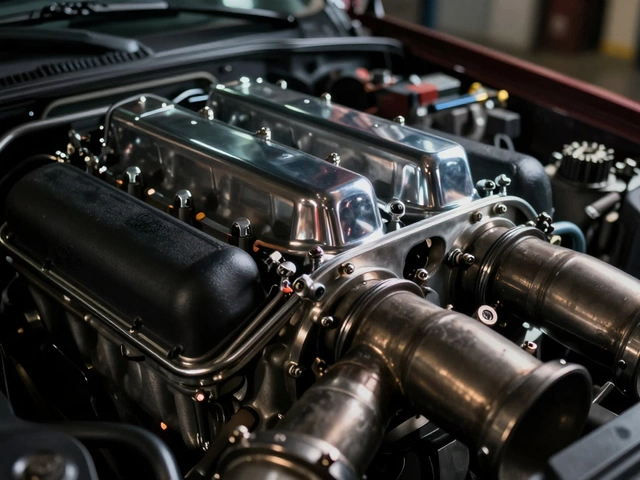
If you want a more drastic change, you look at the Exhaust Manifold. This is the first point where exhaust gases leave the engine. Replacing a stock manifold with Headers-which are open, equal-length pipes-removes the restrictive cast-iron blocks. This usually results in a much sharper, louder, and more raw sound. However, be warned: removing the manifold's restrictions can often lead to a "raspy" sound if the rest of the system isn't designed to handle that increased flow.
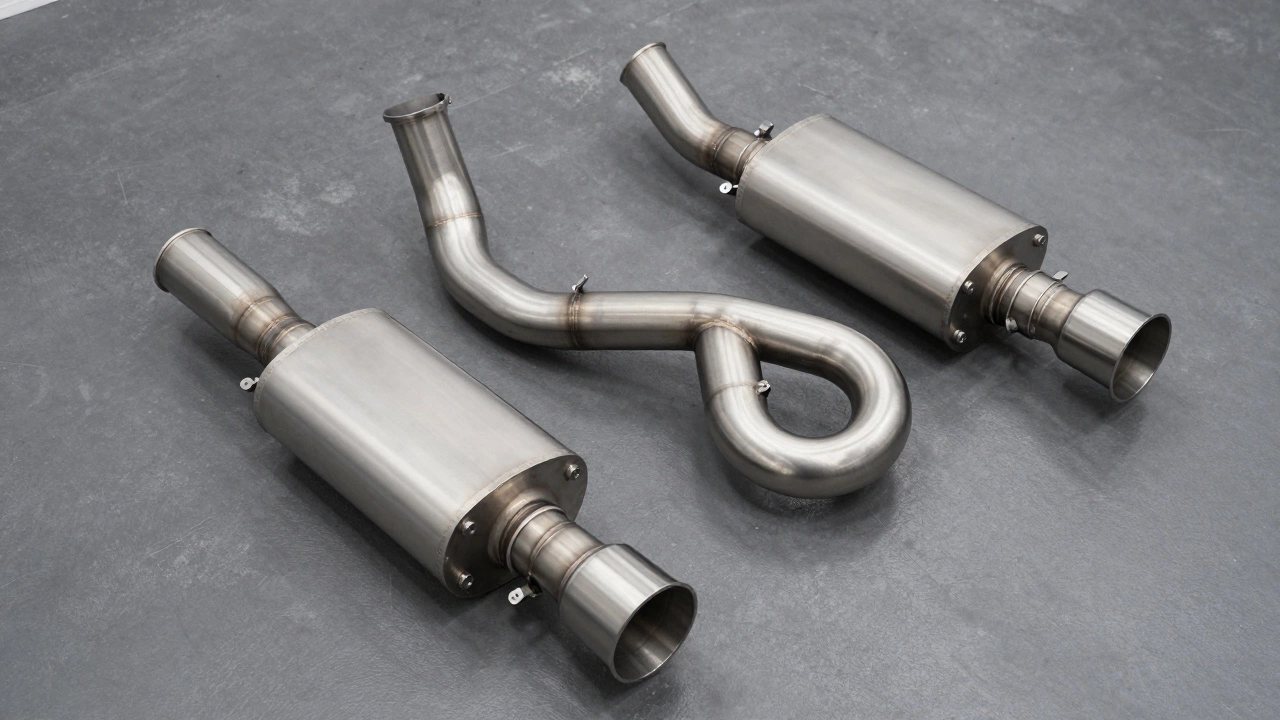
Then there is the Muffler, the final gatekeeper. A muffler's job is to cancel out sound waves. A straight-through muffler (often called a glasspack) barely restricts the sound, giving you a raw roar. A chambered muffler bounces the sound around inside, which kills specific frequencies to make the car quieter or deeper.
| System Type | Sound Character | Volume Level | Best For |
|---|---|---|---|
| Cat-Back | Refined, Controlled | Medium | Daily Drivers |
| Straight Pipe | Raw, Aggressive | Very High | Track Cars |
| Valved System | Variable (Quiet to Loud) | Adjustable | Luxury Performance |
| Headers Only | Sharp, Metallic | High | High-RPM Builds |
Materials: Stainless Steel vs. Titanium
You might think the metal doesn't matter, but it changes the "ring" of the exhaust. Stainless Steel is the industry standard. It's durable and provides a full, rounded sound. It's heavy, but that mass actually helps dampen some of the harshest high-frequency vibrations, resulting in a smoother tone.
Titanium is the choice for high-end exotics and race cars. Because titanium is much thinner and lighter, it doesn't dampen sound as much. This creates a higher-pitched, "crisper" sound. If you want your car to sound like a Formula 1 car or a high-end supercar, titanium is the way to go. But keep in mind, it's significantly more expensive and can sometimes sound too piercing for a street car.
The Nightmare of Exhaust Drone
There is a massive difference between a "loud" car and a "noisy" car. The biggest mistake people make is ignoring drone. Exhaust Drone is a low-frequency humming noise that occurs at specific RPMs, usually during highway cruising. It happens when the sound waves inside the pipe hit a resonant frequency that matches the car's cabin.
To kill drone, you need a Resonator. Unlike a muffler, which reduces overall volume, a resonator is designed to target and cancel out specific annoying frequencies. If you're building a custom system, never skip the resonator. A car with a deep, clean rumble and no drone sounds professional; a car that vibrates your mirrors at 70 mph sounds like a mistake.

Practical Tips for Choosing Your Setup
If you're still not sure what to buy, start with the "Rule of Three." First, identify the sound you love. Do you like the low thumping of an American V8 or the high-pitched scream of a Japanese 2JZ? Second, consider your environment. If you live in a strict neighborhood in Manchester, a full straight-pipe system will get you unwanted attention from the police.
Third, check the pipe diameter. A common pitfall is going too big. People think a 4-inch pipe on a small engine will make it sound "bigger." In reality, it slows down the exhaust gas velocity, which often makes the car sound thin and airy. Stick to the recommended diameter for your engine's horsepower output to keep the tone punchy and tight.
For those who want the best of both worlds, look into active exhaust valves. These use a small electronic motor to open or close a flap in the exhaust. You can have a quiet, stealthy ride while you're in a school zone and then flip a switch to open the pipes wide when you hit a winding B-road.
Does a bigger exhaust pipe mean a deeper sound?
Not necessarily. While a larger pipe can lower the frequency, if the pipe is too large for the engine's airflow, it can actually lead to a hollow, echoing sound and a loss of low-end torque. The depth of the sound is more dependent on the muffler design and the engine's displacement than just the pipe width.
Will removing the muffler make my car faster?
Only by a tiny margin, and usually only if the original muffler was extremely restrictive. For most street cars, the biggest restriction is the catalytic converter, not the muffler. Removing the muffler mostly increases noise, not horsepower. In some cases, losing too much backpressure can actually hurt your low-end acceleration.
What is the difference between a muffler and a resonator?
A muffler is designed to reduce the overall volume of the exhaust. A resonator is a specialized tube designed to eliminate specific frequencies (like the dreaded drone) without significantly lowering the overall volume. A high-quality setup usually uses both.
Are titanium exhausts worth the extra money?
If you are chasing a very specific, high-pitched racing tone and want to shave off significant weight for track days, yes. For a daily driver, stainless steel is usually better because it's more durable, more affordable, and provides a fuller, more pleasant tone for cruising.
Can I just put a louder tip on my car to change the sound?
No. The tailpipe tip is purely cosmetic. It doesn't change how the air flows or how the sound is dampened. To change the sound, you have to change the components that actually process the air, such as the manifolds, resonators, or mufflers.
Next Steps for Your Build
If you're ready to start, I suggest first looking for videos of your specific car model with different brand-name cat-back systems. Listen for the transition from idle to high RPM. If you're going the custom route, visit a local exhaust shop and ask about using a "mandrel-bent" pipe. This ensures the pipe maintains a constant diameter through the bends, which prevents turbulence and keeps the sound crisp.
For those on a budget, start with a high-flow muffler replacement. It's the cheapest way to add a bit of growl without compromising the rest of your system. Just remember to check your local noise ordinances so you don't end up with a fine along with your new sound.