Clutch Repair Cost Estimator
Your Clutch Situation
You notice it first as a slight slip-when you press the gas, the engine revs but the car doesn’t move like it should. Then, maybe, it gets harder to shift. The clutch pedal feels spongy. Or worse, it grinds when you try to change gears. You tell yourself it’s just a quirk. "It’s still driving," you think. But keeping your car on the road with a bad clutch isn’t a temporary fix-it’s a slow-motion breakdown waiting to happen.
What a Clutch Actually Does
The clutch connects your engine to your transmission. When you press the pedal, it disengages the engine from the wheels. When you let go, it re-engages them smoothly. It’s not just a switch-it’s a friction system that wears down over time. A healthy clutch can last 80,000 to 120,000 miles in normal driving. But if you’re riding the pedal, popping the clutch in traffic, or hauling heavy loads, it can fail much sooner.
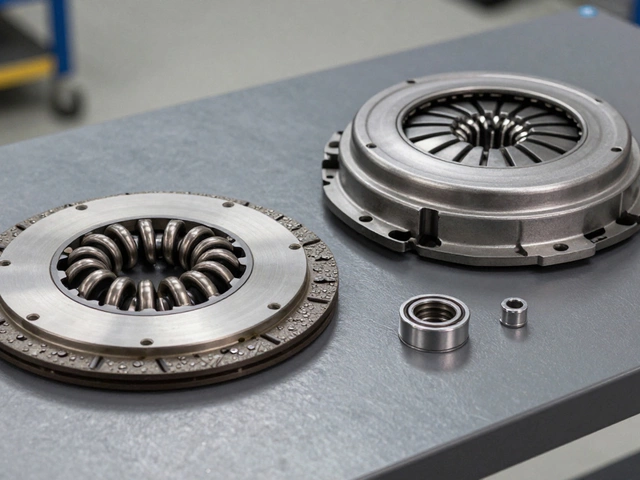
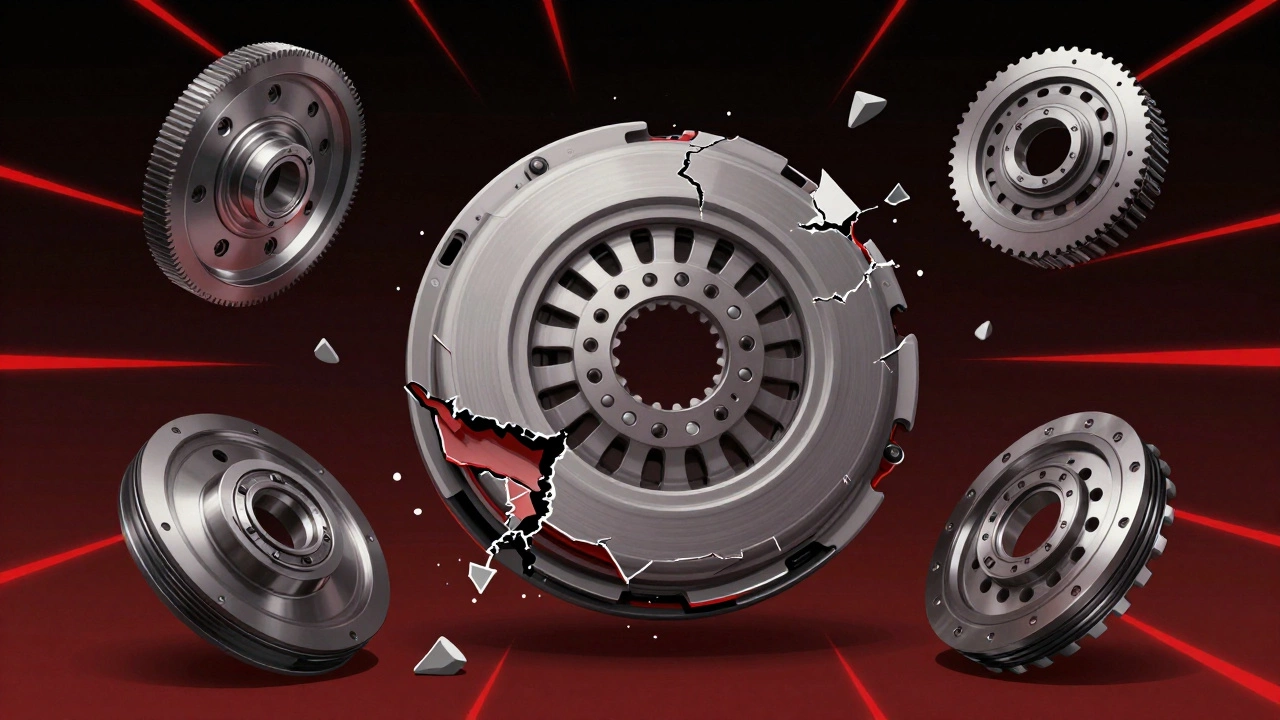
Modern clutches are made of layered materials: a pressure plate, a friction disc, and a release bearing. When the friction disc wears thin, the metal surfaces start to grind against each other. That’s when things go sideways.
Stage One: Slipping Clutch
The earliest sign of trouble is slipping. You’re in third gear, flooring it to overtake, and the engine RPM spikes-but your speed doesn’t match. It feels like the car is losing power, even though the engine sounds loud. This isn’t a fuel issue. It’s the clutch disc slipping because its friction material is worn down.
At this stage, you might think it’s just the car being lazy. But slipping isn’t just annoying-it’s dangerous. On hills, you might not have enough grip to climb. On the motorway, you could lose acceleration when you need it most. And if you’re towing, the clutch overheats faster, accelerating wear.
Stage Two: Hard Shifting and Grinding
As the clutch degrades, shifting becomes a chore. You have to double-clutch. You have to wait longer between gears. Then comes the grinding noise-metal scraping against metal. That’s the release bearing failing or the clutch disc’s friction material breaking apart.
Every time you grind a gear, you’re damaging the synchronizers inside the transmission. These are tiny brass rings that help gears mesh smoothly. Once they’re chewed up, replacing the clutch won’t fix the problem. You’ll need a whole new transmission. And that’s a £1,500 to £3,000 repair, not the £400 to £800 you’d pay for a clutch kit.
Stage Three: Complete Clutch Failure
Eventually, the clutch disc wears through. The pressure plate can’t grip anymore. The engine spins, but power doesn’t reach the wheels. Your car won’t move at all, even with the pedal fully released. You’re stranded.
At this point, you’re not just out of commission-you’ve likely damaged other parts. The flywheel might be scored. The input shaft of the transmission could be warped. The release fork might be bent from overuse. All of these require replacement, and they all add up.
What Else Gets Damaged?
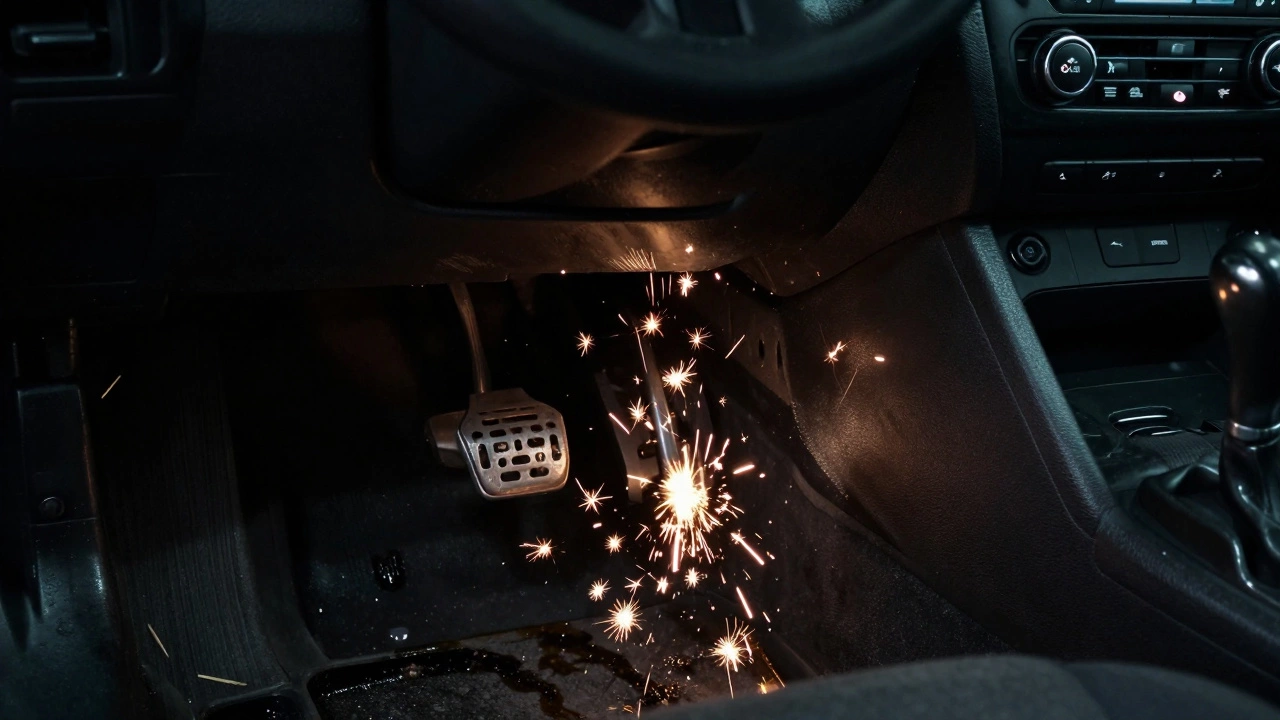
Driving with a bad clutch doesn’t just kill the clutch. It drags down the whole drivetrain.
- Transmission: Constant slipping and grinding overheats the transmission fluid. This breaks down its lubricating properties, leading to bearing and gear failure.
- Flywheel: The flywheel’s surface gets scored or warped from uneven pressure. Resurfacing it costs £150. Replacing it? £300+.
- Release Bearing: This tiny part spins every time you press the pedal. If it’s worn, it grinds and can seize, locking up the clutch system.
- Clutch Cable or Hydraulic System: In older cars, the cable stretches. In newer ones, the hydraulic fluid leaks or the master cylinder fails. Both are expensive fixes if ignored.
One owner in Manchester I spoke to kept driving his 2018 Ford Focus for three months after the clutch started slipping. He thought he could "hold out" until payday. When it finally died, he had to replace the clutch, flywheel, and input shaft bearing. The bill? £2,100. A timely clutch replacement would’ve cost £650.
How Long Can You Really Go?
There’s no magic number. Some clutches die overnight. Others limp along for months. But here’s the rule: if you’re slipping in third gear on flat ground, you’re already past the point of no return. Waiting another week won’t save you money-it’ll cost you more.
Think of it like brake pads. You wouldn’t drive with worn brakes because you’re afraid of the cost. The same logic applies here. A bad clutch doesn’t just break down-it breaks your wallet.
Signs You Need a New Clutch Now
Don’t wait for the car to stop moving. Look for these clear red flags:
- Engine revs rise without acceleration
- Difficulty shifting into gear, especially first or reverse
- Clutch pedal feels softer or higher than usual
- Unusual smells-burnt friction material smells like overcooked popcorn
- Clutch pedal vibrates or sticks
- Grinding noises when shifting
If you notice two or more of these, get it checked within 48 hours. If you notice three or more, don’t drive it. Tow it.
What’s the Fix?
Replacing a clutch isn’t a DIY job for most people. It takes hours, special tools, and access to the transmission. But the parts themselves aren’t expensive.
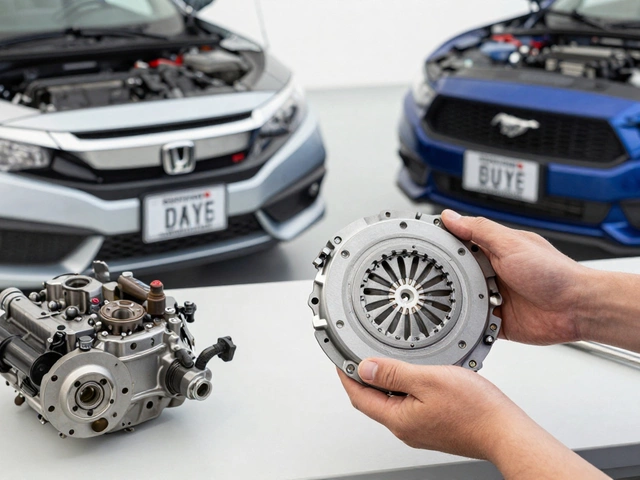
A standard clutch kit-pressure plate, disc, release bearing-costs between £120 and £300 depending on your car. Labour? £400 to £700. Total? Usually under £1,000. Compare that to a £2,500 transmission rebuild.
And don’t skimp on quality. Cheap clutches fail in 10,000 miles. OEM or premium aftermarket kits (like Sachs or LUK) last 100,000+.
What Happens If You Ignore It?
You’ll end up with a car that:
- Can’t climb hills
- Stalls in traffic
- Breaks down on the motorway
- Requires a £2,000+ repair instead of a £800 one
- Leaves you stranded in the rain, snow, or at 2 a.m.
It’s not a matter of "if"-it’s a matter of "when." And when it happens, you won’t be happy about the cost.
Final Advice: Don’t Risk It
Driving with a bad clutch is like ignoring a leak in your roof. It seems fine until the ceiling collapses. The clutch is a critical safety component. It’s not just about performance-it’s about control.
If you’re unsure, get a mechanic to check it. Most garages will inspect it for free. In Manchester, places like Euro Car Parts or local independents offer quick clutch diagnostics. It takes 15 minutes. The cost? Zero. The peace of mind? Priceless.
Replace it now. Not tomorrow. Not next month. Now.
Can you drive with a slipping clutch temporarily?
Technically, yes-but it’s not safe or smart. A slipping clutch reduces your control, especially on hills or during emergency maneuvers. It also overheats the transmission and accelerates damage to other parts. Driving even a few hundred miles with a slipping clutch can double your repair costs. Don’t treat it like a short-term fix.
How long does a clutch replacement take?
Most clutch replacements take 4 to 8 hours. It’s not a quick job. The mechanic has to remove the transmission, inspect the flywheel, and reinstall everything precisely. Some cars with tight engine bays, like the Volkswagen Golf or Mini Cooper, can take longer. Always ask for a timeline before you leave your car.
Should I replace the flywheel when replacing the clutch?
Yes-if the flywheel is scored, warped, or shows signs of heat damage. Most mechanics recommend replacing or resurfacing it at the same time. A worn flywheel will ruin a new clutch within 5,000 miles. Resurfacing costs £100-£150. Replacing it costs £200-£400. It’s cheaper than doing the job twice.
Can a bad clutch damage the gearbox?
Absolutely. Slipping clutches cause the transmission to overheat and work harder. Grinding shifts damage synchronizers. A failed clutch can even warp the input shaft. These are expensive repairs. A £600 clutch job can turn into a £2,000 transmission rebuild if you wait too long.
Is it worth fixing an old car with a bad clutch?
If the car is otherwise in good shape-no rust, solid engine, good brakes-then yes. A clutch replacement can add 50,000+ miles of life. But if the car has other major issues (transmission leaks, engine smoke, frame rust), it might not be worth it. Get a full inspection. Sometimes, the clutch is the last thing you need to fix before it’s time to move on.