Brake Pad Assessment Tool
Check Your Brake Pad Condition
Enter your symptoms and measured thickness to get your safety assessment. Based on the 7 warning signs from the article.
Safety Assessment
Your brake pads appear to be in good condition.
No critical symptoms detected and thickness above 2mm.
Brake pads are one of the most critical safety parts on your car. They don’t last forever, and waiting too long to replace them can cost you more than just money-it can cost you safety. If you’ve noticed strange sounds, vibrations, or longer stopping distances, your brake pads might be failing. You don’t need a mechanic to spot the warning signs. Here’s how to tell if brake pads are bad, using simple observations you can make right now.
1. High-Pitched Squealing or Screeching Noise
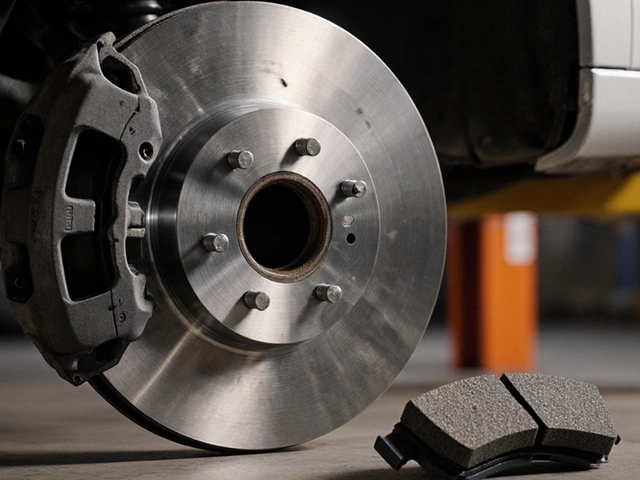
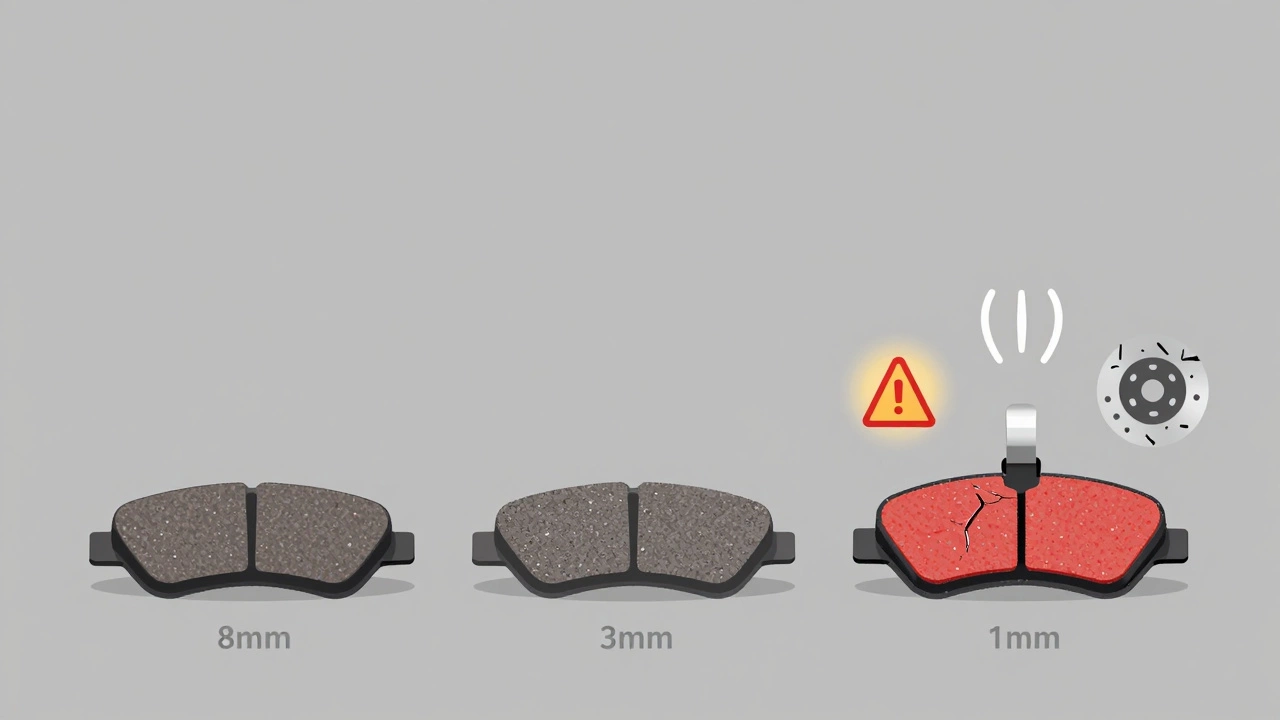
That sharp, metallic squeal when you press the brake pedal? It’s not your imagination. Most modern brake pads have a small metal tab built into them called a wear indicator. When the friction material wears down to about 2mm thick, that tab scrapes against the rotor and makes a loud noise. It’s designed to be annoying-because it’s telling you to act.
This noise usually happens at low speeds, like when you’re pulling up to a stoplight. It doesn’t always mean the pads are completely gone, but it does mean they’re dangerously thin. Ignoring it can lead to metal-on-metal contact, which ruins your rotors and costs hundreds more to fix.
2. Grinding or Growling Sound
If the squealing was your warning, the grinding is your last chance to stop before disaster. A deep, rough grinding noise-like metal scraping metal-is a red flag. This means the brake pad material has worn away completely, and the metal backing plate is now rubbing directly against the rotor.
This isn’t just expensive-it’s dangerous. The rotor can warp or crack under the pressure, and your braking power drops sharply. You might feel the car pull to one side or notice the pedal feels spongy. If you hear this, don’t drive the car any further than you absolutely have to. Get it towed to a garage.
3. Longer Stopping Distance
Brakes that feel sluggish or take longer to stop the car are a serious concern. If you used to stop smoothly at 30 mph in 10 meters, but now it takes 15 meters or more, your pads are losing grip. This happens because worn pads don’t create enough friction against the rotor.
Test this safely: find an empty road on a dry day. From 40 mph, apply steady pressure to the brake pedal. Compare how far you travel before stopping to how it felt a few months ago. If there’s a noticeable difference, your pads are likely worn. Wet weather makes this even worse-worn pads are far less effective when wet.
4. Vibrations or Pulsing in the Brake Pedal
When you press the brake and feel the pedal shake or pulse, it’s not normal. This usually means the rotor is warped or unevenly worn-but that often happens because of worn brake pads. When pads wear unevenly or are left too long, they cause hot spots on the rotor. The rotor heats up unevenly, then cools unevenly, and warps over time.
Warped rotors don’t just cause pedal vibration. They also make your car shake when braking, especially at highway speeds. You might feel it in the steering wheel, too. This isn’t just a comfort issue-it affects control. If you feel this, both the pads and rotors need checking.
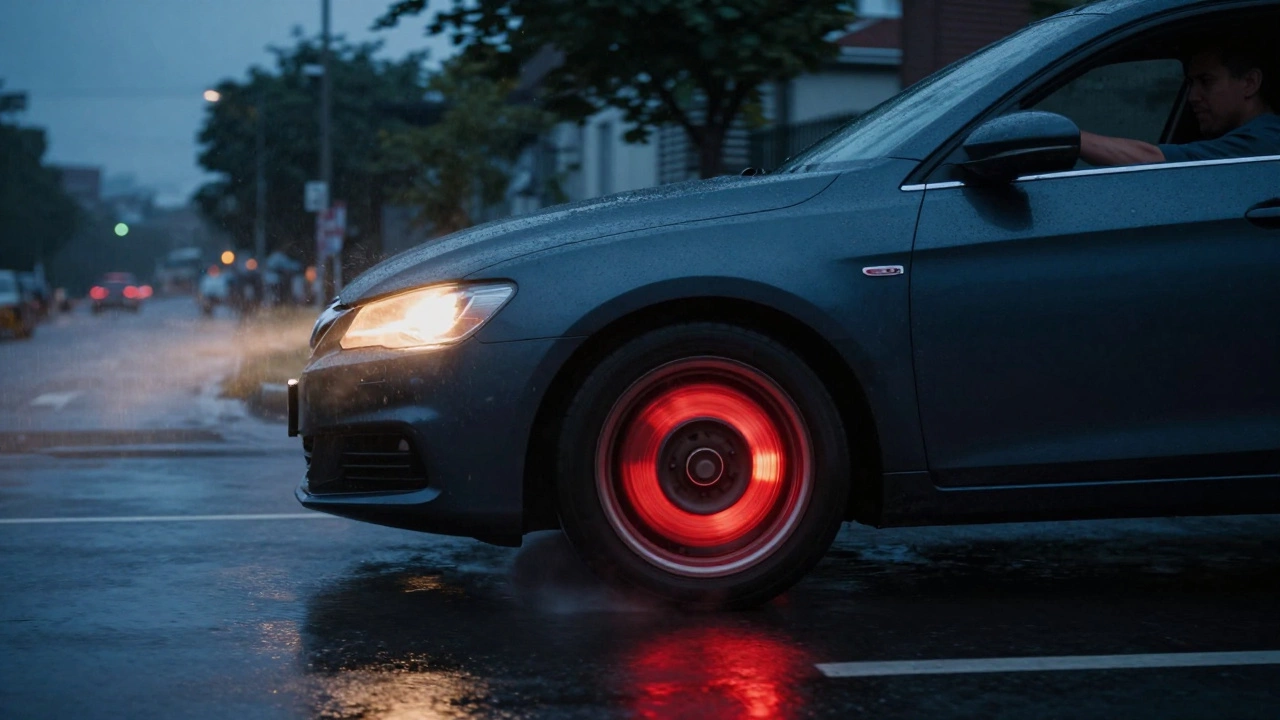
5. Brake Warning Light on the Dashboard
Modern cars have sensors that monitor brake pad thickness. If the pads are too thin, the system triggers a warning light-usually a yellow or red icon that looks like a circle with exclamation marks inside, or sometimes just says "BRAKE".
Don’t ignore this. Some people think it’s just a routine reminder, but if it’s the brake pad sensor light, it means your pads are at or below the minimum safe thickness. Check your owner’s manual to confirm what the light means on your specific model. If you’re unsure, get it checked immediately.
6. Visible Pad Thickness Through the Wheel Spokes
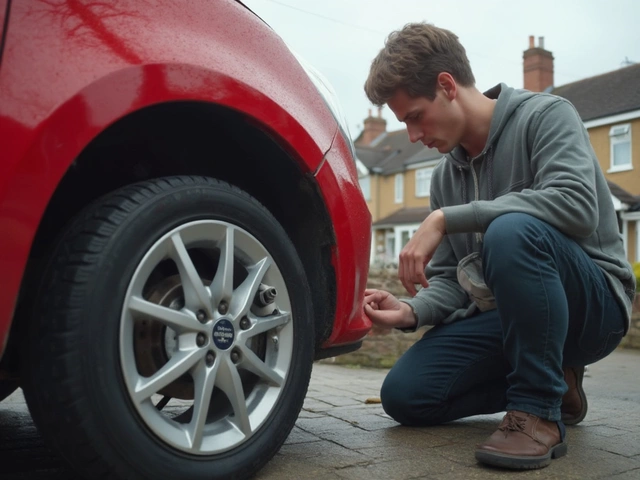
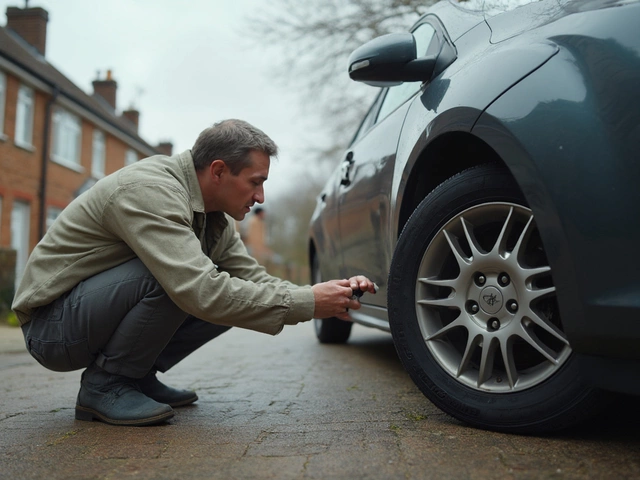
You don’t need special tools to check brake pad thickness. Many cars have wheels with enough space between the spokes to see the pads. Look through the wheel at the brake caliper. You should see a flat, dark gray or black pad pressed against the shiny metal rotor.
Measure the thickness with a ruler or even a coin. If the pad is less than 3mm thick, it’s time to replace. If it’s under 2mm, you’re already in danger zone. Some pads have wear lines-small grooves across the surface. If those grooves are gone, the pad is worn out.
Do this check every time you fill up with fuel. It takes 10 seconds and could save you from a costly repair.
7. Car Pulls to One Side When Braking
If your car jerks or pulls hard to the left or right when you apply the brakes, something’s wrong. One brake pad might be worn more than the other, or a caliper could be sticking. This imbalance causes uneven braking force.
It’s also possible that one brake is contaminated-maybe oil leaked onto the pad, or moisture got in. Either way, this isn’t normal. Pulling to one side reduces control, especially in emergencies. If you notice this, get the brakes inspected right away. Don’t assume it’s just a tire alignment issue.
How Often Should Brake Pads Be Replaced?
There’s no fixed timeline. Brake pads can last anywhere from 25,000 to 70,000 miles, depending on driving habits, road conditions, and vehicle weight. City drivers who brake often-like those stuck in Manchester traffic-will wear pads out faster than highway drivers.
Heavy loads, aggressive braking, and mountainous terrain all speed up wear. If you tow trailers or carry heavy gear regularly, check your pads every 15,000 miles. Most manufacturers recommend inspection every 12,000 miles or once a year.
What Happens If You Ignore Bad Brake Pads?
Ignoring worn brake pads doesn’t just make your car slower to stop-it can destroy other parts. Once the pads are gone, the metal backing plate grinds into the rotor. Rotors are expensive to replace, often costing £150-£300 per pair. You might also damage the calipers or brake lines from overheating.
Worse, your stopping distance can double. In wet conditions, that’s the difference between avoiding a crash and hitting it. Insurance data shows brake-related accidents rise sharply in winter months, especially in urban areas. Don’t gamble with your safety.
What to Do Next
If you’ve noticed one or more of these signs, don’t wait. Book a brake inspection. A good mechanic will check pad thickness, rotor condition, caliper function, and brake fluid level. Most shops offer free brake checks.
Don’t try to guess. Even if you think the pads look okay, they might be worn unevenly or cracked. Brake systems are safety-critical. Get them checked by someone trained to spot hidden problems.
And remember: replacing brake pads early is cheaper than replacing rotors, calipers, or dealing with an accident.
How long do brake pads usually last?
Brake pads typically last between 25,000 and 70,000 miles, but this varies based on driving style, vehicle weight, and road conditions. City driving with frequent stops wears them out faster than highway driving. Heavy loads or towing can cut their life in half.
Can I check brake pads myself?
Yes, you can. Look through the wheel spokes at the brake caliper. The pad should be at least 3mm thick. If it’s less than 2mm, replace it immediately. Some pads have wear lines-grooves across the surface. If those are gone, the pad is worn out. Use a ruler or a coin to estimate thickness.
Is it safe to drive with worn brake pads?
No. Driving with worn brake pads is dangerous. They reduce stopping power significantly, especially in wet weather. If the pads are worn past the metal backing plate, you risk damaging the rotors and losing brake control entirely. Never delay replacement if you hear grinding or feel vibrations.
Why do my brakes squeak when I slow down?
A high-pitched squeal when slowing down usually means your brake pads have a wear indicator that’s scraping against the rotor. It’s a built-in warning that the pads are thin. It’s not always dirt or moisture-it’s often a sign you need new pads. If the noise stops after a few stops, it might be temporary, but if it’s constant, replace the pads.
Do I need to replace rotors when I replace brake pads?
Not always. If the rotors are smooth, even, and thicker than the manufacturer’s minimum thickness, you can reuse them. But if they’re warped, scored, or worn unevenly, they must be replaced or resurfaced. Many mechanics recommend replacing both at the same time for optimal performance and safety.
Final Tip: Make Brake Checks Part of Your Routine
Check your brake pads every time you fill up. It takes 10 seconds. Look through the wheel. Listen for noise. Feel the pedal. If something feels off, don’t ignore it. Brake failure doesn’t come with a warning-it comes with a crash. Stay ahead of it.