Engine Oil Top-Up Safety Checker
Are you about to top up your engine oil? Use this tool to check if your current situation is safe or requires immediate professional attention.
Why?
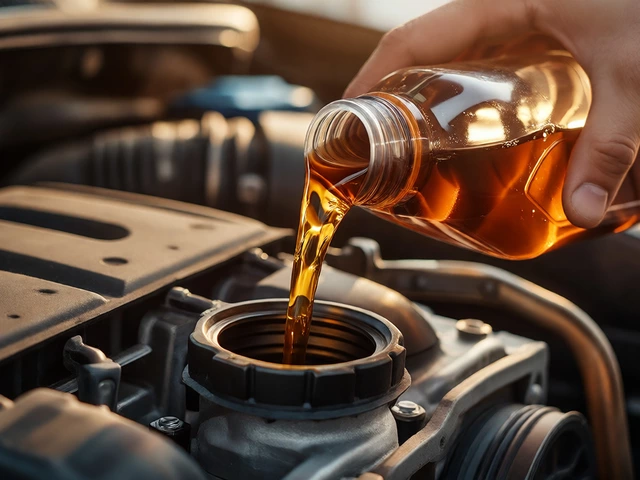
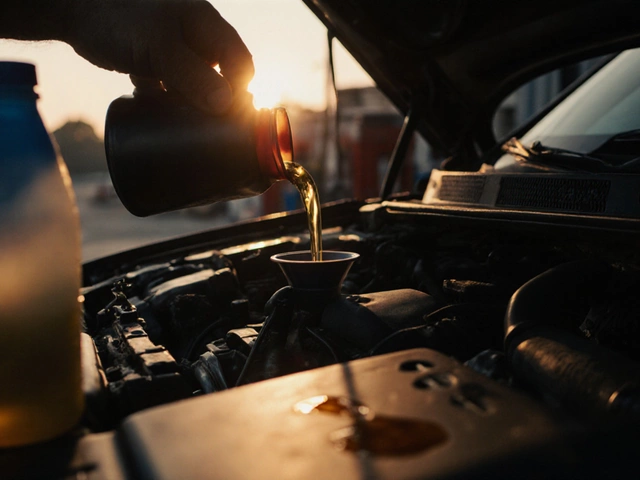
You’re halfway through a long drive, the dashboard light flickers on, and you realize your engine oil is dangerously low. You grab a bottle from the boot, pour it in, and keep going. But have you ever stopped to wonder what’s actually happening inside that engine block? Does mixing fresh, clean lubricant with the sludge-laden remnants of your previous service cause a chemical catastrophe, or is it just a harmless convenience?
The short answer might surprise you: for most modern cars, it’s rarely fatal. But "rarely fatal" isn't the same as "best practice." Understanding the chemistry of how different oils interact can save you from expensive repairs down the line. Let’s break down exactly what happens when you layer new oil over the old, and when you should hit the garage instead of the petrol station.
The Chemistry of Mixing Lubricants
To understand the risk, you need to know what engine oil actually is. It’s not just a slippery liquid; it’s a complex cocktail. Base oils make up about 75-80% of the volume, but the remaining 20-25% are additives. These include detergents to keep surfaces clean, dispersants to suspend contaminants, anti-wear agents like zinc dialkyldithiophosphate (ZDDP), and viscosity index improvers.
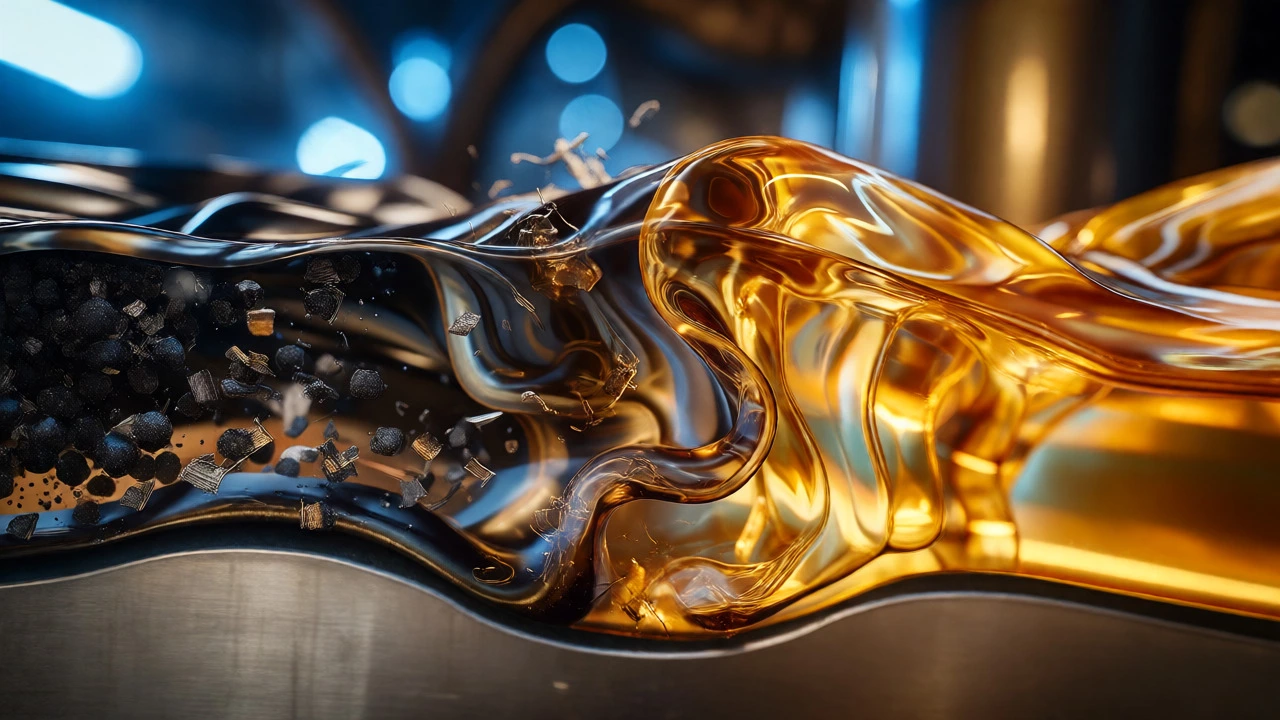
When you pour new oil into an engine that already contains used oil, you aren’t creating a volatile chemical reaction like baking soda and vinegar. Instead, you’re diluting the additive package of the old oil with the fresh supply. The primary concern isn’t explosion or corrosion; it’s contamination. Used oil is filled with combustion by-products-soot, fuel residues, water vapor, and metal particles shed from internal components. By topping up, you’re essentially spreading this grime throughout the entire system rather than removing it.
| Component | Fresh Oil | Used Oil | Effect of Mixing |
|---|---|---|---|
| Additives | Full strength (100%) | Depleted (30-50%) | Dilution reduces protection efficiency |
| Contaminants | Negligible | High (Soot, Metal, Fuel) | Spreads abrasive particles evenly |
| Viscosity | Stable at rated grade | Often sheared or thickened | Mixed viscosity may be unpredictable |
| pH Level | Neutral to slightly alkaline | Acidic due to oxidation | Can accelerate corrosion if left too long |
Viscosity Mismatches: The Silent Killer
One of the biggest issues people overlook is viscosity grading. If your car requires 5W-30 synthetic oil, but you top it up with 10W-40 mineral oil because that’s all they had at the corner shop, you’ve created a hybrid fluid. Modern engines rely on precise hydraulic pressure for variable valve timing and other systems. A mismatched viscosity can alter flow rates, potentially causing sluggish response or increased friction during cold starts.
Think of it like mixing thin syrup with thick honey. While they will eventually blend, the resulting mixture doesn’t behave predictably under stress. In high-performance engines, such as those found in hot hatches common here in Manchester, even slight deviations in film strength can lead to premature wear on camshafts and bearings. However, for older, lower-tolerance engines, the difference is often negligible enough that you won’t notice any immediate performance drop.
When Is Topping Up Actually Safe?
Context matters immensely. If you check your dipstick and find the level is between the minimum and maximum marks, adding a small amount of correct-spec oil is perfectly fine. Manufacturers design oil systems with a margin of error. They expect some consumption, especially in turbocharged engines where heat causes minor evaporation or leakage past piston rings.
However, problems arise when you use topping up as a substitute for regular servicing. If you’ve driven 10,000 miles since your last change and the oil looks black and gritty, pouring in two litres of fresh gold won’t reset the clock. The additives in the old oil are spent. They can no longer neutralize acids or keep soot suspended. By adding new oil, you’re temporarily boosting the total volume and perhaps slightly improving the additive balance, but you haven’t removed the harmful contaminants. You’re just making the dirty soup bigger.
The Risk of Different Oil Types
Not all oils are created equal. There are three main categories: Mineral, Semi-Synthetic, and Fully Synthetic. Generally, you can mix these without catastrophic failure, but there are nuances. Fully synthetic oils contain advanced ester-based compounds that offer superior thermal stability. Mixing them with cheaper mineral oils dilutes these benefits. You don’t lose everything, but you certainly don’t get the full protection you paid for.
A more specific danger lies in mixing oils with incompatible additive packages. For instance, some racing oils use high levels of ZDDP for flat-tappet camshaft protection, while modern "energy-conserving" oils reduce ZDDP to protect catalytic converters. If you mix a high-ZDDP race oil with a low-ZDDP eco-oil, you might inadvertently poison your catalytic converter or fail to protect an older engine. Always check the API (American Petroleum Institute) or ACEA (European Automobile Manufacturers’ Association) specifications on the bottle. Matching these codes is safer than matching brand names.
Signs Your Oil Mix Has Gone Wrong
Your engine will tell you if the mixture is problematic. Keep an eye out for these symptoms:
- Sluggish Acceleration: If the engine feels labored or lacks its usual pep, the viscosity might be too high or the lubrication insufficient.
- Loud Ticking or Knocking: This indicates poor oil pressure or inadequate film strength, often caused by diluted additives failing to cushion moving parts.
- Overheating: Dirty, mixed oil transfers heat less efficiently than clean oil. Watch your temperature gauge closely after a top-up.
- Oil Light Flickering: Even if the level seems okay, a faulty sensor or actual low pressure due to shear-thinned oil could trigger the warning.
If you experience any of these, do not ignore them. Pull over safely and check the oil condition. If it smells burnt or feels gritty between your fingers, you need a full drain and refill immediately.

Best Practices for Top-Ups
To minimize risks, follow these simple rules whenever you need to add oil:
- Match the Specification: Check your owner’s manual. If it calls for ACEA C3 5W-30, buy exactly that. Don’t guess.
- Use the Same Brand if Possible: While cross-brand mixing is generally safe, sticking to one manufacturer ensures consistent additive chemistry.
- Don’t Overfill: Adding too much oil can cause foaming (aeration), which reduces lubrication effectiveness and can damage seals. Add small amounts, wait five minutes, then recheck.
- Schedule a Full Service Sooner: If you’ve topped up significantly, shorten your next oil change interval by 20%. Treat the top-up as a stop-gap, not a solution.
Real-World Scenarios
Consider a driver in London who notices his Audi A4 consuming a litre every 1,000 miles. He tops up monthly with the correct VW-approved 504.00 specification oil. This is acceptable practice for many modern German cars, provided he still performs a full annual service. The consumption is known, the spec is matched, and the intervals are respected.
Now contrast that with a student driving a ten-year-old Ford Fiesta. He ignores the oil light for months, then dumps in whatever cheap 15W-40 he finds at a discount store. The engine now runs on a slurry of degraded synthetic and heavy-duty mineral oil. Within six months, he faces sludge buildup, clogged oil passages, and a potential head gasket failure. The root cause wasn’t the mixing itself, but the neglect combined with inappropriate substitution.
Conclusion: To Mix or Not to Mix?
So, does putting new oil on top of old oil ruin your engine? Usually, no. It’s a viable emergency measure or a temporary fix for known consumption issues. But it’s never a replacement for proper maintenance. The key is awareness. Know your oil specs, monitor your levels regularly, and prioritize getting that contaminated fluid out of the engine as soon as reasonably possible. Your engine is a precision machine; treat it with respect, and it’ll reward you with reliability.
Can I mix synthetic and conventional motor oil?
Yes, you can mix synthetic and conventional oils without damaging your engine. They are chemically compatible. However, mixing them will result in a blend that offers less protection than pure synthetic oil. It effectively lowers the quality of the lubricant to a semi-synthetic level. Use this only as a temporary measure until you can perform a full oil change with the recommended type.
Is it bad to mix different brands of engine oil?
Mixing different brands is generally safe as long as the oil meets the same industry specifications (such as API SN or ACEA C3). The base oils and additive packages are standardized across major manufacturers. Problems usually arise from mixing different viscosities or specifications rather than brand differences alone.
How long can I drive after topping up oil?
If you top up with the correct specification oil, you can typically drive until your next scheduled service. However, if the existing oil was very old or contaminated, it is advisable to schedule a full oil change within the next 500 to 1,000 miles to remove the accumulated contaminants that were merely diluted by the top-up.
What happens if I put the wrong viscosity oil in my car?
Using the wrong viscosity can affect engine performance and fuel economy. Oil that is too thick may cause drag and hard starting in cold weather, while oil that is too thin may not provide adequate protection at high temperatures. Occasional use is unlikely to cause immediate damage, but prolonged use can lead to increased wear on engine components.
Does topping up oil replace an oil change?
No, topping up does not replace an oil change. An oil change removes the old, contaminated oil along with the filter, which traps harmful particles. Topping up only adds volume and fresh additives but leaves the dirt, soot, and metal shavings inside the engine. Regular draining and filtering are essential for long-term engine health.