AC Filter Compatibility Calculator
Check Your AC Filter Compatibility
Enter your AC system information to find out if you can safely use a MERV 13 air filter.
People often worry that switching to a MERV 13 air filter will wreck their home’s AC system. You’ve heard the warnings: higher MERV ratings mean more resistance, and more resistance means your AC will strain, overheat, or break down. But is that really true? The answer isn’t simple-it depends on your system, your ductwork, and how well it was built in the first place.
What does MERV 13 actually mean?
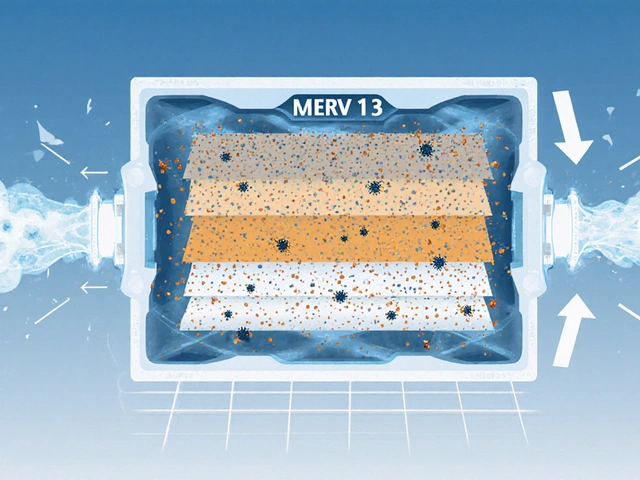
MERV stands for Minimum Efficiency Reporting Value. It’s a scale from 1 to 20 that tells you how well an air filter traps tiny particles. A MERV 13 filter catches things like pollen, mold spores, smoke, and even some bacteria. That’s why hospitals and schools use them. But higher efficiency doesn’t mean better for every home. The real issue isn’t the filter itself-it’s whether your AC can handle the extra work it takes to pull air through it.
Why people think MERV 13 damages AC systems
The fear comes from older advice. Back in the 2000s, most homes had cheap fiberglass filters (MERV 1-4). AC units were designed for those. They had weak fans, narrow ducts, and no pressure sensors. If you slapped a MERV 13 in one of those, the system had to work harder. That extra strain could cause the blower motor to overheat, the evaporator coil to freeze, or airflow to drop so low the system shut off.
But modern systems? They’re different. Since 2015, most new AC units in the UK and US are built with variable-speed blowers. These adjust automatically to changes in airflow. If the filter gets clogged, the motor slows down just enough to keep pressure stable. That’s not something your 2008 unit could do.
How to know if your AC can handle MERV 13
You don’t need a technician to tell you. Here’s how to check yourself:
- Look at your current filter. What’s the MERV rating? If it’s already MERV 8 or higher, switching to MERV 13 is probably fine.
- Check your AC’s air filter slot. Is it wide? Are the ducts clean and unobstructed? Narrow slots or kinked flex ducts are red flags.
- Listen to your system. When the filter is clean, does the blower sound strained? If it’s loud or labored even with a low-MERV filter, MERV 13 might push it too far.
- Feel the airflow. Put your hand near a supply vent. If the air feels weak, even with the filter off, your system may not have enough static pressure capacity.
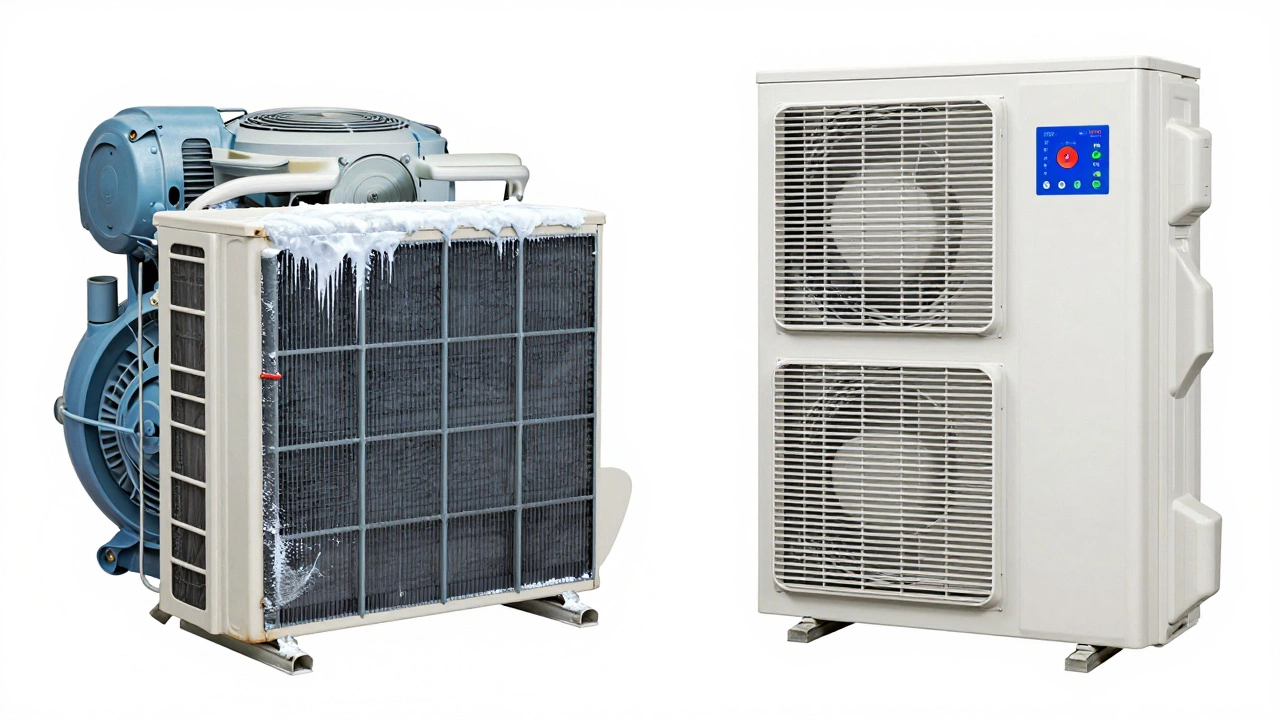
Another simple test: replace your current filter with a MERV 13 and run the system for 24 hours. Check the evaporator coil (inside the air handler) for ice buildup. If you see frost or water dripping, your airflow is too low. Take the MERV 13 out and go back to MERV 8.
What happens if your AC can’t handle MERV 13?
If your system is too weak, here’s what you might see:
- Reduced airflow from vents-your home takes longer to cool
- Higher energy bills because the fan runs longer to push air
- Freezing evaporator coil-ice forms because not enough warm air passes over it
- More frequent system shutdowns-safety sensors kick in to prevent damage
- Shortened compressor life-if the system cycles on and off too often, it wears out faster
None of these are guaranteed. They’re risks-not certainties. Many homeowners use MERV 13 without issues. The difference is in the system design.
Modern AC systems and MERV 13: The real story
Manufacturers now test their units with MERV 13 filters. If you bought a new AC unit since 2018, it’s likely rated to handle it. Check your owner’s manual. Look for the phrase “compatible with MERV 13” or “maximum recommended MERV rating.” If it says MERV 13 or higher, you’re good to go.
Even if it doesn’t say that, many modern units have built-in airflow sensors. They’ll adjust the fan speed to compensate. You might notice your system runs a little longer, but it won’t break. In fact, many HVAC pros now recommend MERV 13 for homes with allergies, asthma, or pets-because the air quality improvement outweighs the small energy cost.
What about filter replacement frequency?
MERV 13 filters catch more dust. That means they clog faster. If you’re using one, check it every 30 days. Replace it every 2-3 months, or sooner if it looks dirty. A clogged MERV 13 is worse than a clean one. It’s like driving with the parking brake on-your system works harder for less benefit.
Some people buy pleated filters that look thicker and assume they last longer. Not true. A MERV 13 filter doesn’t last longer just because it’s denser. In fact, the opposite is often true. Clean it often. Set a reminder on your phone.
Alternatives to MERV 13
If you’re unsure, don’t jump straight to MERV 13. Try MERV 11 first. It catches 85% of the same particles as MERV 13 but with less resistance. It’s a sweet spot for most homes. If you still have allergies or pets, then upgrade to MERV 13. If not, MERV 8 is perfectly fine.
There’s also electrostatic filters and HEPA filters. HEPA is overkill for most homes and will definitely choke your AC. Electrostatic filters are reusable, but they need washing every two weeks and aren’t as effective as pleated MERV filters.
Bottom line: It’s not the filter-it’s the system
Will a MERV 13 damage your AC? Maybe. But only if your system is old, poorly designed, or already struggling. Most modern homes won’t have a problem. The real question isn’t whether MERV 13 is safe-it’s whether your AC is built to handle it.
Start with what you’ve got. If your current filter is MERV 8 or lower and your AC runs quietly, try a MERV 13. Monitor it for a week. Check for ice, weak airflow, or strange noises. If nothing changes, you’re good. If you see problems, go back down to MERV 8 or 11.
Don’t let fear stop you from cleaner air. But don’t ignore your system’s limits either. The right filter balances health and performance-and that’s different for every home.
Can I use a MERV 13 filter in my old AC unit?
It depends. If your AC is over 15 years old and has a single-speed blower, a MERV 13 could cause airflow issues, freezing, or motor strain. Test it by installing it for a week. Watch for ice on the coils or weak airflow. If problems appear, switch back to MERV 8.
Does MERV 13 reduce airflow significantly?
Yes, but not always enough to matter. A clean MERV 13 reduces airflow by about 10-15% compared to a MERV 8. Modern systems compensate for this. Older systems might struggle. If your vents feel noticeably weaker after switching, your system may not be designed for it.
Will MERV 13 make my energy bills go up?
Slightly. Because the filter resists airflow, your fan may run longer to maintain temperature. In most cases, the increase is under 5-10% on your monthly bill. That’s a small price for better air quality, especially if you have allergies or pets.
How often should I replace a MERV 13 filter?
Every 2-3 months, but check it monthly. MERV 13 traps more dust than lower-rated filters. If it looks dark or clogged, replace it right away. A dirty MERV 13 can restrict airflow more than a clean one-even if it’s the same brand and model.
Is MERV 13 better than HEPA for home AC?
No. HEPA filters are designed for medical environments and create too much resistance for standard home AC systems. They’ll likely stop airflow completely and damage your blower motor. Stick with MERV 11-13 for home use. HEPA is only safe in standalone air purifiers, not central HVAC.
What to do next
Don’t just swap filters blindly. Start by checking your current filter’s rating. Look at your AC’s manual or model number online. If you’re still unsure, take a photo of your air handler and ask a local HVAC technician-most will give you a free opinion.
And if you’re replacing your AC soon? Choose a unit that explicitly supports MERV 13. That way, you’re future-proofing your air quality without guessing.