Wiper Fitment: Find the Right Windshield Wipers for Your Car
When it comes to wiper fitment, the process of matching windshield wiper blades to your car’s make, model, and year. Also known as wiper blade compatibility, it’s not just about grabbing the cheapest pair off the shelf. Get it wrong, and your wipers won’t clean properly—or worse, they’ll damage your windshield or fall off mid-rain. This isn’t guesswork. Every car has a specific wiper size and mounting type, and manufacturers design them to fit precisely.
Wiper fitment depends on three things: wiper blade length, the exact measurement in inches from end to end, attachment type, how the blade connects to the arm—hook, pin, or beam, and wiper arm design, whether it’s a traditional J-arm or a newer flat-blade system. Mixing these up is like putting the wrong tire on your car. It might seem close, but it won’t work right. Many people think all wipers are universal, but a 22-inch blade for a Ford Focus won’t fit a Toyota Corolla, even if they look similar. The connector styles alone vary by brand and model year.
And it’s not just about size. The material matters too. Older wiper blades with metal frames can rust and warp over time, while modern beam blades are all-rubber and more flexible, giving better contact on curved windshields. If your car is from the last 10 years, you’re likely using beam blades. If you’re replacing worn blades and notice streaking, chattering, or missing spots, it’s not just the rubber—it could be the fitment. A blade that’s too long will lift off the glass. One that’s too short won’t cover the whole area. Either way, your visibility drops, and that’s dangerous in heavy rain or snow.
Here’s the thing: you don’t need a mechanic to figure this out. Most auto parts stores have digital kiosks or apps where you enter your car’s details and it tells you the exact wiper sizes. You can also check your owner’s manual—it’s often listed under "maintenance" or "accessories." But if you’re shopping online, always double-check the fitment guide. Don’t trust generic listings that say "fits most cars." They don’t. And don’t assume the old blade’s size is correct—sometimes previous owners swapped in the wrong ones.
What you’ll find below are real-world guides from drivers and mechanics who’ve been there. You’ll see how to measure your current wipers, how to spot a bad fit before you buy, and what happens when you ignore the specs. Some posts cover how to install them without breaking a sweat. Others explain why certain brands last longer on specific models. There’s even advice on what to do if your wipers keep lifting at high speeds—something most people don’t even know is a fitment issue.
Wiper fitment isn’t glamorous. But it’s one of the simplest things you can fix to make your car safer. And once you know how it works, you’ll never buy the wrong blades again.
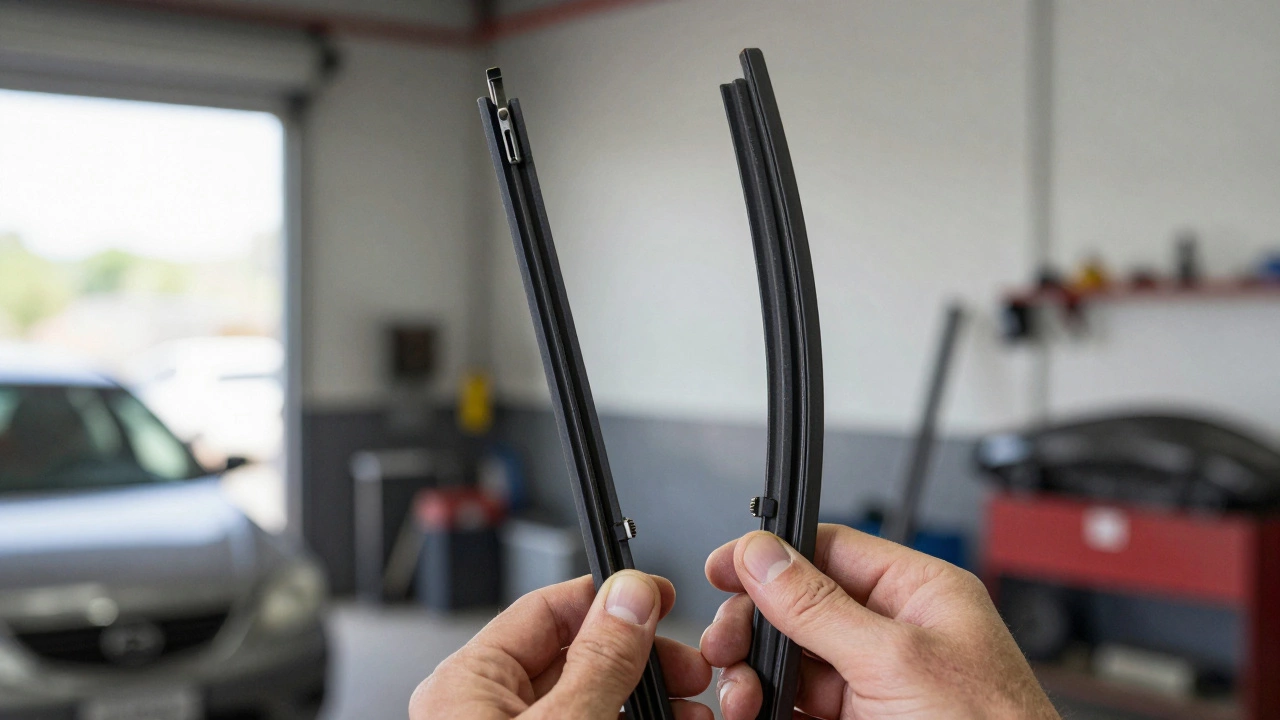
Are Windshield Wipers Universal? What You Need to Know Before Buying
Windshield wipers aren't universal - they vary by car make, model, and year. Learn how to find the right size and type to avoid streaks, noise, and damage. Replace them every 6-12 months for clear visibility.
December 1 2025