Suspension Impact Engine: How Faulty Suspension Damages Your Car’s Engine
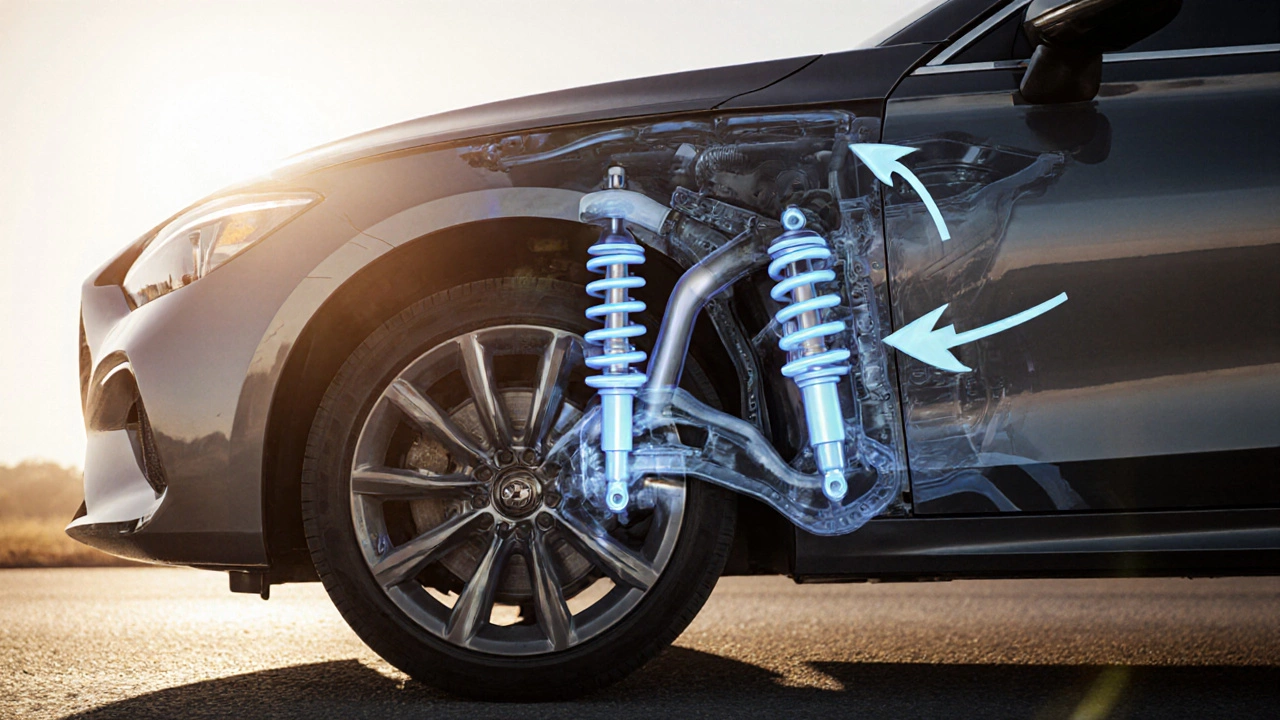
When your suspension, the system that connects your wheels to the car body and absorbs road shocks. Also known as vehicle suspension system, it keeps your tires in contact with the road and protects the rest of your car from constant pounding. goes bad, it doesn’t just make your ride uncomfortable—it starts beating up your engine. Most people think suspension problems only mean a rough ride or weird handling. But if your shocks are worn, your struts are broken, or your control arms are loose, those vibrations don’t just stay in the wheels. They travel up through the chassis and into the engine mounts, transmission, and even the exhaust system. Over time, that constant shaking wears out parts you never thought were connected.
The engine mounts, rubber-and-metal brackets that hold the engine in place and absorb vibrations. Also known as motor mounts, they’re designed to handle normal engine movement, not the wild shaking from a failing suspension. are the first line of defense. If your suspension can’t smooth out bumps, those impacts hit the mounts directly. A cracked or collapsed mount lets the engine move side-to-side while driving. That means your oil pan can scrape the underside of the car, your spark plug wires can rub through, and your exhaust manifold can crack from stress. One driver we spoke to replaced his engine after 90,000 miles—turns out, his worn shocks had been rocking the engine for years. He never noticed because the car still started. But the constant movement had cracked the oil seal and let oil leak into places it shouldn’t be.
Then there’s vehicle alignment, the adjustment of wheel angles to ensure even tire wear and proper steering response. Also known as wheel alignment, it’s not just about tire life. If your wheels are out of alignment, your tires scrub sideways as you drive. That creates extra drag, forcing your engine to work harder just to keep speed. That means more fuel use, more heat buildup, and more strain on the cooling system. A radiator under constant stress from engine overload can crack or leak. And if your suspension is bad enough to cause uneven tire wear, you’re not just replacing tires—you’re risking a blown head gasket from overheating.
You can’t fix suspension issues by just swapping parts. You need to test it. A simple bounce test—pressing down on each corner of your car and watching how it rebounds—can tell you if shocks are dead. Loose steering or clunking noises over bumps? That’s often a worn ball joint or control arm. And if your car pulls to one side or your tires wear unevenly, alignment is off. These aren’t cosmetic fixes. They’re engine protectors. Every time you drive with bad suspension, you’re slowly killing your engine with invisible damage.
Below, you’ll find real-world guides from UK drivers and mechanics on how to spot suspension failure before it costs you a new engine. From how to test your shocks to why a broken mount can ruin your oil pump, these posts cut through the noise and show you exactly what to check—and when to act.
Does Bad Suspension Affect Engine? What Drivers Need to Know
Learn how a failing suspension can harm your engine, spot warning signs, and protect both systems with practical checks and repairs.
October 15 2025